But Zion said, “The Lord has forsaken me, my Lord has forgotten me.” Can a woman forget her nursing child, or show no compassion for the child of her womb? Even these may forget, yet I will not forget you. See, I have inscribed you on the palms of my hands; your walls are continually before me. Isaiah 49:14-16
When I write my sermons or articles for publication, I always leave the title and the introduction for last. My process is to let the theme emerge as I reflect, research, and write the sermon. Recently, I wrote in my notes, “Don’t forget to remember.”
“Don’t forget to remember”—that’s pretty good, but it sounds like a country song.
So, I googled “Don’t Forget to Remember” and discovered that Carrie Underwood has a song called “Don’t Forget to Remember Me.” Of course, there is a country song about this. There is a country song about every aspect of life, isn’t there?
According to family lore, my brother, my little sister, and I all fell asleep in the pews of the church during my dad’s sermon when I was three, my brother Jay was two, and my sister Robbie was one. When it came time to go, my parents each picked up a sleepy child and loaded them into the car to go home. They must have been visiting with late-leaving church members as they loaded their bundles of joy into the car, because when they got home to unload sleepy children, they only had two of the three. They accidentally left my little sister, Robbie, asleep on the pew in the dark, empty church. Two out of three is not a bad batting average in baseball, but it doesn’t work for parenting.
The race was on to get back to my little sister before she woke up in a dark church, and thus caused psychic damage that therapy would never be able to fix. We did, and my sister is barely messed up to this day.
So, apparently, a mother can forget a child.
Some human mothers are bad, and they abandon their children. But even some good mothers will forget you due to age-related diseases, or they will eventually die before you and abandon you.
You see, eventually, you lose your mother. Mother love seems unconditional. It seems indestructible, but it’s not because human beings aren’t indestructible.
If you ever watch a nursing mother, you see it in a way that the mother herself can’t. You see the radiance in her face. God has the audacity to say, “That’s just a dim hint of my delight in you.”
If you lived moment by moment with the bedrock certainty that a Person of that magnitude loved you with that depth—would it change you?
One of the most frustrating things about being a parent is that you’ve made sacrifices, so your whole life has changed, and yet all your sacrifices are completely invisible to the child.
When our granddaughter, Cora Lee, was a baby, we did summer daycare for her parents while Mindy and Caleb were at work. Every morning, I sat in my chair reading when Mindy drove up, brought that precious baby into our house, and sat her down in the chair next to me. Mindy stood there on one foot, then the next. She bent down and cooed at Cora, touched her face, wiped her slobbery mouth with the back of her fingers, stroked her hair, and told her at least 75 times, “I love you, Baby.”
She glanced at her watch and moved towards the door, and then, standing in the doorway, glanced back and said one more time to that little girl still strapped in her car seat, “I love you, baby.”
Let me ask you a question. When baby Cora is 14 years old and wants to wear something to school that is inappropriate, when that teenage girl named Cora wants to hang out with friends past a decent hour on a school night, and Mindy says, “No.” Do you think Cora will remember the morning routine Mindy went through when she was a baby? Do you think Cora will remember and have an inkling of the sacrifice Mindy made to care for, nourish, love, and adore that baby every day of her life?
When Cora is 14 years old, will she remember the 75 times Mama said, “I love you, baby,” standing in my house every morning in the summer of 2020? A child doesn’t understand your sacrifices, any more than a fish can understand what water is because a fish knows nothing but water. And we don’t often understand God’s great love for us on an infinitely larger scale.
So, how do I know for sure that God really loves me?
Read this out loud and slowly, “See, I have inscribed you on the palms of my hands.”
At first, that looks like just another lovely metaphor about His devotion. In ancient times, sometimes a master would tattoo his name on the back of a servant’s hand but never did a Master tattoo the name of a servant on His hand.
Never.
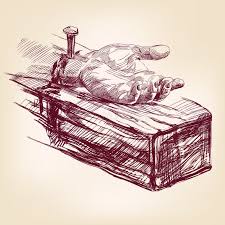
We might think, “Isn’t that beautiful? Another metaphor of God’s love.” No, it’s not a beautiful metaphor. It’s a horrible metaphor. Do you know why? It doesn’t say tattooed. It says, “… I have inscribed you on the palms of my hands…” The word inscribed is a very specific Hebrew term that means carved with a hammer and chisel or with a spike.
Why in the world would you conjure up the image of someone out of love letting people take a hammer and drive a spike right into the palm of their hands?
Would God really do that? Yes.
Where in the world did God do that? Calvary.
Every strike of the hammer on the head of the nail through the hands of Jesus showed that He knows your name, and He knows your address.
I am one year older today, a fleeting whisper of time, Reflecting in the mirror, I see an old man, etched with echoes of laughter and the weight of untold stories.
The mountain wind howls, a fierce companion reminding me of the wilderness I’ve wandered, the paths I’ve forged with weary feet. In my quiet cabin, the aroma of coffee swirls, a warm embrace before dawn.
My wife loves me, that soft truth, a beacon in the dark, and I feel the joy bubbling, anticipation of laughter with good friends, the sacred circles of fellowship.
Yet, amid cheer, my heart aches for the many hurting souls, each one a prayer, each tear a shared burden, as I kneel in the stillness, lifting them with hope.
I am glad I am alive, every breath a gift, each moment a canvas upon which to paint my faith. I love Jesus, a guide through shadows, a light that breaks the dawn.
I long to be a better man, to embody grace, to spread kindness, believing deeply that I am the beloved of God, held in gentle hands, wrapped in mercy. Tomorrow will come, a promise that whispers with dawn’s tender light, Thy kingdom come, thy will be done, on earth as it is in heaven.
I have many more miles to travel on this sacred journey, each step a testament, each mile a prayer, as I walk the path laid before me, with faith as my compass, and love as my map.
It feels like I was created to love the mountains, those towering giants that stretch toward the infinite expanse, rugged and solitary, embodying the wildness of my spirit. Yet in their shadows, I find joy in the company of God’s saints, those flawed, beautiful souls who mirror my own journey. I have walked with God for over sixty years, each step a testament to faith, each breath a whisper of grace. For thirty-five years, I have served the body of Christ, a minister laboring in love, my heart an open well, ever pouring out to others in countless ways.
Blessings have rained upon me, cascading like waterfalls, too abundant to count—each moment spent with the people of God a pearl strung upon the necklace of my life. Jesus saved me first in 1965, lifting me from shadows, pulling me into light. His bride, the church, rescued me a second time in 1999, wrapping me in a warmth that promised belonging—she is the last best hope for a world aching for salvation.
Yet, even amidst this sacred fellowship, I carry my scars, wounds inflicted by some of the very hands meant to heal. Confusion knits its threads into my heart, deep disappointment staining my expectations. I trust Jesus, my anchor in the storm, but His people have not always shown the way; their missteps leaving me weary and unsure.
And yet, what do I do? Love remains a fierce ember, stubborn and undying, compelling me to embrace the people of God despite the pain. I am left to navigate this sorrow, to learn from it, to find the grace woven through the threads of my experience. In the quiet stillness of the mountains, I seek to reconcile the rugged reality of my soul with the vast love that calls me onward. I must learn that love holds both joy and sorrow, climbing higher, reaching deeper, forging a path where my heart can rest and rise anew amidst the peaks and valleys of faith.
You woke me with the chill of a 3° sunrise, its light creeping over the horizon, a thin brushstroke of warmth, like the soft crackling of a fire, its glow wrapping around me.
Gentle strains of music soothe my spirit, notes drifting through the air, weaving a tapestry of sound, while fine food fills my stomach, each bite a communion with sacred company, laughter echoing off the walls.
You lifted me high with the delight of my granddaughter, her joy a beacon, a light in this ever-turning world. You blessed me with the breathing presence of my old friend, his warmth a reminder, familiar comfort at my feet.
Wonder unfolds as I glimpse the doe, graceful, treading softly through the deep snow, her tongue dipping into white powder, seeking refreshment from a world draped in winter’s hush.
You quickened my pulse with thoughts of my wife returning home, the promise of her smile, while shadows gather, reminders of sorrow, like the story of Everett, a Christmas tree standing bare, a boy killed in war, echoing loss in the stillness.
I stand wounded, hearing of the eleven-year-old searching for quick ways to escape, loss heavy in the heart, and then I am moved to tears by the pink glow of a shy peak, fifty miles away, a blush of hope on the canvas of dusk.
This day was hard and good, woven together, a fabric of contradiction, a reminder to cherish the beauty in this tangled life.
Sacred Journey is a ministry that has touched over 200 souls who have either been to our home or other venues. We’ve even ministered to missionaries internationally. (That was a long flight) In 2025, we facilitated four retreats in our home.
We think we have facilitated around 25 soul-care retreats called Sacred Journey. We have never charged for these retreats in the years we have led them. But that doesn’t mean they are free. Each retreat costs between $ 2,500 and $3,000. We have been able to offer these at no cost to participants due to the generosity of past participants or others who believe in Sacred Journey.
This year, ahead of Giving Tuesday, which is a movement to counterbalance the commercialism of Black Friday and Cyber Monday, I would like to ask you to consider donating to the Soul Care ministry at Mountain Heights Church. (If you give it through the church, you will receive a tax credit.)
In exchange for a suggested donation of $25 per book, I will send you a signed copy of the devotional books I have written in years past. I have also put together a journal that I will send you for a suggested donation of $10.
Each book costs me $7 to print and ship to each person. So, if I have done the math correctly, Sacred Journey will receive $18 per book.
Below is the description of each book, found on the back cover.
Walking Ancient Paths: A Daily Liturgy For The Sacred Journey
Humans create paths through erosion from footfall. These paths are called desire paths. Desire paths form when people or animals repeatedly take the same route, creating a strip of trodden earth.
The same could be said of spiritual paths. These ancient tracks can be hard to find in our modern world. But once found, the paths multitudes of saints, poets, and pilgrims have worn down through their travels well before us can show the way to fulfilling the longing underneath all longings — the heart’s great desire for God. This book is a collection of trail markers for you on your journey.
Field Notes on the Jesus Way
The observations of a researcher engaged in hands-on work are called fieldnotes. In the case of this set of essays, they come from a flawed but determined pilgrim in a journey of obeying Jesus when he said, “Come, follow me.” Drawn from a life shaped by relationships, suffering, mistakes, and love for the wilderness, this little book will give you evidence for the phenomenon of grace and a few trail markers along the way- the Jesus way.
Thus says the Lord: Stand at the crossroads, and look, and ask for the ancient paths, where the good way lies; and walk in it, and find rest for your souls. Jeremiah 6:16
The Sacred Life Journal
The purpose of the journal is to assist you in living a more reflective and contemplative life. It is divided into two simple movements: one to reflect on a gospel passage in the morning and another to reflect on God’s work in your day.
These are variations of the classic Christian disciplines of Lection Divina, developed by St. Benedict, and the Prayer of Examen, developed by St. Ignatius. There is a full explanation for each of these practices in the journal, along with a sixty-day reading plan for the Psalms that I enjoy.
So, reach out to me at joseph.o.chambers@gmail.com if you would like a signed copy of one of the two devotionals.
You can give by making a check out to Mountain Heights Church and putting “soul care” in the memo line, and send it to me at 16120 Mt. Princeton Road, Buena Vista, CO 81211. (I’ll see to it that the church receives the money)
OR…
You can give on the Mountain Heights website, in the designated funds tab, to the sub fund called “Soul Care.” https://www.mhbc.life/
If you choose to give online, please let me know so I can send you however many books you need.
When you’re sleeping, what do we call the kind of clock that’s supposed to wake you up in the morning? An alarm clock! That’s not an optimistic name. It would be nice if we called it the opportunity clock or the resurrection clock, but we don’t. The purpose of the buzz is to wake you up. Once you’re awake, you turn it off.
I want to make an important distinction between two experiences: Situational Anxiety (alarm)vs. ChronicAnxiety.
An alarm is a strong initial feeling of unpleasantness or concern designed to alert you that something’s wrong and motivate you to take action.
But imagine if a buzzer went off, you woke up, and never turned it off. You carried that buzzing sound with you all day. You go down for breakfast, it’s still going on; you drive to work, you’re not listening to the radio, the alarm is still going on. Moment by moment, hour by hour, all day long, that sound does not stop.
There are people who live with chronic anxiety eating away at their heart and soul, and it is more toxic by far than it would be to live with that annoying alarm sound all day.
What can be done? No single thing can turn off the chronic alarm and intrusive thoughts, and if it persists, you probably need to seek professional help.
But a few things have helped me:
Saint Paul reminds us,
Be anxious for nothing, but in everything by prayer and supplication, with thanksgiving, let your requests be made known to God; and the peace of God, which surpasses all understanding, will guard your hearts and minds through Christ Jesus. (Philippians 4:6-7)
Turn your worry list into a prayer list. Pray what is in your heart, not what ought to be in your heart.
Make gratitude a daily habit, even if it’s just listing one or two small things you are thankful for, such as a cup of coffee or a nice moment of sunshine.
Keep a journal: Writing down things you are grateful for can be a powerful way to process these feelings.
Share your gratitude: Telling a friend or loved one what you are thankful for can strengthen connections and reinforce positive feelings.
Paul’s words are helpful, but I love what the Big Fisherman said:
“…cast all your cares upon Him, for He cares for you. 1 Peter 5:7
A lady told me one time, “Joe, I could stand this if I knew it mattered to somebody–that anybody cared.” The good news of the Gospel is that it does matter to God. Now, that doesn’t mean it hurts less. That doesn’t mean that you won’t bleed, get wounded, or get sick and die. You’re exempt from nothing. But it does mean that every tear that you shed matters to God…and you can give it over to Him.
No matter how bad it gets, we have a promise from God’s Word that He will lift us up.
When I was about 5 years old, my family and I lived in Zephyr, Texas. The house that we lived in had a field out back that pastured two mean, old, gnarly rams. My brother, who was about 4, and I were forbidden to play in the field with the rams. My dad reminded us that they were mean and dangerous. My dad knew about these things, for he knew all things.
It might not be a good idea to forbid young boys from going exploring in a dangerous field. It awakens something primordial in our DNA. We will defy all thoughts of safety and boldly go where no 4 and 5-year-old has gone before. (Let it be known that I really didn’t want to go into the forbidden field. I had a reputation for obedience as a wee lad, but my little brother made me go.)
We had a blast exploring the creek that wound through the mesquite grove. We fought epic battles, defended our positions, and won the day. When our last foe was vanquished, we made our way back to the fence that bordered our backyard. In the corner of that part of the field, there were two wooden pallets that were on their edge to form a solid corner and a makeshift ladder over the fence.
After my little brother had scaled the fence, it was my turn. I had my hand on the top of the wood when I heard snorting from behind. I wheeled and saw that I was face-to-face with the old, mean, gnarly rams. They were mad. They shook their heads and blew snot out of their noses. I started to cry. For these were not pretend enemies; these were real. With his head lowered, the biggest one hit me full-on in the stomach, slamming me against the wooden corner. I screamed as if this were a dragon blowing fire into my face. The ram backed up and charged again, slamming me for a second time into the wood.
What did my brother do? Did he try to come to my rescue? Did he try to fight off the demon sheep? Did he give me advice and counsel? Did he pray for me? Did he call out for help? No. I’ll tell you what the little redheaded 4-year-old kid did; he screamed bloody murder like the four-year-old that he was.
I am smiling as I write this now, over six decades after the attack, but I will tell you I was scared out of my mind at the time. I had never been attacked by a demon sheep before. I believed I was going to die. Suddenly, in the midst of that horror, as the ram was charging in for the kill, I felt a strong hand grab the back of my collar and pull me up with such force that the ram missed me and head-butted the wood barrier instead. I saw the blue sky as I rocketed upward and then felt two strong arms squeeze me tightly until the tears stopped.
It was my father.
You and I have a heavenly father who watches over us and will come running to our rescue. Stop trying to control outcomes and trust in the strong arm of the Father.
Humble yourselves, therefore, under God’s mighty hand, that he will lift you up in due time. 1 Peter 5:6
Think about what is really keeping you awake at night. Maybe it is a medical problem, perhaps your kids, or wondering if you’ll ever get married, your job, money, or whether nobody loves you. It could be anything.
Perhaps the Father is saying to you, “Child, just be still and toss those things over here and go to sleep. There’s no use for both of us staying up all night.”
Silence may be golden, but duct tape is silver. – Phil Meyers (deceased pastor in my last congregation)
“What has been happening in your prayer life?”
The young pastor looked up and drew in a deep breath. After a minute or two, he said, “Actually, I haven’t been hearing much from God at all in my prayer life.” He said it in such a way that made me think he was surprised to hear those words come out of his mouth.
“Do you normally hear from God in your prayer life?” I asked.
“Always!” he said.
“But what has been happening lately?” I asked.
“Stone-cold silence,” he said.
“How do you feel about that?” I asked.
“Like I am doing something wrong,” he said.
“What if I told you that I believe that God’s first language is silence?”
He just stared at me like I was speaking a foreign language.
The silence of God is not always a sign of displeasure. God is more often silent in my life than chatty. Honestly, I am a little dubious when people tell me that they hear from God all the time. When someone tells me, “God told me to tell you this.” Or “God told me to do such and such.” I find that very off-putting. How do you argue with God? The ultimate conversation stopper is when someone says, “God told me…”
I know God is close to my heart, but a constant flow of direct words and instructions? —I can count on one hand the times I was absolutely certain I heard a direct word from God.
The children of Israel were in slavery for four hundred years, and they didn’t hear a single word from God as far as we know. God speaks to Job for the first time in Job chapter 38. Job thought it was it was eternity. After the last verse of Malachi, God is silent again until the angel came to talk to a little teenage girl in Nazareth named Mary—some four hundred years later. God seems to be quite comfortable with silence.
One of my favorite artists is Andrew Peterson, and he has a song entitled “The Silence of God.” Here are a few lines from that song:
It’s enough to drive a man crazy Or break a man’s faith It’s enough to make him wonder If he’s ever been sane When he’s bleeding for comfort From thy staff and thy rod And the heavens’ only answer Is the silence of God
If you have walked with God for any period of time, those words probably resonate with you. It can be frustrating not to hear from someone you love. And often it feels like God is ghosting us.
The week of Jesus’ death, he was trying to explain what was going to happen regarding his crucifixion to his disciples and others, and at one point, he just walked away from them all.
John says it like this: After Jesus had said this, he departed and hid from them.(John 12:36)
How frustrating that must have been for the crowd who were pestering him for answers to their questions.
Silence.
It has become my conviction that the deeper our love for someone, the more comfortable we are being silent in their presence.
Mother Teresa lived in complete obscurity for decades before the world discovered her. Every day during those years of obscurity, she prayed and communed before her Lord in silence. Then, when she became famous, she continued her practice of silent adoration.
She often gave away what she called her “Business Card.” On the card were these words:
The fruit of silence is prayer.
The fruit of prayer is faith.
The fruit of faith is love.
The fruit of love is service.
The fruit of service is peace.
She was interviewed once and asked whether she really prayed every day. She nodded that she did. The reporter followed up with the question, “What do you say to God?”
“Mostly I just listen.”
The reporter is growing cynical and wryly asks, “What does God say to you when you listen?”
She smiled and whispered, “He mostly listens too.”
A secure love is comfortable with silence. An insecure love needs constant reassurance. An insecure love is desperate for turn-by-turn directions to find its way in this life. A secure love walks with a deep abiding assurance that the Holy Spirit that resides within is going with you, no matter where you go, and will gently nudge this way and that along the sacred journey.
God is not Siri, Alexa, or AI—he is a real being that is constantly with us as our faithful companion. When he speaks, it is often in a whisper. That is why we need to be still and turn up the quiet in our lives.
We touch on a mystery here. Being in communion with God doesn’t always mean we are in constant communication with God. Wordless prayers are the norm for me.
When my dad was teaching me how to work, whether that was piling hay bales, building a fence, or digging ditches, there came a point in our relationship when I could see what he wanted done by watching him work, and then I could join him in his work because I knew what my father was doing. I could anticipate my role in my father’s work.
I’ve learned to sit still, open my heart, be present to the God who resides deep within, and move out into the world slowly to do what is good, beautiful, and true.
“Come to me, all you who are weary and are carrying heavy burdens, and I will give you rest. Take my yoke upon you, and learn from me, for I am gentle and humble in heart, and you will find rest for your souls. For my yoke is easy, and my burden is light.” Matthew 11:28-30 (NKJV)
So let us not grow weary in doing what is right, for we will reap at harvest time, if we do not give up. Galatians 6:9 (NRSV)
In Time Magazine, an article was published about what is destroying family life in the United States. The article was not about violence, infidelity, drugs, or educational problems. It’s just that people are too busy, and we live this frantic, soul-depleting pace of life, which is driving us all crazy.
The obvious question is, “Why do we all do that?” Nobody plans on being burnt out; nobody graduates from school and says, “I want to sign up for a life of chronic fatigue, exhaustion, and depression,” but it happens all the time.
The American devotional writer Lettie Cowman wrote about a traveler visiting Africa and engaging a group of carriers and guides. Hoping to make her journey a swift one, she was pleased with the progress they had covered in the many miles that first day. On the second day, though, all the carriers she had hired remained seated and refused to move. She was greatly frustrated and asked the leader of her hired hands why they would not continue the journey. He told her that on the first day, they had traveled too far too fast, and now they were waiting for their souls to catch up to their bodies.
Have you ever felt the need for time and space to let your soul catch up with your body? That’s a good indication your soul needs rest.
The character for “busyness” in Chinese is a combination of the characters for “tearing” and “heart.” One friend even told me that it can mean heart-death. When our busyness gets the better of us, it does violence to our souls.
I read an article that I have lost track of, but it listed the following signs of burnout or, as I am calling it, the soul sickness of weariness.
Signs of Weariness
1. Your motivation has faded.
The passion that fuels you is gone, and your motivation has either vaporized or become self-centered.
2. Your main emotion is ‘numbness’ – you no longer feel the highs or the lows.
3. People drain you.
Of course, there are draining people on the best of days. But not everybody, every time. Weariness often means few to no people energize you anymore.
4. Little things make you disproportionately angry.
When you start losing your cool over small things, it’s a sign that something deeper is very wrong.
5. You’re becoming cynical.
Many leaders fight this one, but cynicism rarely finds a home in a healthy heart.
6. Your productivity is dropping.
You might be working long hours, but you’re producing little of value. Or what used to take you 5 minutes just took you 45. That’s a warning bell.
7. You’re self-medicating.
Your coping mechanism has gone underground or dark. Whether that’s overeating, overworking, drinking, impulsive spending, or even drugs, you’ve chosen a path of self-medication over self-care. Ironically, some people’s self-medication was actually more work, which just spirals things downward.
8. You don’t laugh anymore.
Nothing seems fun or funny, and, at its worst, you begin to resent people who enjoy life.
9. Sleep and time off no longer refuel you.
Sometimes you’re not weary; you’re just tired. A good night’s sleep or a week or two off will help most healthy people bounce back with fresh energy. But you could have a month off when you’re weary and not feel any difference. Not being refueled when you take time off is a major warning sign that you’re weary.
Identifying with just a few of these signs might just be a sign that you’re tired. If you identify with most or all of these, you might be weary.
There is a distinction between weariness and being tired. I can find myself tired if I don’t get enough sleep at night. I am tired if I split a cord of firewood. That is natural. But I believe weariness is something different. Weariness is a sign of soul-sickness.
What is the cure?
Jesus has an invitation: “Come to me, all you who are weary and burdened, and I will give you rest.
Doesn’t that sound good? Come to me, anyone who is weary—not just in your body, but in your soul—and I’ll give you rest. Then he says something quite surprising. He says, “Take My yoke upon you.” Doesn’t that strike you as a somewhat odd thing to offer to tired people? A yoke? An instrument of burden? He doesn’t say, “Take my orthopedic mattress or my La-Z-Boy recliner. He says, “Take my yoke.” Why does He do that?
The word “yoke” is used over 50 times in the Bible. It almost always involves a picture of being in submission to someone or something.
“Bow your neck under the yoke of the King of Babylon. Serve him and his people.” Jeremiah 27:12
“…Do not let yourselves be burdened again by a yoke of slavery…” Galatians 5:1
Everybody wears a yoke. Jesus knew this. A yoke is whatever cause, dream, or goal you hook your life to —whatever you submit your life to.
To identify potential yoke, ask yourself:
“What is the thing that, if I lost it, would drain all meaning from my life?”
“What thing do I seek to give me what only God can really give?”
We all use our time and energy. We all submit our lives to something. And every yoke besides Jesus has a way of turning into slavery, and it will ultimately crush you. And so, Jesus says, “Take my yoke on you. Take my way of life on you. And if you dare to do that—if you trust me with your time—you will find rest for your souls.”
In 2000 years, Jesus has never led anyone into exhaustion or discouragement.
Never.
Read the following poem/blessing written by the Irish mystic and poet, the late John O’Donohue. Read it aloud and slowly. It will bless you.
For One Who Is Exhausted
By John O’Donohue
When the rhythm of the heart becomes hectic,
Time takes on the strain until it breaks;
Then all the unattended stress falls in
On the mind like an endless, increasing weight.
The light in the mind becomes dim.
Things you could take in your stride before
Now become laborsome events of will.
Weariness invades your spirit.
Gravity begins falling inside you,
Dragging down every bone.
The tide you never valued has gone out.
And you are marooned on unsure ground.
Something within you has closed down;
And you cannot push yourself back to life.
You have been forced to enter empty time.
The desire that drove you has relinquished.
There is nothing else to do now but rest
And patiently learn to receive the self
You have forsaken in the race of days.
At first your thinking will darken
And sadness take over like listless weather.
The flow of unwept tears will frighten you.
You have traveled too fast over false ground;
Now your soul has come to take you back.
Take refuge in your senses, open up
To all the small miracles you rushed through.
Become inclined to watch the way of rain
When it falls slow and free.
Imitate the habit of twilight,
Taking time to open the well of color
That fostered the brightness of day.
Draw alongside the silence of stone
Until its calmness can claim you.
Be excessively gentle with yourself.
Stay clear of those vexed in spirit.
Learn to linger around someone of ease
Who feels they have all the time in the world.
Gradually, you will return to yourself,
Having learned a new respect for your heart
And the joy that dwells far within slow time.
The invitation is to come to the cure for weariness. And that cure is not a formula; it is a person. Then and only then will your soul catch up with your body.
“Are you tired? Worn out? Burned out on religion? Come to me. Get away with me and you’ll recover your life. I’ll show you how to take a real rest. Walk with me and work with me—watch how I do it. Learn the unforced rhythms of grace. I won’t lay anything heavy or ill-fitting on you. Keep company with me and you’ll learn to live freely and lightly.” Matthew 11:28-30 (MSG)
How many of you have ever eaten a bowl of Wheaties? The legend behind this famous cereal’s creation began with bran gruel, which a clumsy dietician at the Washburn Crosby Company was preparing in 1922 when he spilled some on a hot stovetop.
The gruel drops sizzled and crackled into flakes. Once he tasted a flake, the cook realized his accident had created something that tasted way better than the gruel. He got the head honchos at Washburn on board, and they tried 36 different varieties of the creation before developing the perfect flake that wouldn’t crumble in the box.
Even the name could have gone another way. The cereal was released as Washburn’s Gold Medal Whole Wheat Flakes. Doesn’t exactly roll off your tongue. The company decided to hold a contest and asked employees to create better names. The finalists were Nukeys and Gold Medal Wheat Flakes. They finally settled on Wheaties.
As part of the rollout ad campaign, they put a picture of Lou Gehrig on the front of the box along with the byline, ‘The Breakfast of Champions.’ As a kid, I ate my fair share to be a champion.
Clearly, there is something wrong with the cereal.
Who would have known 93 years ago that so many gold-medal winners would eventually don the box of that glorified gruel?
Psychologists and sociologists have studied why Wheaties enjoy such a long shelf life. They concluded that it taps into a deep-seated propensity in American culture to be connected with a champion, a winner.
Wheaties are what we like to eat because they are what we want to be.
In the story before us, we see Jesus preparing a breakfast for His disciples, not as the champions they wished they were, but for the failures that they turned out to be. And as we sit with this old story, I imagine that, if we were honest, we would have to admit that Jesus could easily have prepared that breakfast beside that sea for each of us in our failures, too.
So, I want to invite you to stand with me on the shores of the Sea of Galilee as we watch Jesus prepare a breakfast for failures.
What do you do when you’ve failed a friend? After you’ve cried till you’re numb. After you’ve replayed the failure over and over in your mind. After you’ve run yourself down and can’t think of any more names to call yourself. What do you do then?
You find some way to hold back the pain?
“I’m going fishing.”
That’s Peter’s way of dealing with the pain. He’s tired of thinking. He’s tired of the incriminating conversations he’s had with himself. He wants a mindless diversion, an escape. By any standard of measurement, these followers have failed. They didn’t stand with Jesus in his darkest hour. They ran away like insects scurrying to hide when the light was turned on in the middle of the night.
And because Peter promised to do something heroic but ended up doing something worse, he has been designated a failure of failures.
They are returning to what they do best. They’ve given up on being apprentices of Jesus. Their lives have come unraveled, and they are going home.
And it is in the nadir of their failure that Jesus comes to them. Jesus does the same for us. He comes to us when we are flailing and failing, when we’ve thrown our hands in the air in exasperation, when we have given up hope.
Wet and shivering, Peter reaches the shore. His eyes look down at the warm charcoal fire. He had seen that fire before. A similar fire had warmed him on the night of his denial. Just a few weeks earlier, they had shared the warmth of that fire under different circumstances.
After Jesus had been arrested two chapters earlier and dragged from one kangaroo court to another, Peter followed in the shadows to see what would happen. At one point, he is chilled by the cold morning air and…
John 18:18 says, Now the slaves and the police had made a charcoal fire because it was cold, and they were standing around it and warming themselves. Peter also was standing with them and warming himself.
And as the riff raff and hangers-on jostle in the courtyard of the trial, those standing close said to Peter, “Didn’t I see you with Jesus?” And three times, with escalating fear, rage, and vehemence, Peter denied that he knew Jesus at all. Peter denies Jesus around a fire. That was the last time their eyes met.
And yet here, a few weeks later, they are together again around a small charcoal fire. His approach is suddenly tentative and uncertain. He agonizes over that night as he presses his palms toward the heat. He yearns to talk, but his chattering teeth bite his words short.
Maybe Peter remembers that a similar fishing miracle occurred once before, close to this very spot on the Sea of Galilee.
This story is found in Luke 5, where Jesus had just finished using Peter’s boat as a pulpit. After his sermon, he tells Peter and the others to push off from shore and try again to catch some fish. They had tried all night and had come up empty, but they did what the teaching carpenter from Nazareth commanded.
And suddenly they have more fish than they can handle. Peter has to call out to the other boats to help with the catch of a lifetime. And as their arms burn with fatigue and hands chaff with the fish-full nets, Peter comes face-to-face with the realization that the carpenter from Nazareth is unlike any other preacher he had ever heard.
Luke 5:8 says, Peter fell down at Jesus’ knees, saying, “Depart from me, for I am a sinful man, O Lord!”
But this time, after Peter witnesses this miraculous catch, instead of running away from Jesus, he runs towards Jesus as fast as he can, despite his horrible failure of denial. Despite the guilt and the shame of letting his best friend down, Peter runs to Jesus.
Why the change? What happened between those two catches of fish on this lake?
The cross and the resurrection happened.
At the empty tomb that first easter morning, an angel told Mary Magdalene, Go, tell his disciples and Peter that he is going ahead of you to Galilee; there you will see him, just as he told you. Mark 16:7
At the cross, God dealt once and for all with Peter’s failures and ALL our failures. And because of the empty tomb of Jesus, where God opened a hole in the fabric of heaven to let hope flood into this dark world, to douse unsuspecting losers like Peter, and like you and me, with grace and mercy.
Peter runs TO Jesus in his failure instead of running AWAY FROM Jesus in his failure.
He can make the journey towards healing and restoration instead of running away. And so can you because of the cross and the empty tomb of Jesus.
This story invites us to move towards God in our failures. I know from personal experience that it is a hard pill to swallow.
Now, I’d like to invite my wife to share with you how she experienced the restorative power of Jesus’ presence.
Lynette’s Story
Until 1999, I had an uneventful life. I was married to a pastor with three rambunctious boys. I lived in Denver, where I grew up, with my immediate family nearby. Life was pretty sweet. However, in the fall of 1999, because of my husband’s sinful choices, my marriage was in crisis, and he resigned from his church.
Heartbroken and confused, I asked God what I should do. I asked, “Lord, should I forgive him? Should we stay married?” My heart was filled with such mixed emotions! I wanted to work on our marriage, but at the same time, I was so hurt that I didn’t want to be with him.
At that time, I experienced the verse in Psalms that says, “The Lord is close to the brokenhearted and saves those who are crushed in spirit.”
I heard God tell me, “Whether you leave him or forgive him, I will be with you and bless you.” I contemplated my choices, but I decided against bitterness and chose instead to forgive and work toward restoration.
We moved to Washington in November of that year. My brother-in-law’s little church in Sumner, WA, opened its arms and hearts to us. They used the money they raised to build a new building and covered the costs of our move and counseling for a year. They raised more money to pay for our oldest son to attend a Christian high school. They gave Joe a job tearing down a condemned house next door to the church for $10.00 an hour.
They loved us back to life as a couple and family. It was a tough year, yet God was faithful in restoring our marriage and mending our family.
When our three sons turned thirteen, Joe shared his story with them and asked them to forgive him. They each responded in their unique ways, all very forgiving. I want to share with you how one of our sons responded.
Joe took our youngest son, Caleb, backpacking and told him his story of failure and repentance in the wilderness.
When they returned, I was getting ready for them when I heard them drive up and enter the front door. Caleb came into the bathroom, where I was curling my hair, and said, “Mom, I need to tell you something.”
“Okay,” I said. Continuing to curl my hair.
“Mom put the curling iron down and look at me,” Caleb insisted.
I put the curling iron down and turned to him.
“Mom, I just wanted to say thank you for forgiving Dad and saving our family.”
I felt the presence of God in that moment. God was with me.
And Caleb, too.
Our lives from that point were never the same. God gave me a husband and a relationship that was unlike anything we had in the 20 years prior. This December, we will celebrate 44 years together. Our oldest son married the girl he met in that little church in Sumner when he was just 14, and now we have four beautiful red-headed grandchildren who are all with us today. Caleb and his wife, Mindy, have a little girl, Cora Lee, who is now 5 years old, and the delight of our lives.
After seven years away from ministry, God allowed Joe to return to serving the Church. God led us to a small church plant in Mukilteo, Washington, as executive pastor.
Little did we know that within a year, the lead pastor would resign and move on to another church, and this church would ask my husband to be its next pastor. We had a wonderful ministry in Washington, and then God called us to make another move—this time back to our home state of Colorado and our wonderful congregation at Mountain Heights.
Throughout our journey, I have come to understand that God is a God of restoration, faithfulness, and grace.
Like Peter, I’ve learned the best place to be when you are hurt, confused, and scared is as close to Jesus as possible.
I know that he can use what we mess up for his good.
I want to express my gratitude for being an extension of the restoration work in our lives and for enabling us to do the ministry we have through our Sacred Journey Soul Care Retreats. You have supported us in many ways, from praying for us to delivering meals and desserts to providing housing for our participants.
You have loved us well over the last 10 years. Joe has said on numerous occasions that serving Mountain Heights has been the best years of his ministry.
So, thank you for giving us the privilege of loving you and serving here.
I love you all very much.
****
Here is a question: Is God beautiful or terrifying to you in your failures?
How you answer that question will reveal how deeply you understand the Gospel of grace. God wants to meet us in our failures—that is his specialty.
Jesus shows us a God who will meet us where we are and fix our failures. As the sun dawns on that sea and the disciples warm themselves by the fire, Jesus probes a recent wound in Peter’s heart.
Verse 15 says, So when they had eaten breakfast, Jesus said to Simon Peter, ‘Simon, do you love Me more than these?”
Can you imagine being Simon? Your failure is known by everyone sitting around that fire. You didn’t blow it once, but three times. They all know that. They might have forsaken him, but they never denied him.
Then He calls your name, singles you out, and asks you a comparative question: “Simon, do you love Me more than these?”
What Jesus says is remarkable. But what he doesn’t say is even more remarkable.
He doesn’t say:
• Some friend you turned out to be. • I’m disappointed in you. • You let me down. • You’re all talk. • You are a coward. • Boy, was I ever wrong about you! • And you call yourself a disciple?”
Instead, he asks, “Do you love me?” He asks three times, once for each denial. Not to rub it in, but to allow Peter to confess his love openly. Something Peter desperately needs to verbalize. By the third time Jesus asks him, Peter connects the dots, and a flame leaps from that smoldering memory.
And it burns.
However, Jesus is not there to inflict pain but to relieve it. Jesus had seen his bitter tears when the rooster crowed. That was all he needed to see. That was repentance enough. Peter looks up, longing for the faintest glimmer of forgiveness. And by the smile in Jesus’ eyes and the tone of His voice, Peter knows all is forgiven.
“Jesus said to him, ‘Feed My sheep.”
This was Jesus saying, “I still believe in you. You are my beloved. I think you’re the right man for the job.”
That is when Peter received the restoration of the Lord. The ministry of restoration has been around for a long time.
• Moses would have been a shepherd for the rest of his life without restoration. • Elijah would still be pouting under a broom tree without restoration. • David would never have written some of his best Psalms without restoration. • Jonah would have been fish poop on the bottom of the Sea without restoration. • And Peter would have finished his days fishing for fish without restoration.
The ministry of restoration is why we are still here on earth. Our call is to bring ‘up there down here’ until nothing is broken and nothing is missing.
This intimate moment proved to be a turning point in Peter’s life. Within seven weeks, he would preach the boldest sermon of his life. It would be in Jerusalem, the bastion of hatred against Jesus. Three thousand would be saved. They would form the nucleus of the church he would establish there.
Later, he would stand before Caiaphas himself and the entire ruling council that had conspired against Christ. He would confront them in a bold confession of his Savior. And he would preach about his crucified Lord, shaking the foundations of the temple and sending a tremor to rock even the mighty pillars of the Roman Empire.
Finally, as Jesus said, he would be crucified. Eusebius tells us that when they were putting Peter on the cross, he asked to be crucified upside down, for he didn’t feel worthy to die in the same manner as his Lord had.
What kind of friend inspires devotion like that?
A friend like no other. A friend who prayed for him when he was weak. A friend who picked him up when he was down. A friend who forgave him when he failed. A friend who pursued Peter, the failure of failures. A friend who healed a painful memory. A friend who loved him. A friend who believed in him. A friend who sticks closer than a brother. A friend like Jesus. A friend who died for him.
An old hymn we used to sing in the church I grew up in,
What a friend we have in Jesus, all our sins and griefs to bear!
And so, Mountain Heights, may you ever share the good news about a Savior who wants to prepare breakfast for failures until no one is broken, and no one is missing.
The traditional location of Peter’s restoration with Jesus on the Sea of Galilee in 2018









 Field Notes On The Jesus Way
You must be logged in to post a comment.