
For each one of us, there is only one thing necessary: to fulfill our own destiny, according to God’s will, to be what God wants us to be. – Thomas Merton
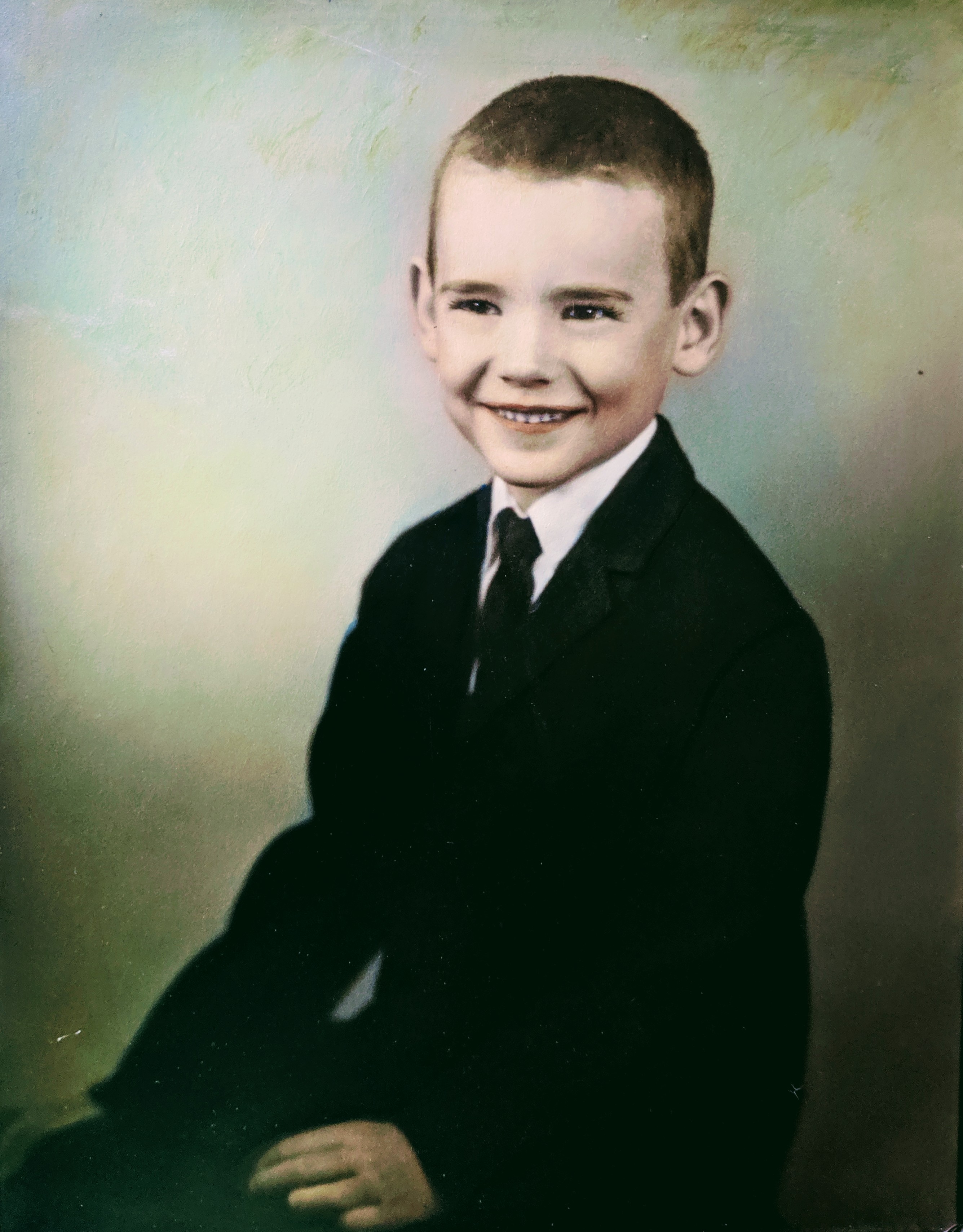
I entered a relationship with Jesus that I was aware of when I was seven years old. I can still see my tears falling into the green gold shag carpet in my preacher father’s study where I said “the sinner’s prayer.” And I think I can still hear the tone in my little brother’s voice when he learned that I had been saved, “I hope it takes.”
Two years later my family moved from Texas to Colorado, and I went to youth camp at the Ponderosa Camp just outside of Colorado Springs. It was a week of learning about Jesus, the proper handling of a .22 and making lanyards for our moms.
Every night we gathered in an open pavilion for a chapel service complete with an altar call. On the last night of the week, I listened to the preacher, but I heard from God. I heard him in my heart. I never heard words. It was more like a whisper—but it wasn’t a whisper of words. You might say it was a “calling.” It was very vague, almost ethereal and I was troubled by it.
I eventually became a preacher. It seemed to be the natural progression in my family. My dad was a preacher. My grandfather had been a preacher. Folks at church would always ask me, “Are you going to be a preacher like your dad?” I don’t remember what I said, but I remember what I felt, “I hope not.” I didn’t want to be a preacher.
But that night at the camp, God whispered to me. He wanted me to pastor his people. I was called to my first church in 1984. I was twenty-six years old. I had no clue what to do. I knew how to preach, but I didn’t know how to be a pastor. That was nearly forty years ago. I have a clue now. And the reason is because God’s grace grew me into who he wanted me to be.
There is a movie called Becket that stars Peter O’Toole and Richard Burton. It’s about how two drinking buddies change over time. Peter O’Toole plays the character Henry II and Burton plays Thomas Becket. Becket was a low-level priest and loved his friendship with Henry.
Though a priest, Beckett was corrupt just like Henry II. He was just as hotheaded and sensual as Henry.
Then one day the Archbishop of Canterbury died, and Henry thought, “I’ll make Thomas the Archbishop of Canterbury! Thomas is just a regular guy. He’s not going to tell me how I have to live my life. He will not oppose me in any way. He’s just a regular guy. Finally, I’ve solved the problem of church/state relations.”
So, he makes Thomas Becket Archbishop of Canterbury.
But something happened to Thomas Becket. Thomas is shaken because he knows that even though it has come through Henry for all the wrong reasons, and even though he’s completely corrupt and completely unholy and completely unworthy and completely unqualified, now he is the bishop of England. He suddenly realizes a sense of the call of God in his heart. He realizes how unworthy he is of it, and it changes him.
He becomes a good person. A man of integrity. He begins to represent the gospel. He begins to call out Henry for the things he’s doing wrong. This infuriates Henry. He is filled with conflict because he loves Thomas, yet now he’s so mad at him because Thomas has become a good man. He grew into his calling.
Finally, one night in frustration, Henry says out loud to his knights what he had been thinking in his heart, “Who will rid me of this meddlesome priest?” The four knights look at each other, and they strap on their swords and go to the cathedral.
As the knights approach Thomas with swords drawn and he realizes they are there sent by Henry to assassinate him, he says with no guile, “Poor Henry. Poor Henry.”
The call had made him holy. The call had made him like Christ when Jesus said, “Father, forgive them for they know not what they do.”
That’s what the call of grace does to our lives. God’s grace qualifies us for God, and it changes us. We spend the rest of our lives living into and out of our calling.
And now you will excuse me because I have to work on Sunday’s sermon.

 Field Notes On The Jesus Way
You must be logged in to post a comment.