
The grass withers, the flower fades; but the word of our God will stand forever. Isaiah 40:8
It’s an interesting truth about us that we don’t like to think much about death, but we spend a lot of money when it happens.
I did some research this week on the funeral industry. I read a market analysis by an MBA in the coffin business. He is very optimistic because of the increased number of people who will die in the United States over the next thirty-five years. He said the “growth in the deceased” forecast continues each decade, peaking at 18.1% between 2030 and 2040.
Because “Boomers” want to go out in style, one of the growing trends is the “Designer Casket.” These can cost up to $20,000.
There are “University Caskets” that can be made in the colors of your Alma Mater, and you can get your school logo on it. These were sold at Ohio State University at a Homecoming Game.
When they say “Homecoming” at Ohio State, they really mean homecoming!
Does anyone recognize the name “Mel Blanc?” He was the voice behind all of the cartoon characters in Looney Tunes. At the end of every movie, you would see Porky Pig come on the screen, and he would always say the same thing: “That’s all, folks!”
A few years ago, Mel Blanc died. Do you know what his family put on his tombstone? “That’s all, folks.”
Which is true? He is risen indeed, OR That’s all, folks?
Does death mean that the show is over, or is it possible that somewhere the real show is just starting?
Today, I want to talk to everybody who needs to know about the show that starts after death. In other words, I want to talk about hope.
For some of you, life may be going great this Easter, and everything is up. I hope that’s true, but I know many folks for whom that isn’t true.
I think about a couple who have been married for twenty years, and their marriage is melting like an ice cube on a hot summer day.
I think about a man I know who is suffering incredible pain in his body and has no end to that pain in his future.
I think about a young person I know who is not at all sure there is a God or there is a hope.
I want to talk especially today to some of you who might have thought, “I’m not sure I want to go to church on Easter.”
If that is you this morning, I want to remind you that the first Easter did not come to happy, well-dressed people for whom life was going well. It came to people who had just lost their leader and their hope. They were frightened, confused, afraid, and disappointed.
We need a hope that is not glib, that is not superficial, and that is not just human. If it were just about our circumstances, we wouldn’t need Easter if we could engineer hope.
The Truth
Life is brief. Isaiah and his people, Israel, lived in really dark times politically and economically. They were suffering. The ancient superpower, Babylon, oppressed them. Things were really bad, and Isaiah wanted to tell them words of comfort and of hope, but he was given this odd message.
A voice says, “Cry out!”
And I said, “What shall I cry?”
All people are grass… Vs. 6
It’s an odd message to give folks in a dark place, but it’s true. Whether you believe in the Bible or not, it’s just true. We live in a culture that doesn’t talk much about death or really serious matters. We kind of live in denial of it. But the death rate among humans is hovering right around 100%.
I don’t know that there’s ever been a culture that has spent more money on death and less time and attention to what comes after death.
But that hasn’t always been true of us. For many generations, when parents would tuck their children in at night, they would have them say a little prayer. Many of you know this prayer:
Now I lay me down to sleep, I pray the Lord my soul to keep.
If I should die before I wake, I pray the Lord my soul to take.
That’s not a very cheery way to send kids off to bed. There’s a second verse:
Our days begin with trouble here, our life is but a span.
And cruel death is always near, so frail a thing is man.
Night, night, honey—pleasant dreams.
People used to teach their kids to pray this because people wanted their children to know that death is real, but it’s not the end.
Isaiah says, “Don’t put your ultimate hope in human sufficiency, ingenuity, or strength!” When he said this, these people were living in the shadow of Babylon’s wealth, splendor, power, and ambition—the best the earth offers. People in Babylon believed that Babylon’s glory would last forever.
Did it? Do we have any Babylonians here with us this morning? Notice it didn’t last as long as they thought it would. Of course, America is different. Aren’t we much smarter than the Babylonians were? We have technology, the glory of America. The Bible says all flesh is as the grass.
You don’t have to believe the Bible. Just look around.
- The fastest athlete in the world will eventually be defeated by arthritis.
- The most beautiful supermodel in the world will not be on the cover of the Sports Illustrated swimsuit issue when she is 97.
- Wealthy, powerful CEOs get betrayed by their bodies, and they die.
All flesh is as grass. This is important because we live in a culture that denies this.
The Ache
All flesh is grass;
their constancy is like the flower of the field.
The grass withers; the flower fades. Vs. 6b-7a
Grass is here today and gone tomorrow. We’re that way, but here’s how we differ from grass.
The Preacher says,
[God] has made everything beautiful in its time…He has put eternity in [our] hearts… Ecclesiastes 3:11
The grass doesn’t know it’s here today and gone tomorrow. No other creature carries this glory and this burden.
There is a cave in New Zealand filled with thousands of phosphorescent glowworms, which light up the inside of the cave. These worms spend most of their lives as larvae. Amazingly, they have no mouths when they finally hatch and get their wings. They have no way to feed. They only live for one single day. They get one day to fly. They get one day to attract a mate, get married, have children, and then they die. One day.
The grass is here today and gone tomorrow. We’re different. We have a radar for eternity.
- You have a longing for security that this world can’t provide.
- You long to be known fully, completely, utterly, and loved perfectly in a way nobody on this earth can offer.
- You have a longing for healing that no therapist in this world can give you.
- You hunger for meaning that no mere achievement on this earth can bestow.
God has placed eternity in the human heart.
Back in 2013, I met many fascinating people on the Oregon section of the PCT through the Cascade Mountains of central Oregon. They were from different professions, socio-economic stations, and foreign countries like Switzerland, Finland, Australia, Ireland, and Texas.
I met a young woman named Megan. She had long brown hair with strands of gray streaking through her braids. One afternoon, I saw her sitting in the shade, trying to cool down in the 93-degree heat and reading a Steinbeck novel. We chatted briefly about Mr. Steinbeck, and then I moved on.
We kept meeting and having clips of conversations about life on the trail for about 60 miles. Once, a few of us were stopped at a stream, and she mentioned her father dropped her off at the trailhead in northern California. I asked a typical male/father question—“What does your father think of you hiking the trail all alone?” She looked defiantly at me and asked, “What does your father think of you hiking the trail all alone?” I might have offended her, so I said, “He’d be jealous.” She said, “Yeah, my dad is jealous too.”
Another time I asked what she did away from the trail. She said she was a Sustainable Transportation Planner and Program Developer for a small college in Monterrey, California.
“Huh?”
She repeated herself, but this time slower. “I’m a small college Sustainable Transportation Planner and Program Developer.”
I smiled like I knew what she was talking about and said, “Tell me more.”
“I advocate a vision of a transportation system that reduces greenhouse gas emissions, moves the most people in the least space with the least energy, and promotes public health through exercise.
“Oh,” I said.
I kept affirming her work of stewarding the environment, and the more I affirmed her, the more she talked.
Finally, she sighed and said, “I want this earth to be alive and well long after I’m gone, and I’ve dedicated my life to make that happen.”
“How long do you think this Earth will last?”
“Not very long if we don’t do our part.”
“I couldn’t agree with you more, Megan. But the law of entropy is clearly at work. As you know, it states that anything left to itself will become more disorganized and more random, like my garage. If I don’t clean it out and put everything away, it becomes cluttered and chaotic after a while. The universe acts in the same way.
“The Earth is not sustainable because the universe is not sustainable. But we want it to be. I certainly want it to be. But the best minds this world has ever produced have said it will one day end. Our sun will one day go supernova and burn out. It will all one day end. I believe in doing everything we can to care for it, but ultimately, it is fading away. There is an old Jewish proverb that says, ‘The grass withers, the flower fades, and surely the people are grass.’”
She stared at me and said, “So, are you saying I should not be trying to save the planet?”
“No! Keep doing it! Please do your best to sustain this good earth. I’m just saying that ultimately it is winding down. But you aren’t. You will live forever.”
“What do you mean?” she asked
“Just as thirst proves that there is water and hunger proves that there is food, your passion for a sustainable earth demonstrates that you have eternity in your heart. You long for significance, you long for sustainability. It is in your DNA. Taste the huckleberries at your feet, look at Mount Jefferson, and listen to that woodpecker rapping away on that tree…you are similar yet very different. You have sustainability in your soul.
She blinked and asked, “Who are you?”
I smiled and said, “I’m a Soul Sustainability Transportation Consultant and Program Developer for a small group of faith pilgrims in Washington State.”
She just stared at me.
“I’m just teasing you, Megan. I’m a pastor. And I work hard to awaken the sustainable. I hope you will continue to do your good work and listen to what your soul is trying to tell your head.”
“Okay,” she said. “Do you have any extra coffee?”
That was her signal that she was ready to change the topic.
God put eternity into your heart, and every one of us has those moments, those quiet moments, those still moments when we hear an eternal echo,
- It might be at a funeral, and we are faced with the mystery of death.
- It may happen when I go for a walk, and I see flowers that are so glorious but that are here today and gone tomorrow, and I wonder what it is that I feel.
- Or when I listen to a piece of music.
- Or when I read something of moral beauty.
I love the way Dallas Willard describes this dynamic,
“You are an unceasing spiritual being with an eternal destiny in God’s great universe.”
This is just true…but I’m also like grass. I’m going to die. You’re going to die. God didn’t plant death in the human heart. It’s very interesting in the text. It says God planted eternity in the heart. Death is not the way we were supposed to be. Death came because of sin, and that includes my sin, and I’m going to have to face a holy God on a day of reckoning, and I have not lived up to the standard of his holiness. Not by a million light-years.
Human self-sufficiency is not going to get me out of this one. All the king’s horses and all the king’s men, as well as all the creativity, innovation, and pride of America, are not going to innovate us out of this one.
If you do not have a hope bigger than death, you don’t have any hope at all; that is why God made a way.
The Hope
The grass withers, the flower fades;
but the word of our God will stand forever. Isaiah 40:8
That last phrase is a signpost if you are over fifty; if you are under fifty, think of it as a hyperlink. When we click on it, we see that Isaiah is pointing to something.
In the gospel of John,
In the beginning was the Word, and the Word was with God, and the Word was God…And the Word became flesh and lived among us. (John 1:1,14)
Just like my words this morning express who I am, Jesus is the expression of God, the incarnation of God. The eternal Word became flesh.
But I thought Isaiah said that all flesh is like grass. Temporary. Disposable. It dies.
Yes, and that’s the point.
- Jesus humbled himself.
- He took on the very nature of a servant.
- He lived among the poor.
- He washed the dirty feet of his followers.
- He was struck, and he would not strike back.
- He was hated, and he wouldn’t hate back.
- He was cursed, and he wouldn’t curse back.
- He was rejected, and he wouldn’t reject back.
- He was held in contempt, but wouldn’t have contempt for anybody.
- He was condemned, and he gave forgiveness.
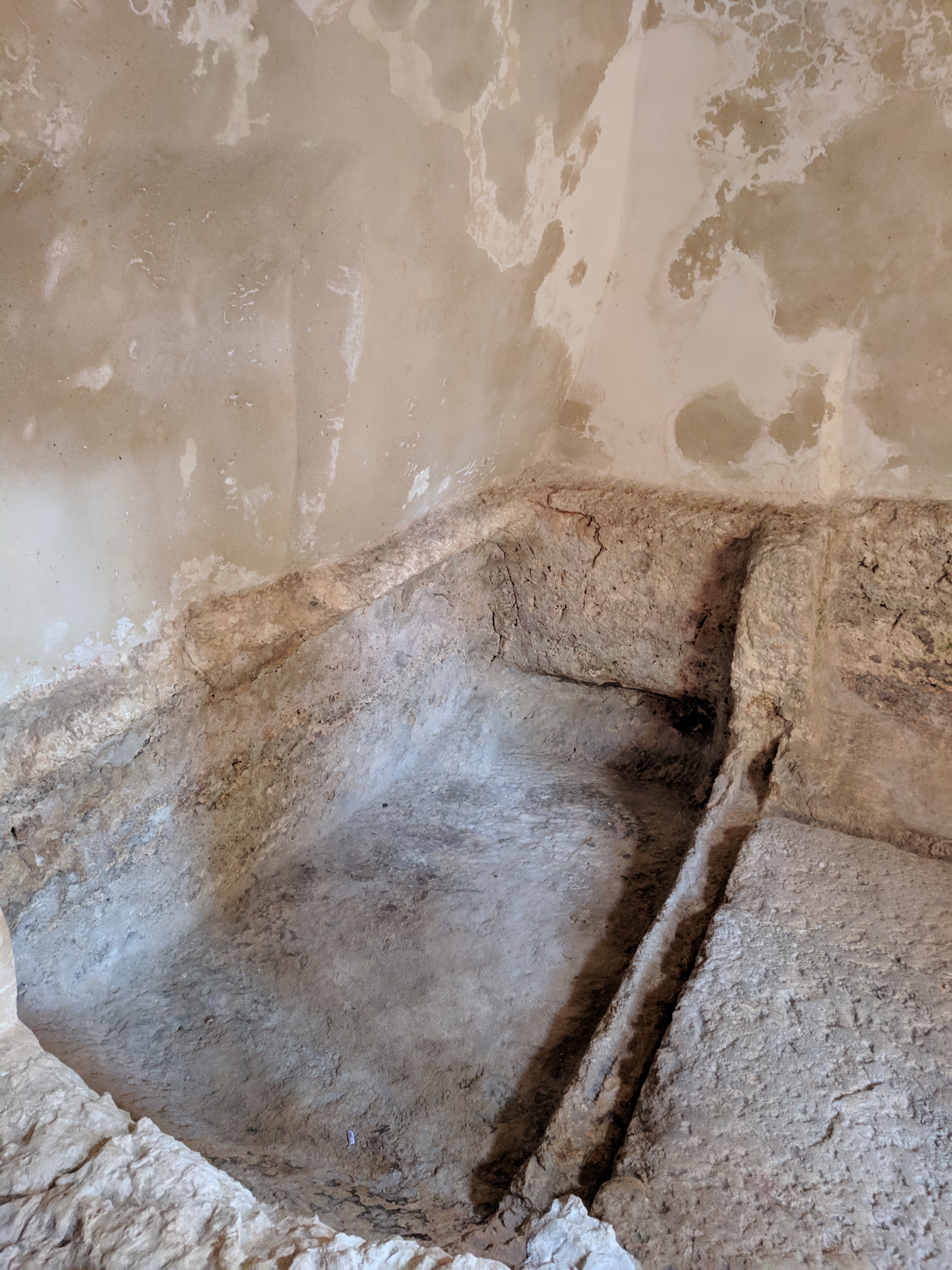
You understand that in this man, Jesus, the Word became flesh. They whipped him until he bled, put him on a cross, and hung him until he died. They laid him in a tomb, and they sealed it with a stone.
All flesh is as the grass. It’s always been that way. Then they said, “That’s all, folks!”
But on the third day, Jesus said, “I want my life back.” The stone rolled away, and the tomb was empty.
Eternity invaded history, and death was defeated.
There’s a great story about Churchill when he was a relatively young man. He was at a dinner party, and there was a woman, Lady Violet Ashworth, who had become a lifelong friend. It was the first time she had met him, and she said that for a long time, he just ignored her. Then finally…Churchill, a very colorful character and very ambitious… turned to her, and his first question was, “How old are you?”
She thought that was odd, but she told him. Churchill said, “I’m 29 already. Older than anyone else who counts, though.”
Then he started talking about all he wanted to do and just went on this diatribe.
“Curse our mortality. Curse ruthless time. How cruelly short is the allotted span for all we must cram into it? We are worms. All men are worms. We are all just worms, but I believe I am a glowworm.”
But even the glowworm has a day—just a day—to light up the darkness. All flesh is as the grass. Eventually, Churchill died on January 24, 1965, and they held his funeral, the end of maybe the most remarkable life of the twentieth century.
They finished the ceremony. Everybody thought it was all done, but after they thought it was done, to their surprise, there was a bugler up in the dome of Saint Paul’s. The bugler began to play. Just one single bugle playing “Taps.” That song in the army that says, “Day is done…” Darkness has fallen. It’s time for sleep.
The last note died out, and they thought, “Now it’s all over,” but on the other side of the dome, another bugler got up and played “Reveille,” the song of the morning,
“It’s time to get up. It’s time to get up. It’s time to get up!
And so, Mountain Heights, always remember that God has placed eternity in your heart, and because of the open and empty tomb, that even though all flesh is grass, that’s NOT all, folks!

 Field Notes On The Jesus Way
You must be logged in to post a comment.