How to Beat the Devil

“Let all bitterness…be put away from you.” (Eph. 4:31)

It was late at night and on the way to the hunting camp, I got lost on an old logging road and was running low on gas. I began to think about how I could get some white gas out of my camping stove before I ran out when I downshifted and snapped the stick shifter off inside the console. I couldn’t believe it. I was so furious that I ripped the console off the floorboard and found that I could still shift the one-inch nub.

I was almost there and traveling entirely too fast for the rugged terrain when I hit a rock that jarred the jeep so hard that it bent the rim and popped a bulge the size of a baseball on my right front tire.

The force knocked my battery out of its place over onto the alternator where the spinning pulley acted as a skill saw and cut a gash into the side of the battery spraying battery acid over the entire engine. Steam spewed from the acid on the hot engine block, but I was there. I was a bit harried and edgy, but I was there.

In my hurry to leave Denver, I hadn’t taken time to buy a hunting license. I had planned to go down to Meeker the next day to buy a bow hunting license, but it was opening day and I decided to go to town in the afternoon. The odds of me killing an animal were virtually negligible and the possibility of being caught without a license this far back in the woods was very low. We set out about 4:00 in the morning. We didn’t see deer all morning and mid-morning decided to go back to camp for breakfast.

As we topped a little hill, there was a green game warden truck parked at a gate.  When we got close, he asked to see our hunting licenses.  I froze.  I didn’t have one. The game warden checked my arrows for blood and hair.

He began to write me a ticket for hunting big game without a license (a $750.00 fine and no hunting for years in Colorado) I was embarrassed and ashamed. Especially when he asked me what I did for a living. I told him I was a pastor and that bought me a little grace, I reckon. He reduced the ticket to hunting small game without a license that carried a much less severe penalty.

As I was leaving the camp and coming down the mountain, I turned a corner and hit an oncoming Nissan Pathfinder head-on.  No one was hurt, but I couldn’t drive my jeep.  The entire front end was caved in. I had to walk about a mile back up to the hunting camp. I was embarrassed to ask for a ride down to a payphone to call for a tow truck and the Colorado State Highway Patrol.

The Trooper arrived and began to fill out paper work. He asked me what I did for a living—I sighed. He cited me with a traffic violation and offered to give me a ride into Meeker.

The Trooper’s son was serving in the Army and this was during the first Gulf War. He was worried about his boy. He and I talked about that for several miles and then when he stopped the cruiser to let me out at a café, I asked him if I could pray for his son. His eyes brimmed with tears and nodded his head. I prayed and he said, “Pastor, you may think this was a bad day for you, but it was a great day for me.”

“Grrrrrrrr,” I thought.

It was a Saturday evening and I was scheduled to preach the next morning and so I needed someone to make the 3-hour drive to come to get me. I made the call for my ride, slid into a boothe in the cafe to get a bite to eat, drink coffee, and study my sermon notes for the next morning. I took a deep breath, sipped some bad coffee, asked God for forgiveness for breaking the law—thought about the events of the last few days, the trauma, the disobedience—my poor jeep…

Dejected, I cried out, “Lord Jesus Christ, Son of God, have mercy on me, a sinner.”

And then do you know what I did? I started laughing. If you had been there you would have thought that I had finally and completely lost my mind. I laughed until tears rolled down my cheeks. It wasn’t bitter laughter, nor was it the laughter of cynicism. It was a free and freeing laughter.

What else could I do? When I finished laughing, I noticed a difference. My situation was still as bad as it had been before. Nothing had changed—except me.

Satan hated my laughter. He had some plans that were thwarted by it. He wanted to make me bitter. But because the laughter reflected my acceptance of suffering, it made him bitter.

Better him than me, I figured.

Posted in Uncategorized | Tagged , , , | 1 Comment

The Brutal and Beautiful of Being a Dad

This past month I wrote each of my adult sons a five-page letter. In it, I described my regrets as a man, husband, and father. But I also tried to express to each of them my heart for them.

What I am learning is that the people we love the most need to know our hearts. They need to hear or read words that penetrate the surface and go beneath the waterline. This is risky, I realize. Much can be misunderstood at that level of vulnerability, but life can also be infused into the hearts of those we love.

I try to do that with Lynette frequently, but this past month decided to do that with the men who are my sons.

Joe and Steve

Recently my friend Steve Smith and I sat down to talk about the adventure of being dads. We talk about what we did wrong, what we did right, and then offer a blessing to fathers and the women who love men.

You can listen to it here: Potter’s Inn Soul Care Conversations

And remember—you are the beloved of God.

Posted in Uncategorized | Tagged , , , , , | Leave a comment

It’s Your World, We’re Just Trying To Live In It

Hubris, noun

an extreme and unreasonable feeling of pride and confidence in yourself:

“Hubris brought him down in the end.”

—Cambridge Dictionary

As a young man, I felt that one of my great strengths was my self-confidence. I felt that my ability to accomplish my agenda by the sheer force of my will and personality was a virtue. I remember sizing people up as to how much effort and energy I needed to expend in them was proportionate to their potential in helping my organization grow or become more efficient.

When we view people only in terms of their potential, we commodify them. And the moment that happens people become pawns on our chessboard. That is not much different than pornography—where we reduce image-bearers into objects for our pleasure or gain.

This all stems from the notion that it is my world, and everyone else is a satellite in my solar system and they exist to orbit around me. This myopic attitude cannot be remedied easily.

The ancient Greeks considered hubris a dangerous character flaw capable of provoking the wrath of the gods. In classical Greek tragedy, hubris was often a fatal shortcoming that brought about the fall of the tragic hero. Typically, overconfidence led the hero to attempt to overstep the boundaries of human limitations and assume a godlike status, and the gods inevitably humbled the offender with a sharp reminder of his or her mortality.

Let’s imagine some of the benefits of humility:

Humility Stands Against Ambition

It’s one thing to work hard in seasons, but to habitually work hard is a response to inner emptiness.

Read these biting words by Eugene Peterson:

I am busy because I am vain. I want to appear important. Significant. What better way than to be busy? The incredible hours, the crowded schedule, and the heavy demands on my time are proof to myself and to all who will notice that I am important.

Driven people frighten me. I know that pathology personally and it is destructive. It does violence to the soul and to the people in my life. To love God is to arrange my life around the gravitational grace of the sovereign God of the universe. It is there that I will find rest—and so will everyone else.

Humility stands against Condescension

Condescension is a certain disdain for people. It is a feeling of superiority. It is to look down on people who have not achieved what I have achieved, or who have inferior life-management skills to mine, or who simply haven’t attained the maturity that I have. It is to feel as if I have the right doctrine and everyone else is stumbling in the dark and headed for eternal ruin and probably taking lots of people with them.

I used to be so sure of my doctrine when I was a young man that I felt compelled to police everyone’s beliefs. Getting people to conform to my view of correct doctrine was arrogant and it was not very compelling. Love says that who you are is more important than what you believe. There are heresy hunters afoot these days and I am their frequent prey. When we correct beliefs before we listen to the hearts of our brothers and sisters we do great violence to the body of Christ.

I love the way the late Rachel Held Evans put this, people bond more deeply over shared brokenness than they do over shared beliefs.

Humility Stands against Willfulness.

The need to always be right. These are the people who will say I’m often wrong but never in doubt. They have a hard time ever taking advice.

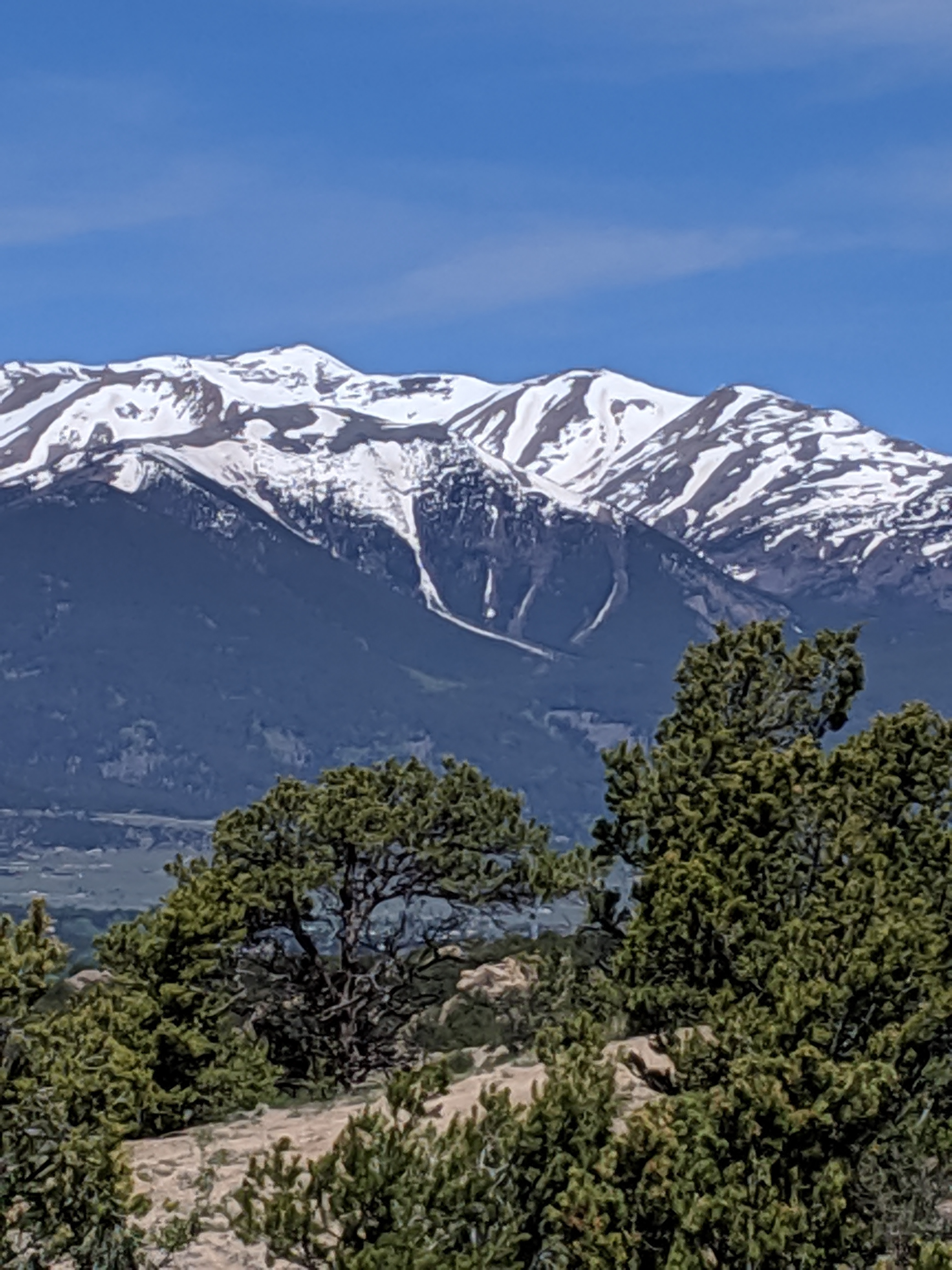
A thirty-six-year-old man from another state came to see me last year and as we were driving from my study to get lunch, he marveled at the beauty of the mountains in our valley.

Then he said, “What ski resort is at the base of that mountain over there?”

I said there was no ski resort there.

He said, “But look at those ski runs coming down that mountain.”

“Those are avalanche shoots,” I said.

“Oh,” he said.

Five minutes later he asked a second time, “Are you sure those aren’t ski runs?”

Humility Stands against Self-Consciousness

Self-consciousness is thinking of yourself all the time. It’s being preoccupied with yourself. How am I going to get this done? What are people going to think of me? How are they going to treat me? How do I manage perception here, there, and everywhere?

True humility is not thinking less of yourself; it is thinking of yourself less. — C. S. Lewis

When I fill myself up with the love of God, I am typically not hungry for the love of self and the approval of others. But if I don’t, then I am ravenous in my soul and people look good enough to consume because my empty ego is like a roaring lion seeking whom it may devour.

That’s why starting my day with God-time and times of reflections during the middle and the end of my day is so helpful in assuaging my unhealthy appetites.

The only answer to hubris is humility. And the only way to get humility is worshiping the living God down deep inside the soul.

Let an old first-century hymn captured by Paul in his letter to first-century Christians help you see the path to humility,

Let the same mind be in you that was in Christ Jesus,
who, though he was in the form of God,
did not regard equality with God
as something to be exploited,
but emptied himself,
taking the form of a slave,
being born in human likeness.
And being found in human form,
he humbled himself
and became obedient to the point of death—
even death on a cross.

The way up is the way down.

Posted in Uncategorized | Tagged , , , , | Leave a comment

A Feather of Faith

In Manassas, Colorado our denomination owns a piece of property in which we are trying to plant a church. But the way the underground aquifers are in that part of the San Luis Valley, the water table is relatively close to the surface so the building is elevated on concrete stem-walls because during wet years the underground water will seek to join the surface water. But for most of the year, the water is below the surface of the ground and the building appears to be sitting on stilts waiting for a flood.

However, during the driest of years there is still a hint of green all around the building because even though water may be scarce above ground, there is plenty of water just below the surface. So, when the year is wet, like this year, the vegetation is even lusher around that church building.

African American pastor Howard Thurman wrote a poem about the inner you. He says, There is in every person an inward sea.

I like the way Dallas Willard defines joy:

Joy is not the mere sensation of pleasure — it is a pervasive, constant, and unending sense of well-being that flows from vision, peace, righteousness, and hope. True joy is robust. We can experience the joy of being in God’s kingdom even in the midst of suffering and loss.

Like the subterranean source of water at that church in Manassas, there is growth even during times of drought.

The prophet Jeremiah helps us,

Blessed are those who trust in the Lord,
whose trust is the Lord.
They shall be like a tree planted by water,
sending out its roots by the stream.
It shall not fear when heat comes,
and its leaves shall stay green;
in the year of drought it is not anxious,
and it does not cease to bear fruit. Jeremiah 17:7-8

If you want to know the joy of the Lord you have to go after knowledge of God in the Bible. You have to pursue it. It won’t’ just drop into your heart from above.

But there is an additional way to learn more about God…

I have been practicing this method for years and if you practice it consistently it might change your life. If you will commit to this practice for thirty days, you will be shocked at how much joy you will discover bubbling up through the fissures of your life. My friend Steve Smith talked about this on a recent Potter’s Inn Soul Care Conversation. I’ve adapted portions here:

Praying Backwards

At a set point in your day, review the last twenty-four hours of your life. Try to really notice things. And in a journal or in conversation with your spouse or friend discuss the following:

Express Gratitude. Gratitude helps us find God in all things, places, and people. Try to express your thankfulness for what you have experienced in the last twenty-four hours.

Notice and discuss the Brutal of your day. This is the felt absence of God. This is when you do not see God working in your heart. These are the events which caused anxiety, self-preoccupation, distress, fear, upset feelings.

Notice and discuss the Beauty in your day. This is the felt presence of God. These are the places where you experienced joy, happiness, peace, satisfaction, blessing, well-being in your day.

Blaise Pascal worried that the biggest threat to the spiritual life for folks in his day was their relentless ability to distract themselves from thinking about God.

Your joy comes from what you know to be true about God and what you take time to see—really see.

Read this poem slowly, out loud.

Feather at Midday

By Sister Dang Nghiem

If I had not stopped to watch a feather flying by,

I would not have seen its landing–
a tiny pure white feather.

Gently, I blew a soft breath
to send it back to the spring.

If I had not looked up to watch
the feather gliding over the roof,
I would not have seen
the crescent moon
hanging at midday.

Now, read it aloud again, this time even slower.

You can experience the presence of Jesus if you will take steps to see and not just hope you feel something from time to time. Knowing God requires investigation not only of His Word—but of your life. It requires intentional noticing. Joy comes to the surface through the upsurge of love from the hidden aquifers of Living Water inside me.

That happens when you pray backwards.

Posted in Uncategorized | Tagged , , | 1 Comment

A Confusing Jesus and Learning from Women

But (Jesus’ parents) did not understand what he said to them. Luke 2:50

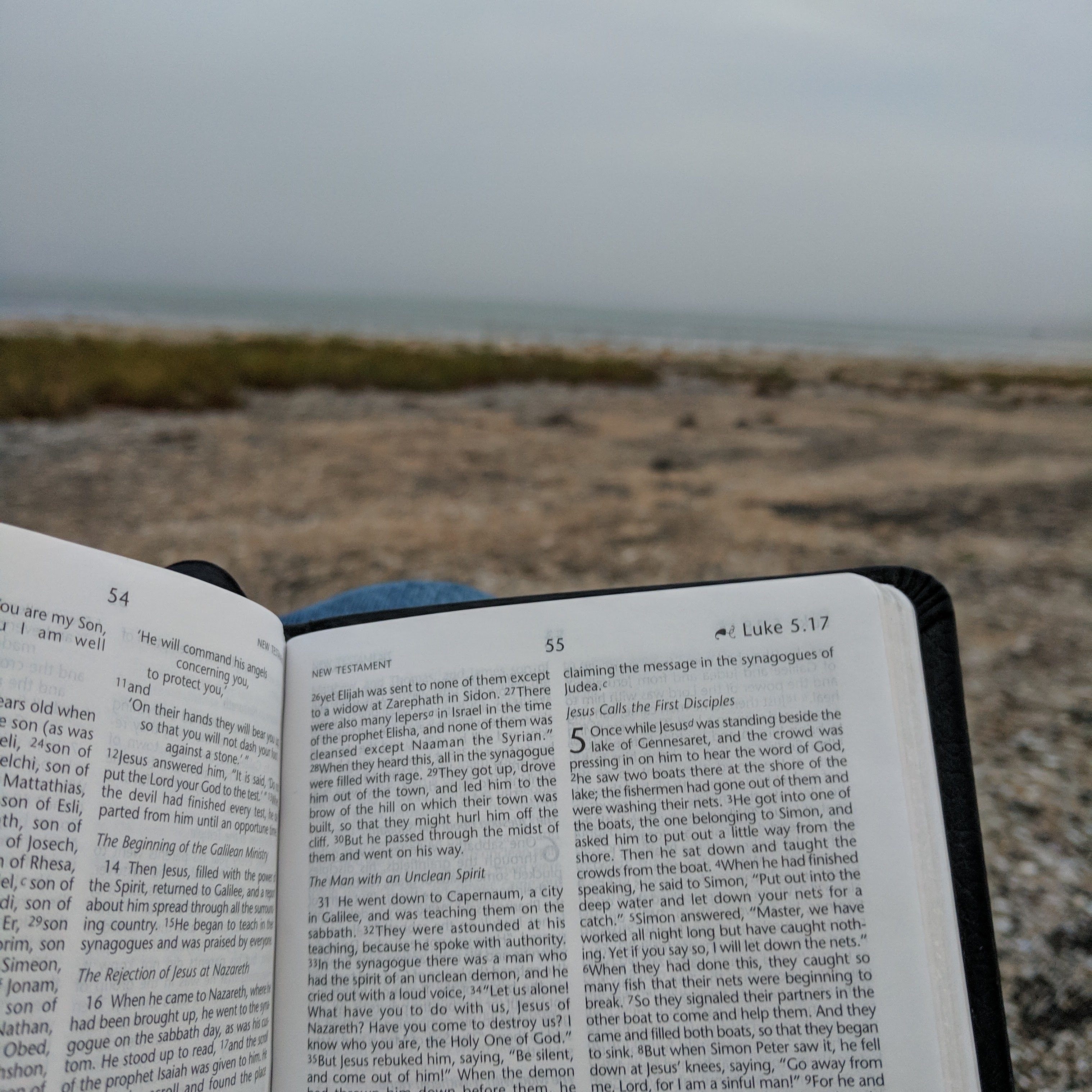
I woke up especially early, got dressed, made myself a hot cup of coffee, kissed my sleeping wife on the cheek, and walked out into the pre-dawn morning. I remembered that the shore to the Sea of Galilee was about a hundred yards down from our hotel room and started walking that way. With my journal and Bible, I made my way down to the shore. I stopped and grabbed a plastic chair and continued.

Sea of Galilee Lectio Divina

I sat the chair down and opened my Bible to Luke chapter five where Jesus called his first disciples from a boat on the sea in front of me. I could hear the waves gently lap against the shore. The morning breeze rustled the tall reeds beside the shore. The air was warm and moist. The sun started to paint the eastern sky a pastel pink. It was a once in a lifetime moment.

After I read the story, I opened my journal and began to scribble the scene I just described to you when I felt a familiar irritating sting on my arm. I looked down and saw a mosquito swelling with my red blood.

And, honestly, my first thought was, “Really, Jesus? Did they dare bite you when you walked these very shores? Did you ever slap one and kill it? Or did you let it, and its kin, just poke you full of holes like a pin cushion? Why did you create these things?”

My irritation was small that morning but, if I’m being honest, my confusion about Jesus was real.

I have some confusion when it comes to Jesus. From mosquitos to tsunamis. From pain and suffering to the age of the universe. If the universe is really only 6,000 years old, why did he make it look so old that it confuses the scientific community? Does he really not want women to speak in Church?

Do you ever find yourself completely baffled by Jesus?

My wife, Lynette, recently applied for a teaching position in the very school she had a long-term sub assignment for ninety percent of the school year. She was very hopeful that because of her working with the team that would interview her and decide whether to invite her to work fulltime with them she might have a reasonable shot.

She interviewed and was turned down.

Not going to lie, that hurt her. It hurt me, too. I prayed that Jesus would give her that job, not so much for the job, but so that she would not feel the rejection from the very people that she worked side-by-side with for months and months.

I remember we both sat in her car and commiserated for about forty-five minutes. All kinds of questions floated to the surface of our conversation. Questions of identity for her. Questions of if God was punishing us. Questions of why God seemed to be withholding financial, healthcare, sense of purpose, and dignity from Lynette.

We were hurting.

It felt like Jesus was letting us down. Of course, our heads knew better. Of course, our history together with Jesus for nearly forty years would tell us differently. But our hearts were hurting in that red car in front of our house.

What do we do with this hurt? We keep putting our trust in the Jesus that confuses us. That’s what Lynette does, and that’s what I am going to do too.

I love the story where Jesus and the disciples are in the boat and a storm comes up threatening to swamp the boat and yet Jesus is sound asleep. They say, “Jesus, don’t you care that we are all going to die?”

Jesus rubs his sleepy eyes and groggily says, “Where’s your faith?”

One writer pointed out that they weren’t thinking clearly. They already knew enough about Jesus to know better than to be this afraid, but they weren’t using the faith that they already possessed. See, their premise was that if Jesus loved them, he wouldn’t let storms happen to them.

They should have known by this point in their walk with Jesus that he did love them. And, of course, if they don’t feel loved by Jesus then it can only mean that they are not loved by Jesus, right?

I am learning something my friend Timothy Moore told me years ago, “Feelings are damned liars. Enjoy them when you can, but never trust them.”

I find some comfort in the knowledge that I am not the only person that has ever been confused by God. Mary and Joseph were puzzled that twelve-year-old Jesus would linger in the Temple while they went home to Nazareth—pushing them into a panic. The disciples that spent 24/7 with Jesus for three years were so often confused by Jesus I don’t have time to list them here. Paul couldn’t understand why his infamous thorn in the side was never removed.

And if you look through the foliage of the Garden in Gethsemane you would see Jesus wrestling mightily with the thought of the cross and you might wonder if Jesus was baffled by God when he asked for the cup to pass from him.

When Mary was scolded by the twelve-year-old Jesus for wondering where he was and causing her to worry herself to death, Luke tells us,

“His mother treasured all these things in her heart. And Jesus increased in wisdom and in years, and in divine and human favor.”

Mary reminds me that it is natural to be confused by Jesus. But she also teaches me that if I would treasure the Jesus that confuses me in my heart, he will grow inside me. And if I do that long enough in this life, then there will come a time when, perhaps, mosquitos will fly away from feasting on my blood singing,

There is power, power, wonder-working power
In the blood of the Lamb
There is power, power, wonder-working power
In the precious blood of the Lamb

Posted in Uncategorized | Tagged , , | Leave a comment

Seashell Radio

I’ve only read the occasional quote by Rachel Held Evans. I’m not familiar with her work in a personal way. I’ve been attracted to other writers since she became popular. But her tragic death this past weekend and the visceral reaction from both friends and enemies on social media has been mind-blowing, to say the least.

There was something about her that is reflected in the way her friends and fans talk about her that makes me wonder and curious. She had no shortage of critics from my tribe on the right. But her impact was and is unmistakable. I am curious about what she has to say. In fact, sometimes I read authors based, not on their work, but on their critics. For instance, I will read almost anyone that John MacArthur tells me not to read or says is a heretic. That says a lot about me, I realize.

(I always test to see if the sign that says “Wet Paint: Do Not Touch” is telling the truth, by the way.)

We live in a strange world in which there are theological brownshirts that will come knocking on your door and tell you that the person you are reading or quoting is not on the approved reading list. I usually find that mildly irritating—a pebble in my shoe kind of thing. But it has been happening a little more frequently to me lately and it makes me wonder if we are drifting into a spiritual dystopian age.

I had a dream one time in which I was given an office in a bookstore and told I could write about anything I wanted and they would promote it on their bookshelves. Even offered to give me an endcap. So, I wrote and wrote and wrote and when I handed it to them they were so sweet and kind and appreciative. They asked me to write some more books. So, I did. Book after book. I gave it to them and they smiled, thanked me and asked me to write more.

One day I took a break from writing and was wanting to check on a quote I wanted to use in one of my upcoming works so I went out into the stacks to find the book. I walked by the section where my books should have been on display. The endcap was empty.

I asked the manager about my books and he smiled sweetly and said that they were wonderful books and that I should write more but that they would never be on the shelves of this store. I asked why and he said, “You believe the earth is round and everyone knows that it is flat. We wouldn’t want your doctrine to corrupt our readers and patrons.”

“Well, I will leave then, ” I said.

I stomped to the front door and found that it was locked. I asked about that. And the manager said, “You must stay here and write books. You can write about anything you want.” He smiled sweetly and escorted me to my writing cubicle.

“Is this a Phillip Dick story?” I asked.

“No. This is a Christian Bookstore,” he said sweetly.

Do I stay in that bookstore, make a deal with the devil and write in such a way as to get my books on the shelves? Or do I take my little geologists hammer and begin to dig a tunnel and hide it behind a poster of Henri Nouwen and break out of that prison where I can write whatever would warm a wandering soul to the love of God?

Perhaps if I read a Rachel Held Evans book she will show me the way.

Posted in Uncategorized | Tagged , , , , | 1 Comment

The Book that We Love

In the beginning was the Word, and the Word was with God, and the Word was God. – Saint John

It has been said that 125 people died for every word of Hitler’s Mein Kampf in WWII. It is a thick book of 720 pages. Words can kill.

I remember what a coach said to me about my body when I was a boy that caused me to be insecure until this day. Words can scar.

A President can give a speech that causes the stock market to soar or tank. A dictator can boast of weapons of mass destruction and war is the result. Words can influence.

A poem written on a napkin and slid across the table can make a heart warm and eyes brim. Words can move us.

I have a note written by my oldest son taped inside my Bible that he sent me on pastor appreciation day many years ago. Every time I read them, my eyes leak. Words can be treasured.

I love words.

I read the little bird tracks across paper, I write them longhand in my journal, and I type them on this computer. I listen to them intoned by a professionally trained actor as he or she reads someone else’s words. I speak them every Sunday morning. I listen to them every day in coffee houses around where I live.

I love words. I love listening to them in a song from a lover or protester. Words can be a salve for a wounded heart.

Words can transport me to another planet when I read C.S. Lewis’ science fiction classic Perelandra. Or, thanks to Larry McMurtry, I can find myself in a dusty border town in Texas called Lonesome Dove. I can laugh at the outrageous characters dreamed up by Flannery O’Connor or feel a tear tracked its way down my cheek at the last scene of John Steinbeck’s The Grapes of Wrath.

In so many ways words are my world.

But no words—written or spoken by great authors—compare with the Word of God to bring lasting change to the culture, guidance to a government, or gentle encouragement to a frightened heart.

My wife and I visited an elderly saint in our Church who had broken her hip and was in the hospital. Her daughter was by her side and waved us in.

We washed our hands, walked in, and when this octogenarian saw me, she raised her spindly arms up, tethered with tubes, as if a small child wanting to be picked up and held. I took her knobby hands in mine and assured her of the prayer support of her church family.

Her chest moved up and down with a deep guttural rasp. Every exhale was loud and labored. There was a wild look of concern her eyes; the look you might expect from someone who was uncertain about their next breath.

Her daughter asked if I had a Bible. I felt a rise of embarrassment flush my face and shook my head.

“She’s been asking for a Bible and the hospital staff couldn’t find one. Mom wants to read the twenty-third Psalm,” her daughter said.

“Well, I think I might be able to recite most of it,” I said with more confidence than I had any right to possess.

I put my right hand on her warm forehead and held her hand left hand and began to recite, “The Lord is my Shepherd, I shall not want.”

The precious saint closed her eyes and her breathing slowed. I continued, “He maketh me to lie down in green pastures: he leadeth me beside the still waters. He restoreth my soul…”

Her breathing was as gentle as a baby’s now. I looked at her daughter and tears were streaming down her face.

I continued,

He leadeth me in the paths of righteousness for his name’s sake.
Give us this day our daily bread. He anointeth my head with oil.
Forgive us our trespasses as we forgive those who trespass against us.
And Yea, though I walk through the shadow of death, I will fear no evil:
Surely mercy and goodness shall follow all the days of my life
For Thine is the Kingdom, the power and the glory forever. Amen

I glanced at my wife and her head was cocked to one side like a puppy listing to a squeaky toy. I knew I had botched the verses.

“Did that sound familiar?” I asked the saint. Her eyes grew misty and she slowly nodded her head.

I tried to wrap up the visit so we wouldn’t tire her out. She grasped my hand tightly and said, “Pastor, I have confessed all my sins to Jesus, and I am ready to go.”

I smiled and said, “It’s not the time for that yet.”

She said, “Well, stay or go—either way, it’s fine.”

Her words fell like notes from lover’s ballad to my heart. Words of love and longing. Words of surety. Words of knowing. She knew The Word that became flesh. And that made all the difference.

I love words.

Posted in Uncategorized | Tagged , , , | 1 Comment

The King Has One More Move

He is not here: for he is risen, as he said. Matthew 28:6

For the Christian, death is just a change of address. – Anne Lamott

Do you recognize the name “Mel Blanc?” He was the voice behind all of the cartoon characters in Looney Tunes. At the end of every movie, you would see Porky Pig come on the screen, and he would always say the same thing: “That’s all folks!” A few years ago, Mel Blanc died. Do you know what his family put on his tombstone? “That’s all folks.”

Which is true? He is risen indeed, OR That’s all folks? Does death mean that the show is over, or is it possible that somewhere the real show is just starting?

There is a painting in which Faust is playing chess with the Devil. Faust has only a few pieces left on the board and seems to be check-mated. The expression on his face foretells his doom. The Devil, who seems to be very much in control, has a sneer of glee.

Through the years people would come to the gallery where the picture was displayed and gaze and ponder the hopelessness of the situation. As they would leave, most left with the sense that the artist had captured the essence of their own situation.

Then one day, a great chess master came into the gallery. He stood for hours focused on the painting and specifically the chessboard. Day after day, he would return to study the portrait. Finally, with a shout that disturbed everyone in the gallery, “It’s a lie! You still have a move.”

A man named Moses convinces a nation of oppressed slaves to run away from the most powerful man on earth. Pharaoh sets out after them. They’re standing on the shore with the Red Sea in front of them and the greatest army in the world behind them, and the people say to Moses, Moses, what were you thinking? And Moses says to God, “God, what were You thinking?” But The King still has one more move!

A little boy named David’s up against the giant named Goliath. David is in trouble. He tries to put on King Saul’s armor, but Saul’s a 52-Long, and David’s a 36-Short. He can’t even handle a grown-up’s sword. It looks like Checkmate, but the King still has one more move.

A man named Daniel gets thrown into a den of lions because he refuses to stop praying to his God. The lions are hungry. He’s in there all night. At the first light of dawn, Darius calls down. Daniel tells him that the lions have been put on a “Low Protein Diet,” and he’s fine because the King still has one more move.

This is our great hope. On Good Friday, they tried Him and judged Him; they whipped Him and beat Him; they mocked Him and scorned Him; they hung Him on a cross to die and laid Him low in a tomb to rot the way every human body has rotted ever since death entered this sorry, dark world.

And then they said to everybody, That’s all, folks. The show’s over. Time to go home. Checkmate. But they were wrong because the King still had one more move!

I don’t know what challenges you face. Maybe there is stress at work. Maybe you’re in a marriage that is falling apart, or that has already fallen. Maybe there is a son or daughter, somebody that you love, who is struggling or estranged from you. Maybe you have financial pressures. Maybe you have done the wrong thing, or said the wrong thing, or made a mistake that feels so big it could never be redeemed.

Maybe not. Maybe things are going pretty well, and there is no crisis at all. But there will be one day. The mortality rate is still hovering right around 100%. Whatever you face, whether it’s today or tomorrow, the promise of Jesus to everyone who puts their trust in Him is this: there is hope, even when it feels like “Checkmate.”

That’s not all folks, because the King still has one more move.

Posted in Uncategorized | Tagged , , , | Leave a comment

Unforgettable Beauty

And I will give him a white stone and on the stone a new name. ~Jesus

There is a flower that lives above the tree line in the Rocky Mountains that has captured my heart for almost forty years. It is a flower that can be difficult to find. I shudder at the thought of how many times I might have trampled this raindrop-sized flower under the lugged sole of my boot and have been none the wiser.

I’ve sat at 13,000’, chest heaving, trying to gasp every ounce of oxygen out of the thin air and, while on that tawny carpet of alpine tundra, head between my knees choking back mountain sickness, spied the Lilliputian pinwheel of blue petals and yellow pistils smiling at me in the shadow of my size fourteen hiking boots.

They come from the genus Myosotis, which in Greek means, “mouse ear.” In a German legend, God named all the plants when a tiny unnamed one cried out, “Forget-me-not, O Lord!” God replied, “That shall be your name.” Because the Alpine forget-me-not flourishes on the tundra where the winter wind and snow blow with a fierce intensity, they never grow larger than the top button on your shirt.

In all my years of trekking at altitude, I am filled with wonder when I find this shy flower. And often when I fold my 6’4” frame and kneel down to get a closer look, I whisper something only God would hear, “I see you, little one.”

What has struck me over the years has been how such delicate beauty could survive in such harsh conditions, and I marvel at a Creator-God who would plant it in such inaccessible places. I have no idea how many times I have found the flower and thought God is delighting in his creation. Or to paraphrase Anne Lamott, “God is showing off.”

Showing off to whom? I would be the only person to see it. How many millions of little blue, mouse-eared flowers are never seen by any sentient earth-bound being? He must have made those for His own delight. This is so unlike me. I do virtually nothing for the sake of beauty alone. I never prepare a sermon and want to preach it to an empty church. I never write an essay or a story, hoping no one will ever read it. Any beauty I might try to create, I want to share with others. I want someone to say something laudatory about my art.

However, my ego is fragile, and I’m trying to be larger than I am.

Each flower is the same, at least it seems so to my naked eye. Doesn’t God get weary of the sameness of His creation, no matter how heart-poundingly beautiful it might be? I guess the short answer is, “No.” He continues to do it season after season, mountain after mountain, flower after flower.

Monotony is my enemy—because I am human, and monotony makes me vulnerable to sin. Perhaps it was monotony that made the forbidden fruit look not so forbidden. Maybe it was the monotony that led King David to gaze at a bathing beauty. And perhaps it was the monotony that made the Pharisees fail to see the Creator-God walking and re-creating in their very midst.

Monotony makes me antsy. So, I distract myself with trivial pursuits.

Not God.

G.K. Chesterton wrote:

“Because children have abounding vitality, because they are in spirit fierce and free, therefore they want things repeated and unchanged. They always say, “Do it again”; and the grown-up person does it again until he is nearly dead. For grown-up people are not strong enough to exult in monotony. But perhaps God is strong enough to exult in monotony. It is possible that God says every morning, “Do it again” to the sun; and every evening, “Do it again” to the moon. It may not be automatic necessity that makes all daisies alike; it may be that God makes every daisy separately, but has never got tired of making them. It may be that He has the eternal appetite of infancy; for we have sinned and grown old, and our Father is younger than we.”

Beauty is a reminder of the “appetite of infancy” that is at the heart of our Creator-God. I find myself valuing it, wanting to possess it, and desiring to create it. There is something about beauty that takes us to the place of the innocent delight of being a child. And perhaps it is in that wonder of delight we step into, if for but a moment, another garden coming down from heaven at the end of days.

So, you don’t know my art? Perhaps you don’t remember my name. No matter. Each time I marvel at the beauty of a bashful flower, I remember that it is but a taste of another garden where I will receive my new name.

I will not be forgotten, and neither will you.

Posted in Uncategorized | Tagged , , , , | 6 Comments

The King and his Son

There once was a king who loved being king. He liked sitting on the throne and making decisions. He liked living in the castle; he liked the symbolic functions of his office; he liked visiting the towns and villages of the kingdom and meeting his subjects; liked the authority and power because he could use them to help his people.

Not only did the king like being king, but his people all over the kingdom praised him for ruling so benevolently and wisely. The people knew they could trust their king to do the right thing for them and for the kingdom, and they were right. Because of the king’s wisdom, the kingdom was prosperous and peaceful.

When the king’s son was born, the people put on a great celebration. Now there was an heir! The people knew the king would be a good father and that his son would someday be as great and as wise as his father.

The king loved his son more than his own life. His greatest joy was to spend time with his son. Each evening after the day’s duties were done, the king would go out into the formal gardens behind the castle and play with his son. The thought of those times with his son often made the hard task of ruling a little easier. Sometimes when he faced a difficult decision or had to settle a dispute or complete a project, the king would think, “When this is over, I can be with my son,” and he would smile.

One day the king’s son got lost. It was one of the most tragic days that ever passed in the kingdom. He didn’t mean to get lost. The loved his father as much as his father loved him, and those times in the evening with his father were the happiest times of his young life.

But one day his father had a really busy day and was late for their daily meeting in the castle gardens. So the boy decided to explore. He went on an adventure. There certainly wasn’t anything wrong with that, except this boy was very little and very young, and nobody had told him how easy it is for a little boy to get lost.

It happened before the boy knew it.  He was just walking and thinking about his father when, looking up, he found himself deep in the forest behind the castle. Nothing looked familiar. He was confused and turned around. At first, he was calm because his father would come soon and find him, but, as he waited, he began to see things in the shadows and hear things moving in the brush and he began to panic. Then he began to run. But he didn’t know which way to run. But the more frightened he became the faster he ran. All the while he was running away from the castle. His clothes caught on broken limbs and tore. A couple of times he fell in mud holes, and once he cut himself on a jagged rock.

Eventually the little boy wandered into one of the villages of the kingdom. To be perfectly honest, by that time he looked more like a little street urchin or a beggar than a prince. He would go up to someone on the street, and grab their coat, and pull on it and say, “Mister, I’m the king’s son. Would you help me get home?”

“Sure you are, kid” the man would laugh, “ And I’m his wife.”

“But you don’t understand. I got lost, and I can’t find my father,’ he would say to another.

Most folks simply ignored the little boy, and those who didn’t ignore him laughed at him. Pretty soon the little boy was forced to beg for pennies just so he could buy bread to keep from starving.

Meanwhile, back and the castle, the king spent many sleepless nights looking for his son. He looked everywhere he knew to look, but the boy was nowhere to be found. By morning of that first day the king suspected that someone had kidnapped his son and feared that we would never see the boy again.

The king called all his armies together, and told them what had happened, and sent them into the kingdom looking for his son. He offered great rewards to anyone who could give him information leading to the discovery of his son. But to the king’s great sorrow, the little boy was not found.

Hours blended into days, days into weeks, weeks into months, months into years. The little boy was no longer a little boy; he had grown into a strong young man.

At first he really had thought he was the king’s son, but so many adults had told him differently that he began to think maybe it had all been a dream. After all, adults know those kinds of things. As the years passed, he forgot about the castle and about his father.

Then the young man began to run with the wrong crowd. Murder, stealing, rape—nothing was beneath him. But he was still a prince. If you are a prince (even when you don’t know it), it shows. Eventually the young man became the leader of a gang.  He was meaner than all of his friends. He murdered the most. He stole the most. He raped the most. Years after he had left the castle and his father, the king’s son had become the most wanted criminal in the kingdom.

Then one day, through a strange set of circumstances, the king found out that his own son was the kingdom’s most wanted and notorious criminal. At first he couldn’t believe it, but the more he checked, the more it became clear that he had found his beloved son, and in finding him, the king faced a terrible dilemma.

The king loved his son, but he was also just and fair. He knew if he released his own son who had committed terrible crimes, he would need to release all the others who had committed crimes. That was unacceptable.

And so the king’s son was arrested and brought before a judge who condemned him to be executed for his crimes. The verdict was just. The king’s son was thrown in a dungeon beneath the castle where he had once lived to wait for his execution.

On the night before the young man was to die, the king made his way to the prison beneath the castle. Opening his son’s cell, he walked in and sat on the bunk across from his son. The king sat there a long time looking at his son before he spoke.

“You are my son. Did you know that?”

“Yeah. Someone told me.”

“Have you ever wondered, over these years, about your parents?”

“Sometimes, but I had a good life, and it wasn’t that important.”

“Well, I have never stopped wondering about you—where you were and what had become of you. You have never been out of my mind and heart.

“My son,” the king continued, voice trembling with emotion and tears running down the age lines in his face, “I loved you with a great love, but you became lost. I did everything I knew to do. I sent out my soldiers; I offered a great reward; I have never ceased to search for you. But now it has come to this and tomorrow you are to die.

“But, son, I have decided to allow you to go free.”

With those words, the old king got up and walked out of his son’s cell into the crisp night air.

The young man went over to the cell door and tested it.  WELL, WHAT DO YOU KNOW?  THAT OLD MAN LEFT IT OPEN.

The king’s son quickly grabbed his coat, threw it over his shoulder, and with a cynical smile said: “That stupid old man!! He thinks because he has set me free, I will come back to his castle and be his slave. Well, he is more senile than I thought.” And with that the young man disappeared up the stone stairs and into the night air.

Some two weeks later the king’s son found out what price his freedom had cost. On the day of his scheduled execution, the requirements of the law had been met. His own father had taken his place—he had died that his son might be free.

You probably have some questions: What did the son do? Did he return to the castle and become king? Did he accept his heritage? Did he even care about the price his father had paid for his freedom? Did he decide to obey the law?

I’m not sure because, you see, you are that son.

For while we were still weak, at the right time Christ died for the ungodly. Indeed, rarely will anyone die for a righteous person—though perhaps for a good person someone might actually dare to die. But God proves his love for us in that while we still were sinners Christ died for us. Romans 5:6-8

Posted in Uncategorized | Leave a comment