Living the With-God Life (part one)

…Abide in me and my words abide in you…John 15:7

My son Caleb’s favorite musical group is Switchfoot. He played that music often when he lived with us before he married. He has been to many of their concerts. It’s a good Christian band, and I like them too. They have one song that haunts me. I won’t play the song for you because you might not like the music. But listen to a few lines from the song as I read them to you,

Yesterday is a wrinkle on your forehead
Yesterday is a promise that you’ve broken
Don’t close your eyes
This is your life and today is all you’ve got now
And today is all you’ll ever have
Don’t close your eyes

This is your life, are you who you want to be?
This is your life, is it everything you dreamed that it would be?
When the world was younger and you had everything to lose

Yesterday is a kid in the corner
Yesterday is dead and over

This is your life, are you who you want to be?

Are you who you want to be? If the answer is no, then how can we change? What will change us? I don’t know about you, but I want to be more like Jesus. Do you?

The Word of God is the leaven in your soul to produce life-giving bread for yourself and the world. It’s one thing to read the Bible for inspiration. It’s one thing to read the Bible for doctrinal information. It’s another thing to let these words abide in you.

When I realigned my life with Jesus after years of wayward living, I went to college to study the Bible. I wanted to follow Jesus deeply, but I was having difficulty doing the little things I had been taught were necessary for spiritual growth: Prayer and Bible Study.

Developing the habit of opening God’s Word was extremely difficult. There always seemed to be something else that would distract me. I had no problem reading—I would read all the time—but spending time in God’s Word was extremely difficult.

So, in a phone call to my parents, my dad challenged me to ask the Living Word (Jesus) to give me a hunger for His written word (the Bible). He asked me to pray daily for Jesus to give me that hunger for His Word. I must have put up a little resistance because he reminded me of the scripture that says,

If you abide in me and my words abide in you, ask for whatever you wish, and it will be done for you. (John 15:7)

He asked, “Joe, do you think it is God’s will for you to get to know Him through reading his Word?” I said, “Yes.” Then my dad said, “I can promise he will grant you the answer to your prayers. Ask him to give you a hunger for his Word. Ask it every day for thirty days and see what happens.”

I committed to that in the spring of 1979. I prayed that prayer for thirty days straight.

Nothing changed overnight. But, in time, it began to take root. And I can confidently say that there have only been a handful of days in those 45 years that I haven’t spent time in God’s Word, even when I wasn’t pastoring God’s Church and needing to write a sermon every week.

So, if you struggle to consistently spend time with Jesus and his Bible, perhaps you would do what I did 45 years ago and pray that God would give you that hunger. He wants to meet you personally through his love letter to you.

The Psalmist helps us.

Blessed is the man
Who walks not in the counsel of the ungodly,
Nor stands in the path of sinners,
Nor sits in the seat of the scornful;
But his delight is in the law of the Lord,
And in His law he meditates day and night
. Psalm 1:1-2

The Hebrew word “meditate” is the word hagah. And itmeans to mutter to yourself, to talk to yourself, to muse, to ponder.

“As a lion or a young lion growls over its prey…Isaiah 31:4

The word translated as “growl” here in Isaiah is hagah in Hebrew. You’ve watched enough nature shows to visualize this scene. A lion has killed her prey and has a giant paw draped over the kill, and she begins to lick the carcass with her big red tongue, and a low growl or purr rumbles from deep inside her chest. She protects it, gnaws on it, chews it, licks it, turns it over, and licks the other side.

This is how I abide in the Word:

  • Begin with 1-2 minutes of silence.
  • Invite the Holy Spirit to reveal the message Jesus wants you to hear.
  • Read a selected passage aloud very slowly with long pauses. Feel the words on your tongue.
  • Notice a word or phrase that resonates with your heart. Stop. Say the word and hagah.
  • Sit with that word or phrase. Chew on it.
  • Finish reading the passage.
  • Sit in silence, saying the word or phrase several times to yourself.  (hagah)
  • Read the entire passage a second time, engaging your five senses.

What do you see?

What do you smell?

What do you taste?

What do you feel?

What do you hear?

  • Journal or speak those images aloud.
  • Sit with the sights, sounds, and smells of the passage for a few minutes.
  • Read the passage again a third time, this time listening, seeing, and noticing what Jesus might be trying to get you to do or say in your life for this given day. Imagine Jesus is sending you an encrypted message through the passage, and you are to hear it and decode it.
  • Do what he tells you to do.

Do you ever feel as if God is distant from you?  How many of you feel God is a million miles away? I was thinking about this a few days ago.

What if my four-year-old granddaughter, Cora, was so busy playing that whenever she passed my chair and I offered her to sit on my lap to read her a book, she just kept playing like I wasn’t even there? I offer to sit with her, but she is too busy watching TV, playing video games, or wanting to blow bubbles. No matter what I do, she is so absorbed in her play world that she won’t take the time to “be” with me.

If she consistently operated that way, would she possibly grow up and complain to her parents, friends, or therapist that she never felt loved by her grandpa?

I’m here to tell you that your heavenly Father is more than willing to walk with you, sit beside a bubbling stream, and whisper to you through a child’s laughter, but you must notice. You have to pay attention. 

And that comes from hagah. Pondering on the Word that became flesh for you. If you do that over time, you will be changed and feel adored by your Heavenly Father. 

This process is not complicated, but it does require an intention to be still and know that he is God. The Word of God is the leaven in your soul to produce life-giving bread for yourself and the world.

Don’t close your eyes

This is your life, are you who you want to be?

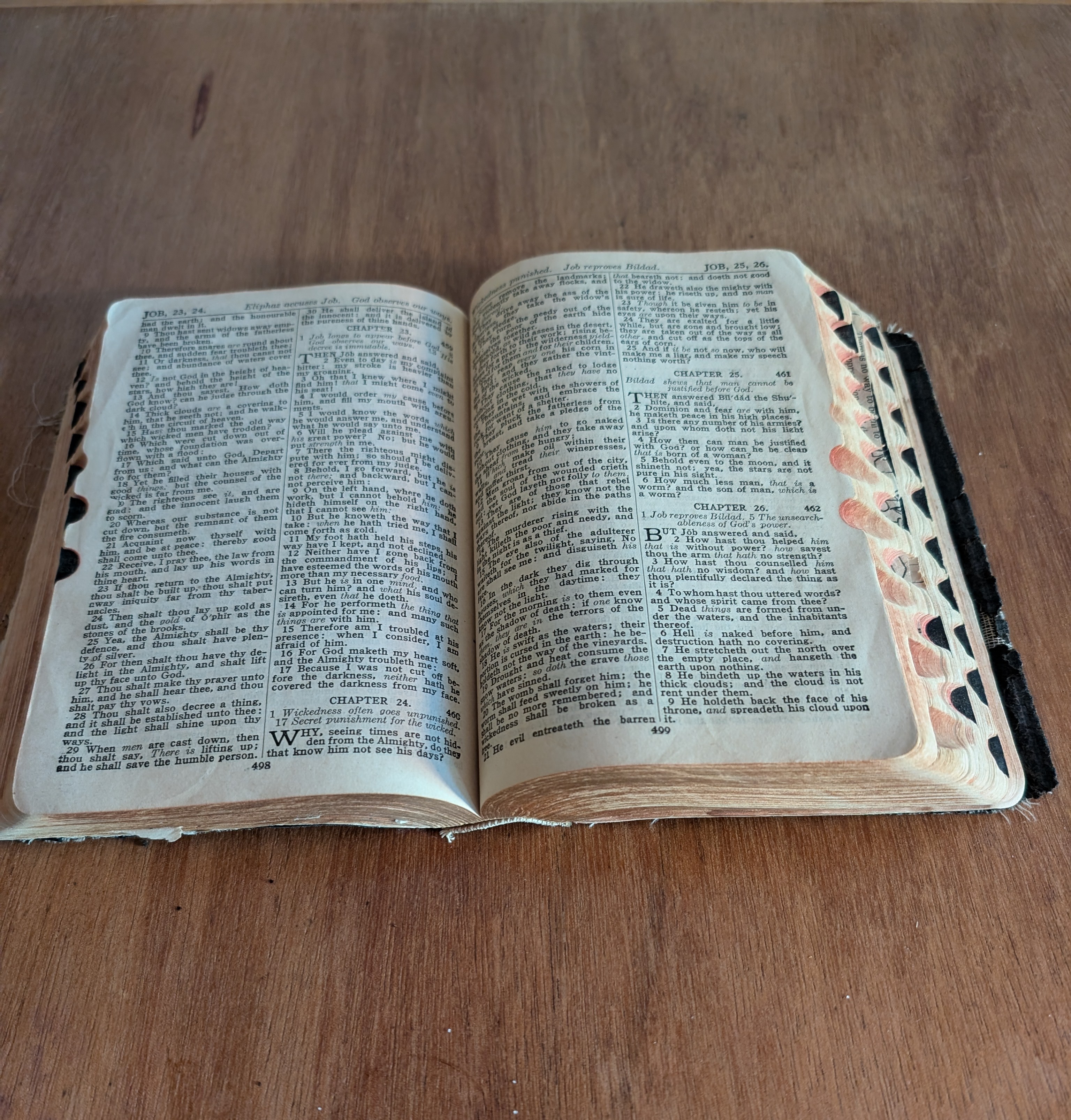
Open your bible and growl.


Posted in Uncategorized | Tagged , , , , | Leave a comment

The Restoration of Beauty

Music is a sacrament.~ Bono

For the Christian, pleasure is innocent until proven guilty. ~ Tim Keller

At various times, we all come to a place where we notice something almost sacramental, rich, and holy about the experience of listening to the music of Beethoven or Mozart. Or listening to Johnny Cash sing Amazing Grace.

There is something transcendent about watching a bee pull nectar from the tiny alpine-forget-me-not flower at fourteen thousand feet above sea level. There is something holy about watching a sunrise or the smell of a baby’s hair. There is something packed full of beauty and goodness about the innocent laugh of a toddler. Or the wise, gentle smile of a grandparent.

What do we do with these instincts that this material reality is beautiful, good, and holy? Is it merely neurons firing and synapses reacting in our brains, or is there more going on?

Live in God’s World Playfully

Have you noticed that Christians are some of the saddest, dourest, meanest people on the planet? And yet one of the salient marks of what the Scriptures say is supposed to set us apart from people with God is that we are joyful people.

God made this world, and even in its groaning and marred state, we are to enjoy the creative world God has placed us in.

Will we slow down enough to see the petals of a flower, hear the distinct tone of a songbird, taste the texture of a pan-seared steak, or have a leisurely conversation with an old friend? Will we slow down enough to see, hear, taste, smell, and touch this good earth? How will we ponder and praise the moments of beauty God offers us this week?

Live in God’s World Gratefully

That is one of the great benefits of gathering weekly to worship. When we gather to sing, pray, laugh, study, hear, and love as a gathering of the faithful, we focus all the inarticulate praise of the cosmos and turn it into an expression to the living God. Worship is practiced in gratitude.

This is why it is so important that we determine to be present in a place of worship even when we don’t feel like it. Without the weekly discipline, it is so easy to fall into a default mode of working on the next item on your “to-do list” that we fail to realize we have so much life and grace for which to be thankful.

In worship, we are to slow down long enough to be stunned by the beauty of God and the grace of Jesus and—to say thank you as a people.

Live in God’s World Seriously

We know that this world is both beautiful and broken. God loves this world so stubbornly that He enters it in Jesus to restore and heal it. Each of our lives is supposed to be a signpost to that blessed hope. That means we get serious about serving the world that God loves.

When you work in your yard, when you speak with the clerk at the store you frequent, when you teach a child to read, when you build a house, when you pump gas, when you provide employment for others, when you process transactions at a bank, when you write a story, when you listen to a friend, when you play with a child, when you cook a meal…it is all spiritual.

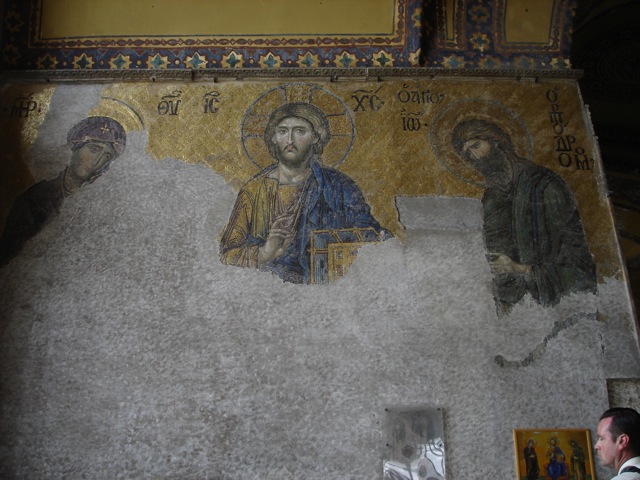
One of the fascinating restoration projects happening in the world today is happening in Istanbul, Turkey. The church of Hagia Sophia (literally “Holy Wisdom”), built in Constantinople, now Istanbul, was first dedicated in 360 by Emperor Constantius, son of the city’s founder, Emperor Constantine. Today, it boasts the largest unsupported dome structure in the world. It is beautiful, breathtaking, and transcendent. And yet, with all of its grandeur, it is in disrepair.

In the 15th century, Sultan Mehmed ravaged the city and converted it into a mosque, which it remained until the fall of the Ottoman Empire in the early twentieth century—plastering over the beauty of the mosaics with the ugly of plain plaster. However, in the 1930s, the Hagia Sophia was officially commissioned as a museum and was no longer controlled by a religious entity. Since that time, slowly—week-by-week, month-by-month, and year-by-year—the ancient beauty of that place is being restored. The plain plaster is carefully, gently chipped and peeled away so that the original beauty underneath might reemerge.

What a wonderful picture of what God is doing in this world through Jesus’s apprentices and what the maker of Heaven and Earth is doing with His creation. Through Jesus’s person and work, He is repairing and restoring a ruined cathedral, and He intends—no, insists—that it be beautiful again.

So, dear friends and fellow pilgrims, may you know the maker of Heaven and Earth and learn to live well in His good world.

Kings of the earth and all peoples;
Princes and all judges of the earth;
Both young men and maidens;
Old men and children.
Let them praise the name of the
 Lord.    Psalm 148:11

Posted in Uncategorized | Leave a comment

Curious or Critical?

“I know you think you understand what you thought I said but I’m not sure you realize that what you heard is not what I meant” – Alan Greenspan

I saw an interview where the reporter asked a celebrity what life was like as a musician. The interviewee was indignant. Said, “I don’t do magic tricks. What kind of interview is this? What are you implying with that question? I play music; that is what I do.” The reporter sat stunned but then said, “Yes, I understand. You play music. So, how is life as a musician?” The interviewee got angry and started taking their microphone off to leave the interview. “I am not going to sit here and be insulted like this. I told you I am not a musician. I don’t do magic. I play music.”

Sometimes, people seem to work hard to try to misunderstand you. When you’re misunderstood, you have no defense. And no matter how hard you try to correct the misunderstanding, it usually worsens. You go fully loaded, ready to “set them straight,” and all you do is dig yourself deeper! The harder you work, the worse it gets, and the deeper it hurts.

Recently, Lynette and I visited another country to lead a soul-care retreat. We had a wonderful time visiting with fellow pilgrims and sharing what it means to live a contemplative life. At one point, we visited a halfway house where this NGO was trying to give recovering addicts a job on a chicken farm to help them get back on their feet and back into society.

We met a local man who wanted to tell us his story of recovery. He spoke the native language, and we had an interpreter. It was wonderful to hear his story of sobriety and how God had rescued him from the streets.

We went to church with our friends and didn’t understand a single word of the music except the melody of a couple of the songs. The preacher got up to preach in his native tongue. He had another man stand beside him and interpret his preaching into Russian. We had a young lady sitting next to us who interpreted the Russian into English.

So, imagine this: a preacher interpreted the Bible in a sermon. A man interpreted the sermon into Russian. A young lady interpreted the Russian interpretation into English. Then Lynette and I had to process and interpret what our American friend said in English.

Was anything lost in translation? No doubt there was.

We started with a generous heart for our recovering friend, who told us his story and the sermon that was preached in a foreign language. That goodwill went a long way in smoothing over what might have been lost in translation. However, the interview with the person who played music but was not a musician had filters up before the conversation began, which caused her not to understand the question, and the misunderstanding escalated from there.

And that relationship didn’t recover.

Being misunderstood is one of the most frustrating aspects of being a pastor, both in the pulpit and in the everyday conversation of church life. I find comfort in the fact that Jesus was misunderstood as well.

“You remember these things I did, but you still don’t understand?” Mark 8:21

Naturally, misunderstandings happen all the time. We might ask clarifying questions or ask someone to say something differently. We work hard at trying to understand not just the words but the intent of the words. But there are times when my woundedness might interfere with my hearing. Haven’t you had a headache or other ailment and misunderstood what your friend or spouse said?

Personally, my hearing goes dim when I don’t feel well or when I am hAngry. But more seriously, sometimes, my ability to understand someone is impeded by my soul’s woundedness. Unresolved trauma can impact my ability to fully understand what another person says or does. I need to be very aware that I might have a hearing problem that comes from my soul.

But the question I am wrestling with is, what do I do when I am misunderstood? When every gesture towards someone is wrongly interpreted.

What to Do?

The Psalms have been a balm for my soul for many years. I read them every day, every month, and every year. Here are some helpful words that I found recently during a difficult time of conflict.

Be Honest with God About How I Feel.

Give ear to my prayer, O God;
    do not hide yourself from my supplication.
Attend to me and answer me;
    I am troubled in my complaint.
I am distraught by the noise of the enemy,
    because of the clamor of the wicked.
For they bring trouble upon me,
    and in anger they bear a grudge against me.
Psalm 55v1-3

This poet speaks to God about what he is feeling deep inside. He cries out to God about what others are saying about him. I love the line, “I am distraught by the noise of the enemy.” Haven’t you been distraught by the noise others might be saying or thinking about you? I certainly have.

Speaking to God about what is in your heart rather than what ought to be in your heart is very healing for your soul.

Give the Situation to the Lord.

Cast your burden on the Lord,
    and he will sustain you;
he will never permit
    the righteous to be moved.

But you, O God, will cast them down
    into the lowest pit;
the bloodthirsty and treacherous
    shall not live out half their days.
But I will trust in you.
Psalm 55v22-23

I don’t know how often I’ve just had to give a situation to the Lord. When you think about it, what else will you do with it?

Large-hearted people are more curious than critical. (Lord, help me.)

It is impossible to lead, pastor, or parent without being misunderstood. Sometimes, it happens in funny ways (Are you a musician?). Sometimes, it happens in different cultures (Lost in translation). And sometimes, it comes from a wound (I can’t understand you when I am hangry).

But it inevitably happens.

It is important not to react during times of misunderstanding but, first and foremost, to take it to the Lord, who knows what it feels like to be misunderstood. Let him deal with it.

It’s what he does.

Posted in Uncategorized | Tagged , , , , | Leave a comment

The Wedding

When they ran out of wine, the mother of Jesus said to Him, “They have no wine.” John 2v3

Most thirty-something singles who attend a wedding at some point imagine their wedding day.  Is this happening for Jesus as he watches the wedding feast at Cana of Galilee? He sees the joy, His eyes dance, and he laughs with everyone else.  He hears the music, claps, and sways to the strum of the instruments, and perhaps grabs His mother’s hand and takes her on a twirl around the dance floor.

Maybe he’s a little out of breath from the dance, his face flushed from the wine, and as He makes His way back to His seat, he says to Himself, “I will have a wedding one day. It won’t be with a girl. It will be with a people.”

But then, in an instant, the bright joy is chased away by the dark knowledge of what will have to happen to make that wedding possible. Every time John uses the word “hour” in his Gospel, he is referring to Jesus’s crucifixion. So, while everyone at this gathering is celebrating a wedding, Jesus knows that in order for Him to go to His own wedding, He has to pass through a funeral. That was what was on His mind.

As He puts the golden chalice to His lips to sip the new wine, a single drop falls onto the white linen tablecloth, and the crimson spot begins to spread as the cloth absorbs the wine. He knows that one day, his blood must be spilled. The sweetness of the joy of the new-wine moment is traded for a sharp tang of the coming sour wine offered on a hyssop branch.

He is very aware of the barrier between the Lover and the beloved. And He thinks, “If I am going to raise the cup of festive joy at my wedding feast, I am going to have to drink the cup of the Divine wrath of God. I have to go through that ‘hour.’  I will have to provide the wine if I am ever going to have this spousal love with my Bride – – – my people, I have to pass through a funeral, and the wine must be spilled; that wine is my blood.

I will strip naked for my beloved—on the cross.

I will offer my heart up to the point of breaking—on the cross.

I will be hacked to pieces so that my beloved will be restored—on the cross.

I will become ugly so that my beloved may become radiantly beautiful—-on the cross.”

When I see the extent and depth of love that occurred on the cross for me, a promiscuous lover – – – it changes me; it makes me want to please my heavenly Lover.

For He made Him who knew no sin to be sin for us, that we might become the righteousness of God in Him.  2 Cor. 5:21

As a pastor since 1984, I’m not going to lie; I’ve seen my share of ugly brides. But do you know who has not seen an ugly bride? The groom. It doesn’t matter what a girl looks like in street clothes; in a wedding dress, she is radiant and beautiful.  You and I are not much to look at from an eternal perspective.  In fact, I am not sure we could even say we are plain.  From a holiness perspective, we are rather hideous.  But we have a Groom who went to a funeral and passed through that dark veil of death and is welcoming us into the bridal chamber today.

In His nail-scarred hands, He holds the unspoiled linen of His righteousness, ready to wrap around our sagging shoulders. He is looking at us with the longing eyes of our heavenly Lover, and no matter what we look like in our street clothes, we are beautiful to our Groom.

So…

I will arise and go to Jesus,

He will embrace me in His arms;

In the arms of my dear Savior,

O there are ten thousand charms.

Posted in Uncategorized | Tagged , , , , | Leave a comment

The Hope of Darkness

From noon on, darkness came over the whole land until three in the afternoon.  Matthew 27v45

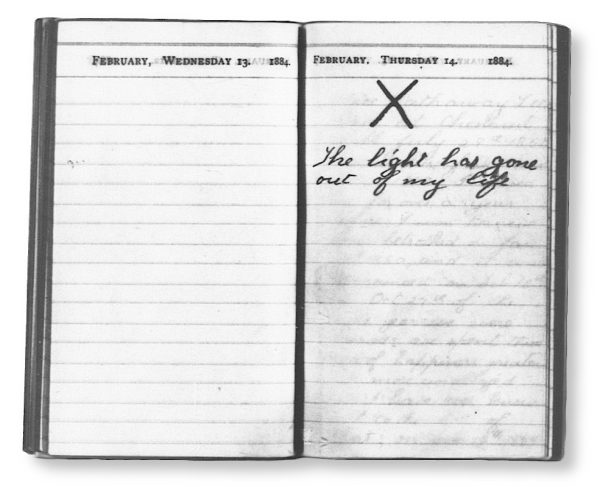
On February 14th, 1884, Theodore Roosevelt lost his beloved mother and, a few hours later, lost the love of his life, Alice, after giving birth to their only child. Upon her death, he wrote in his diary: The light has gone out of my life.

Grief brings darkness.

Sometimes, darkness enters our hearts because of guilt. Something I did caused me to feel a bleakness that can only be cured by absolution. I need forgiveness.

But also, my heart is far darker than I want to admit. Or, as the late poet Mary Oliver has said, the heart has many dungeons. Bring the light! Bring the light! She is right. My heart is complicated. I can have a room called melancholy, regrets, or depression.

Sometimes, my internal darkness is caused by things I have done, sometimes by the circumstances I find myself in, and sometimes by physiological factors beyond my control.

Would it surprise you to know that Jesus experienced darkness in his life?

As I meditated on this idea of noonday darkness at the crucifixion, I was reminded of a relatively recent discovery in physics. It is called a singularity or a black hole.

A black hole is a region in space where gravity is so strong that light and other electromagnetic waves cannot escape. This happens when matter is squeezed into a tiny space, which can happen when a star dies. The boundary of no escape is called the event horizon.

Jesus draws our sin, brokenness, and darkness deep inside his own holy and pristine soul. This moment is so profound and powerful that it becomes a singularity for daytime light.

Jesus is laying down his life in death to bring us into a new life with God.

This was not just a unique moment in history—like the day Abraham Lincoln was killed. This moment of disappearing light, sin, and evil was for you.

The good news of the story is that at this cross, the vortex of darkness swirling around the infinite soul of Jesus means your bad decisions from years ago, last week, or last night, have already been absorbed into the sinless man hanging here on this cross.

Jesus is for you. This cross is for you. The good news of this story is that you are never too far gone for the grace of God because of what Jesus did on that day in this darkness. No matter what you have done with your life, because of Jesus’ death on this cross, you are not too far gone from God.

My brother’s church in Sumner, Washington, attracted the misfits of the community. That included me and my family. One of my favorite church members from 20 years ago was a fella named Roger. Roger was an addict. He was not addicted to any one thing but to almost anything.

We would have testimony services on Sunday evenings, and Roger would often say, “I praise God that I am 6 years, 7 months, and 8 days sober from alcohol. I’m 45 days sober from cigarettes, and I am 4 years, 3 months, and 2 days sober from gambling!” We would all applaud and encourage him.

Then, the next time we had testimonies, he’d say, “I praise God that I am 6 years, 7 months, and 15 days sober from alcohol. I’m 55 days sober from cigarettes. I am one day sober from gambling!”

We would all applaud and encourage him. This routine happened many times.

Christ Church of Sumner was a place for people who knew they were a mess, a hot mess. They knew Jesus was for them, and so were we.

We might do a little better job of hiding our issues than the church in Sumner, but the truth of the matter is we are just as messed up as Roger.

That’s why we need someone to bring the light. And Jesus did just that. He took the singularity of our lives’ darkness and let it ravish his pristine soul because he was for us.

This darkness happened in Jesus on Friday.

But Sunday’s coming, and with it comes the Light!

Posted in Uncategorized | Tagged , , , , | Leave a comment

Enemy Love

(Judas) came up to Jesus and said, “Greetings, Rabbi!” and kissed him. Jesus said to him, “Friend, do what you are here to do.” Then they came and laid hands on Jesus and arrested him. Matthew 26v49-50

One day Ernest Hemingway was having lunch with friends, and they were talking about the importance of writing with brevity.

Hemingway bet everyone at the table ten dollars each that he could craft an entire story in six words.

After the pot was assembled, Hemingway took a napkin and wrote down the following six words:

“For sale: baby shoes, never worn.”

Everyone paid up without saying a word.

Saint Matthew does a pretty good job of coming up with his own version of Hemmingway’s barroom story.

Then all the disciples deserted him and fled. (Matthew 26v56)

In this story of betrayal, the disciples desert Jesus. When Jesus called his disciples to follow him towards the beginning of the book of Matthew, these same men “deserted” their vocations, homes, families, and friends to apprentice with Jesus.

Once they left everything for Jesus. Now, they leave Jesus so they can hang on to everything. Everybody in this story is either an enemy, a betrayer, or a disappointment.

Everybody.

And Jesus walks straight into a sacrificial death for all of them.

When Jesus preached his most famous sermon, the Sermon on the Mount, these same disciples were sitting on that grassy hillside on the north shores of the Sea of Galilee in Matthew 5 and heard,

“You have heard that it was said, ‘You shall love your neighbor and hate your enemy.’ But I say to you: Love your enemies and pray for those who persecute you, so that you may be children of your Father in heaven.  (Matthew 5v43-45)

You don’t defeat enemies, Jesus says, you love enemies. That’s what Kingdom people do.

That’s what Jesus said in a sermon and that’s what Jesus does in this dark garden in front of a mob of men with torches, clubs, and disappointing disciples.

In this election year, with our unprecedented polarization, it is easy for evangelical Christians to say, “That way is naïve and impossible to live in the real world. If we don’t win this November, we will lose the America I love. We have to fight. We have to win at all costs!”

Bertrand Russell who was a 20th-century atheist and philosopher said, “The Christian principle, Love your enemies is good. There is nothing to be said against it except that it is too difficult for most of us to practice sincerely.” 

He’s right.

You and I, on our own, can’t work up enough moral sweat to live this way. And that is why we have to receive what Jesus does for us into the center of our being.

When Lynette and I were in Israel in 2018, we stood in this garden and one of the things that became clear to me as I stood there facing Jerusalem and the Temple Mount is that Jesus would have been able to see and hear this mob coming for about an hour. He would have had all kinds of time to make his escape if he wanted to.

That isn’t what Jesus did. No fight or flight with Jesus. He watched the people who are coming to kill him and welcomed them.

If evangelicals are ever going to regain the moral authority that we have lost through scandals, political atrocities, and moral relativism, I believe it will happen when the one who welcomed his enemies in a dark garden occupies a deeper place in our soul than our enemies.

If not, we will end up behaving like the world and voting for people who legislate policies and values that veer away from normative and historic Christian values or a candidate who’s behavor is a violent violation of normative and historic Christian values.

Either way, our country deserves a better version of ourselves than what we’ve shown in recent years. If not our country, then the one who loved enemies, betrayers, and deserters.

It’s time to write a different story.

Posted in Uncategorized | Leave a comment

Grace in the Garden

(Jesus) threw himself on the ground and prayed, “My Father, if it is possible, let this cup pass from me, yet not what I want but what you want.” Matthew 26:39

We all will go through a time of deep sorrow in our lives. Jesus was not exempt from deep sorrow either. As we peer into this late-night garden scene, we see that he doesn’t want to drink the cup. He doesn’t want to go to the cross. Jesus is deeply honest in his prayers.

I think that this dark prayer in the garden illuminates for us a profound paradox about Christian praying. Praying your doubts, your tears, your anger, and your desperation is not a sign of a LACK of faith; it is an ACT of faith.

These words give us a vocabulary to yell for help to the living God when we are in the middle of our troubles, vulnerabilities, anger, and confusion. The garden prayer gives us words to speak to God smack in the middle of our messy lives.

I invite you to kneel before God and turn your pain and your tears into prayers.

Jesus expressed his honest desires and immediate desires—let this cup pass. But then he expressed his deepest desire—Your will be done. And as followers of Jesus, he leads us to learn how to do the same.

I know I needed to pray this garden prayer this last week as I attended my 42-year-old niece’s memorial service in Tacoma, Washington.

At Carly’s memorial service, there were probably close to 600 people in attendance. The eulogy was beautifully written by her twenty-year-old daughter, Clair. One of the things shared in that eulogy was that when Carly was in 2nd grade, she became a Christian and was baptized. Unknown to her parents, she took her baptism certificate to school for show and tell. She stood in front of her entire class and showed the class her certificate and told them about being baptized.

The pastor shared a gospel message. And as he closed his sermon he talked about how, when Carly was graduating from the 6th grade, she wanted to give a gift to her teacher and so she wrote her a letter. In the letter, she said that the best gift she could give her was to tell her about Jesus. So, Carly told her about Jesus and how she could become a Christian. The pastor read the letter to all of us. When he was finished Lynette leaned over to me and said, “The pastor should have skipped the sermon and just read the letter.”

Soon after that, they played an audio recording of Carly singing the song 10,000 Reasons.

Then the last verse came, and Carly sang,

And on that day when my strength is failing
The end draws near and my time has come
Still, my soul will sing Your praise unending
Ten thousand years and then forevermore

My tears were flowing. At that point, I was overwhelmed by grief. My father was seated behind me, and I stepped out into the aisle, turned to him, got close to his ear, and said, “I’m not very happy with God right now.”

I was reading this text over and over this past week and it occurred to me that I needed this garden prayer. I needed to take my cues from Jesus and follow him into that garden, to be honest with God and trust in his good, good heart.

I’ll bet that you do too.

I think that is why I could tell my earthly father that I wasn’t very happy with my heavenly Father last Saturday. I have learned to pray what’s in my heart, not what ought to be in my heart. And I learned that right here in this dark garden.

Would you follow Jesus into your Gethsemane?

Here’s Carly’s letter to her 6th-grade teacher.

Dear Mrs. Masino,

This present that I have given to you may be nice or fun (I made it all by myself) but I’d like to share with you the most precious gift ever known to man, a gift I experienced over four years ago.

In January of 1988, I became a Christian by asking Jesus Christ to become my personal Savior forever. He died on the cross to pay for my sin and whenever I know I do something wrong, I ask Jesus Christ to forgive my sin because He is the one who died for me and rose again to prove He was the Savior of the World. I have found a scripture verse in the Bible that explains this.

          “In (Jesus) we have redemption through His blood, the forgiveness of sin.”

Redemption means to be freed from the punishment and sin.

When I received this precious gift, I prayed and asked Christ to forgive me of all sin and that He would be the Savior of my life. Now I pray constantly to Him for strength, forgiveness and that I could touch those who are hurting.

Christianity is not a religion but a relationship between me and my Savior. People all over the world want peace to be on earth. I know the only way peace can be on this earth. If every person on earth received Christ as their personal Savior, there would be no more fighting or hate.

1 John 4:21 says “and this commandment we have from Him; that he who loves Christ must also love His brother.”

I am an ambassador for Christ, and I am supposed to tell the world about Jesus Christ and His precious gift to us – His death and His life. I hope you can understand the message in this letter. I love you Mrs. Masino and I felt that God wanted me to share this precious gift with you. He has always been a friend and a Savior, and I know I will live eternally with Him because that is what heaven is about – Jesus Christ.

                               Love,

                                      Carly

And so, friend, hear the good news, that because of Jesus, we can trust that God is good and at work in our lives even when we can’t see how God is at work in our lives.

Bless the Lord, o my soul, o my soul
Worship His holy name
Sing like never before, o my soul
I’ll worship Your holy name

Posted in Uncategorized | Tagged , , , , | Leave a comment

Grow Into Your Calling

For each one of us, there is only one thing necessary: to fulfill our own destiny, according to God’s will, to be what God wants us to be. – Thomas Merton

I entered a relationship with Jesus that I was aware of when I was seven years old. I can still see my tears falling into the green gold shag carpet in my preacher father’s study where I said “the sinner’s prayer.” And I think I can still hear the tone in my little brother’s voice when he learned that I had been saved, “I hope it takes.”

Two years later my family moved from Texas to Colorado, and I went to youth camp at the Ponderosa Camp just outside of Colorado Springs. It was a week of learning about Jesus, the proper handling of a .22 and making lanyards for our moms.

Every night we gathered in an open pavilion for a chapel service complete with an altar call. On the last night of the week, I listened to the preacher, but I heard from God. I heard him in my heart. I never heard words. It was more like a whisper—but it wasn’t a whisper of words. You might say it was a “calling.” It was very vague, almost ethereal and I was troubled by it.

I eventually became a preacher. It seemed to be the natural progression in my family. My dad was a preacher. My grandfather had been a preacher. Folks at church would always ask me, “Are you going to be a preacher like your dad?” I don’t remember what I said, but I remember what I felt, “I hope not.” I didn’t want to be a preacher.

But that night at the camp, God whispered to me. He wanted me to pastor his people. I was called to my first church in 1984. I was twenty-six years old. I had no clue what to do. I knew how to preach, but I didn’t know how to be a pastor. That was nearly forty years ago. I have a clue now. And the reason is because God’s grace grew me into who he wanted me to be.

There is a movie called Becket that stars Peter O’Toole and Richard Burton. It’s about how two drinking buddies change over time. Peter O’Toole plays the character Henry II and Burton plays Thomas Becket. Becket was a low-level priest and loved his friendship with Henry.

Though a priest, Beckett was corrupt just like Henry II. He was just as hotheaded and sensual as Henry.

Then one day the Archbishop of Canterbury died, and Henry thought, “I’ll make Thomas the Archbishop of Canterbury! Thomas is just a regular guy. He’s not going to tell me how I have to live my life. He will not oppose me in any way. He’s just a regular guy. Finally, I’ve solved the problem of church/state relations.”

So, he makes Thomas Becket Archbishop of Canterbury.

But something happened to Thomas Becket. Thomas is shaken because he knows that even though it has come through Henry for all the wrong reasons, and even though he’s completely corrupt and completely unholy and completely unworthy and completely unqualified, now he is the bishop of England. He suddenly realizes a sense of the call of God in his heart. He realizes how unworthy he is of it, and it changes him.

He becomes a good person. A man of integrity. He begins to represent the gospel. He begins to call out Henry for the things he’s doing wrong. This infuriates Henry. He is filled with conflict because he loves Thomas, yet now he’s so mad at him because Thomas has become a good man. He grew into his calling.

Finally, one night in frustration, Henry says out loud to his knights what he had been thinking in his heart, “Who will rid me of this meddlesome priest?” The four knights look at each other, and they strap on their swords and go to the cathedral.

As the knights approach Thomas with swords drawn and he realizes they are there sent by Henry to assassinate him, he says with no guile, “Poor Henry. Poor Henry.”

The call had made him holy. The call had made him like Christ when Jesus said, “Father, forgive them for they know not what they do.”

That’s what the call of grace does to our lives. God’s grace qualifies us for God, and it changes us. We spend the rest of our lives living into and out of our calling.

And now you will excuse me because I have to work on Sunday’s sermon.

Posted in Uncategorized | Leave a comment

This Is the Time to Be Slow

This is the time to be slow,

Lie low to the wall

Until the bitter weather passes.

Try, as best you can, not to let

The wire brush of doubt

Scrape from your heart

All sense of yourself

And your hesitant light.

If you remain generous,

Time will come good;

and you will find your feet

Again on fresh pastures of promise,

Where the air will be kind

And blushed with beginning.

by John O’Donohue

Posted in Uncategorized | 1 Comment

Inside-Out Living

“Let the little children come to Me, and do not forbid them; for of such is the kingdom of God. - Jesus

This week a man came by my study at the church. I was the only one there. He looked familiar, but I couldn’t recall his name.

He said, “I’m trying to get a hold of Jerry. I’ve called him many times and he doesn’t answer his phone. I don’t know if you remember, pastor, but I lost my wife a couple of years ago and I know Jerry lost Shirley too. We became pretty good friends during those sad days. So, how can I get in touch with Jerry?”

I said, “Jerry passed away last spring.”

He turned his face away and stared out through the glass doors. Then he swallowed hard, slowly shook his head, and without looking at me asked, “Was it that cancer on his face?”

“Yes.”

He continued to stare through the glass towards Mt. Princeton.

“He was such a good man.”

“Yes, he was,” I said, “I was with him just a few hours before he died. We prayed together and he told me he was ready to see Jesus.”

Deep sigh.

I said, “Jerry died exactly the way he lived. Filled with faith, hope, and love.”

He said, “Yeah, what was in him on the inside showed up on the outside.”

I agreed.

He said, “I wish I could live that way,” as he pushed open the door to leave.

I said, “It’s not too late. Come back sometime and we will talk some more.”

He waved without looking back, got in his car, and drove away.

What is on the inside showed up on the outside. When the gospel takes root down deep, where the knobs are, it shows up in a simple child-like faith.

What was it about the way Jerry lived that made it possible that what was on the inside showed up on the outside? He trusted God—like a child.

I think that one of the main reasons children are so important to Jesus is to show us that, like babies, we don’t bring anything more to the table with God than a screaming little kid with a poopy diaper.

The difference between adults and children, Jesus says, is that little children are aware of their need for help.

Having a three-year-old granddaughter living in my house has brought such delight and reminded me of the gospel on more than one occasion. One of her favorite things to do is sing. She sings a lot and often gets the words wrong to familiar songs like Twinkle, twinkle little star, how I wonder how I are.

Or the other day she was playing with her doctor set and checking my health with her stethoscope, and I had about enough so I pretended to be irritated with her and said,

Me: I think I am better now.

Cora: Get out, Papa.

Me: It’s my house.

Cora: Get out.

Me: You are bothering me.

Cora: No, you are bothering you.

But my favorite happened last summer when we were left home alone together, and I went out to work on my woodshed. We were out there all morning on a Saturday. At some point, she fell and skinned her knee, and I could see her some ways away from me crying, and then her hands just went up in a motion that indicated she wanted me to pick her up and hold her.

She just expected that I would come to her rescue. She knew she needed help.

Jesus says that is exactly how you enter into life with God. And that is exactly how you grow deep, wise, and strong in the with-God life.

Moment by moment trusting in God is what surfaces our faith. God-dependency is what makes what’s on the inside show up on the outside.

“…I am continually with you; you hold my right hand.” Ps. 73:23
Posted in Uncategorized | Tagged , , , , | 1 Comment