The Gardner

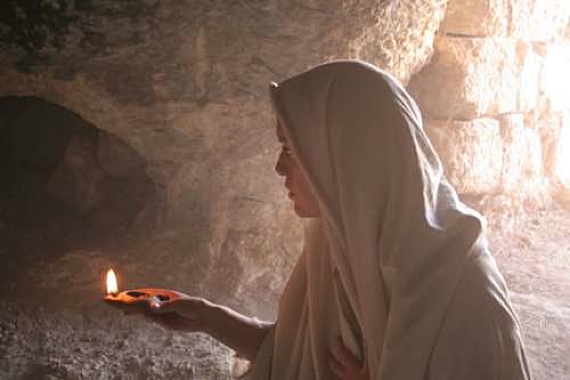
Mary stood outside by the tomb weeping. – John 20:11

Not too long ago, I read an article in The Atlantic about the state of Jazz in America. It was written by a man named David Hadju, who describes the experience of visiting a jazz club. As the band begins to warm up and moves into its first set of songs, he thinks he sees the great jazz trumpeter Wynton Marsalis. Here is how he describes the scene…

“Excuse me,” I whispered to the fellow next to me (a jazz guitarist, I later learned). “Is that Wynton Marsalis?”

“I very seriously doubt that,” he snapped back.

The fourth song was a solo showcase for the trumpeter, who, I could now see, was indeed Marsalis, but who no more sounded than looked like what I expected. He played a ballad, “I Don’t Stand a Ghost of a Chance With You,” unaccompanied. Written by Victor Young, a film-score composer, for a 1930s romance, the piece can bring out the sadness in any scene, and Marsalis appeared deeply attuned to its melancholy. He performed the song in murmurs and sighs, at points nearly talking the words in notes. It was a wrenching act of creative expression.

When he reached the climax, Marsalis played the final phrase, the title statement, in declarative tones, allowing each successive note to linger in the air a bit longer. “I don’t stand … a ghost … of … a … chance …” The room was silent until, at the most dramatic point, someone’s cell phone went off, blaring a rapid singsong melody in electronic bleeps. People started giggling and picking up their drinks. The moment—the whole performance—unraveled.

Marsalis paused for a beat, motionless, and his eyebrows arched. I scrawled on a sheet of notepaper, MAGIC, RUINED.

I tell you this story because, in many ways, it describes Mary’s life. The magic of her life was ruined when Jesus died on the cross.

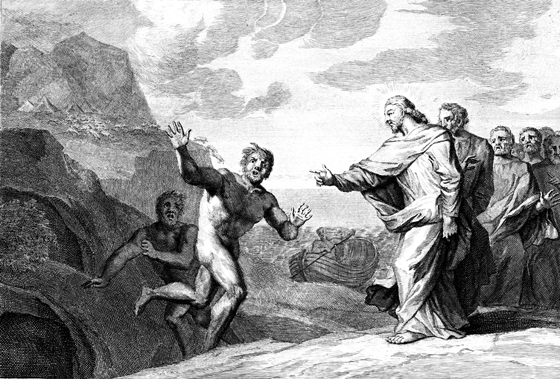
Her hope was Jesus. He had changed her life, and she had followed him ever since. He had cast seven demons out of her, freeing her from untold torment. He had given her life…a reason to live…a place in the kingdom. He had given her worth and dignity, understanding, compassion, and he had given her hope.

Now that hope lies at the bottom of her heart, flat and lifeless.

But something helps her survive that cruel moment. Something resilient, like a blade of grass that springs up after being stepped on. That something is love.

Love brought Mary to his cross. And love brings her now to his grave.

The early church looked at Mary, weary with weeping grief, just outside the tomb of Jesus, as a symbol of the whole world.

Mary’s tears are the tears of Minneapolis, because of a mass shooting at a Catholic school on August 27th, where two children were killed and 17 others were injured.

Mary’s tears are the tears of Evergreen High School here in Colorado, where a student entered the school and opened fire on his fellow students, injuring two, and then turned the gun on himself, where he died from self-inflicted wounds.

Mary’s tears are the tears of Erika Kirk, the wife of Charlie Kirk, who was murdered in Utah last Wednesday at a rally in Orem, Utah.

Mary’s tears are the tears of Gaza, where a truck carrying humanitarian aid overturned near a refugee camp in the Gaza Strip, killing at least 25 people.

Mary’s tears are the tears of Afghanistan, where a major earthquake killed over 1,100 people.

Mary’s tears are the tears of a 33-year-old minister whose wife left the faith and wants out of the marriage.

Mary’s tears are the tears of an 86-year-old deacon whose wife of 65 years died of a stroke.

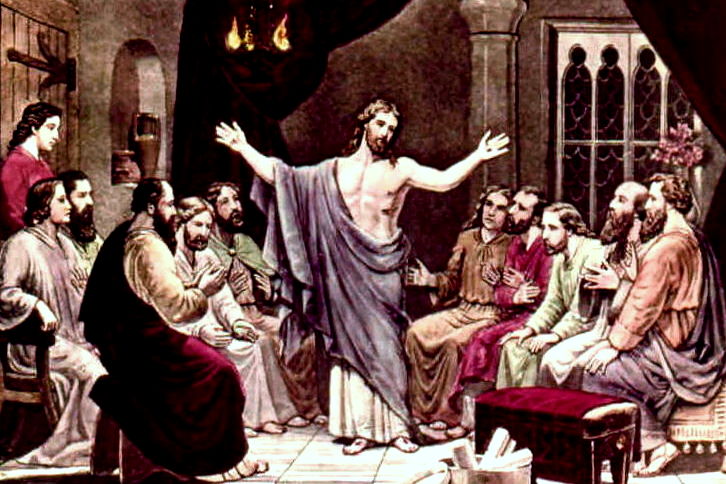
And Mary’s tears are the tears of your life, too. Mary is a stand-in for all the grief and suffering of all the world. But here is what is important to remember: It is to Mary in the predawn dark, in her most painful moment, that Jesus appears.

Of all the people that Jesus could have revealed himself to, he chose Mary first.

Peter and John had been there earlier in the morning, but they didn’t see angels. Angels only turn up for Mary and her tears. Maybe it’s because, sometimes, you can only see angels through tears.

Easter is not about escaping this sorry dark world into the next world. Easter is about tearing a hole in the fabric that separates this world from the next so that heaven can get into this world.

One of the favorite musical artists that my son Clinton and I share, Jack Johnson, has a song that describes the complexities of life in the 21st century. It is a song filled with pain, sorrow and the angst of our times, but he has a line that serves as a refrain in the song that says:

There were so many fewer questions

When stars were still just the holes to heaven.

I love that imagery. Next time you step outside and look up to see the stars, think of them as tiny holes in the floor of heaven.

Easter is a Grand Canyon-sized hole in the floor of heaven. The eternal came flooding into our world through that opening when the stone was rolled away. The bodily resurrection of Jesus is a foretaste of the renewal, re-integration and restoration that is coming when the ‘thy-will-be-done-on-earth-as-it-is-in-heaven’ part of our Lord’s prayer is answered once and for all.

Here’s the point of Easter:  God loves this world.

Sometimes I’ve said to skeptics that don’t yet believe in our faith that they should at least hope our faith is true; because it makes so much sense of the longings that are latent in all of our souls.

I love what Tolkien says,

We all long for [Eden], and we are constantly glimpsing it: our whole nature…is still soaked with the sense of ‘exile’.

You, your children, and grandchildren may have walked away from the Church, but deep down they long for what the church stands for to be true. They have an ache for Eden.

The thirst for spirituality is not an illusion. It is there because we were made for another reality—God. Because God is our home. Your deep passion for health and education for children, justice in the world, and beauty in your life—these things are not random desires, they are inside us because they are a part of a world created by a God who made it to operate that way.

Why did my oldest son, Cole, take his four children to a park every year to pick up trash and celebrate Earth Day? Because he is a new age, liberal, tree-hugger? No, believes that how we respect this earth is a reflection of our love for the Creator-God who created the first garden called paradise and came back to life in a second garden of tombs.

David Hadju sat stunned in the back of the jazz club as the magic that he experienced in the room was ruined. But I want you to listen to what happened next…

The cell-phone offender scooted into the hall as the chatter in the room grew louder. Still frozen at the microphone, Marsalis replayed the silly cell-phone melody note for note. Then he repeated it, and began improvising variations on the tune. The audience slowly came back to him. In a few minutes he resolved the improvisation—which had changed keys once or twice and throttled down to a ballad tempo—and ended up exactly where he had left off: “I…don’t…stand…a…ghost…of…a…chance…with … you …” The ovation was tremendous.

That is a small picture of what God has done for us and the world at the empty tomb of Jesus. All the ways that we are unraveled, all the ways that we and the world are ruined—Jesus used all of that and transformed it into a restoration and healing.

Jesus has taken our brokenness, tears, and ruin—and he has refashioned it into a redemption song.

Posted in Uncategorized | Tagged , , , , | 7 Comments

Good Friday

A LAMENT FOR GOOD FRIDAY

I cry out to you, O Lord, I say, “You are my refuge, my portion in the land of the living.”
For I am a magnificent sinner and my relentless transgressions are ever before me.
My God, my God, why have you abandoned me and feel a million miles away?
Do not leave me alone with my darkness.

For I am a magnificent sinner and my relentless transgressions are ever before me.
O Lord, love me for who I want to be; not who I am.
Do not leave me alone with my darkness.
I’ve been Your son for fifty-eight years and need you every hour.

O Lord, love me for who I want to be; not who I am.
My God, my God, why have you abandoned me and feel a million miles away?
I’ve been Your son for fifty-eight years and need you every hour.
I cry out to you, O Lord, I say, “You are my refuge, my portion in the land of the living.”

Never celebrate Easter on Good Friday; it diminishes both. Do not hurry to Sunday, my friends. Feel deep the darkness. Be present with Jesus today.

Posted in Uncategorized | Tagged , , , , , | Leave a comment

The Devil

My name is Legion; for we are many. ~ The Gadarene

If you make anything more important to your happiness, more important to your sense of self, more important to your sense of security than Jesus, it is your master. You have made a pact with it. You have made a Faustian deal. What is your heart centering on?

And if you win you get this shiny fiddle made of gold,
But if you lose the devil gets your soul. ~ Charlie Daniels

What is the driving thing that makes you want to get up in the morning? What is the real thing that makes you feel good about yourself? Or what is the core reason you can sleep at night?

I love how Rebecca Pippert puts it in her book Out of the Salt Shaker,

“Whatever controls us is our lord. The person who seeks power is controlled by power. The person who seeks acceptance is controlled by acceptance. We do not control ourselves. We are controlled by the lord of our lives.”

I’ve made a pack with somebody. I think I’m in charge and I’m wrong. Whatever is the center of my life.

Is it possible for security to be an idol?

According to Jesus, faithfulness moves us beyond love of neighbor to love of enemy. If pursuit of my safety trumps my ability to love whomever God has in my path, fear wins, and I distance myself from God’s heart for the world.

How can I love my “enemies” if I don’t know them? The idol of safety moves us away from people who are different than us and sends us inward to those who look, think, and act like we do. There is no love outside of relationship; there is only misunderstanding, demonization, and stereotype.

Jesus never called us to be safe; he called us to be faithful.

Interestingly, I find myself wrestling through this stuff during Holy Week. This is the week in which Jesus models to the world life as it was meant to be lived.

A life that ended with the uttering of this prayer for his enemies: “Father, forgive them for they know not what they do.” These are the stories we tell in Sunday school and say, “Wow, Jesus was fearless! He wasn’t scared of anything, and I would do anything to live and love like that.”

Imagine if instead he chose to worship the idol of safety and never left the security of his little Galilean synagogue so he could read Torah and remain isolated from all the violence of the world? That story would not only stink, it wouldn’t reflect the heart of a God who literally moved into our human neighborhood to remind us what love looks like.

So, many of us buy more guns, hoard more food, pull away and only listen to and engage with people who are exactly like us in skin color, musical tastes, politics and fundamental sensibilities. And, as a result, we feel emboldened; we feel powerful. We might say, “They can have my guns when they pry them from my cold dead hands.” We almost dare “them” (pick a “them”) and say, “Come at me!”

But the more we focus on safety and security in our older age, the more we will find ourselves enslaved; because if we have at our core anything as more important than Jesus, our fears will reveal that we have struck a Faustian bargain.

By the way, I am not anti-security. I am anti-idol.

It is in seeing the cost Jesus paid to defeat evil in your life that you begin to understand how much He loves you, that frees you. Now you can look at the good things in your world and realize they are not the ultimate things; and the Faustian pact is broken.

Now your safety is just a lock on your door. Your security is wise financial stewardship.

They are not your savior.

During the Second World War, when Hitler conquered France, he immediately shut down the borders to keep the people from leaving the country. But one small border town saw its population diminish rapidly, so the Germans searched for the answer.

It turned out, this town had a cemetery that straddled the border with the neighboring country, which was free from Nazi control. The locals opened up an ancient gate in the wall of the cemetery, and they kept having “funerals” – except the people never came back! They went out to the tombs, but they just kept on walking, right out the back gate, to their freedom!

Perhaps it is time to have a funeral for the idols of your heart and walk out of the cemetery of your life in freedom singing that old familiar song,

All to Jesus I surrender
All to Him I freely give
I will ever love and trust Him
In His presence daily live

Posted in Uncategorized | Tagged , , , | 1 Comment

A Lament for the Syrian Children

Photo: WFP/Abeer Etefa

You are the Lord, most high over all the earth; you are exalted far above all gods.
Poisonous gas has filled the lungs of the young ones and bombs are exacting revenge.
If you are as strong and merciful as you say you are, why won’t you stop the violence?
I have said to the Lord, “You are my God; listen, O Lord, to my supplications and stop the violence.

Poisonous gas has filled the lungs of the young ones and bombs are exacting revenge.
O Lord, protect the children from the evil of men.
I have said to the Lord, “You are my God; listen, O Lord, to my supplications and stop the violence.
O that wrinkled eyes, crepe-skinned hands, and bent backs would be the kind fate of the little ones.

O Lord, protect the children from the evil of men.
Poisonous gas has filled the lungs of the young ones and bombs are exacting revenge.
O that wrinkled eyes, crepe-skinned hands, and bent backs would be the kind fate of the little ones.
You are the Lord, most high over all the earth; you are exalted far above all gods.

Posted in Uncategorized | Tagged , , , , , , , , | Leave a comment

The Jail

While Joseph was there in the prison, the LORD was with him. Genesis 39:20

I sat down on a cold plastic chair in a four-foot-wide room; a thick barrier of Plexiglas spanned the table to the ceiling. Tender names of lovers and vulgar epithets were etched on the walls. Loud voices and the bang of heavy metallic doors echoed in this cramped space as I waited for my friend to step through the door on the other side of the plastic barrier.

In the two minutes that passed before he arrived, I replayed the high points of our friendship. I remembered the grace with which he received my story. I flashed on the image of working beside him in a little church on Saturday Workdays. I smiled at the deep laughter we enjoyed telling stories with our families. I remembered the Bible study he led. The prayers he prayed. The acts of service for the community—all of these memories tumbled together in a swirl of kaleidoscopic colors and shapes.

The door opened and in walked my friend wearing a pink jumpsuit. His eyes fell to the cold floor when I smiled at him. He said, “I’m sorry, Joe. I’m sorry you had to see me here in this place.” Tears filled his eyes. “But,” he continued, “I’m glad you came to see me.”

I said how cute he looked in pink. We tried to laugh. Sadness filled that confined space and became the sacrament of community. I prayed for him and promised I would be back next week and every other week until he was released. I kept that promise. Each week it got easier to talk to him about his life in jail and the complications that alcohol abuse had wrought in his life.

He said, “Joe, do you remember when you preached about Samson? You talked about how he broke each vow one-by-one on his way to ruin. That each vow was like a speed bump God put into his life to cause him to slow down and consider what he was doing, but that each time he approached that speed bump he just gunned the engine and eventually he lost everything and ended up in prison. I heard you say all that while I was careening out of control and thought, that won’t happen to me. I’m a good driver. Now, here I am in jail wearing a pink jumpsuit. I should have slowed down.”

Someone once said, “People want you to fix in a counseling session what they’ve rejected in a sermon.” Here’s what I know: Sin will take you places you never dreamed you would go.

It took Abraham to a lie about his wife. It took Moses to the desert. It took Samson to blindness. It took King David to Bathsheba. It took Saint Peter to a warming fire. It took a prodigal to a pigpen. It took my friend to jail.

After my friend was released, he wrote me this note:

I never intended for my life to turn out this way, yet I was in a prison of my own making. The worst part is realizing that there was no one to blame, no excuse, and no more rationalization. The truth was upon me—I had sowed the wind and was reaping the whirlwind.

During my despair, I came to know that the Lord had not forgotten me. And despite my attempts to destroy myself, he would not sit idly by and watch me go down. So, he used the very ones I had betrayed as instruments of healing and reached through the bars to restore me.

Here is the good news: There is no lie that God won’t forgive. There is no desert that God won’t cause to bloom. There is no infidel’s bed that God won’t purify. There is no betrayal fire that God won’t exchange for a breakfast fire. There is no pigsty that God won’t turn into a joyful family reunion. And there is no jail that God won’t visit.

Just ask my friend in the pink jumpsuit.

Posted in Uncategorized | Tagged , , , , , , , , | 9 Comments

With what can we compare the kingdom of God, or what parable will we use for it?  It is like a mustard seed, which, when sown upon the ground, is the smallest of all the seeds on earth; yet when it is sown it grows up and becomes the greatest of all shrubs, and puts forth large branches, so that the birds of the air can make nests in its shade. ~ Jesus

Why didn’t Jesus put the definition of the Kingdom of God in a single sentence? The fact is Jesus never really defined it. He just tells stories, uses metaphors and likenesses to explain the Kingdom of God.

Flannery O’Connor was once asked to explain one of her stories, “Could you put the meaning of that story into a sentence?” She replied, “If I could put the meaning of the story into a single sentence I wouldn’t have had to write the whole story.”

She was not saying that she couldn’t give the thesis statement of a story. What she was saying was that the biggest things in life. The deepest truths in life cannot be tucked into a neat and tidy definition. One bullet point, one sentence will never impact the imagination and access the deeper parts of the soul like a story.

Jesus said that the Kingdom of God is so important that it cannot be reduced to a simple definition.

Originally, God dwelt on earth, and we had his presence, his life, his glory, his face. When he dwelt on earth, the world was a garden. A Paradise. There was no death, no disease, no decay. There was no poverty, no injustice, no brokenness of any kind.

Why? Because God’s presence, as it were, was like the soil every created thing had to be planted into if we’re ever going to blossom.

But we human beings wanted to be our own lords and saviors and we got exactly what we wanted. We assumed control of our destinies and thus the presence of God was removed. And Heaven became remote from earth.

So, we live in a broken world. Because when our relationship with God unraveled all relationships unraveled. In some ways, we are like fish flopping and gasping in shallow puddles, able to get enough oxygen to stay alive, but are not able to swim in the blue ocean for which we were designed.

We were not built to live for anything other than God. And yet we turn away from Him and live for our job, our family, recreation, beauty and our causes; and they are all puddles compared to the Pacific Ocean. They are all too small for our souls.

And the world is broken.

The Kingdom of God is the re-introduction of the presence of God into this world in order to turn this world into the home that our hearts most desperately want. A life that is cleansed of disease and decay, and death and brokenness of any kind.

A world that becomes a place where the deepest longings of your body and soul become satiated. A garden again. That is the Kingdom of God.

Jesus says, “I am bringing that.” As John Ortberg has said, “The Kingdom of God is bringing Up There down Here.”

God’s salvation is not only about making me happy, forgiving my sins, giving me strength during difficult circumstances and punching my ticket for heaven.

When you get to the end of the Bible, in the Book of Revelation, you do not see us as individuals escaping this world into heaven; you see heaven coming down and renewing this world. Because the purpose of God’s salvation is to restore this creation. It is not just to heal your alienation with God but also to heal all alienations that arose from the loss of God’s presence on this earth.

His salvation is not just to save souls it also includes righting social injustices. We are to be about trying to save souls…but also to feed the poor…to seek racial reconciliation, and to work towards justice for the voiceless.

The Kingdom of God is not just about me, it is about the world! But not only that, the Kingdom of God is not about me, it is about God.

God is a King. Why would I enter a relationship with a King? Not just to meet my needs. (Though He does that) I don’t enter a relationship with my King to make me happy. (Though it does) I enter a relationship with my King because it is His due.

I’ve had many conversations with folks who are interested in becoming Christians but they almost always ask this question: If I become a Christian what will I have to give up? What will I have to start doing?

But if He is the King of the Universe you can’t come to Him negotiating what you will do or won’t do. How do you come to a King? You bow, you kneel, and you offer your sword, hilt toward Him, blade toward you.

Why? Because when you offer your sword to a King hilt towards Him and blade towards you, you are saying, “I am now radically vulnerable to you and I trust you not to abuse what I am giving you.”

If you will not trust Him that much you are not treating Him as a King. Is He King of the Universe? Then we can’t negotiate the terms of our relationship!

Jesus Christ literally became the smallest of seeds.  He is the Lord of the Universe and became small.  Like a man?  No, before that.  Oh, like a baby?  Before that.  Oh, like a fetus?  Before that.  Oh, he became an embryo?  Before that, the Lord of the Universe became a single cell, the smallest of seeds.  Why would he do that?

He came down to a womb; to a manger; to a peasant family; in a no where town; in a no name nation to reclaim, redeem, and restore His creation.

Which includes you.

Posted on by Joe Chambers | Leave a comment

The Loss

The Lord gave, and the Lord has taken away; blessed be the name of the Lord. ~ Job

Bridge to Terabithia is a story of a special friendship between a young boy and girl. Although from different backgrounds, their hearts were knit together in a secret kingdom of their own creation called Terabithia. Like all of us, they both longed for a friend that “you did everything with and told everything to.” And like a lucky few of us, they found it.

One day, the rope that swung over a creek from their ordinary world to the shores of their enchanted world broke. The eleven-year-old queen of Terabithia drowned—and Jesse, her king, had to learn how to continue growing through his loss.

The story of Terabithia grew out of an event in real life; the author’s eight-year-old son lost his best friend when she was struck by lightning. Katherine Paterson shares about her son’s subsequent struggle to grow through this loss in a later book, Gates of Excellence, saying,

He is not fully healed. Perhaps he never will be, and I am beginning to believe that this is right. How many people in their whole lifetimes have a friend who is to them what Lisa was to David? When you have such a gift, should you ever forget it? Of course he will forget a little. Even now he is making other friendships. His life will go on, though hers could not. And selfishly I want his pain to ease. But how can I say that I want him to “get over it,” as though having loved and been loved were some sort of disease? I want the joy of knowing Lisa and the sorrow of losing her to be a part of him and to shape him into growing levels of caring and understanding, perhaps as an artist, but certainly as a person.

Maybe you, too, know what’s it’s like to have your life molded by the pressure and pain of loss. Often those who mean well inflict pain that is unnecessary.

Joe Bayly in his book, View from A Hearse says that one of the best contributions we can make to a person going through intense suffering and loss is our presence without words, not even verses of Scripture dumped into the ears of the grieving. He said:

Don’t try to “prove” anything to a survivor. An arm about the shoulder, a firm grip of the hand, a kiss: these are the proofs grief needs, not logical reasoning.

I was sitting, torn by grief. Someone came and talked to me of God’s dealings, of why it happened, of hope beyond the grave. He talked constantly, he said things I knew were true.

I was unmoved, except to wish he’d go away. He finally did.

Another came and sat beside me. He didn’t talk. He didn’t ask leading questions. He just sat beside me for an hour or more, listened when I said something, answered briefly, prayed simply, left.

I was moved. I was comforted. I hated to see him go.

A person reeling from the blow of calamity has a broken heart. The soil of his soul is not ready for the implanting of the heavenly seed. He will be later, but not right away.

We are familiar with the stages of grief: Denial, anger, bargaining, despair, and acceptance. Less familiar are the styles of grief. It is best to think of these styles on a continuum.

Styles of Grief

Intuitive Grief [———————————————————] Instrumental Grief

Intuitive Grievers will often—talk about waves of affect and waves of emotion.

When you ask them how that grief was expressed, it’ll mirror those reactions, “I just kind of felt this. I cried. I screamed. I shouted.”

Their expression of grief mirrors their inner experience of grief… they’ll often talk about the fact that it really was helpful for them to find some place, whether in counseling, whether with a confidante, whether in a support group, whether in their own journaling or internal process, to sort of explore their feelings.

On this end of the continuum those that experience loss might be described as “Being Grief.”

Instrumental Grievers often will talk about it in very physical or cognitive ways: “I just kept thinking about the person. I kept running over it in my mind. I felt I was kicked in the stomach. I felt somebody punch me.”

When you ask them how grief was expressed, sometimes they’ll be curious about that question.

They might respond at first “I guess I didn’t express much grief,” but then when you really talk to them about it, they’ll say, “I did talk about the person a lot” or “I was very active in setting up this scholarship fund.” They may not always recognize that as an expression of grief.

On this end of the continuum those that experience loss might be described as “Doing Grief.”

Grieving is part of the normal human experience, a part that even Jesus shared, and shouldn’t be viewed as unspiritual.

So how can we acknowledge our grief, yet move through it with measured steps toward growth and maturity, instead of dissolving into lifelong bitterness and resentment? It’s a matter of perspective.

It is our perspective that will determine whether our reaction to loss will be common or rare. If our perspective is strictly horizontal, focused on the things of this world, then we cannot escape mere hopeless grief.

Stephen Colbert is a comedian.  He took the place of David Letterman as host of The Late Show. Just before he took that position he did and interview about his life and he disclosed that when he was ten years old his father and brother were killed in a plane crash. It devastated him, but it also drove him deeper into faith in Jesus.

In the interview, Colbert described the time that J.R.R. Tolkien received a letter from a priest complaining that his novels and short stories weren’t theologically correct because they treated death as a gift, rather than a punishment for sin after the Fall:

“Tolkien says, in a letter back: ‘What punishments of God are not gifts?’ ” Colbert knocked his knuckles on the table. “ ‘What punishments of God are not gifts?’ ” he said again. His eyes were filled with tears. “So it would be ungrateful not to take everything with gratitude. It doesn’t mean you want it. I can hold both of those ideas in my head.”

For someone who has been through so much emotional devastation as a young boy, one would not be surprised to see him lash back at the dark clouds of life with a steady flow of comedic cynicism and snark – a common currency for stand-up comedians.

Instead, Colbert responds counterintuitively. “I’m not angry. I’m not. I’m mystified, I’ll tell you that. But I’m not angry…. That might be why you don’t see me as someone angry and working out my demons onstage. It’s that I love the thing that I most wish had not happened.

This is someone who can look at a weak and dark moment and realize that God was there.

If you read the entire book of Job, do you know what you discover? His friends all leave. He never gets his kids back. He never gets an explanation from God why his life fell apart. His wife is still with him. Sure, he gets more kids and he obtains more wealth.

But one thing he gets that is more valuable than kids, wife, possessions, health, and friends—he gets God.

Have you recently suffered a loss? Maybe the wound is still tender; maybe it’s too early to know why. Frankly, you may never know why! But through it all, believe me, God has not left you. He is there. He will never walk away.

Posted in Uncategorized | Tagged , , , , , , | 1 Comment

Misunderstood

I say to the Lord, “You are my God;
    give ear, O Lord, to the voice of my supplications.”
O Lord, my Lord, my strong deliverer,
    you have covered my head in the day of battle. Psalm 140:6-7

Few things are more difficult to live with than being misunderstood.  Sometimes it’s downright unbearable.

When you’re misunderstood, you have no defense.  And no matter how hard you try to correct the misunderstanding, it usually gets worse.  You go fully loaded, ready to “set them straight”, and all you do is dig yourself deeper!  The harder you work, the worse it gets and the deeper it hurts.

In his book, Communication: Key to Your Marriage, Norman Wright points out six types of misunderstandings that may enter the bloodstream of any healthy conversation and immediately begin breaking it down.

  • What you mean to say.
  • What you actually say.
  • What the other person hears.
  • What the other person thinks he hears.
  • What the other person says about what you said.
  • What you think the other person said about what you said.

Not exactly encouraging news.

Do you have a “friend” or family member giving you grief?  Tell God on him.  That’s why you have a Savior and a Deliverer.

Learn to bring your misunderstanding to Him.

A young lady named Caitlyn and her mother, Denise, began to attend my last church. They had both come from a toxic and abusive previous church experience. They were so excited to find a safe church with a safe pastor. The younger woman began to do some administrative work for me. The mother began attending a woman’s bible study.

Caitlyn’s husband, David, was agnostic and hated preachers. They asked me to pray for him. After months of prayers, he attended a Christmas Eve service. First time he’d been in church since he was a little boy. They were so excited.

Some time went by and we needed to buy a copier for the church and David said that his company would donate a used copier to us. He and I worked on that transaction and developed a relationship. We had coffee together several times and over time, he began coming to church with his young bride and mother-in-law.

Caitlyn and David had tried and tried to have children, but were not able to. They asked our church to pray, so we gathered around them, anointed them with oil like it teaches in James 5, laid hands on them and prayed.

Soon after they conceived! Our church was elated along with this young couple and the future grandmother. Life was going so well. This whole story was a big win for God, his church, and the restoration of this family’s faith in Church.

On Mother’s Day that year we asked the middle schoolers to hand out single red roses to all the mothers. The place was packed and it was going slower than I would have preferred, so I grabbed a handful of roses and began to hand them out. I gave one to Denise who was seated right behind her daughter, Caitlyn and David, who had begun to come to church every week.

I offered a rose to Caitlyn, then pulled my hand back and with a smile and a wink said, “Nooo. Not yet.” She laughed. He laughed. I turned to walk back to the front of the church, then I turned on my heels and said, “I’m kidding. Here’s two roses.” And I gave one to Caitlyn and the other to David. They smiled and gave me a hug.

As I hugged Caitlyn, I was face-to-face with the mother, Denise, in the row behind her; she was not smiling but for some reason it didn’t register in my brain that anything was wrong.

The next Sunday Denise was a greeter at Church and I said good morning to her and she lit into me with a fury I have rarely encountered in my life. I had to ask a deacon and his wife to take her into a side room to calm her down so that I could begin the worship service.

Over the next two weeks I worked with the deacons, their wives, and Denise to try to make amends. I apologized profusely, but nothing I could say could diffuse the situation. The young couple were not upset at all, but the mother was furious.

One statement she made, with hatred in her eyes, that I’ll never forget was, “Pastor, for all your talk about being a safe place of grace and restoration, you are a cruel man.”

She left the church. Caitlyn and David continued to come but they eventually quit coming to church as well.

I would give anything to have never teased that young expectant mother with that rose on Mother’s Day. I realize that much of that conflict was embedded deeply inside the wounded heart of the mother, but the fact is that the misunderstanding caused a relational breakdown that every effort I tried could not repair.

I hurt for a long time over that one. Although the suffering from that sting is gone, the memory is not. I’d like to tell you that I’ve only gone through that kind of misunderstanding once. But that would be a lie.

To be sure, the mistakes I’ve made as a pastor pile higher than Mt. Princeton; and the times I’ve been misunderstood are about as high. It has happed in every church I’ve pastored. It has happened a few times already at my current one. It goes with the territory of being a pastor. I get that.

Still hurts, though.

I’ve learned something: Wounded hearts can be as fragile as a soap bubble and some relational bridges can never be rebuilt, so learn to grieve and give them to God.

Over the years, I’ve released many wounded church members to the care and control of the Great Physician. It’s the safest place for them.

It’s the safest place for me, too.

Posted in Uncategorized | Tagged , , , , , , | 1 Comment

Losing My Religion

“The Sabbath was made for man, not man for the Sabbath.  So the Son of Man is Lord even of the Sabbath.” Mark 2:27-28

As a young man, I was steeped in the music of my era. I loved Rock and Roll. Bands like The Beatles, The Rolling Stones, The Eagles, and Lynyrd Skynyrd, were some of my favorites. (I’ve matured and grown sophisticated since then and listen mostly to Jazz.)

And you must know that music went deep into my persona. I loved and still love music. I can’t study without it. I can’t cook without it. I can’t go to sleep without it. It is an elixir for my soul.

When I went to Bible college in the 70’s, I took my massive vinyl record collection with me. Why not? I was very proud of it. But what I didn’t know is that there were a group of ministerial students that believed that the devil should have all the good music, and they went around checking to see what music preacher boys listened to and would try to get them to burn all non-Christian albums.

As it turns out, they found me and came to visit me in my dorm room. I guess they could hear the bass and drums pounding through the thin walls. There were three of them that came to save me from my worldly ways.

They said that if I played the albums backward I could hear the devil speaking. Said that The Eagles went out into the desert of California and had a High Priest in the church of Satan cast a spell on the album so that it would be a big seller. They said that John, Paul, George, and Ringo were tools of the devil. They told me that Mick Jagger was the devil.

They told me that by just having the vinyl’s in my dorm room that the demonic spirits could come out of them and enter my body.

I looked at them incredulously. Why hadn’t I heard of this before? Why hadn’t my Southern Baptist preacher father ever told me that my eternal soul was at risk by just having these records in my possession?

I’ll tell you why. Because it is stupid and my father is not a legalist.

I said to these religious ne’er-do-wells, “I listen to these records while I do my daily Bible readings.” They went apoplectic. In fact, I think one of their heads began to rotate 360 degrees and they began to make all kinds of guttural noises; the bed that I was sitting on began to levitate and I could hear dogs howling outside my window. I’m pretty sure the moon turned to blood.

I said, “You boys are welcome to stay, but I’m going to either put a Bill Gaither record on, play it backwards and see if and angel sends me a message or put a scratchy record of Peter Frampton’s live album on and study for my Old Testament survey test that is going to be given at 8:00 tomorrow morning.”

They scurried out of the room like it was on fire. I passed the test with an A, by the way.

Eugene Peterson, in his book Traveling Light, describes legalists well:

There are people who do not want us to be free. They don’t want us to be free before God, accepted just as we are by His grace. They don’t want us to be free to express our faith originally and creatively in the world. They want to control us; they want to use us for their own purposes.

Grace-killers and joy-stealers were always trying to trap Jesus in a religious sting operation to make him look foolish to the people and ensnare him legally so they could stop His ministry.

Shabbat is the original Hebrew word for our English word Sabbath. It means “to cease, to end, to rest.”

Jesus says, “I am the Lord of rest. I am the source of the deep rest you need. I am the Sabbath.”

When you’re sleeping, what do we call the kind of clock that’s supposed to wake you up in the morning? An alarm clock! That’s not a real optimistic name. It would be nice if we called it the opportunity clock or the resurrection clock, but we don’t. The purpose of the buzz—is to wake you up. Once you’re awake, you turn it off.

noon_rest_from_work_-_van_gogh-1

The Sabbath, Vincent van Gogh,

Imagine if a buzzer went off, you woke up—and never turned it off. You carried that buzzing sound with you all day. You go down for breakfast, it’s still going on; you drive to work, you’re not listening to the radio, the alarm is still going on. Moment by moment, hour by hour, all day long that sound does not stop.

That would wear on you. You would want a reprieve–a rest.

There are people who live with chronic anxiety eating away at their heart and soul and it is more toxic by far than it would be to live with that annoying sound all day. It is the nagging sense that they have to do something to gain the favor of God.

They need soul rest.

You might call it the REM rest. There’s a kind of sleep where you don’t get rapid eye movement sleep. You wake up exhausted. I want you to know you could take all the vacations in the world, but if you don’t have the deep REM sleep of the soul, resting in what Jesus did on the cross, where He experienced the restlessness of separation from God so we could have the deep rest of knowing he loves us now, that our sins have been paid for, you will fidget and fight all of your life and all of eternity.

Are you weary in well-doing?

Listen to the words from the Carpenter from Nazareth:

 “Are you tired? Worn out? Burned out on religion? Come to me. Get away with me and you’ll recover your life. I’ll show you how to take a real rest. Walk with me and work with me—watch how I do it. Learn the unforced rhythms of grace. I won’t lay anything heavy or ill-fitting on you. Keep company with me and you’ll learn to live freely and lightly.”  Matthew 11:28-30 (MSG)

A man couldn’t sleep and he kept tossing and turning because the cares of this world were swirling in his brain when a voice from the darkness said, “Jim, why don’t you toss those cares up here to Me and get some sleep? No use both of us staying up all night”

Posted in Uncategorized | Tagged , , , , , | Leave a comment

The Healing

“Son, your sins are forgiven.” ~ Jesus

I heard the gravel crunch under big tires in the driveway of my first Church. I went to see who it was. It was Otis. He had a box of fruit in hand and said, “I brought you something, Preacher.”

A kind gesture from a man who owned a fruit deliverer company in that small Oklahoma town. Kind gesture, but there was no smile or softness in his eyes.  That was unusual. He was a light-hearted and gracious man. But there was something darker in his eyes on this day, in spite of the bright fruit in the box.

After pleasantries, I asked him, “Otis, is there something bothering you?”

“Yes, preacher. June and I are going to leave the Church.”

Otis had been a member of the church for over 20 years. I was shocked.

“Why are you going to leave, Otis?”

“Well, we just don’t feel like we are being fed,” he said. “The fellowship has grown cold. We don’t feel like it is a very friendly church anymore.”

I was 27 years old and this was the first time someone had threatened to leave a church that I pastored and I didn’t know what to say or think. But something in me told me to just listen. So, I asked him a few more questions. He told me more about what was wrong with the church and my ministry as pastor. The list grew and grew, the more he talked. It was if he was talking himself into more criticism.

Leaning up against his blue Chevy pickup, I remember asking God to help me understand. No one else had ever listed the things he was listing as problems in the church. In fact, just the opposite. Almost everything that he said was a problem, I had had 10 other people tell me were strengths.

I became quiet and listened some more.

Finally, I said, “Otis, if I fixed all those things you just mentioned about my preaching, leading, and the fellowship of the church—would you and June stay?”

He got quiet.

Finally, he said, “No.”

“Why? Is there something else?”

“Yes. I don’t like it that I haven’t been asked to sing in the church anymore,” he said.

“You know I don’t have anything to do with that, right? That is Ellsworth Honeycutt’s job to arrange special music.”

“Yeah, but you could tell him to ask me to sing.”

I sighed and said, “Okay.”  I didn’t know any better than to let a church member blackmail me so I asked Ellsworth to invite Otis to sing special music on Sunday mornings from time to time.

I’ve learned a thing or two since then. And one of those things is that more often than not the stated reason behind someone leaving the church is not the real reason they are threatening to leave.

I’ve also learned in doing hours and hours of counseling with folks in my study, that the issue they come to see me about is often not the issue that is really troubling them.  I’ve learned that there is a question underneath the question. An issue underneath the issue. A problem underneath the problem.

mark-2

Mark 2:1-12

My wife’s favorite story in the New Testament is about four men who bring a paralyzed man to Jesus, tear a hole in the roof of a house and lower the man into the presence of Jesus. The first thing Jesus says to the man on the mat, “Son, your sins are forgiven.” Seems like the most obvious issue the man is dealing with is his inability to be self-mobile. Jesus bypasses his physical need and goes straight to the brokenness of his soul.

The problem under his paralysis was his estrangement from God.

What’s more, Jesus announces to this broken man forgiveness of his sins without the man repenting. This is not the pattern in Scripture. Every other time in the Bible God forgives after contrition and repentance. Not in this story. What’s going on?

Jesus had the ability to see into the hearts of all people. I think he saw that underneath the paralysis of the man’s body, and underneath the obsession of being healed, there was an inkling of desire to be whole at the soul level.

Jesus is so gracious, so eager to pour out mercy and embrace this guy, that He even responds to fragmentary, imperfect expressions of contrition and repentance that are left unexpressed in our hearts. Jesus is aggressive with His grace. He comes after you and pours His grace into you if you just give Him the slightest of openings.  Faith is a gift.

It’s almost as if Jesus has a “grace gun” and it is always pointing at us; all He is waiting for is a flinch in His direction and He’ll blast us with grace.

Jesus knows that there is a problem underneath our problems. Our deepest need, the need under all of our needs, is that we need God. In some ways you just have to ache in his direction.

Most of us go to Jesus to have Him help us get our saviors. We want God to get us over the hump in finances, attractiveness, job, family, health, career…we want Jesus to fix our externals. We believe that if our externals are fixed, we will be happy and fulfilled. It never occurs to us that we are still looking to something other than Jesus to validate our existence.

The problem underneath our problem is that we are all looking for love in all the wrong places. We come to him with an inkling of desire for grace, but a blue pickup load of desire for him to fix our circumstances of life.

But Jesus didn’t leave the three-corner table in heaven to help me be happy, successful, and fulfilled. He came to be King and Redeemer.

He’ll be that or He’ll be nothing.

So, flinch in His direction, I dare you. You never know what might happen.

Posted in Uncategorized | Tagged , , , , | 1 Comment