Love hurts, love scars Love wounds and marks any heart Not tough or strong enough To take a lot of pain, take a lot of pain Love is like a cloud, holds a lot of rain Love hurts, ooh, ooh, love hurts. – Nazareth
A man tells me of a pornography addiction that has escalated into group sex with strangers and random sexual encounters with men. I listen and pray with him for weeks and months; I give him Biblical wisdom about such things, and I meet with him as long as he is willing.
A woman has an affair with a co-worker, and the husband finds out. My wife and I spend hours, days, and weeks meeting with them. I get calls and texts in the middle of the night for months from one or both of them because their hearts are on fire with pain and betrayal. We pray, listen, and give counsel from the Bible. We declare to them both that we will walk with them to a marriage of restoration. They stay married.
A man comes to faith in Jesus, I baptize him, and I spend hours drinking coffee and teaching him the basics of the Christian life. We pray together, we talk, and we walk together for months and then years. He grows and grows in his understanding of the faith.
Two young couples with their kids come to church and declare that they have found the church for which they have been looking all their lives. We pray together and enfold them into places of service within the Church. Their children grow and learn about Jesus.
Another family joins the fellowship and begins to serve in the church. I met the man for coffee hours, and yet he and his wife drift apart, and he begins dating a married woman, so I ask him to take some time off from serving in the church until he settles his marital status. I pray with him and show him the scriptures’ teachings on divorce.
A man who is addicted to pornography comes to me and asks if I can help him. I say I will help him until his soul is fully restored. I pray with him and show him what the Bible says about lust and intimacy. We met weekly for months.
A recovering alcoholic and I meet for coffee and great conversations about life, Rock and Roll music, and Jesus.
A woman and her daughter begin coming to our Church and breathe a sigh of relief at finding a safe place from which they can recover from a toxic church relationship. They are enfolded deeper and deeper into the Church and begin to serve. The younger woman was having difficulty getting pregnant. So, we pray and pray and pray for the couple to conceive and give birth to a healthy baby. We pray that the husband begins to attend Church. He begins coming and is faithful to come even when his wife is too ill with morning sickness. He begins to serve in the Church. A healthy baby is born to this lovely family.
A middle-aged couple begins attending and starts serving at the Church. I visit them in their home. We have them in our home. We pray with them.
A single mother and her daughter attend and serve. I go to her place of employment with the horrible news that her father has suddenly died. I carried her in my arms to her car and drove her home. My wife and I pray with her and care for her.
A man comes to church for years without his wife and daughter. He serves faithfully in a vital place of ministry at the Church.
A couple comes to our home to share several meals, she sings on the worship team, and at one point, the husband tells his wife I am a fake Christian.
And now I must stop. For the tears are flowing and the pain is deep. In eighteen months, they all left my previous church. Some attend other churches, prettier and sexier churches. Others just don’t go to church anymore.
But I know their names.
When I was a young man, Anwar Sadat was Egypt’s president. He was in the news a lot due to the complications of the Arab and Israeli conflict. He had a small dark spot high on his forehead. I asked my father what that was, and he said it was a prayer bruise. Said that Sadat knelt and faced Mecca five times every single day and touched his forehead to the ground in prayer to Allah. It was a bruise that never went away because of his devotion.
The longer I live and the more I care for the souls of pastors, the more I have come to believe that pastors who are faithful to the people in their communities are going to have bruises on their hearts. Those bruises will come from criticisms, misunderstandings, betrayals, and sometimes the meanness that sheep have towards their shepherds.
But what do we do? We pray for those who take from us and then leave.
We pray.
Read this from the late John O’Donohue,
For the Priesthood
May the blessings released through your hands Cause windows to open in darkened minds.
May the sufferings your calling brings Be but winter before the spring.
May the companionship of your doubt Restore what your beliefs leave out.
May the secret hungers of your heart Harvest from emptiness its sacred fruit.
May your solitude be a voyage Into the wilderness and wonder of God.
May your words have the prophetic edge To enable the heart to hear itself.
May the silence where your calling dwells Foster your freedom in all you do and feel.
May you find words full of divine warmth To clothe the dying in the language of dawn.
May the slow light of the Eucharist Be a sure shelter around your future.
Living with a bruised heart is not the same as living with a broken heart. When my heart is broken, I spend some time with a licensed Christian counselor. But when my heart is bruised, I find a life-giving friend (or friends) and share what’s going on in my heart.
And then I spend some time on my knees so that I can get back on my feet.
Some of you are aware that I have a ministry of soul care to ministry leaders called The Sacred Journey. For the last several years I have served ministry leaders from all over the country through retreats, soul care intensives, and online soul care sessions.
In the spring, summer, and fall seasons each year, we host 4-6 couples for high-quality retreats here in Buena Vista, Colorado. We call it The Sacred Journey Retreat. At these retreats, we offer encouragement and rest for the souls of ministry leaders and pilgrims of the Jesus way from all over the country. If you want to know more about this retreat, you can click https://youtu.be/c_0jx6g1H_4?si=pN00ytxSJvj_2PFk.
At this time, we are not charging for these retreats. We want them to remain accessible for ministry leaders no matter how large their ministry (church) might be. And so, while they don’t cost participants anything, they are not without cost. Each retreat costs us about $3,000. Our funding for these is a mystery. Sometimes past participants have donated funds to ‘pay it forward.’ Sometimes the church’s participants have included us in their annual budgets. Yet most of the time we don’t know where the money comes from.
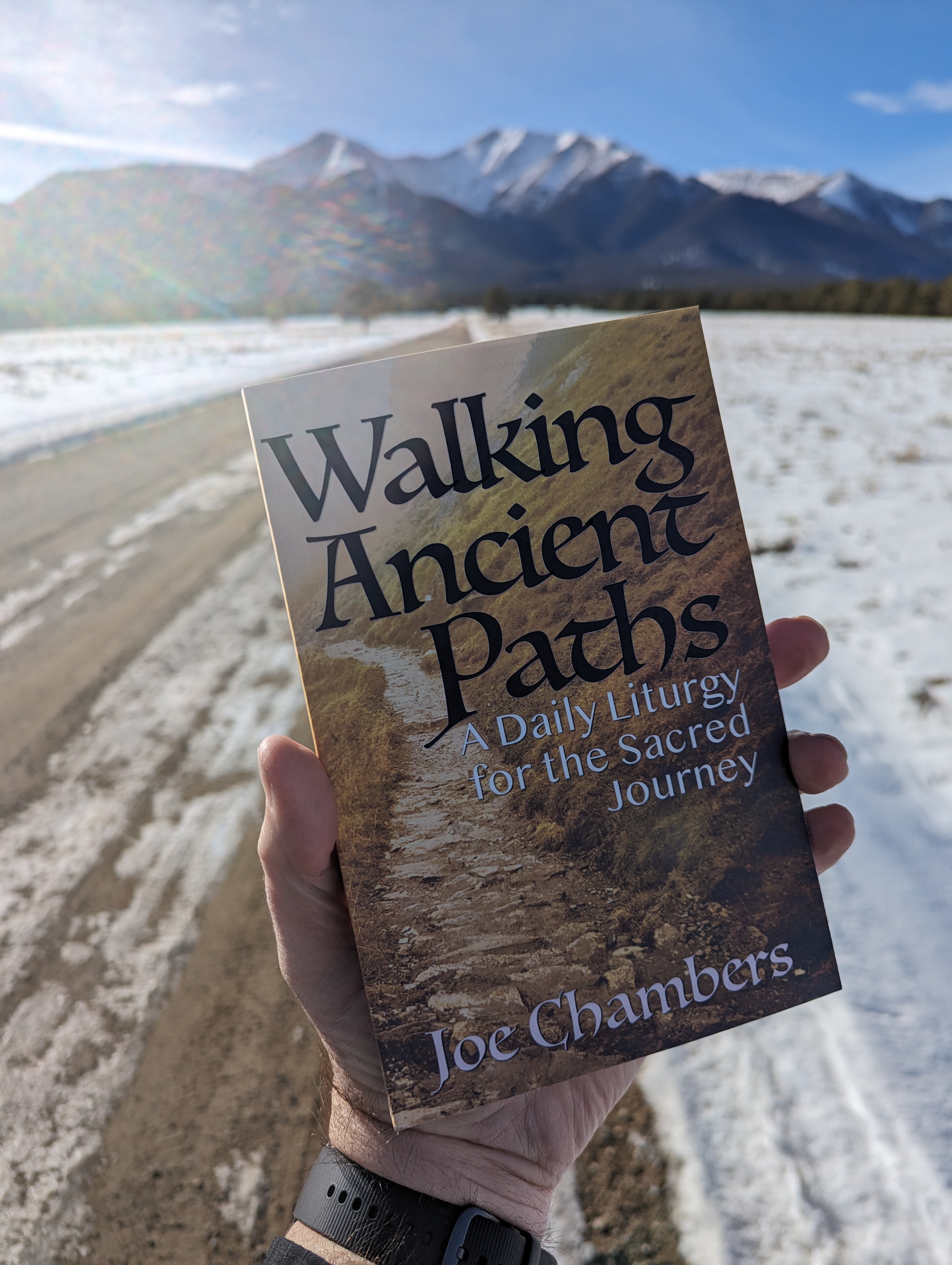
We desire that it remain this way. That being said, I wrote a book this last year with the specific idea in mind that any monies donated for the devotional book would go towards the ongoing cost of keeping The Sacred Journey Retreats affordable to anyone who wants to attend. The book is called, Walking Ancient Paths: A Daily Liturgy for the Sacred Journey. I created a short video about it, and you can watch it by clicking here https://youtu.be/D_4JoMDS-fg?si=MbT0e7VovvM-GPUO.
Each book costs us about $7.00 to print and be shipped to our church and then shipped to anyone interested in supporting this retreat ministry. We are asking for a donation to Mountain Heights Church “Soul Care” for $15-25 per book.
If you or your church are interested in receiving one of these books (or a case) and donating to The Sacred Journey Retreat, you can do so in the following ways:
Mail a check to:
Mountain Heights Church
P.O. Box 786
Buena Vista, CO 81211
Give online at our website:
mhbc.life
In both of these cases, please designate your gift “Soul Care” or “Joe’s book.” Also, I will need to know what address you will want the book(s) shipped to.
The book is unique in that it is a 31-day liturgy, intended for repeated use. It might not fit everyone’s sensibilities. However, it is the method that works well for me in my walk with Jesus. If you have any questions, please reply to this email or give me a call.
For we know that the whole creation groans and labors with birth pangs together until now. Romans 8:22
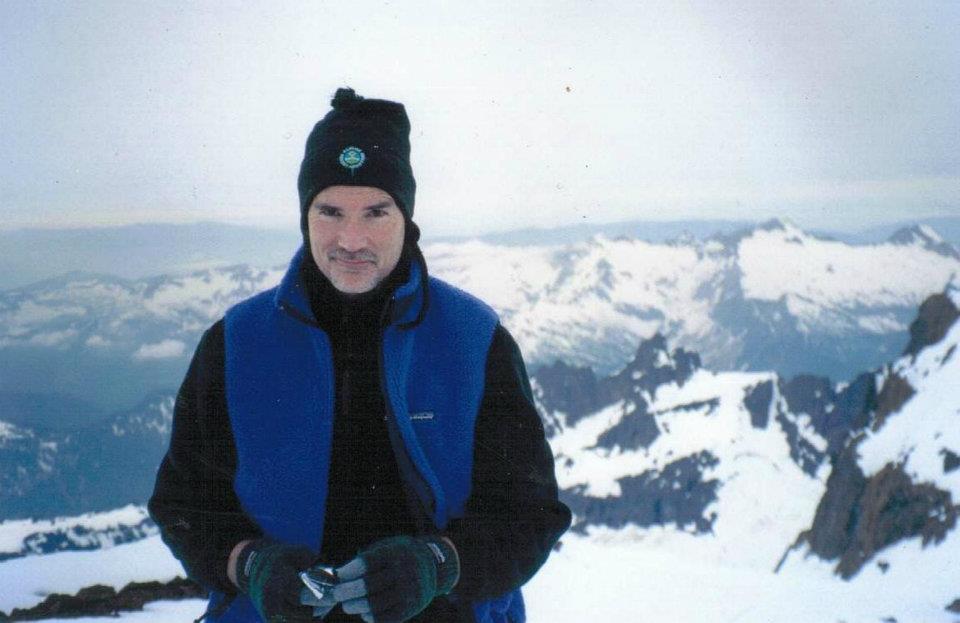
Over two decades ago I summited Mount Baker in the northern Cascade Mountains in Washington State. At 10,781 ft. in elevation, Mt. Baker is the second most glaciated peak in Washington, only behind the much taller and comparatively more challenging Mt. Rainier.
My climbing group and I camped at about 9 thousand feet on one of the glaciers. While eating our evening meal before we summited the next morning, we heard a loud rumble. It reminded me of thunder, but there were cloudless skies. We all looked at each other and someone said, “The mountain is groaning tonight.” We determined that it was the movement of the glacier we were camped on that was causing the deep rumble.
We live in a world that is groaning for new birth, new creation, and new wholeness. The wars in Ukraine and Israel. The earthquakes in Afghanistan.
There are more people in slavery today than at any time in human history. The best estimate, according to the U.S. State Department, is 27 million, and that does not include bonded labor.
There is an estimated 75 to 199 million tons of plastic waste currently in our oceans, with a further 33 billion pounds of plastic entering the marine environment every single year.
In the year 2023, there have been 643 mass shootings. According to Mass Shooting Tracker, they define a mass shooting is an incident of violence in which 4 or more people are shot. Of course, the latest high-profile shooting is the mass shooting in Lewiston, Maine. Where a single gunman killed 18 people and injured another 13.
The objectification of women and the exploitation of children. The sexual abuse coverups in institutions like the Boy Scouts of America, the Roman Catholic Church, and the Southern Baptist Convention. And on and on and on it goes.
God loves this world. And God wants to save it, redeem it, and heal it.
I remember hearing a preacher say, “We don’t need to worry about the spotted owl, because after the rapture God is going to burn it all away. Besides, why should we leave anything of any beauty and value for the Anti-Christ?”
Here’s my problem: What if that particular interpretation of the second coming is wrong? We will be mismanaging God’s world because of questionable theology.
What do we do with the covenant that God has established with the earth?
In Genesis 9:16 we read,
Whenever the rainbow appears in the clouds, I will see it and remember the everlasting covenant between God and all living creatures of every kind on the earth.”
So God said to Noah, “This is the sign of the covenant I have established between me and all life on the earth.”
God established a covenant with Noah and this good earth. Do you know what is included in “all life on the earth”? Spotted owls.
People are always criticizing the theology in today’s modern praise songs. But I have a problem with the theology in some of the old hymns. Here’s an example.
Turn your eyes upon Jesus Look full in his wonderful face And the things of earth will grow strangely dim In the light of his glory and grace
I think Paul would say, that when you turn your eyes upon Jesus, the things of this earth will become crystal clear. Christ is the light of the world. Christ lights up this world so that I can see it more clearly than ever before. I can see its beauty and I can see its heartbreaking brutality. I become much more sensitive to it.
God loves this world. In fact, the most popular and often quoted verse in all of the word of God reminds us of this great love:
For God so loved the world that He gave His only begotten Son, that whoever believes in Him should not perish but have everlasting life.
That’s why Jesus came into this world. And that’s why we need to listen to the groans. Because God is looking for people like you and me to make God’s dream real for this world.
What is groaning in this world right now that has grabbed your heart? What is groaning in this world that God is nudging you towards so that you can do something about it?
Are young families that need mentoring? Are senior adults lonely? Are there people of color in our communities that need to be invited into our homes. Is there anyone struggling with mental health issues that needs an advocate? Are there after-school programs that need volunteers?
And the list could go on and on.
Can we hear those groans? Or am I just caught up in my own world?
What will change the world? I believe it will change incrementally when we look away from the fearmongers on the left and the right and start looking to Jesus the author and finisher of our faith. And while we are looking to Jesus, listen for the groans of this world.
One way to discern a groan God might be calling you to is to ask yourself, “What issue makes me weep or pound the table?”
I believe with all my heart that every single follower of Jesus has been given a unique calling. I love the way the late Frederick Buechner put this:
“The place God calls you to is the place where your deep gladness and the world’s deep hunger meet.”
What is the groan that gets hold of your heart and your life?
We find our ministry and we find our vocation — we find our role in God’s dream in this world—when we are able to hear the groans of the world.
How well do you really know yourself? All of us have blind spots in our self-awareness. If we are ever going to grow and change as followers of Jesus, then we must grow in our understanding of ourselves.
Listen to a few of the best thinkers in our faith:
“Grant, Lord, that I may know myself that I may know thee.” – Augustine
“Nearly the whole of sacred doctrine consists in these two parts: knowledge of God and of ourselves.” – John Calvin
I recently traced the encounters the Apostle Peter had with Jesus, and I can tell you that the Peter who made the great confession, “You are the Messiah, the Son of the living God.” (Matthew 16:16) would have never dreamed he would deny Jesus when Jesus needed him most. And yet that is exactly what he did.
Peter had a blind spot in his self-awareness that needed to be discovered.
Many of us have followed Jesus for a lot longer than three years like Peter did and yet I wonder if we have deepened our understanding of ourselves. Though we glibly talk about a personal relationship with God, many of us know God less well than we know our casual acquaintances. We have settled for knowing about God. Too easily our actual relationship with God is remarkably superficial. It’s no wonder we don’t know ourselves very well.
When I was a teenager, I was wild. I lived for my own self-interests—very sinful. Through the influence of my parents, the prayers of a deacon named Clint Spearman, and getting into a car accident with a Denver police officer when he was responding with his lights and sirens on, I re-aligned my life with God and repented of my sins.
Learning on Uncompahgre Peak
In the summer of 1979, I was a summer intern for the Colorado Baptist General Convention and worked with the backpacking program my dad started called R.A.A.T. patrol. Those letters stood for Royal Ambassador Adventure Trips. Royal Ambassadors were sort of a Baptist Boy Scout program. The name was later changed to Recreational Alpine Adventure Trips.
The summer I was an intern in this program the training process was that I went on an eleven-day backpacking expedition in the San Juan Mountains with Christian High Adventure. It was a faith-based Outward Bound type program. I was probably 22 years old at the time.
On the seventh day, we were to go on a solo trip for 24 hours and spend it in silence and solitude with the Lord. I was not looking forward to this. I did not want to be alone. But that day spent above timberline, all my sins that I had asked God to forgive came flooding back into my memory. I got very emotional. I remember crying out to God in a rather angry voice, that I thought I had asked him for forgiveness. Why were these images, memories, and guilty feelings coming to the surface of my mind?
After my sobs subsided, I wrote in my journal, “Joe, you have received forgiveness from everyone.” Then I listed out everyone who had said they had forgiven me and that included family, friends, church, and God.
“Well, then why do I still feel so dirty, guilty, and lonely?” I wondered.
And it was as if the Holy Spirit said, “There is one person who has never given you any grace and his name is Joe Chambers.”
That started to open the floodgates of tears again.
I offered myself the grace that everyone had given me. I dared to believe what those who loved me were saying about me. I gave myself the gospel.
But that younger Joe knew himself as a sinner and God as a forgiver.
Learning at Sand Creek
As most of you know, last August I went on Sabbatical for a month. The first part of my sabbatical was spent backpacking. I decided to go to the Sangre de Cristos, a place that was very special to me and my family growing up. I first backpacked there over fifty years ago.
I climbed over Music Pass and dropped down into the beautiful Sand Creek valley.
On day 6 of being alone in the wilderness, with Tijeras Peak jutting into the deep blue sky like giant praying hands and the green valley stretching before me with the tawny summer grass waist-high waving in the breeze like Kansas wheatfields—I read a passage of Scripture that took my breath away.
Greater love has no one than this, than to lay down one’s life for his friends. You are My friends. John 15:13-14
All I could see in those verses is that Jesus was calling me friend. Over and over and over again, I kept hearing him call me friend.
I thought of Abraham who is called the friend of God. I thought of Moses where it is said that God spoke to him face-to-face as a man speaks to a friend. Me? Friend? I’m just a fat old man. A regular guy. But then so was James, Bartholomew, and Nathaniel.
And Peter.
I learned that the Pharisees were right in their harsh accusation about Jesus, He WAS a friend of sinners. I am someone Jesus wants to hang out with.
I thought of what might be carved on my tombstone, Joe and Jesus—friends.
There is a difference between relating to Jesus as a forgiver and relating to him as a friend.
I invite you to reflect on your life in such a way that you listen to a quiet voice that would teach you something about yourself so that you can learn something about God. How can you trust that inner voice of self-revelation? It will always be a voice of love drawing you closer to the Father’s heart.
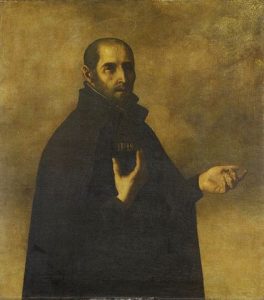
St. Ignatius believed that God intended for the human imagination to draw us closer to him. He was well aware that the imagination can just as easily separate us from God, of course. But imaginative prayer is different from idle daydreaming in two ways:
It is powered not just by our imagination, but by the Holy Spirit working through our imagination.
It is rooted in a sacred text, usually the Gospels.
In imaginative prayer, the same Holy Spirit who inspired the authors of the Gospels also “inspires” (literally “breathes into”) our imaginations in a way that draws us closer to Christ. Prayer is a conversation with God; imaginative prayer creates a space for that encounter.
The heart of imaginative prayer, then, is to “meet” God, usually in the person of Jesus, in a personal way.
With all this in mind, let’s go over the basic method of imaginative prayer.
1. Choose a Scripture passage
First, choose a suitable Scripture text. While imaginative prayer can be used with any sacred text, scenes from the Gospels are the best texts in which we encounter the Son of God “in the flesh.”
2. Prepare with prayer
Rather than diving right into the Scripture or other sacred reading, it is helpful if we first prepare ourselves. Find a quiet and comfortable place to pray and take a few moments to settle in. Then, take a few moments to pray along these lines:
Begin by becoming aware that God is already here waiting for you. Rest in his loving presence.
Then, respond to God’s loving presence by giving yourself over to him. Pray that you might love and serve him in all your thoughts, words, and actions.
Prayer is fundamentally an expression of our relationship with God. When we begin by acknowledging God’s availability to us, and by making ourselves available to God in return, we situate everything that happens next within that relationship.
3. Read the scripture
Next, read the Scripture passage at least once.
You may wish to ask the Holy Spirit to help you to read the text prayerfully. Given the amount of reading most of us do online, you may be in the habit of skimming the text rather than ruminating on the words. Try to slow down (I always read them aloud); the Gospels were written slowly and intentionally. Each word and phrase, and each omission, was chosen for a reason. Stay with the words and see what they serve up.
4. Set the scene
After you have read the story at least once, use your imagination to set the scene. Be as specific about the details as possible, engaging all your senses: touch, smell, sound, sight…even taste, if the opportunity arises. Make the Gospel story come vividly to life, almost as if you were directing a movie. The Son of God chose to save us not merely with a word from heaven, but by becoming the Word-made flesh at a specific time and place in human history. In imagining the Gospel in its physical setting, we honor the reality of Jesus’ incarnation and set the stage for encountering him “in the flesh” ourselves.
Here are some things to consider as you set the stage for your imaginative prayer experience:
Who are you in this story?
What time of day is it? What is the weather like?
What do you see around you?
Who is present? What do they look like, and what are they doing?
What ambient sounds do you hear?
How do you feel? Hot? Hungry? Tired?
What do you smell?
Above all, be sure to pay attention to Jesus. What does he do? What does he look and sound like?
5. Walk with Jesus
Once you have “composed” the setting of the story, put aside the text and let yourself enter into it. This is the body of your imaginative prayer, so take as much time here as you need.
Before stepping into the Gospel, consider what you most desire from this encounter with Jesus.
Next, enter the Gospel, letting the action of the story unfold by itself under the direction of the Holy Spirit; do not actively direct or force the actions of the main characters. Your role is to participate in the action of the story in whatever way seems natural.
Finally, as you step out of the Gospel story, speak to God directly. Have an intimate conversation with God. This is often called a “colloquy, “or a spiritual conversation. This is where we share our thoughts, feelings, and desires with God much as one friend would speak to another. What is his invitation to you?
I invite you to close your time of prayer with the Lord’s Prayer; you might substitute another formal prayer that you like, such as praying the twenty-third Psalm. The point is to punctuate the end of this special time with Jesus.
6. Reflect on the Journey
After you are finished praying, spend some time reflecting on your encounter with Jesus. You can do this immediately after your prayer, or as you go about the rest of your day. You might record your reflection in a journal or notebook or share and discuss your experience with your prayer group or a spiritual director.
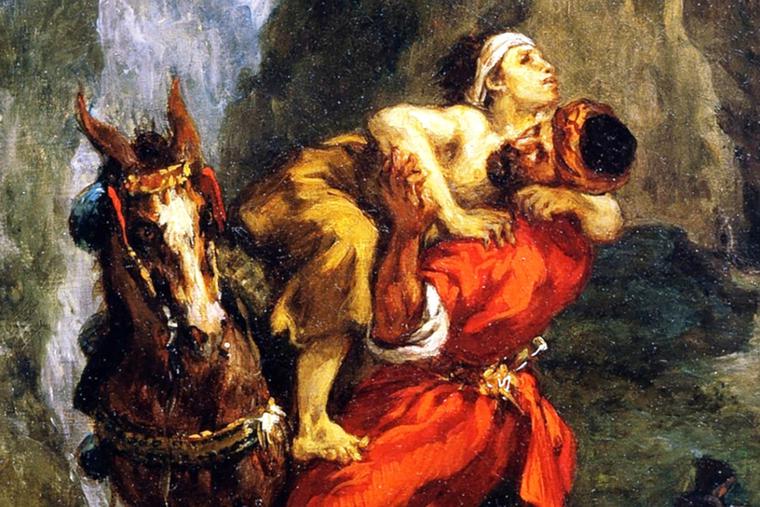
A man was going down from Jerusalem to Jericho and fell into the hands of robbers, who stripped him, beat him, and took off, leaving him half dead. Luke 10:30
Ministry that costs nothing accomplishes nothing. – John Henry Jowett
This was a road that was infamous for having robbers who would mug you. The local people called the road “The Bloody Way” in the first century.
Jesus said that two religious pros went out of their way to avoid the broken man on the road. And it wasn’t a two-lane road with a wide shoulder. It was more like a mountain trail through rugged ravines and cliffs. To go around this guy meant that the two religious professionals had to leave the trail, and climb up a crag of rocks to get past him. It took quite some effort to avoid the bloody pile of a human on that road.
And then Jesus contrasts that with the figure of the Good Samaritan. Who comes near to this person, bandages their wounds, and puts them on their own animal. Takes him to a hostel in Jericho and essentially leaves his credit card with the clerk and says, “Whatever this guy needs to recover, put it on my card.”
In a very real sense, the Samaritan was putting life back into a person who was dying.
Nearly twenty-five years ago, my world came crashing in on me. Because of some selfish choices, I lost my position as a pastor and needed to move my young family to another state. Emotionally, I was as broken and battered as that man on the road called “The Bloody Way.”
Lynette and I were trying to get our house ready to be put on the market so that it could be sold, and we could move to the Pacific Northwest and start a new life. There were a thousand little things that needed to be done to the house to get it ready to be put on the market before we could move. But I was so broken that I couldn’t think straight.
I don’t know all the details, but one day my brother-in-law, John, showed up unannounced on our front porch. I asked him what he was doing, and he said, “I heard you were in trouble, and I came from California to help you get your house ready to sell.”
Those days are a fog in my memory, and I don’t remember everything he did, but he spent two or three days working on our house because I was too emotionally broken to do it. John Harrington entered into the brokenness of the broken and it marked my life in a deep and profound way.
That is what a burden-bearer does. That is the kind of church community I want to be a part of; a community of life-giving friends who bear one another’s burdens.
The Good Samaritan was willing to spend himself on behalf of the bloody stranger. This man allowed his schedule to be disrupted. He spent his time, his energy, and his own money. When we begin to fulfill the law of Christ that Paul talks about in Galatians, it will disrupt our schedule, cost us time, and energy, and often cost us money.
We do it because a man named Jesus left heaven’s glory for earth’s gloom to bind up our broken souls and anoint us with this love and great cost to himself.
Surely He has borne our griefs And carried our sorrows…
But He was wounded for our transgressions, He was bruised for our iniquities; The chastisement for our peace was upon Him, And by His stripes we are healed. Isaiah 53:4-5
Who is broken in your world that needs a burden-bearer? Are you that burden-bearer?
Jesus took with him Peter and James and his brother John and led them up a high mountain, by themselves. Matthew 17:1
Get Mark and bring him with you, for he is useful to me for ministry. 2 Timothy 4:11
In the early nineties on a large game preserve in South Africa, the rangers began to notice that white rhinoceroses were being killed by much larger animals. Turns out the killers were adolescent bull elephants. These elephants had been orphaned and were left on the reserve to fend for themselves.
In the wild, the males herd together, and the older and much larger bulls keep the younger bulls in check. Without the older bulls to model adult elephant behavior and the gravitas to challenge the younger bulls—they were doing great damage. The rangers introduced old bulls into the Park and the violence stopped.
You may not be doing great damage, but there is something to be said about getting close to a life-giving friend—a seasoned believer, a non-anxious presence, a scarred old bull.
We all need someone to shepherd our souls. Every pilgrim needs a guide.
There is a difference between a friend you play racquetball with and a soul friend. A soul friend is an intimate, life-giving companion who helps you pay attention to God.
A soul friend will say to you, “How is God speaking to you in this? How does God want to be at work in your life through this? And how are you responding to him?” They help you pay attention to God.
How do you go about finding a sacred companion, a soul friend?
John O’Donohue reminds us,
Stay clear of those vexed in spirit. Learn to linger around someone of ease Who feels they have all the time in the world.
When you find a possible safe person, you might begin by disclosing some area of struggle, not the deepest one in your life, but a significant one.
Here are some questions to reflect upon as you consider a soul friend:
Is there a level of empathy? Is there an internal slowness in their life? Do they give unsolicited advice? Do they listen well? Are they a non-anxious presence? Are they wise and discerning in their response? Is there a judgmental spirit attached to them? Do they honor confidentiality? Are they curious more than confident of their own opinions? Do you feel pressure when you are with them? Are they comfortable with silence when they are with you? Are you comfortable with silence when you are with them?
Are they a person who leads with truth and follows up with grace or are they someone who leads with grace and follows up with truth? (the order is important. See John 1:14)
I’m not sure that anyone can have a shepherd for their soul and be called poor. I’m not sure that anybody could lack having a friend for their soul and be called rich.
Old bulls walking with young bulls. Because every pilgrim needs a guide.
Are any among you suffering? They should pray. Are any cheerful? They should sing songs of praise. Are any among you sick? They should call for the elders of the church and have them pray over them, anointing them with oil in the name of the Lord. The prayer of faith will save the sick, and the Lord will raise them up; and anyone who has committed sins will be forgiven. Therefore confess your sins to one another, and pray for one another, so that you may be healed. The prayer of the righteous is powerful and effective. Elijah was a human being like us, and he prayed fervently that it might not rain, and for three years and six months it did not rain on the earth. Then he prayed again, and the heaven gave rain and the earth yielded its harvest. James 5:13-18
A little boy was asked by his father to say grace at the table. While the rest of the family waited, the little guy eyed every dish of food his mother had prepared. After the examination, he bowed his head and honestly prayed, “Lord, I don’t like the looks of it, but I thank you for it, and I’ll eat it anyway. Amen.”
When our second son, Clinton, was a very small boy, I would tell him and his brother Cole bedtime stories from the Bible and Lord of the Rings. Sometimes I would tell a mash-upped story where King David kills a very large spider named Shelob with a slingshot and five smooth stones. (Forgive me, Lord.)
But after a time of storytelling, I would ask them to say their prayers so that I could hear them. One night Clinton, with his hands folded across his chest and eyes closed, began mumbling his prayers so that I couldn’t understand what he was saying. I said, “Clinton, speak up. I can’t hear you.”
He looked up at me and said, “Dad, I’m not talking to you.”
This is a passage that is written by the brother of Jesus—James. I think the fact that James wrote this book is powerful evidence of the veracity of Christianity. Because when I was a kid, I was never once tempted to ever think that my brother was somehow God among us or divine.
And yet here’s James—a follower of Jesus and a leader in the early church.
And in this letter, he’s inviting these early followers of Jesus to enter into a praying way of life.
So we’re going to listen to James’ wisdom this morning and I want us to listen with an ear for the posture of prayer, for the power of prayer, and then for some practicalities.
The Posture of Prayer
13 Are any among you suffering? They should pray. Are any cheerful? They should sing songs of praise.
In other words, you can boldly go to God with everything that concerns you about your life and have the confidence that God is going to lean towards you and listen.
I am reminded of a beautifully gut-wrenching poem by Ted Loder (from Guerrillas of Grace):
“How shall I pray? Are tears prayers, Lord? Are screams prayers, or groans or sighs or curses?
Can trembling hands be lifted to you, or clenched fists or the cold sweat that trickles down my back or the cramps that knot my stomach?
Will you accept my prayers, Lord, my real prayers, rooted in the muck and the mud and the rock of my life, and not just my pretty, cut-flower, gracefully arranged bouquet of words?
Will you accept me, Lord, as I really am, messed up mixture of glory and grime? Lord, help me! Help me to trust that you do accept me as I am, that I may be done with self-condemnation and self-pity and accept myself.
Help me to accept you as you are, Lord: mysterious, hidden, strange, unknowable; and yet to trust that your madness is wiser than my timid, self-seeking sanities, and that nothing you’ve ever done has really been possible, so I may dare to be a little mad, too.”
How can Ted Loder and James talk like this? Here’s how.
Every generous act of giving, with every perfect gift, is from above, coming down from the Father of lights, with whom there is no variation or shadow due to change. James 1:17
The point is that if you have a covenant relationship with Jesus and are living a life of repentance, then God isn’t a distant cosmic force for you. He isn’t just a wonderful philosophical idea for you. No, if you have placed your life in the nail-scarred hands of Jesus then God is your good Father.
So, if you’re a follower of Jesus, praying is not just something that you do when you’re about to eat dinner, it’s not something you do when you don’t have enough money to make it to the end of the month, it’s not something you do when a friend goes in for surgery…Praying is a posture for your whole life.
The goal of prayer is to live all of my life and speak all of my words in the joyful awareness of the presence of God.
That’s the posture that James invites us to take with God.
The Power of Prayer
15 The prayer of faith will save the sick, and the Lord will raise them up; and anyone who has committed sins will be forgiven. 16 Therefore confess your sins to one another, and pray for one another, so that you may be healed. The prayer of the righteous is powerful and effective.
James does not say that prayer is powerful because Christian people are especially devout or perfect. Prayer is powerful, James says, because God is powerful.
And when you and I enter into a praying life with him, we participate in God’s purposes.
This is what the reference to the story of Elijah is about. (1 Kings 17-18)
The point of the story of Elijah is not that he was some kind of devout or perfect person. In fact, if you would read the story of Elijah, you’d realize that exactly the opposite is the case.
Elijah got angry.
Elijah got lost in life.
Elijah got depressed in life.
Elijah got lonely.
The point wasn’t that Elijah was perfect. The point is that he prayed in faith to a powerful God.
James says, when you and I address the same God in humble childlike dependence, in the name of Jesus, for things that God cares about—God answers.
Now, you don’t need to have been a Christian for a long time to wrestle with these words. Why does God not seem to answer when these words promise that God will answer?
Sometimes God doesn’t answer prayer because we ask for wrong or selfish things.
Chapter 4:3,
You ask and do not receive because you ask wrongly, in order to spend what you get on your pleasures.
Sometimes in not answering our praying in the way that we’d want, God is helping us to be patient. Teaching us to trust him.
And sometimes…I don’t know. I just don’t know why God doesn’t give us what we ask.
I know what it’s like in my own life to pray for people that I love, who don’t get better.
There are some threads in the story of redemption that we just won’t see where they lead in this life. There are some people that you and I pray for, and we need to trust that God will raise them up at the end, if not now.
However, a life shaped by Jesus can bring all the pain, desperation, dirtiness, and ugliness of life to God’s presence and know that God is there, and God is at work even when we don’t understand how.
The Practice of Prayer
13 Are any among you suffering? They should pray. Are any cheerful? They should sing songs of praise.
Pray the Psalms.
When he speaks of songs of praise in verse 13, many scholars believe he is referring to the Jewish prayer book—the Book of Psalms.
James is telling us, “You can use the words that God gives us to learn how to speak to him.”
I’ve been praying the Psalms back to God for years. Often when I don’t know what to pray, or even feel like praying, I pray God’s words back to him.
If you want to use the reading plan that I use, I have copies of that down here at the front.
That’s why God gives us his words so that we can learn how to talk to God.
Wordless Prayers
I have come to appreciate the value of silence.
We are inundated with words. I love how Henri Nouwen talks about this,
Words, words, words. Our society is full of words: on billboards, on television screens, in newspapers and books. Words whispered, shouted, and sung. Words that move, dance, and change in size and color. Words that say, “Taste me, smell me, eat me, drink me, sleep with me,” but most of all, “buy me.” With so many words around us, we quickly say: “Well, they’re just words.” Thus, words have lost much of their power.
Sometimes is altogether appropriate to sit in silence before the Lord.
This morning I was reading in my Psalm reading plan these words from Psalm 63:5-6
For God alone my soul waits in silence, for my hope is from him. He alone is my rock and my salvation, my fortress; I shall not be shaken.
The Psalmist reminds us, “Be still, and know that I am God!” (46:10)
In 1654, scientist and philosopher Blaise Pascal wrote: “All of humanity’s problems stem from man’s inability to sit quietly in a room alone.”
There was a time when an old preacher was feeling sorry for himself. He felt he was fighting the good fight all alone. He had no support from his congregation. He had no support from his family. He was depressed and desperate. So, he went out into the wilderness (probably above timberline) to get away from everyone to seek God.
While there, a messenger said,
“Go out and stand on the mountain before the Lord, for the Lord is about to pass by.” Now there was a great wind, so strong that it was splitting mountains and breaking rocks in pieces before the Lord, but the Lord was not in the wind, and after the wind an earthquake, but the Lord was not in the earthquake, and after the earthquake a fire, but the Lord was not in the fire, and after the fire a sound of sheer silence. When Elijah heard it, he wrapped his face in his mantle and went out and stood at the entrance of the cave. Then there came a voice to him that said, “What are you doing here, Elijah?” (1 Kings 19:11-13)
Every morning I spend a couple of hours reading God’s word and listening to the day awaken. A sign of deep love is when two people can spend long periods of time together in silence.
Intercessory Prayer
Every morning I pray in three areas:
Personal
Church
World
Long Wandering Prayer
My friend David Hansen wrote a book called Long Wandering Prayer about this practice,
Long wandering prayer happens on the inside like it happens on the outside. It is mental wandering in the presence of God, corresponding to physical wandering in the presence of God. Long wandering prayer involves leaving our normal environment for the express purpose of spending many hours alone with God. It involves walking, or at least moving, and stopping whenever we want, to consider a lily for as long as we desire. Long wandering prayer uses the fact that our minds wander as an advantage to prayer rather than a disadvantage. In long wandering prayer we recognize that what we want to pray about may not be what God wants us to pray about. Our obsessive drive to control our minds in the presence of God, that is, to pray about one thing or stick to one list, maybe a form of hiding from God. In this kind of prayer, we recognize the wandering mind as a precious resource for complex and startling dialogue with God.
Sometimes we might question if we are doing prayer correctly. There is no wrong way to pray. Find your way to be in the presence of God and let him sort it. Pray, as Eugene Peterson has said, the way we can instead of trying to pray the way we can’t.
When I was a young pastor, I had an office manager named Martha King. She was an extraordinary administrator and could really boss me around. One day, she and I were talking about her past church experience, and she was telling me about her pastor. Said she really respected him and admired him. I asked her what she admired about him.
She said, “He was a man of prayer. He would spend a great deal of his time in solitude and prayer.”
To my deep shame, I remember thinking what a waste of time and talent. I would go nuts doing that. I needed to measure progress. How do you do that in prayer?
I feel differently about things now. I spend a big portion of my time praying. But sadly, I have come to this value late in life. I have a devotional book in the process of being printed and should be available in September. In it, I describe much of what I have shared with you today. At the beginning of the book, I wrote a poem that expresses where I am in my devotional life in my mid 60’s. Most of my life has been focused on doing, in my latter years I have focused more on being. That awakening has left me with some regrets.
Late have I learned to listen, to weep, to be still, to be. Almost gone are moments to slow down, to reflect, to wonder, to day-sleep. Fleeting is the day for wordless prayers, to pause, to sing, to remember. Late have I learned to turn up the quiet, to speak low, to be small, to love well. “Late have I loved you, beauty, so old and so new: late have I loved you.”
And so, dear reader, may you learn to love the Lord deeply enough to sit still with him and lift words and silence to the God who wants to be with you.
For you yourselves know very well that the day of the Lord will come like a thief in the night...Therefore encourage one another and build up each other. 1 Thessalonians 5:2,11
Our words hold vast and immense power. When you use words, you may do so in a Godly or ungodly way, but you always will do so in a God-like way. Your words, because you’re made in the image of God, are powerful.
With the words that you speak, you can create hope and another person or destroy it. You can lift someone up, or you can erode their dignity. You can build faith and encouragement in another human life, or you can tear it to pieces.
You know this in your own story. You know what it’s like to have someone who’s a trusted colleague or a mentor look you in the eye and say, “I believe in you. You can do this.” You know what it’s like to have somebody you’ve offered your whole life to look you in the eye and say, “I don’t love you anymore. You’ve betrayed me.”
Words hold immense power.
It has been said that 125 people died for every word of Hitler’s Mein Kampf in WWII. It is a thick book of 720 pages.
A suicide note left by a teenage girl simply read, “They said…,” and then she took her life.
Words can kill.
I remember what a coach said to me about my body when I was a boy that caused me to be insecure until this day.
Words can leave scars.
The president can give a speech that causes the stock market to soar or tank. A dictator can boast of weapons of mass destruction and a war is the result.
Words can influence.
I have a file with notes and cards that church members have sent me over the years. I get them out from time to time when I need to remind myself that I am not always a horrible person. I have a note from my father that he sent me when I was in college when I was questioning my call to the ministry. I’ve kept it for 45 years. I have a note that my oldest son sent me on pastor appreciation month about 12 years ago that I have taped to the inside of my Bible. They are words of affirmation and admiration.
Words are life-giving treasures.
And we’re invited to use our words to build faith, hope, and love, in the lives of people that God puts around us.
We live in a cultural moment in which it’s urgent that we learn how to do this.
“Two epidemic illnesses of our time…. are the disintegration of communities and the disintegration of persons. My impression is that we have seen, for perhaps a hundred and fifty years, a gradual increase in language that is either meaningless or destructive of meaning.” Wendell Berry, Standing by Words
Here’s the thing, Wendell Berry has never even been on Facebook or Twitter. Those words were written in 1979.
We live in a time where we have ever more efficient ways, on the one hand, to connect with each other, but on the other hand to lob insults at each other. We think that insult in political discourse is a normal thing.
But Paul says that in times of uncertainty, we need to be people committed to building up other people, seeking their good, and choosing to bless them. In a time when the world is frightened and therefore tearing each other apart, we need to be a community that is committed to building each other up. That would be a powerful picture of Christian hope.
I want to just invite you to consider who it is that you might offer gospel encouragement.
Who needs a phone call from you?
Who needs a handwritten letter from you?
Who needs a cup of coffee with you?
Who needs a meal with you?
Words can bring such life and hope to a sagging soul. This came home to me last winter when our friend and deacon at my church, Jerry Thornhill, was in his last months of life. I tried to visit him every day. One day I promised him that I would bring him a meal. So, I went home and made a pot of potato soup for him.
Lynette and I loaded up the soup in the car and drove into town to take it to our friend. As we were driving across the valley, I was looking at Mt. Yale and thinking of Jerry and how much he meant to me and our church—the warm and creamy smell of the potato soup filled my heart with love for Jerry. Lynette must have sensed that I was having a moment, because she squeezed my hand and said, “You are a good man, Joe.”
My eyes welled with tears, and I squeezed her hand in response.
Her words reminded me of the proverb that says, “A word fitly spoken is like apples of gold, in settings of silver. Proverbs 25:11
And so, friend, in a world of uncertainty with a cacophony of destructive voices all around, may we speak words of faith, hope, and love to a world that longs for the Gospel.
Dear Lord,
Help me to live with the constant awareness that my mouth is either an instrument of destruction or a source of encouragement. Your Word says that you have put eternity in the hearts of those who love You, would you put eternity in my mouth? Help me to hold my tongue when I am tempted to impress others with my words. But let it loose, Lord, when I see an opportunity to speak words of life and love.
I give you a new commandment, that you love one another. Just as I have loved you, you also should love one another. By this everyone will know that you are my disciples, if you have love for one another. John 13:34-35
We are living in one of the most polarized times in our nation’s history. It is true in our culture and politics, and it is also true in our churches.
There is a young man I know that was telling me about his church. It is a mainline and liberal church. They are very active in many of the hot-button social issues of our day. He said that they openly affirm the LGBTQ+ community. In fact, they have a large rainbow banner saying so across the front of their church. They also have a “Black Lives Matter” sign on the churchyard. They are an aggressively liberal church.
I said to him, “Sounds like your church is doing the same thing that a conservative church might do by having American flags all over their churchyard and MAGA banners across their church. And a sign that says, “Blue Lives Matter.”
I said, “Your church and the MAGA church are sending the same message to the community. The message is “This is who we are!” And this is who is welcome in our church and who is not welcome in our church.
He looked at me and said, “No, there is a difference.” I said, “What is the difference?”
He said, “Our banners are right and theirs are wrong.”
I said, “But the MAGA church would say the same thing.”
He said, “We both can’t be right. Someone has to be wrong.”
I said, “You both are wrong.”
He couldn’t hear me.
The late author Tim Keller said, “Churches that are too heavily invested in the political agenda of a particular party or candidate can appear to others to be captive to an ideology instead of the Lordship of Christ.”
Let me modify that for a moment, “Christians that are too heavily invested in the political agenda of a particular party or candidate can appear to others to be captive to an ideology instead of the Lordship of Christ.”
One of the striking things about Jesus is that He didn’t work really hard to make sure He put together a small group of people who were naturally compatible with each other.
The third chapter of Mark gives us a list of the people who were in Jesus’ small group.
One of them was a man named Simon the Zealot. Zealots were an extremist nationalist political party, committed to the overthrow of the Roman government by any means possible, violence if necessary, and sometimes assassinations. They hated the Romans.
The only people they hated more than the Romans were the people who collaborated with the Romans, like tax collectors who were Jewish people willing to collaborate with the Romans for corrupt financial gain. Zealots were freedom fighters or terrorists, depending upon your political point of view.
Jesus is forming a small group, and He says, Simon, you’re a Zealot. You despise Romans and collaborators like tax collectors. I’ll take you.
And then He says, Matthew, you’re a collaborator and a despised tax collector. I’ll take you. You room with Simon. You guys should have some interesting talks with each other.
Can you imagine what it was like?
We are to be a community that embraces and includes each other, not a body that is filled with hatred and exclusion. This is why Jesus emphasizes that we know we love God—when we love each other. This is the in-breaking of God’s new community.
Some Practical Steps for Showing Love:
Be Curious
A few stories in the Gospel of John serve to remind us how curious Jesus could be and how it could lead a person to redemption and restoration.
In John 3 it appears as if Jesus is curious about how a man of Nicodemus’ education and status could have a hard time understanding how spiritual beginnings came from the mysterious movement of God. In John 4 Jesus seems fascinated about a woman who would fetch water at a well in the heat of the day. He inquires about her personal life and dignifies her with a theological conversation about worship. In John 5 Jesus sees and notices a man with a disability and asks him, perhaps, the most profound personal question in the Bible, “Do you want to be well?”
When I display curiosity rather than condemnation, I am showing dignity and respect to a person who might be different than me. That is a good place for love to find a foothold.
Be Quiet
He questioned him at some length, but Jesus gave him no answer. (Luke 23:9)
You don’t have to have an opinion on every issue. You certainly don’t have to share it.
The 2018 film First Man, is about the life of Neil Armstrong. After the horrible fire in Apollo 1 that killed astronauts Ed White, Gus Grissom, and Roger Chaffee there is a scene that shows the Apollo 11 crew of Neil Armstrong, Mike Collins, and Buzz Aldrin talking about the future of the Apollo program. But it all happened right after the fire while everyone was still grieving the loss of their colleagues and friends.
Buzz Aldrin was always loud, outspoken, and a bit irritating to the other astronauts.
Mike Collins says to the other two, “So, do you think we are going to get to go to the moon?”
Aldrin says, “It’s been up for grabs since Gus died.”
Long and awkward pause.
Then Aldrin says, “I’m just saying what you’re thinking.”
A long and tense pause.
Neil Armstrong says, “Well, maybe you shouldn’t.”
As a follower of Jesus, we might do well to not have an opinion about every hot-button issue in the world today. An old saint named Phil Meyers one time told me, “Silence may be golden, but duct tape is silver.”
Be Compassionate
The word on the street is that Christians are angry, judgmental, and mean. I promise you if you were to ask most non-church-going folks in our country if they thought of Christians as gentle, loving, and compassionate, they would look at you like a mule looking at a new gate.
We are known as the group that is against everything. What if we could change that by being for love, grace, and mercy?
How do we do this? We love those we disagree with. We love those that oppose us. We stop trying to change everyone else and be the change we want others to see. We love everyone with the love we received when we found Jesus.
Our Lord’s little brother learned this lesson. He watched his older brother love those who were hardest to love and heard the story of how, when He hung on a cross, said, “Father, forgive them, for they do not know what they are doing. (Luke 23:34)
Maybe that’s why he could say, Be merciful to those who doubt. (Jude 22)
Take down your yard signs and fold up your banners. Speak words of love, do acts of love, and pray for those whom we don’t understand.
That’s how we change the world, one soul at a time.





 Field Notes On The Jesus Way
You must be logged in to post a comment.