The Restoration of a Pig Slopper

…when he came to himself…  Luke 15:17

It is good to be between a ruined house of bondage and a holy promised land.  ~Leonard Cohen

Jesus tells a story about a father with two sons.  One stays home on the family farm and the younger son takes his inheritance and leaves home.  He leaves the predictable comfort of hearth and home and is off  to see the world and he is not looking back.

Means and opportunity can be a toxic cocktail of destruction and this boy spends everything he has on food, folks and fun.  A famine gnaws the far country, like a feral dog on a bone, and the blue-blooded Jewish boy has no recourse save slopping pigs.  Slop hogs or die of hunger.  A perfect cocktail for repentance and restoration.

Desperate, he gets on his hands and knees to sidle an old sow to one side in order to put his face in the trough beside her. Then he pauses and thinks, “How did I get here? I don’t have to do this. I can go home.” No prodigal leaves home and heads straight for the pig pen.

 No shepherd boy who writes, The Lord is my shepherd, I shall not want plans to one day lust after a neighbor’s wife, commit adultery, and murder her husband. No one sets out to ruin their life.  They just start walking away from the Father…one step at a time. 

What brings him to his senses is a memory of his father.  His father is kind, but not soft.  All he knows is that he needs to go home; he remembers that he matters to his father.

One late afternoon, as the father is studying that horizon, a dot suddenly appears.  He watches the speck move down the road.  He’s done this before.  Waiting and watching for a familiar carriage of a man that only a paternal eye can discern.  As this vagrant approaches, through the tattered clothes, matted beard and long hair; he recognizes the gaunt visage of his youngest son.

Jesus didn’t say that the father waited until the boy came groveling up to the porch.  He didn’t say that the father waited until the boy had taken a bath.  And the father didn’t lecture him:  “Look at you, you’re a disgrace…I knew when the money ran out that you’d come crawling back!”

The father says none of these things.

Enter the older brother—the dutiful, rule-keeping older brother who doesn’t have a delinquent bone in his body. The older brother is out in the field working as dusk begins to fall.  He’s tired and sweaty from a day of faithful labor.  As he approaches the house, he catches the enticing aroma of beef cooking on an open fire.  He hears music and shouting; he sees servants scampering.

He wonders what festival he has forgotten; what could be the cause of such joy and celebration?  So he grabs one of the busy servants and asks what was going on.  The servant, with arms filled, begins to exclaim, “Your little brother has come home!  Your father has killed the fatted calf and is throwing a party in his honor.  Come celebrate!”

Through clinched teeth, the older brother says, “I ain’t going in there!” 

The servant takes the sad news to the father. So the father goes out and tries to get the older brother to come in.  And the older brother erupts in anger, “I can’t believe that you’re allowing that boy back in the house!  He took all of your money and wasted it.  He’s a drunk.  Think of where he’s been. Think of all the whores he’s slept with, think of our name, our reputation.  No, I’m not going in that house with that…that…pig-slopper!”

In that single moment this older brother displays another side of an out-of-control life—a life distant from the father.  He is so concerned about keeping the rules, underneath that functional exterior is a soul fragmented by anger and resentment. He has forgotten whose house it is. It is the Father’s house.

The younger son, looks down at an unmanageable life, he looks up to a Father who relentlessly loves him, he looks forward to putting his life back into the care and control of his father, and he never looks back at the filth of the far country. The only one looking back at the far country at this point is the older brother.

My first post-pastorate job was tearing down a condemned house. An old lady had lived in the house for decades with her countless cats.  Tearing down the condemned house was metaphor of my life.  I had spent years building a resume, reputation and career as a trust worthy man.  But because of my arrogance and stupidity, I had seen my life abandoned and condemned. 

But with this little yellow house I had already dismantled and hauled off all of the outlying buildings, porch and knocked down many of the non-load bearing walls and it was time to go after the bathroom.  The vanity came out without much resistance, the sink as well.  The only thing left was the tub and the toilet.  I decided to deal with the toilet first.

I removed the tank and carried it out and threw it into my truck to take to the dump.  I unbolted the bowl from the floor, but it wouldn’t budge.  Something——time, rust, secret glue, some malicious spirit—–had corroded, sealed, or soldered the toilet bowl to the floor.

Finally, I wrapped my arms around the cold, slick and disgusting bowl and heaved with all the vein-popping effort I could find.  It wouldn’t budge.  I was frustrated, sad and ashamed of myself. 

I remembered that only two months before I was on the board of trustees of a major Christian organization.  I was a former president of the second largest denomination in the state of Colorado.  I was well-respected and admired and successful in almost every way. 

Now I was trying to tear a toilet out of an old cat-woman’s house.  I remember wondering, “How many times had the cat lady’s bare butt sat on this seat I was hugging?”  I fell back against the bathtub with the sharp smell of urine piercing my nostrils and began to weep,  “Oh, God how did I get here?” 

Louder than an audible voice I heard the Father say, “You are with Me and WE are going to be just fine.” 

My chest heaved with sobs of pain and unmitigated joy.  God was with me on the floor of the cat lady’s bathroom.  I mattered to him.

“Okay,” I said. 

I got up off that bathroom floor, went over the house where my wife was preparing lunch, gave her a kiss and went back and took a sledgehammer to that toilet.  And every day of repentance in the last 16 years is a day further from the filth of the far country and a day of bright joy walking with the Father.

Listen to a prodigal pastor: You matter to your Heavenly Father and He alone has the power to restore you to your proper place in the family of God.

Come home.

You can watch this story here:

Posted in Uncategorized | 4 Comments

My Village

Here every bird and fish knew its course. Every tree had its own place upon this earth. Only man had lost his way.~Margret Craven

I see him, thin and pale at the front of the boat, jaw set, chin high, leaning into the wind as the bow of the boat knifes the water and leaves a steady wake moving up-river to a village called Kingcome.  The young ordinand is Mark Brian and unknown to him, he is going to the village to learn enough about life that he will be able to die well.  He has been sent there by his bishop.  He has a terminal disease.  The bishop knows that the village is the place for him. For it is in this bone-chilled damp village on a river in British Columbia that the young man learns how to love a people on their terms and how to pass from this life into the next.

This is the premise of my favorite novella, I Heard the Owl Call My Name, by Margret Craven.

The vicar learns how to be a priest not by trying to change the natives but, rather, by living along side them in the births, deaths, tidal flows, and salmon runs. He learns that life is tied to place.  And by so living he affects them in ways that will last into eternity.

He goes about his duties as the village vicar with simplicity, humility and grace.  The children are his first friends.  They must sense something childlike in this priest.  Then slowly, as he gives the people space to continue the rhythms of their native life, he earns the respect of the elders in the village.

There is a prefab vicarage to be assembled for the old one is in disrepair and instead of asking for help from the village, he serves them until they come to him, in time, and offer to float the materials up the river and help him build the new vicarage.  Loving them slowly brings them to him and he into them.

I can’t explain how this book has touched me.  I can only tell you that I read it almost annually.  It reminds me that being a Christian is more about being than about doing.  It is about sitting with the congregants with whom I have been charged.  They are the reason I am here.  They are not here to do my bidding, to fulfill my vision, be cogs in my ecclesiastical machine.  They are here to teach me how to be their pastor. And together we learn to be God with skin in our community.

After the young priest has died, and the villagers have laid him to rest, the author writes:

Past the village flowed the river, like time, like life itself, waiting for the swimmer to come again on his way to the climax of his adventurous life, and to the end for which he had been made. Wa Laum. That is all.

I Heard the Owl Call My Name is a book of great beauty that can teach much, without polemic, for those who will listen.

Today, as I went on my walk down my street beside the Puget Sound with Whidbey Island on my right and the snow-capped Olympics in the distance, I passed a snag of an old tree and high in its peak sat a bald eagle, watching me, watching the Sound.  I’ve seen him before.  It is his favorite perch.  When I saw him, I felt connected to this land; to this coastal village called Mukilteo.  I walked, not among clapboard houses on stilts with barking dogs running to chase me away and canoes on saw horses waiting for a fresh coat of paint and water sealant.  I saw manicured lawns, nice cars in driveways; I saw the Ferry churning across the Sound towards  Whidbey Island carrying commuters either to or from Boeing.

But the eagle and me, we have something in common: this is our place.  We watch and wait here for life to ebb and flow while we stand ready to do what we have been placed here to do.  He fishes–and I help folks pass from this life into the next.

For I am a pilgrim, and I, too, am on my way home.

Posted in Uncategorized | 2 Comments

The Third Book of God

My father could hear a little animal step,

Or a moth in the dark against the screen,

And every far sound called the listening out

Into places where the rest of us had never been.

        ~William Stafford, Listening

I went for a walk with a new friend. We walked about three miles as the crow flies, but much further inside his story tracing back years and hundreds of miles. I remember thinking, “This is his pearl of great price, be very careful with it.” I held his story in my large hands—as if holding it in a kintsugi chalice. He felt safe enough to let me carry it for a while as we walked down a mountain trail.

Carrying another person’s story is one of the most sacred things I have ever done and ever hope to do. Inside their story is the essence of who they are, what they’ve done, and who they aspire to become. I am witness to the colors and contours of a life God is eroding, wind-carving, and growing into a landscape in which He would walk in the cool of the day.

Standing before me is the artistry of a Creator-God at work in the story of my friend. Together he and God were finger-painting a messy and yet breathtaking landscape of restoration.

OLYMPUS DIGITAL CAMERA

photo credit Michelle Wegner

A doe scampered across the trail; golden aspen leaves gently clattered like organic wind-chimes in the breeze. On and on came his words of pain, loss, and heartache. There was a dryness to the mountain air in sharp contrast to the tears tracking down the face of my friend.

He spoke of an emotionally distant father, the suicide of a close friend, the loneliness that comes from caring for people, angst about what is truly important in life, insecurity about his own value and worth, a job that went bad, pain…pain…pain…. And then temptation. And then sin.

With such tenderness, these words flowed from my friend. It was beautiful to hear his story. Lyrical. His pain made the telling even more elegant, like listening to an oboe high above the symphony as it lingers before rushing to a crescendo. It doesn’t seem to fit and yet you can’t imagine the piece without it.

We stopped and sat on a gray log. He asked me to tell my story. Thus, we shared something much deeper than a walk in the woods—we shared our souls.

Because when we slow down to share the deeper parts of our lives with a sacred companion, we experience the presence of the Holy Spirit in the sacramental space between us and we feel safe, warm and loved. 

I ask myself why I love hearing soul stories from my brothers and sisters, and it occurred to me that when I am invited into the story of another, it is like looking into an alpine lake. I see three wavy images. One is the trusted brokenness and pain of a person created in the image of the living God, and the other is the shining splendor of the creature I am becoming by the grace of God as two souls share slow and unguarded moments together.

And as I peer through the gossamer veil of the Holy Spirit, I see something else. Something glorious. Something beautiful. Something transcendent—the backside of Yahweh.

The ancient church fathers said that nature is the second book of God. May I be so bold as to suggest there might be a third?

Sit with me for a long while—and tell me your story.

(If you would like to hear me read this piece, click the link below.)

Posted in Uncategorized | 3 Comments

Sorrow Drives Us To God

All of life is repentance. ~ Martin Luther

We all have strategies for living. We all have certain activities, certain accomplishments that we are betting on to pay off in the end. Whether we have formally articulated them or not, we all have them. Kim Kardashian has one, Bill Gates has one, Lady Gaga has one, you have one, I have one.

We are so good at taking good things and twisting them into self-protecting, self-promoting, self-aggrandizing strategies that we are often blind to how toxic they can be. But any good thing used to substitute for an authentic relationship with Jesus is going to lead to ruin if not in this life in the one to come.  And it’s not that we drift into debauchery or completely evil lifestyles.  No, it’s much more subtle and culturally acceptable than that.

We drift into just doing life our way…without God.

Recently Brittany Olson, a member of our Church,  shared a powerful story of how she is exchanging her strategy for coping with pain and sorrow for the better way towards restoration.

You can read about the accident she mentions here: Mistaken Identity

I grew up in a Christian home and became a believer at a young age.  I attended a Christian school and was raised studying the Word of God.  I had a wonderful family, friends, and was provided for in every aspect of my life.  I had a childlike faith and God was good.

My faith was tested the last month of my senior year of college when my friend was involved in a car accident that killed 5 students and injured 4 others.  She was critically injured and in a coma for 5 weeks before discovering there had been a mistake.  My friend had passed away at the scene of the accident and authorities had mistaken her for another student.  I was numb and in denial of all that had happened.  I clung to God and His Word and leaned heavily on friends and family.  I grieved, just like anyone does after a loss, and gradually over time, the pain lessened.  I felt like my life was returning to normal and I was happy to have overcome this trial.

Throughout all of this, I felt that nothing had changed with my relationship with God.  I was living in ignorant bliss, believing that I was allowing God to work in and through my life.  My faith had been tested and seemed to have endured.

It wasn’t until the last 6 months or so that I began recognizing that I really didn’t have control of my life and the events that occurred in it.  I slowly realized that while I thought I was allowing God to lead my life, I really just had a death grip on it and would not give it over to Him.  I was feeling lonely and isolated, yet kept people at arm’s length and would not allow them closer.  Since the accident, I have been scared and guarded in all my relationships so that I couldn’t get hurt or feel abandoned.  I was scared to be vulnerable and go deeper with others.  I was trying to protect my heart from getting hurt again.

What I didn’t realize was how much I was already hurting.  I was keeping myself busy and surrounded by others so that I didn’t have to be alone.  I was filling the silence so I couldn’t hear God’s voice and gentle tug on my heart.  I was ignoring Him and pretending that everything was fine.  However, this became exhausting and I became overly sensitive.  Someone asking me how I was REALLY doing would cause me to break down.  Joe recognized this and encouraged Evan and I to meet with him and talk about my emotions and struggles.  We began meeting weekly and going through a workbook called “Recovering from Life’s Losses.”

As we got deeper into the study, it became clear that I felt betrayed and let down by God after the mistaken identity but had never realized it.  I have never prayed so hard for anything in my life than I did for Laura to recover and be healed, only to feel completely devastated and let down when I found out there had been a mistake.  How could a good and loving God that I trusted allow this to happen???

I realized that I haven’t been able to trust God since that event.  My prayer life has never been the same and I am afraid to earnestly pray, for fear of betrayal and rejection again.  I was angry with God, not for allowing Laura to die, but for the heartache and confusion from the mistaken identity.

Over the past 7 years, I have fooled myself into believing that I was still trusting Him when really I had made myself ruler and god of my life.  To avoid potential hurt, I tried to control my life events and just maintained a business relationship with God.  I would “pray” to God, but then make decisions completely on my own.  This seemed to work for awhile, but eventually my “good and happy” life seemed to come crashing down.   All I had done was put a Band-Aid over my hurt, but the wound and the infection were never treated.

This realization is the first step in my recovery journey.  I am still wrestling with trusting God and His plan for my life and figuring out how that trust looks.  I am also working through my hurt and anger from the mistaken identity.  It is a daily battle.  I am no longer running away from or ignoring my anger and hurt.  I am attacking it head on.  This has been extremely hard and painful and I am far from overcoming it.  But the moments I have been able to give Him complete control have filled me with an indescribable peace and assurance.  I can feel my relationship and trust in Him slowly growing, and as it does, my tight grip on my life is slowly loosening.

I believe Lord, help me to overcome my unbelief!

This has been my prayer lately as I continue to work through my anger and hurt, trusting that He who began a good work in me will carry it on to completion.

I’ve discovered that the best idea is to take our self-generated strategies (sin) for living to the cross.

Take it to Mount Calvary, not to Mount Sinai. If you take a sin to Mount Sinai that means you’re thinking about the danger of it. You’re thinking about how it has messed up your life.  You’re thinking about all the punishments that are probably going to come down on you for it. That is not repentance; that is self-pity.

Self-pity and godly sorrow are two different things. The difference between self-pity and repentance is this:

Self-pity is thinking about what a mess your sin got you into, while godly sorrow is imagining what your sin has done to the With-God life Jesus died to make possible.

Real sorrow is when you say, “What has this sin done to God? What has it cost God?

For godly sorrow produces repentance leading to salvation…                                                                       2 Corinthians 7:9-10 (MSG)

Posted in Uncategorized | 2 Comments

Jailhouse Jesus

For I will restore health to you
And heal you of your wounds,’ says the Lord…  Isaiah 30:17

The following is a restoration story shared in our Church on a recent Sunday morning.

I arrived at prison and found a group meeting announcement for something called Celebrate Recovery.  I thought I might as well check it out, if nothing else maybe they serve cookies.  After eating jail food I really could use a cookie.

Immediately after the first meeting I knew this was exactly where I belonged.  I can’t remember if cookies were served but I remember knowing that I needed this group of women whom had hurts, hang ups, and habits just like me.

I am your sister in Christ and I struggle with addiction.  My journey on earth began in a family consumed with alcohol, drugs, violence, and sexual abuse.  My first childhood thoughts of God were that He must be mean for putting me here and that I must have done something very bad.  Hence, my fear of God began and I knew that I was on my own.  Isolation and surviving on my own became my theme and addictions became my numbing tools.

When I began puberty, I began to use food in hopes of covering up what was happening to my body as a way to hide from the predators I lived with.   No matter how many candy bars I ate, it didn’t seem to help.   At age 12 I began to use alcohol and drugs and quickly became addicted to speed and sleeping pills.  A year later I remember walking home after a weekend of drugs, alcohol and promiscuity when the thought of suicide became an option.   I began to make plans on how I would do that when I found myself taking a short cut through the parking lot of St. John’s Catholic Church.  As a last resort I decided to go to confession.  Maybe I didn’t need to commit suicide after all?

In the booth with the Priest behind the curtain, I bravely entered, but I quickly realized that I made a big mistake as the Priest began to yell at me for forgetting the words to my confessional prayer.  I wanted to run out of there as soon as possible so I lied about my sin.  I simply told him that I had used a cuss word, and I almost laughed when he forgave me.

At age 14 I decided to get out of town so I skipped school one day and started hitch hiking.  I heard California had lots of sunshine.  I didn’t know there was so many truck stops.  Having no money, food or bed, and since I had been taught how to earn money from my own father, it became sort of natural for me to prostitute.  A short time later I was arrested in a cheap, dirty hotel outside of LA and put on an airplane back home.  My mom told me that if I ever ran away again she would kill me.

I decided to stick to alcohol and finish high school.  At age 21, I tried to commit suicide.  My wrists were bandaged up in the emergency room and I was sent upstairs to the psych ward.  When I was released from the hospital my mother picked me up and drove me to the airport and dropped me off with a ticket to a city where my aunt lived.  Now I was in a new town and didn’t know anybody and nobody knew me.  It was the perfect opportunity for me to become a new person, without help from anybody, especially God.  After all, he abandoned me in the jungle the first time around, so I could do it up real good on my own.

I took some accounting courses at college and obtained a respectable office position.  I dressed conservatively stylish, fine dined and fine wined, and met my husband.  With my secrets and hidden shame, I became what society calls a Lady.  My husband and I moved but soon after I left him and we were divorced.  Then I took in 3 children from a family member whom was required to go to rehab for 90 days.  That 90 days ended up being from the first day of kindergarten into adulthood.

During that time I became disabled from a chronic progressive disease.   Being full of pride and living by my theme of isolation I didn’t ask for help.   I remember one night when the children were sleeping and I was wondering how I was going to pay the rent.   I became very angry at myself for getting fat once again. I mean, after all, I could earn enough money to pay the rent in just one night if I were still the right size.  Of course, I was old now I would probably be required to offer a senior discount.   At work since I was the bookkeeper I decided to just take the money I needed and open up an accounts receivable on the books so I could pay it back when I could.

I had become a thief.   I found it easy to add to my accounts receivable and pay my rent over and over again.  I became greedy.  One more pair of shoes, one more family vacation, one more set of furniture, one more do it up fancy bow and wrap stuffed Christmas morning, one more, one more, one more…. Then came arrest for embezzlement.  Sitting in a county jail cell for 3 months and off to prison for 9 more.    Who’s in control now?

Isolation without the pretense of control, control of anything.  Not even going to the bathroom when I needed.  I quickly decided that if there was a jailhouse Jesus than I need to wheel and deal with the man.  I told him, how arrogant could I be right? Well I told him anyway to use me as a sacrifice, like all the animals that were killed and sacrificed in the Bible, in exchange for his care and protection of the children of whom I have now abandoned on the other side of these cement walls.  A sense of calm washed over me.  I knew for certain that Jesus heard me and that the children would be ok.

I spent the next 11 weeks reading the Bible and telling myself that I was doing this research into the whole world of Jesus just to make sure that he was the man for the job of taking care of the children.  Every day I found myself on my knees with tears flowing endlessly while I acknowledged my sins in a painfully intimate way.  Here I was, waking every morning and going to bed every night with an unpurchased ticket to my movie of sin and the awareness of the pain I’ve caused others.  I spent my free time walking hours a day around the prison yard talking with Jesus.

Sometimes I fall back into thinking that I alone know what’s best and during these moments I tend to explain to Jesus what and how I think it should be.  I think He actually smiles and laughs as if saying, “My dear child, my dear beloved, you are stubborn girl, give it up!”  This is why I know that I need a community of restoration.

Please keep praying for those incarcerated and those who are just prisoners of their own making that need Jesus.  Maybe that could be you.

F.B. Meyer said, “No one suddenly becomes base.”  It all begins with one small step, that turns into two, then we begin to pick up the pace and start to run and we run faster and faster.  In fact, mankind is the only animal that runs faster when it is lost.

When you are tired of running; Jailhouse Jesus, Living Room Jesus, Barroom Jesus, Carpool Jesus will be right beside you.

Turn to Him.


Posted in Uncategorized | 2 Comments

Coming Clean

“To forgive oneself is like trying to sit in one’s own lap” ~Fredrick Buechner

You know the story of King David, how after being a shepherd boy, he killed the giant Goliath which made him a national hero, Samuel came and anointed him the next King of Israel and because of his popularity, King Saul brought him into the palace where he became best friends with King Saul’s son, Jonathan.

In time both Jonathan and Saul were killed in battle and David became king.  He enjoyed military success after success and the years rolled by.  One day while his army and best advisors were away battling those pesky Philistines; David, in a fit of boredom, walked out on his palatial terrace and spied a young woman bathing on a roof close by.  Because he was King, and had power, brought her to his bedroom, slept with her and sent her home.

She became pregnant from the night with the king and scandal was afoot.  David brought her husband home from the army and tried to get him to sleep with his wife to cover up his sin.  The honorable husband would not enjoy the conjugal comforts of his own home while his men slept on the battleground away from their families.

David had him killed in battle.  Then David kept quiet about it and even began to lie about the incident.  This angered God so He brought a prophetic truth-teller named Nathan into his life and pointed out the sin.  David is cut to the quick in his heart, sees his own treachery clearly for the first time and begins to write about it in his journal,

I acknowledged my sin to You,

And my iniquity I have not hidden.

I said, “I will confess my transgressions to the Lord,”

And You forgave the iniquity of my sin.  Psalms 32:5

We are experts at minimizing our sin.  “I just made a little mistake.  I’m only human.” We often deny, hide, refuse, or cover-up before God.  Relief comes from telling it to God like it is. David spent a year in silence—speechless and mute before God.  When he came to himself he made a confession. And if we are going to be free from our guilt we must do what David did.

We admit:

…I acknowledged my sin to You… vs. 5

The Hebrew word for “sin” here is a word that means rebellion, revolt, or acts of sedition against the government of God.  David broke God’s law, violated his” own conscience, and betrayed other people.  But the first step up and out of guilt is to tell God the truth about what we have done.

“…And my iniquity I have not hidden…”  vs. 5

Missing the mark. That’s what this different Hebrew word means.  We must admit that we have deflected our aim, erred from our own standards.  The shepherd boy David never intended to do what the king David did.  The author of the 23rd Psalm hardly expected to have to write the 32nd Psalm. He missed the goal that he had set for his own life.

“…I said, “I will confess my transgressions to the Lord…”  vs. 5

At the level of doing, we rebel and miss the mark.  But that’s not the deepest truth about us. There is something out of alignment that needs to be set straight.  There is something warped that needs to be unwarped.  David had to admit what he was, not just what he did. The moment we make this three-dimensional confession, we experience the pardon of God.

But we know something better than David knew.  He looked back to animal sacrifices and a temple.  We look back to Calvary and a Risen Lord.  That Lord is now our great Advocate. We need Someone who is worthy to stand before the God of the universe and speak for us.

My little children, these things I write to you, so that you may not sin. And if anyone sins, we have an Advocate with the Father, Jesus Christ the righteous.  1 John 2:1

What is an advocate?  Someone who pleads your case, someone who speaks for you when you can’t speak for yourself, someone who stands before a judge and makes your case for you.  And because of the cosmic nature of our spiritual sedition, we need an eternal Advocate.

We need Jesus.

When we tell it to God like it is and turn to Jesus as our Advocate, our guilt burns away like morning mist in the summer sun.  But what do I say, how do I do it?

Let’s say I lied to my wife. Well, first of all, I don’t say I made a little mistake.  I say to Jesus, I’ve rebelled against your thrown, I miss the mark, and there is something warped inside of me that only you can plane smooth.

And what does my Advocate say to the God of the universe on my behalf?

He says something like this:

“Father, you see Joe Chambers down there?  He has openly rebelled against you, he misses the mark all the time, there is something twisted inside of him that I am working on straightening out.

But Father nearly fifty years ago Joe Chambers gave his life over to my control.  And with the help of the Holy Spirit we are changing Joe.  Two thousand years ago I left my home in heaven with You and went to earth for him.  I left my throne and was born in a feed trough for him.  I lived a perfect life for 33 years I taught and lived a life of unparalleled grace and power for him.

When they accused me of open rebellion, I kept my silent, when they said I was missing the mark as a Messiah, I said nothing, when they said something was warped and demonic in me, I picked up a wooden cross and walked up an old rugged hill for Joe Chambers.

I took of my royal crown and put on a crown of thorns, I took off my robes righteousness and died in nakedness.  I opened my veins and shed my royal blood. I’ve covered him from head to toe with my doing and my dying and because of that you can forgive him, Father.”

He has a big lap.

Posted in Uncategorized | 1 Comment

In the Secret Place

It is so easy to get sad.  Just pay attention to what mankind is doing in and to the world. From the anemic economy to the chemical weapons in Syria, to the toddler tantrum in Washington, to the gray skies and the fact that I burned my toast this morning.

Sometimes it seems that we look for reasons to get our heads down and when we don’t see a reason right away, we create a reason.

But what will help me with the ugliness all around?  In a word: Beauty.

Beauty is unbearable, drives us to despair, offering us for a minute the glimpse of an eternity that we should like to stretch out over the whole of time. ~~Albert Camus

Never lose an opportunity of seeing anything beautiful, for beauty is God’s handwriting.~~Ralph Waldo Emerson

The earliest European cave paintings date some 32,000 years ago. The purpose of the paleolithic cave paintings is not known. The evidence suggests that they were not merely decorations of living areas, since the caves in which they have been found do not have signs of ongoing habitation. Also, they are often in areas of caves that are not easily accessed. Some theories hold that they may have been a way of communicating with others, while other theories ascribe them a religious or ceremonial purpose.

May I suggest another reason for the art?  Man was created in the image of a Creator-God.  And our Creator-God is an artist.  32,000 years ago man was imitating his Creator.

He still is.

King David was an artist and penned these words…

One thing I have desired of the Lord,
That will I seek:
That I may dwell in the house of the Lord
All the days of my life,
To behold the beauty of the Lord,

Why do We need beauty?

The answer to that question is found in the setting of this Psalm 27.

“For in the time of trouble…”

What trouble?

When the wicked came against me

To eat up my flesh,

My enemies and foes,

They stumbled and fell.

Though an army may encamp against me…  Vs. 2-3

David is an ancient king and armies muster all the time to try to dethrone rival kings.  There was very little national security for David and his people.  We know very little of the insecurity that many nations feel all the time as they are surrounded by their enemies.  The closest to national insecurity we might know is the aftermath immediately after Pearl Harbor and 911.

My mother told me that this Psalm is special to her because as a young mother of three toddlers, while my dad was working nights and going to school during the day, she would feel vulnerable because of the unsafe neighborhood in which we lived. This Psalm comforted a young mother alone in a dangerous place.

Maybe these days your insecurities have to do with health, or your job or a shaky relationship.  Any problem—can be an enemy of your life and soul.

What I like about the Bible in general and this Psalm in particular is that it doesn’t play silly mind games with believers about the difficulty of living in this sin-filled world.  I agree with the quote from the Pulitzer award-winning author that wrote:

“I think that taking life seriously means something such as this: that whatever man does on this planet has to be done in the lived truth of the terror of creation, of the grotesque, of the rumble of panic underneath everything. Otherwise it is false. ~Ernest Becker

In other words, to pretend that all of life is puppy breath, cotton candy and Hallmark movies are NOT living in the real world.  We are not taking life seriously unless we admit “the rumble of panic that lies underneath everything.”

That is what this Psalm does.  David is saying that whatever beholding the beauty of God means must include living with eyes wide open to the evil and falleness of this dark world.

For in the time of trouble

He shall hide me in His pavilion;

In the secret place of His tabernacle

He shall hide me;

He shall set me high upon a rock.

And now my head shall be lifted up above my enemies all around me…”      Vs. 5-6a

Beholding the beauty of God was able to strengthen him to keep his head up even though he was surrounded by enemies.  David is not hiding, masking or medicating his pain and trouble—his enemies are all around him and yet because he is beholding the beauty of God—his head is up.

And this isn’t about just coping—sort of a grit your teeth and bear it—it is a way of having victory over them!  He says my head shall be lifted above my enemies.

So, beholding the beauty of God enables you and I to face “the rumble of panic underneath everything.”  The evil and terror of life in this dark world will not go away but you will be able to live with our heads held high.

It may be easy to get sad, but we are not bereft of a way to live.

…behold the beauty of the Lord.

Posted in Uncategorized | Leave a comment

Lions or Dragons?

Then the (dragon) said to the woman, “You will not surely die. For God knows that in the day you eat of it your eyes will be opened, and you will be like God…”  Genesis 3:4-5 (NKJV)

In a street fight who would win: a lion or a dragon?  More on that in a minute.

I hate giving up autonomy.  The more insecure I am the more I am driven to control. Traditionally sin is thought to refer to the “bad things a person does” such as stealing, adultery, cussing, gossiping, judging, voting republican/democrat and such.

But as William Temple pointed out, these things are only symptoms of a deeper problem. He says there is only one Sin (capital S), and that is putting ourselves in the center of our lives and other people’s lives where only God should be. Sins with a small “s” are those specific things we do as a result of putting ourselves in the center of our world.

How do we play God? By denying our humanity and by trying to control everything for selfish reasons. I’ve noticed that when my world gets out of control I often try to control the myriad of little things over which I have power.

We care so much about what other people think about us.  We don’t want them to know what we are really like.  We play games; we wear masks; we pretend; we fake it.  We deny our weaknesses, and we deny our feelings.  Some people won’t get the help they need because they don’t want people to see them as weak.

We try our best to control people. Parents try to control kids; kids try to control parents.  Wives try to control husbands; husbands try to control wives.  Coworkers vie for office control.  People try to control other people.  Everyone has their preferred methods: some use guilt and shame, some use praise and affirmation.  Others use anger, fear, or an old favorite—the silent treatment.

We try to control our problems by thinking, “I can handle it.  It’s not really a problem.  I’m okay, really. I’m fine.”  When a T.V. repairman was asked about the worst kind of damage he’d ever seen to at television set, he said, “It’s when someone tries to fix the TV on their own.”

We have become experts at pain-management.  Have you ever thought about how much time and effort you spend running from pain?  Avoiding it, denying it, escaping it, reducing it, or postponing it?  We avoid it by: eating, not eating, drinking, smoking, shopping, abusing prescription drugs, exercise, traveling, serial relationships.  Others withdraw into a hole and build a protective wall of depression around themselves.

But the real pain comes when we realize, in our quieter moments, that no matter how hard we try, we’re not in control.  That realization can be very scary.

In our culture we have come to believe that any pain in our lives is a violation of our spiritual rights. We run from pain like it was a disease.

Freedom comes when the acid of your pain eats through the wall of your denial.“~~Keith Miller

Let it motivate you to get help.  How’s your pain level?

The Cure for Playing God is Admit You Are….Utterly Powerless*

I grew up thinking that the masculine way to deal with my unmanaged life was,  “Pull yourself up by your own bootstraps,”  “I got myself into this, I’ll get myself out.”  Listen:  You can’t do it on your own.  If you could you would, but you can’t so you won’t. You need God and other people.

I’ve learned that admitting that I’m not God means I know I am:

1.         Powerless to change my past.

2.         Powerless to control other people.  (I am responsible for my actions not theirs.)

3.         Powerless to cope with my problems.

I need a power beyond myself…I need God.  He made me to need Him.

Is it time for you to let Jesus, who is sometimes called The Lion of Judah, be the God of your life?

C.S. Lewis pictures the struggle we all got through in facing the reality of who we are in his children’s book Voyage of the Dawn Treader.  In this quote the lion, Aslan, the Christ-figure is confronting a very unkind, mean and stubborn little boy named Eustace Scrubb.

The transformation of Eustace Scrubb into a dragon is a picture of what happens when you seek to be your own god and live for your own power and glory. This “leads to the most bestial and cruel kind of behavior”. Likewise his restoration or renewal represents the transformation of the gospel of Jesus Christ.

Eustace clearly had a lust for power, but he expressed it in the mean petty ways that only a schoolboy could, in teasing, torturing animals, tattling, and ingratiating adult authorities.

When Eustace found the treasure he was elated and began to imagine the life of ease and power he would now have. When he woke, however, to his horror, he had turned into a hideous dragon. … Becoming a dragon was a “cosmic natural consequence”. Because he thought like a dragon, he had become a dragon. When we set our hearts on power, we become hardened predators. We become like what we worship.

The shock of his transformation humbled Eustace and he longed to be a normal boy again. As his pride faded, the idolatry in his heart began to be healed.

One night Eustace the dragon met a mysterious lion. The lion challenged him to “undress”, to try to take off his dragon skin. He managed to peel off a layer, but found he was still a dragon underneath. He tried repeatedly but made no further progress. The lion finally said:

  “You will have to let me undress you. I was afraid of his claws, I can tell you, but I was pretty nearly desperate now. So I just lay flat on my back to let him do it. The very first tear he made was so deep that I thought it had gone right into my heart. And when he began pulling the skin off it hurt worse than anything I’ve ever felt … Well, he peeled the beastly stuff right off – just as I thought I’d done it myself the other three times, only they hadn’t hurt – and there it was lying on the grass: only ever so much thicker, and darker, and more knobbly-looking than the others had been. And there was I as smooth and soft as a peeled switch and smaller than I had been … I’d turned into a boy again

After a bit the lion took me out and dressed me —

“Dressed you? With his paws?”

Well, I don’t exactly remember that bit. But he did somehow or other: in new clothes – the same I’ve got on now, as a matter of fact. And then suddenly I was back here. Which is what makes me think it must have been a dream.

“No. It wasn’t a dream,” said Edmund.

Why not?

“Well, there are clothes, for one thing. And you have been – well, un-dragoned, for another.”

What do you think it was, then?” asked Eustace.

“I think you’ve seen Aslan,” said Edmund.

I’ve come to learn that peace comes in my life only when I realize that I’m not God; admit I’m powerless to control my tendency to do the wrong thing and my life is unmanageable.

When I believe that truth down deep in my life, down where the knobs are, that I find peace and hope.

I became “un-dragoned.”  And so can you. 

In a street fight, bet on the Lion.

*Adapted from “Life’s Healing Choices,” by John Baker

Posted in Uncategorized | Leave a comment

God is Good


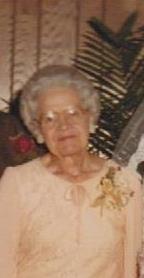
Grandma Maske at our wedding.

Grandma Maske at our wedding.


Posted in Uncategorized | Tagged , , , , | Leave a comment

When Peter Pan Comes To Church

Being a mature adult is difficult work.  Taking responsibility for your actions, following through in what you said you will do, being true to your word, living with delayed gratification, going to work when you would rather go fishing and on and on.

Most of us remember the story of Peter Pan–a boy who refused to grow up.  Wishing to escape the responsibilities of adulthood, Peter Pan was determined to stay eternally young and carefree in Never Never Land.  There is something attractive about this playful approach to life.  It offers us the joys of childhood and adolescence without the responsibilities of adulthood.

Caught in the abyss between the man he didn’t want to become and the boy he could no longer be…Children who follow in the footsteps of Peter Pan eventually experience a serious psychological problem that usually leads to social maladjustment.  Many of them are emotionally crippled and interpersonally inept.  Feelings of isolation and failure abound as they encounter a society that has little patience with adults who act like children.  But these people see no reason why they should feel so bad.  Viewing their problem as temporary, they do their best to forget about it.  Needless to say, it gets worse. ~~Dan Kiley, Peter Pan Syndrome

Spiritually speaking, there are many people who become children of God but never become adults.  Although they may be in their 20’s or older, they remain spiritual teenagers.

Know how you can tell if you are dealing with a spiritual adolescent? For one thing they are unstable when the going is rough.  Teenage-like adults do not have staying power during difficult times.  In short, adolescent adults are too unstable to be obedient. A long obedience in the same direction is not on their radar.

They also display an irresponsibility when the world is appealing.  Adolescent adults can frequently resist mild allurements, but when faced with greater temptations to sin, they often cave in without much of a fight.  I see it all the time.  Teenage adults may say a resounding “NO” to the temptation of stealing or adultery, but easily get themselves in trouble with credit card debt and thus hindering their ability to have an open-handed generosity to those in need all around them.

And when it comes to receiving hard truth spoken into their lives there is incredible push-back. Immature adults are usually stubborn.  They refuse to listen to the advice of others and they are unwilling to give up their rights for the good of those around them.

It seems to me that teenage adults in the Church more than ever need the stable and stretching influence of the family of God.  No one is going to spiritually grow up on their own.  To borrow what has become almost a cliché from the 90’s, “It takes a church to raise a fully devoted follower of Christ.”  What is needed more than anything is the steady, stable and edifying influence of sustained co-location of adolescent adult believers with mature saints in the Church.

Ah, yes, but there is the rub.  Adolescents historically don’t enjoy hanging out with their parents, unless they need a ride or some money.  And adult adolescents don’t need anything, until pain begins to intrude into their lives forcing them to look at reality.

I wish there was another way.  Until I find one I stand ready to bind up their wounds with the salve of grace and truth.


Posted in Uncategorized | 2 Comments