Please, Lord, save me from Your followers!

“Jesus’ enemies are not his only problem.” – Dale Brunner

Today I learned that a very prominent member of my denomination of Southern Baptist was released from his position as president of our largest seminary. That, along with several high-profile evangelicals embroiled in various scandals, reminded me of a conversation I heard recently.

In a coffee shop, two young adults were ripping my Christian faith. They rattled off the usual suspects: The Crusades, the Inquisition, the Salem Witch Trials, Abortion Clinic bombers, Southern White Slave masters, pedophile priests, and philandering preachers.

I felt my face redden. They kept talking about my faith as “those people.” As if we were not a part of the human race. I wondered if they had ever actually spoken with a Christ-follower or were they just parroting their favorite critic of the Christian faith.

When people who claim to be followers of Jesus do bad things is it because of His teachings, or is it in spite of His teachings? Jesus went against the conventional wisdom of his day by teaching, “…I tell you, love your enemies.” It is easy to love those who love us because it makes sense. But to love our enemies…that is a love beyond reason.

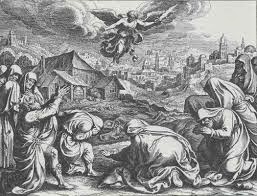
Speaking of enemies—When Judas betrayed Jesus in the Garden of Gethsemane with a betrayer’s kiss, he was accompanied by the Temple guard and a contingency of Roman soldiers. When they came to arrest Jesus, Peter drew his sword and proved he was a better fisherman than gladiator and while aiming at the man’s throat, cut off his ear instead. Jesus rebuked Peter, calmed the mob, and turned toward the wounded man named Malchus. Here was an enemy if there ever was one.
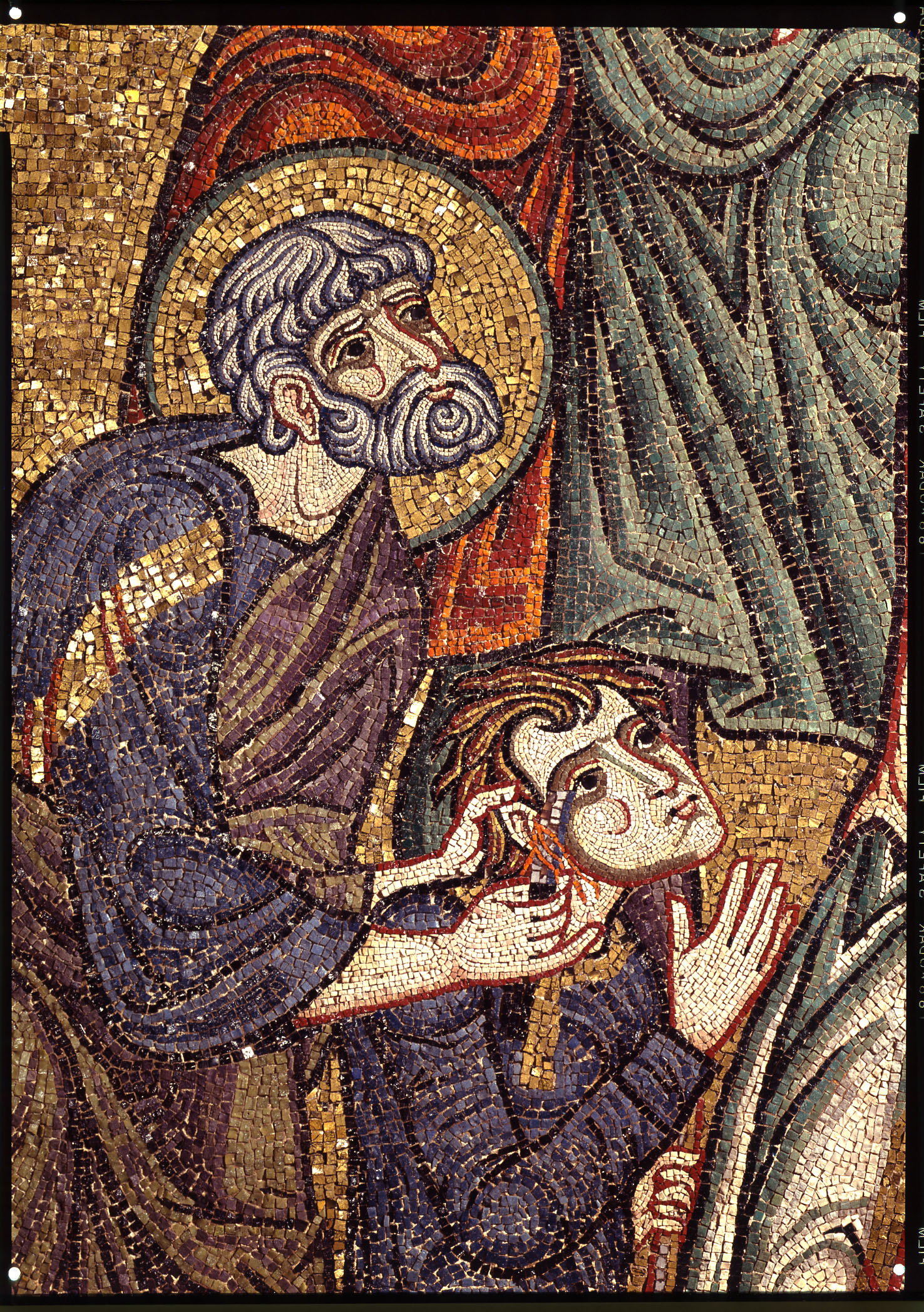
The wound must have bled profusely. Red crimson spurted through his fingers as he instinctively placed his hand over his wound while blood flowed down his neck and jawline, matted into his beard, streaked down his neck and his robe growing wet and warm.

How long did it take for Jesus to stoop and pick up the severed ear, clean it off and place it back on the man’s head? Did he have to convince the guards he meant no harm before they would release his arms?

Jesus reached up to Malchus’ blood-stained hand pressed tightly in the gash where his ear used to be and gently pulled it away; muttered a prayer and healed the ear. The mob, for fear of further violence, jostled Jesus away to a trial and then to the cross where He died.

Malchus? We don’t know what happened to him. This incident is mentioned in all four Gospels and Luke calls his name but after that there is no further mention of him in Scripture, as far as I can determine, none in history. But he went somewhere.

“How was your day at work, Malchus?” asked his wife.

“Oh, pretty good. All things considered” he said.

She laid down her wooden spoon she had been stirring in a pot of stew. Looked at him and screamed, “What in the world happened to you, Malchus?” when she saw the blood on his robe

Then maybe Malchus said,

“Interesting story…. I was attacked by a follower of the Nazarene. The man had a vicious look in his eye that screamed hatred. I have never seen such uncontrolled rage in all these years in my garrison. This follower of the Nazarene was in a full-tilt rage. The guy’s name was Peter. He was a fisherman from Galilee, I think. He took a swing at my head with a sword, I ducked but he cut off my ear.”

Then she asked, “I see the blood, but where is the wound?”

Malchus said, “You’re not going to believe this, but when that fisherman cut off my ear and blood was squirting everywhere, and people were screaming, and swords were drawn; I heard the Nazarene say something about putting swords away. The next thing I knew he had my ear in one hand and with the other he pulled my hands away from my wound. I looked into his eyes and saw the opposite of what I saw in his follower’s eyes. I saw such deep compassion and grace and love. He turned my ear in his hand; looked at it, brushed off a pine needle and then, whispering something, pressed my ear back on my head. The bleeding stopped, he smiled at me and then they took him away.”

He paused and pulled on his ear and then said with a smile, “Say what you will about that violent fisherman, but there is something pretty amazing about that Nazarene.”

Of course, I have no idea what conversation occurred between Malchus and his wife. But the truth is pretty simple. Followers who misappropriate the theology of Jesus and do unspeakable things in Christ’s name have been doing so for two millennia. That is a fact. No defending it.

However, those actions, severe and violent as they are, do not discount the validity of Jesus or his teachings. In fact, the healing of Malchus proves just the opposite. Jesus transcends his follower’s behavior, even his really good ones…like the Apostle Peter.

Jesus rises above.

I wish I were a better ambassador of the Nazarene. I hope I get another opportunity to speak on His behalf in my coffee shop, I know what I would say to those two if I see them again.

Don’t judge Jesus by those who follow him.

Especially me.
Posted in Uncategorized | Tagged , , , | 2 Comments

Extra Grace Required

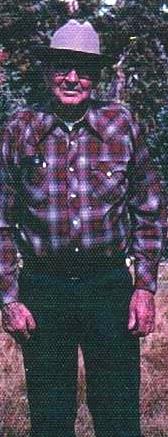
Everyone has a family member that is hard to love. If you don’t know who that particularly challenging-to-love person is, chances are it is you. It is quite sobering to imagine that I am someone’s hard to love person. In our family that person was my maternal grandfather.

Oscar Lee Johnston

Oscar Lee Johnston

He was a grumpy old cowboy from west Texas. He only had an 8th grade education and, for a few years when my mother was a little girl, he was a Baptist preacher. Then he decided that making money was more important than winning souls so he went back to combining wheat up and down the Midwest from Texas to Canada.

He was an old man when I was born and much older than his years. His teeth were worn down to the gums on both sides of his mouth from clamping down on a pipe stem for so many years. He never brushed his teeth and only took a bath once a week. To this day there are three smells that make my head spin: Vitalis hair tonic, Prince Albert tobacco smoke, and Ben-Gay. And that’s all I want to say about that.

He was a complicated man and a walking contradiction, my grandfather. He would give the shirt off his back to a complete stranger, but was hesitant to buy new clothes for his own children.

As family stories go I’ve told this one so many times and it happened so long ago that I can’t remember if it happened to me or my brother or to both of us.

One day I was riding with him in his old 1959 blue ¾ ton Chevrolet pickup up a rough old mountain road in northern New Mexico. He cleared his throat, took the pipe out of his mouth, and began to sing an old hymn:

What a friend we have in Jesus,

All our sins and griefs to bear!

What a privilege to carry

Everything to God in prayer!

About this time in the hymn, suddenly and without warning we hit a huge pothole in the road that bounced us so hard we both hit our heads on the roof of the cab of the pickup. That’s when my grandfather yelled, “God damn these roads!”

Then he went back to singing…

Have we trials and temptations?

Is there trouble anywhere?

We should never be discouraged—

Take it to the Lord in prayer.

I was stunned. I never understood, at such a formative stage in my life, how two disparate things could come out of the same mouth—curses and praises. He was as deeply flawed a man as I have ever known, but you know what? He loved Jesus and he loved me and that meant I loved him too.

There are people in every family that are hard to love. And what is true of our personal family is true of the family of God. How do we love the hard to love, old, curmudgeonly Christians in the family of God? And how do I love someone who is morally broken?

One day a group of people came to Jesus dragging a disheveled woman who had been caught in adultery. They threw her at his feet. Each held a stone for the punishment of such a crime was death by stoning. Interesting, they only brought the woman. This leads me to believe the woman had been framed.

In John Chapter 8, they said, Teacher, [. . .] What shall we do with her? (vs 4-5) They didn’t care about this woman. She was just a pawn in their game to try to trap Jesus. They knew the Law. They had a lot of truth, but not much grace.

Stone in HandSometimes stones feel good in our hands. They fit like a well-worn tool. Do you ever have a stone in your hand: a judgmental attitude or self-righteous thoughts?

Why do churches produce so many stone throwers? They don’t dance. They don’t laugh. They don’t have much capacity for joy. But there is one thing they do enjoy—passing judgment on other people they regard as spiritually inferior.

Someone’s kids get a little wild, they pick up a stone. Somebody’s marriage isn’t working, they pick up a stone. The worship leader chooses the wrong kind of song, they pick up a stone. The pastor posts something on social media they don’t like, they pick up a stone. Somebody crosses the line, somebody violates the code, somebody has a problem—word spreads and people start picking up stones.

The truth is that gathering stones energizes them in a way. They almost look forward to it. It kind of makes them feel good. I know what that feels like. Maybe you do too. But the only people attracted to a club of stone-throwers are other stone throwers. And God forbid you mess up because you don’t want to be around when the rocks start flying.

So Jesus said to all the people who had gathered around Him, Let the one who is without sin cast the first stone. And they all walked away. Then He turned to the woman and said, ‘Does no one here condemn you?  . . . Then neither do I.’ (vs. 7,10-11)

That’s grace—no condemnation from Jesus. But then, He said one more thing to her. He said to her, Now go and sin no more. (v. 11) That’s truth.

Preaching to an African-American church is very different from preaching in my church because they give you feedback the whole time. If you’re doing well, they give you grace. They say, “Preach it! Keep going! Tell it!”

If it’s not going very well, they give you truth by yelling, “Help him, Jesus!”

What a great thing it would be if as a Christian community we could flood folks with grace and truth. When people are doing well, we’d let them know and cheer them on, “Go on! Tell it! Do it!”

And when someone messes up, we’d say, “Help ’em, Jesus! Help ’em!”

We are all walking contradictions and God knew just what we needed. The Apostle John wrote in John 1:14, And the Word became flesh and dwelt among us, and we beheld His glory, the glory as of the only begotten of the Father, full of grace and truth.

There will always be holes in the road of life that bring out the worst in us. We need grace and truth from the family of faith. But when we can’t find it there or their hands hold only stones, we can always go to Jesus.

Can we find a friend so faithful,

Who will all our sorrows share?

Jesus knows our every weakness;

Take it to the Lord in prayer.

His hands are open and the only thing he carries in them are scars.

Posted in Uncategorized | Tagged , , , , | 7 Comments

A Story of Repentance

David said to the Lord, “I have sinned greatly in what I have done.” 2 Samuel 24:10

Age alone is no guarantee of maturity or freedom from error.

It would be wonderful if I could announce that as we grow older we automatically grow up, or that the longer we walk with the Lord the more we are guaranteed immunity from sin. That is not the case, however. We will never be immune from sin’s appeal. Often those who fall the hardest are those who have walked with God the longest.

Not until we are “with the Lord” will we be what we ought to be. There is no such thing as outgrowing sin. We are never immune to its appeal. And when spiritual leaders fall, they usually take a host of innocent people with them.

In this strange story, David is an old man and because of his pride, he decides to number the people. Intuitively he must have known is was not what God wanted him to do. He is restless all night with the census report laying on his bed stand. Finally, he can’t take it anymore and he confesses to God in the middle of the night that he had done wrong. As a result of his folly, thousands of people perished as a consequence of his sin.

But David has said these words of confession before. When David was a middle-aged man, the prophet, Nathan, came to King David and confronted him about his adultery with Bathsheba and subsequent cover up. After hearing about the consequences of what his sin would cause,

David said to Nathan, “I have sinned against the Lord.” 2 Samuel 12:13

But there is a major difference in the two confessions.

When he was a middle-aged man he said, “I have sinned …” after his pastor showed up and hit him pretty much over the head with a two-by-four.

Here as an old man, perhaps in his eighties, he says, “I have sinned …” before his pastor shows up.

David was stricken to the heart because he had numbered the people. 2 Samuel 24:10

His pastor didn’t confront him; didn’t strike him and make him feel guilty. The law didn’t strike him. The consequences didn’t strike him. His heart struck him.

This is a man who has grown. He has grown in grace. A spiritually growing person is not someone who repents less and less, a spiritually mature person is somebody who repents more and more the longer they walk with God. And they do it more quickly, more genuinely, and more deeply.

One of my concerns as an older Christian who has a conservative bent, is that I have a tendency to be pretty opinionated and judgmental about the behavior of others. I sometimes find it difficult to admit that I am a judgmental person. I find it difficult to admit when I am wrong.

And what I fear is that in my conservative pre-disposition both theologically and politically is that I am insensitive to the gentle touch of the Holy Spirit when I am wrong.

Recently, my wife and I went on a date. We saw a movie and went to dinner and then to Lowes to buy window blinds for our house. The blinds needed to be cut to our specific window dimensions and so we needed some help. I asked a Lowe’s employee to help us.

She came to our aisle and answered our questions. She was clearly a woman but was more tomboyish than normal. She was very polite and helpful. When it came time to thank her for her assistance, I glanced at her name tag wanting to call her name as I said thank you.

Her name tag said, “John.”

I paused. I said thank you but couldn’t bring myself to call her name.

Now, there is much about gender confusion that I don’t understand. But here is my spiritual battle: Part of me felt a certain level of condemnation towards “John.” Part of me wanted to stop and tell him/her to stop behaving badly. But another impulse came to the surface of my soul that said, “Why don’t you silently pray for this broken person.”

Then the Holy Spirit thumped me on the back of my head and said, “Why don’t you just pray for this beautiful soul who is made in my image and leave the word “broken” off of your prayer?”

See, I am a judgmental person. I am a mess. I needed to repent.

We like to say all the time, “Hate the sin, but love the sinner.” How about we just love the sinner? Isn’t that what God did for us in Jesus? Jesus took care of all our brokenness on the cross. It is not my job to confront all brokenness in this world. It is my job to love everyone I see. My job is to repent and do the right thing.

A spiritually growing person is not someone who repents less and less, a spiritually mature person is somebody who repents more and more the longer they walk with God. We never get too old for complete repentance.

And so, dear friend, may you grow in your faith in such a way that you can feel the gentle prod of the nail-scarred-hand to hate your own sin and love all the sinners.

It is never too late to do the right thing.

Posted in Uncategorized | Tagged , , , , | 1 Comment

Clinton and Rachel (A Wedding Blessing)

When Clinton was a very small boy, I would tell he and his brother Cole bedtime stories from the Bible and Lord of the Rings. Sometimes I would tell a mash upped story where King David kills a very large spider named Shelob with a sling shot and five smooth stones. (Forgive me, Lord.)

But after a time of story-telling, I would ask them to say their prayers so that I could hear them. One night Clinton, with his hands folded across his chest and eyes closed, began mumbling his prayers so that I couldn’t understand what he was saying. I said, “Clinton, speak up. I can’t hear you.”

He opened one eye and said, “I’m not talking to you.”

Out of the mouths of babes.

Clinton, this occasion of your wedding is one of the seminal moments in this father’s life. In fact, I can only think of one other event in your life that plucks similar chords in my heart and that was the day I baptized you when you were about six years old.

Behind the words of commitment you have made to Rachel today is a bedrock truth: You will mean every word you say down to the sinew of your soul. I know you will keep your promise to her because intuitively you know that she is the best thing that has ever happened to you. And, further, I know you will keep your promises because you are a man of your word. Your integrity is one of the things that I admire most about you, son.

And I realize that your integrity was not born in a vacuum. The values you live by have come from your family—represented here by your parents, grandparents, and brothers. These, along with aunts, uncles, and cousins, have influenced who you are as a man of integrity.

In addition to these, there are your friends—like Kramer and Rebecca, and Danny and Maddie and Ian—who have shaped and formed you. They have had a large impact on who you are. And when I see your devotion to your friends, my heart swells with admiration. You are a deeply blessed man to have these people of some quality, and many others, who will speak into your life.

Finally, there is Rachel. As your mother and I watch how you interact with her, we see a man who respects a woman. And, in a world where men do not always respect women—from presidents to preachers—the way you treat Rachel gives us hope that there is a new generation of men on the rise who will defend without patronizing, love without objectifying, and who will be committed without compromising.

I respect the way you treat Rachel, Clinton.

But I really believe that the greatest influence on the formation of your soul is Rachel Robin Reid. Her love for you will change you. Your deep love for her will change you, for the object of our deepest devotions always shape us.

So, son, continue to love Rachel well and we will all marvel at the glorious man you will become. Clinton, your mother, brothers, sisters-in-laws, grandparents—and so many others who could not be present today—respect you for your intelligence, sense of humor, core values, and who you have decide to spend the rest of your life with in covenant love.

We could not be more pleased with your choice for a wife and life-partner.

Now, I want to say a few things to Rachel.

Lynette and I have been praying for you for a very long time. When Clinton was a chubby-cheeked, red-headed little boy, we imagined this day for him. That is when we began to pray for you. Over the years as he had relationships with some fine women, we both would smile and say to each other, “Not yet.”

Then we met you, broke bread with you at a very good Thai restaurant in Portland and we drove away and said, “Yes!” Then you came to spend a Christmas weekend with us in Mukilteo. That’s when we knew Clinton would never, ever make a better decision in his life than to commit to loving you the rest of his days.

Do you remember going on that walk with me on Christmas day? I’m sure you were nervous to spend that much time alone with an intimidating man like me whom you barely knew. But I told you that I wanted to share three things with you back then, and I will remind you of them today:

One, my faith is the most important thing in my life. It’s not just my job as a minister but being an apprentice of Jesus of Nazareth is my life. I aspire to be like Jesus in everything that I do.

Second, I love Clinton as much as a father can love a son. His soul’s flourishing is my most fervent prayer and desire. I love Clinton James Chambers.

Third, if you love Clinton, I’ll love you in the same way that I love him.

You smiled and said that you respected my devotion to faith in Jesus. You also said that because I love Clinton so much, you would love me—because we both love the same man.

Rachel, that is when mutual respect was born. That three-mile-walk began our relationship as future father-in-law and daughter-in-law. It was one of the best walks—ever.

Lynette and I respect you, admire you, and love you as a beautiful soulmate for our son. We feel honored that God answered our twenty-nine-year-old prayer.

Thank you, God for hearing our prayers.

Thank you, Clinton for loving Rachel.

Thank you, Rachel for loving our son.

Now, I will share with you some very old words that serve as our life-long hope for you both.

The Lord bless you and keep you;
the Lord make his face to shine upon you, and be gracious to you;
the Lord lift up his countenance upon you, and give you peace.

In the name of the Father, the Son, and the Holy Spirit. Amen

Posted in Uncategorized | Tagged , , | 8 Comments

Forgiveness is not for Wimps

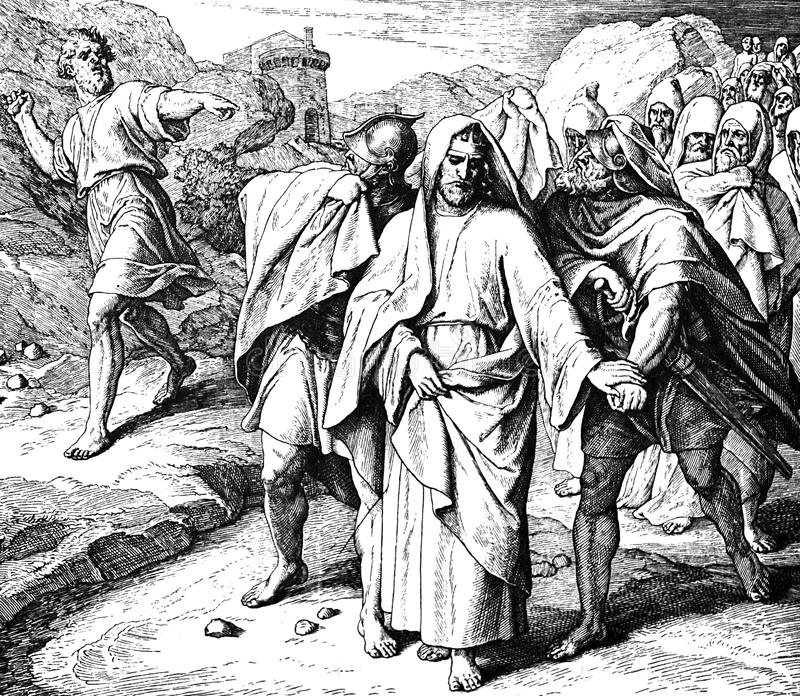
So David and his men went on the road, while Shimei went along on the hillside opposite him and cursed as he went, throwing stones and flinging dust at him. (2 Samuel 16:13)

Leonard Cohen, the legendary 82-year-old Canadian poet and singer who died last year, is well-known for a set of powerful lyrics from his song “Anthem,” off the 1992 album The Future.

In dark times, poetry and music often become more important to us, providing the kind of transcendence we need to interpret painful events in a wider context. And Cohen wrote “Anthem,” one of his most beautiful and hopeful songs, in a tumultuous global period.

Ring the bells that still can ring
Forget your perfect offering
There is a crack, a crack in everything
That’s how the light gets in.

Those lines come to life in this moment in David’s life—there are cracks everywhere. He has used his power to bring about great harm against other people. He has started a cycle of violence in his own family. And here he is experiencing the consequences of it.

Everything is cracking up in David’s life.

David’s affair with Bathsheba had set off a whole chain of tragic events: his infant son died, his family was in turmoil, he lost his throne to his rebellious son Absalom. Stripped of his dignity and political power, David had reached the lowest level of his life.

David approached a little village, nestled on the eastern slope of the Mount of Olives just outside of Jerusalem, when someone from the other side of the valley begins to call and curse his name.

Shimei is from the house of Saul, David’s immediate predecessor. So, it is safe to assume that Shimei is an extended member of Saul’s family. There is a good chance that this is someone who has been nursing a deep, seething hatred against David for decades. Alexander Whyte calls him “a reptile of the royal house of Saul.”

Shemei has come at David at a hard moment. David has done nothing to warrant these public assaults. But they come, nevertheless. David now has a choice. He can be offended and become resentful and take revenge on this man—or not.

Cursing, throwing rocks, flinging mud, and drawn swords.

If you think about it, this is the world in which we live as well. Whether that is in our personal families, national politics, or the local church—cursing, throwing rocks, flinging dust and drawing swords. How do we break free from this downward cycle?

David says,  Let him alone, and let him curse…It may be that the Lord will look on my distress, and the Lord will repay me with good for this cursing of me today.”

David forgives him even though Shemei doesn’t ask for it and has not stopped his malicious behavior.

How is that David’s soul is spacious enough to give away that kind of unasked for mercy?Because David is aware of the cracks in his own soul. He has seen all the warped and twisted parts of him exposed. He knows his own guilt.

And, more importantly, he’s experienced God’s Mount-Princeton-size-grace. Remember when his pastor, Nathan, confronted him about his affair and coverup with Bathsheba? David did not go into spin mode. He didn’t try to explain away his sin.

David said to Nathan, “I have sinned against the Lord.” Nathan said to David, “Now the Lord has put away your sin.” (2 Samuel 12:13)

David can express loyal love, even when it is not reciprocated, because David had experienced that loyal love from the God of the universe.

Like King David, the Son of David—Jesus— would tread upon this exact same path on the side of this very same mountain. He would go on in his most trouble-filled moment and experience the worst that a crowd of Shemeis could dish out. He would experience fickle and faithless friends who scattered like bugs when the light comes on. He would feel the dry kiss of betrayal from his disciple Judas. He would stand before the worst of corrupt government and the worst of corrupt religion.

He would endure sneering, taunting, and torturing soldiers. He would endure mocking bystanders watching him stripped naked and executed as if it were an afternoon matinee. Jesus would go to these depths for God in order to offer unasked-for forgiveness to us.

The good news of Jesus is that because he walked this same road as David, it changes everything about the world and how we relate to each other—forever. Because people who have tasted of God’s scandalous forgiveness, drink it in and metabolize it into their souls—it shows up in their life as daring and scandalous forgiveness towards others.

The same door in our hearts that lets God’s forgiveness into our souls is the door that allows grace to escape and embrace others. If we keep the doors locked, it stops the flow of forgiveness—both ways.

I must always remember that deep and thorough forgiveness is a journey; not a moment.

The Bible talks about forgiveness as a new vision and a new feeling towards the person who harmed us.

When you forgive that person, you may be the only person healed. The other person may be hostile or apathetic about your pain. So, when you forgive, you must often be content with editing your own memory. It’s something you do inside your own mind.

I love what Lewis Smedes says about forgiveness,

You will know that forgiveness has begun when you recall those who hurt you and feel the power to wish them well.

So, my friends, remember that the light of Christ has entered through the cracks of your soul and that is how it escapes into this dark world.

Posted in Uncategorized | Tagged , , , , , , | 3 Comments

The Kindness of God

The king said, “Is there anyone remaining of the house of Saul? (2 Samuel 9:3)

In virtually every gangster films there are some very predictable tropes. It doesn’t matter which film it is. Films like The Godfather trilogies, Donnie Brasco, Goodfellas have some similarities. There are loud Italian men with shirts unbuttoned and lots of chest hair showing. There is always a “rat” in the mob somewhere. There is always a murder in a restaurant.

But there is another trope that is inevitable. When someone is being targeted by the mob, often someone will ask them about their family. And that’s how you know that family’s life expectancy just got a lot shorter.

David doesn’t have to be in a mafia film for that to be a frightening question. Because in those days, in order to secure the future of the throne, a reigning king would kill off all of the possible threats to his throne in rival families. Especially families who once occupied the throne upon which he sits.

But in this story, David isn’t plotting violence, he is plotting kindness.

The Bible does not often give us definitions of abstract ideas; it tells us stories. Stories that invite us to enter and then live. This story shows us the multi-layered dimensions of what kindness looks like in the life of King David.

David asks a servant named Ziba about any possible descendants of Saul, his former rival. Ziba says, “There remains a son of Jonathan; he is crippled in his feet.”

So, what we know about this boy is that he is disabled and has gone into hiding. And as we watch this crippled character come into view we are looking at a hurting, dishonored, and forgotten person.

David sends someone to find the boy. Can you imagine how he felt when the knock came to the door and the person on the front stoop was in uniform and has this stern message for you, “Come with me, the king wants to see you”?

What might be going through his head? Am I going to be killed? Exiled even further from my homeland? What is my fate? He knows what happens to grandsons of deposed kings in the ancient world. He must have thought that his pointless life is about to come to a violent end.

As this boy is laying, face-down on the floor before the king, David calls his name. In fact, David is the first person to actually speak his name thus far in the story. His name appears to mean “from the mouth of shame,” or possibly “One who scatters shame.” Probably not his given name, but one acquired due to the circumstances of his times.

Even the town where he is living, Lo-debar, meant, place of no pasture, no hope, total desolation.

David looks at a forgotten, disabled vagabond, full of shame, from hopeless town, and does not see a political problem to be solved, or a victim, or a cripple—he sees a human being.

Mephibosheth is used to being treated like a shameful disgrace, like a dead dog, and yet David gives him the dignity of looking at him eye-to-eye and man-to-man. But he gives him more than that. David’s loyal love to best friend, Jonathan, has been passed on to his forgotten son, Mephibosheth. And he restores the sizable family landholdings back to him. He brings him out of hiding and gives him a home again.

Beyond that, David practically adopts him into his royal family.

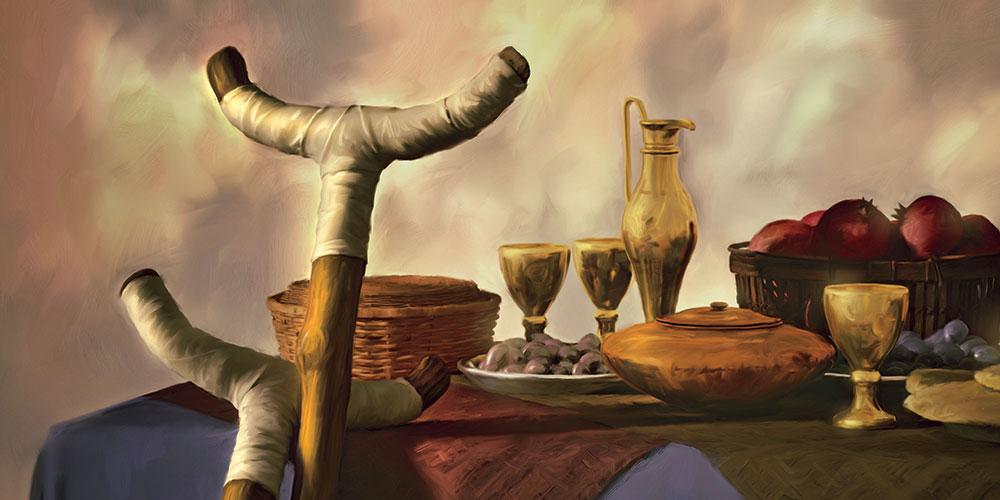
Picture what life would be like in the years to come at the supper table with David. The meal is fixed and the dinner bell rings and along come the members of the family and their guests. Amnon, clever and witty, comes to the table first. Then there’s Joab, one of the guests—muscular, masculine, attractive, his skin bronzed from the sun, walking tall and erect like an experienced soldier. Next comes Absalom. Talk about handsome! From the crown of his head to the soles of his feet there is not a blemish on him. Then there is Tamar—beautiful, tender daughter of David. And, later on, one could add Solomon as well. He’s been in the study all day, but he finally slips away from his work and makes his way to the table.

But then they hear this clump, clump, clump, clump, and here comes Mephibosheth, hobbling along. He smiles and humbly joins the others as he takes his place at the table as one of the king’s sons. And the tablecloth of grace covers his feet.

What a beautiful story of lovingkindness.

But what I find fascinating is the end of this story where Mephibosheth and Ziba turn up again in David’s life. Years later, David is in desperate and terrible times. His oldest son, Absalom, has driven him from his palace and is trying to kill him. David flees the city with loyal family members and servants with barely a suitcase in his hands.

Just as David crests a hill, who does he see approaching him but Ziba. This is the man who had made all the arrangements to bring Mephibosheth to the king’s palace, but Mephibosheth stays behind. And Ziba tells David that he has betrayed him.

Not only is his son attempting a coup, his adopted son, Mephibosheth, is betraying him. David flees further into the woods, with his head bowed and his heart broken.

Eventually, after David had defeated Absalom and his army and returned to the city, he sought out Mephibosheth. Mephibosheth tells a different story about why he didn’t flee with David. He says that Ziba is not telling the truth and had left him alone in the city and because he was lame, so that he couldn’t follow David.

David knows that these two men can’t both be telling the truth. Somebody is lying and abandoned him in his most desperate hour at best or had intended to betray him at worst.

He has every right to punish these two for what they have done. But what does David do? Nothing. There is no cross-examination. There is no investigation. David, knowing that one of these two are lying to him, simply accepts both of them back into his house.

What this shows us is that there are times when you will open your life to someone and their gratitude is expressed in an abandonment or betrayal. There are times when we will reach out our hands to extend kindness and it will be slapped away.

How could David simply welcome both of these back into his good graces and home, knowing that one of them or both of them have stabbed him in the back? How is David’s soul large enough to handle dishonesty and rejection from the people he had helped so much?

The secret is found in one simple phrase,

The king said, “Is there anyone remaining of the house of Saul to whom I may show the kindness of God?”

David could only give away what he received. He had been the recipient of the kindness of God, and that positioned him to be a conduit of that same kindness back to those who had betrayed him.

Perhaps David’s mind flashed back to when he was but a boy, tending sheep outside of Bethlehem. He is the last of eight sons. There was a worshipful celebration happening with cranky old Samuel and he hasn’t been invited to attend. But then word comes to him that Samuel wants to see him, and standing face-to-face with the old prophet, he hears, “You will be the next king.” Then the warm oil from the horn of the prophet flows down his hair and gleams his smooth and ruddy face.

God came for him, through Samuel, and showed him—kindness.

David can keep faith with those who didn’t keep faith with him because God kept faith with David. David can express loyal love, even when it is not reciprocated, because David had experienced that loyal love from the God of the universe.

Isn’t this a wonderful picture of what God did and does for us in the covenant love put on full display in his son Jesus?

Because in all the ways that matter most you and I are not that much different than Mephibosheth. We are all morally and spiritually disfigured. Spiritually speaking we are all dead dogs. We live in a land of no pasture. And even when the kind hand of God is extended towards us, we return God’s faithful love with almost daily infidelity, abandonment, and betrayal.

On our own, we are estranged from the King of the universe, but because of what God did through the life, death, and resurrection of Jesus, we have been invited to the King’s table.

All of this shows us a principle: You cannot give what you have not received. Only those who have been forgiven, can actually forgive. Only those who have tasted of the kindness of God, can extend the kindness of God.

We have had the love of God shed abroad in our hearts so that we can embrace covenant love that compels us to be loyal to the Lord, and faithful to our friends.

Frederick Buechner wrote a historical novel called Brendan. Set in 6th century Wales, the elderly St. Brendan is in conversation with Gildas, a Welsh monk and scribe. Finn, Brendan’s friend and follower narrates the story:

Pushing down hard with his fists on the table-top he heaved himself up to where he was standing.  For the first time we saw he wanted one leg.  It was gone from the knee joint down.  He was hopping sideways to reach for his stick in the corner when he lost his balance.  He would have fallen in a heap if Brendan hadn’t leapt forward and caught him.

“I’m crippled as the dark world,” Gildas said.

“If it comes to that, which one of us isn’t, my dear?” Brendan said.

Gildas with but one leg.  Brendan sure he’d misspent his whole life entirely.  Me, Finn, that had left my wife to follow him and buried our only boy. The truth of what Brendan said stopped all our mouths. We was cripples all of us. For a moment or two there was no sound but the bees.

“To lend each other a hand when we’re falling,” Brendan said. “Perhaps that’s the only work that matters in the end.”

We are all cripples, all of us, but the good news is that, the son of David—King Jesus—has extended his nail-pierced hand towards us and invited us to sit at His table for all eternity.

And the tablecloth of grace covers our sins.

Posted in Uncategorized | Tagged , , , , , | 6 Comments

The King’s Darkness

When it was noon, darkness came over the whole land until three in the afternoon. At three o’clock Jesus cried out with a loud voice, “My God, my God, why have you forsaken me?” Mark 15:33-34

Detail from Pierre-Paul Prudhon, Crucifixion (1822)

Perhaps for his own reasons God draped a curtain of darkness around the death scene of His Son. Perhaps to conceal the transaction in some deep spiritual way that transpired between the Father and the Son.

I don’t know…

But I remember in the Old Testament on the Day of Atonement when the High Priest entered into the Most Holy Place and on that day, he would enter that enclosed place full of darkness. He could not see what transpired on the Mercy Seat on the Ark of the Covenant…it was too high and holy. The rabbi’s said in the Talmud that he could not live if he had seen what happened in that moment.

I think of the first Passover in Egypt that it happened at Midnight.

I think of the experience in the Exodus at the foot of Mt. Sinai—it was the first real encounter of God and the people. God had given Moses the 10 commandments and the people were too frightened to be near God.

In Exodus 20:21 we read,

So the people stood afar off, but Moses drew near the thick darkness where God was.

Somehow, someway God was present in the darkness with Moses on Sinai, but on a different mountain, a mountain called Calvary, God would not be with Jesus.

There are some caves in Colorado called Marble Caves that I have explored several times. If you turn off your headlamps it is blacker than the darkest midnight. You can’t see your hand in front of your face. You can’t tell directions. Getting lost in the darkness of the caves for more than a day or two can drive a sane person mad.

You can’t see forward, so you don’t know where you are going. You have no direction. You can’t even see yourself; you don’t know what you look like. You may as well have no identity. And you can’t tell whether there is anyone around you, friend or foe. You are isolated.

Physical darkness brings disorientation, but according to the Bible, so does spiritual darkness. Spiritual darkness comes when we turn away from God as our true light and make something else the center of our life.

The sun is a source of visual truth, because by it we see everything. And the sun is a source of biological life, because without it nothing could live. And God, the Bible says, is the source of all truth and all life.

If you orbit around God, then your life has truth and vitality. You are in the light. But if you turn away from God and orbit around anything else—your career, a relationship, your family—as the source of your warmth and your hope, the result is spiritual darkness.

You are turning away from the truth, away from life, toward darkness.

When you are in spiritual darkness, although you may feel your life is headed in the right direction, you are actually profoundly disoriented.

If you center on anything but God, you suffer a loss of identity. Your identity will be fragile and insecure, because it’s based on things you center your life on. It’s based on human approval. It’s based on how well you perform. You don’t really know who you are. In the darkness you can’t see yourself. As a result, you become isolated from other people and you feel unloved.

Any preacher who tells you he doesn’t care about how big the crowd is on Sunday’s when he preaches lies about other things. I take it personally when the crowd is small on Sunday’s. It can only mean that I am not performing in such a way in the pulpit that would make them want to come, right? That is what my idol says to me.

But God has a different word. His word to me is that because of what Jesus did on the cross and that I have entered into a covenant relationship with him, I am now the beloved of God. That love-relationship is not based on my performance, it is based on untrammeled love of the God of the universe through His son, Jesus Christ.

Author and speaker Brennan Manning has an amazing story about how he got the name “Brennan.” While growing up, his best friend was Ray. The two of them did everything together: bought a car together as teenagers, double-dated together, went to school together and so forth. They even enlisted in the Army together, went to boot camp together and fought on the front lines together.

One night while sitting in a foxhole, Brennan was reminiscing about the old days in Brooklyn while Ray listened and ate a chocolate bar. Suddenly a live grenade came into the foxhole. Ray looked at Brennan, smiled, dropped his chocolate bar and threw himself on live grenade. It exploded, killing Ray, but Brennan’s life was spared.

When Brennan became a priest he was instructed to take on the name of a saint. He thought of his friend, Ray Brennan. So he took on the name Brennan. Years later he went to visit Ray’s mother in Brooklyn. They sat up late one night having tea when Brennan asked her, “Do you think Ray loved me?”

Mrs. Brennan got up off of the couch, shook her finger in front of Brennan’s face and shouted, “Jesus Christ—what more could he have done for you?!”

Brennan said that at that moment he experienced an epiphany. He imagined himself standing before the cross of Jesus wondering, Does God really love me? and Jesus’ mother Mary pointing to her son, saying, “Jesus Christ—what more could he have done for you?”

The cross of Jesus is God’s way of doing all he could do for us. And yet we often wonder, Does God really love me? Am I important to God? Does God care about me?

And Jesus’ mother responds, “What more could he have done for you?”

Posted in Uncategorized | Tagged , , , , , | 2 Comments

O, How the Mighty have Fallen (a lament)

There is none like the Lord;
there is none besides you; there is no rock like our God.
O, how the mighty have fallen
in the midst of battle. I am distressed for you, my brothers.
Lord, why do you sleep?
Why does your redemption not change us in deeper ways?
Bind up the brokenhearted
and increase the passion for holiness in your leaders.

O, how the mighty have fallen
in the midst of battle. I am distressed for you, my brothers.
Where is the future for the Lord’s bride
when your shepherds support and indulge in indecency?
Bind up the brokenhearted
and increase the passion for holiness in your leaders.
Your bride is soiled and suffering,
What will you do about your shepherds who disdain purity?

Where is the future for the Lord’s bride
when your shepherds support and indulge in indecency?
Lord, why do you sleep?
Why does your redemption not change us in deeper ways?
Your bride is soiled and suffering
What will you do about your shepherds who disdain purity?
There is none like the Lord;
there is none besides you; there is no rock like our God.

Posted in Uncategorized | Tagged , , , , , , , , | 1 Comment

The Drift

It happened in the spring of the year, at the time when kings go out to battle… David remained at Jerusalem.    2 Samuel 11:1

It was generally believed that he was about 50 years old or so at this time. He wasn’t an old man yet, but he wasn’t the golden boy anymore either. And women didn’t look at him the same way they used to. He started using Rogaine. He told himself he was going to work out a little more, get a jogging track installed around the palace. He didn’t tell anybody, but he had a little Metamucil added to the royal diet.

What did he want? David didn’t really know. He wanted to feel young. He wanted to feel alive. He wanted to feel vital. He was restless, and he was lonely, and he was a little bored. So, he decided he would stay home.

But what he apparently did not do is he did not talk to God about this.

We find an interesting insight into the God/David relationship in Second Samuel 12:7, about halfway through the verse, after the first phrase. God speaks through David’s pastor, Nathan:

‘I anointed you king over Israel, and I delivered you from the hand of Saul. I gave you your master’s house and your master’s wives into your keeping, and gave you the house of Israel and Judah. And if that had been too little, I also would have given you much more!

God says to David, “I’ve had my eye on you your whole life long, and I love you, and I want the best for you, and I’ve given you so much. And if all this had been too little, David, I would have given you more. Why didn’t you come to me? Why didn’t you ask me? Why didn’t you talk to me?”

I think of how often in human history God has said that to his children, “And if all this had been too little, I would have given you more.” If more is what it takes to make the human heart content, God will just keep giving more.

But, of course, generally more doesn’t do it.

David’s problem is he did not trust that God really did have his best interest at heart. He did not trust that God was that good. David really thought, as so many of us do at a really deep level, that really when it comes right down to it, “I’m going to have to look out for myself. I can’t really trust that if I abandon myself to God that radically, he will take care of me.”

David should have spent some time alone with God, this God who waits to bless and waits to give and find out why was this drift factor at work in him.

He needed to ask himself why another man’s wife was so beautiful to him that he was willing to risk his kingdom to be with her. He needed to ask himself what was lacking in his walk with God that made holding Bathsheba in his arms more important than being held in the arms of God.

But he doesn’t do that. He drifts.

You are familiar with how this story ends. Nathan comes to King David and confronts him with the truth of his sin. David is undone. He is truly repentant and is never the same.

I want to show you what he wrote in his journal after he had come to terms with his sin and we will get a glimpse of the real reason for his broken world.

Against You, You only, have I sinned. (Psalm 51:4)

“Bathsheba”
by Jean-Leon Gerome (1824-1904)

David realized that there was a sin underneath the sin. Before he committed physical adultery, he committed spiritual adultery. Before he committed adultery with Bathsheba, he committed adultery against God. He wanted her arms because he didn’t have God’s arms. He wanted her beauty because he didn’t have God’s beauty.

That is the nature of spiritual drift.

But, thank God, David stops the drift and returns to his fist love. And when he does he makes an amazing discovery:

There’s a wideness in God’s mercy,
Like the wideness of the sea;
There’s a kindness in His justice,
Which is more than liberty.

There is no place where earth’s sorrows
Are more felt than up in Heaven;
There is no place where earth’s failings
Have such kindly judgment given. ~ Frederick Faber

Thank God.

Posted in Uncategorized | Tagged , , , , , , | 1 Comment

The Dance

David was afraid of the Lord that day; he said, “How can the ark of the Lord come into my care?”

In King David’s spiritual haste to bring the Ark of the Covenant back to his home town, they all got a little too casual in the handling the holiest artifact in the Jewish faith and a colleague died and, as a result, the entire company are suffering from a panic attack–including King David. He sends the Ark away, but that won’t do either so he makes plans to try again to bring the Ark into his town.

What David realized was that he can’t live without God, but he can’t live with Him either. And I can completely relate to that feeling. We can’t live without transcendence, without God; but we can’t live with him either. He is too holy. He is too perfect.

I love that place in The Lion, Witch and the Wardrobe where the children are asking about this mysterious creature named Aslan and Mr. Beaver goes about to set them straight,

“He’s the King. He’s the Lord of the whole wood, but not often here, you understand. Never in my time or my father’s time. But the word has reached us that he has come back. He is in Narnia at this moment.”

After Beaver recites an old (prophetic) rhyme about Aslan, notching the tension even higher, Lucy asks, “Is — is he a man?”

“Aslan a man!” said Mr. Beaver sternly. “Certainly not. I tell you he is the King of the woods and the son of the great Emperor-beyond-the-Sea. Don’t you know who is the King of Beasts? Aslan is a lion — the Lion, the great Lion.”

Then, of course, Susan and Lucy ask if this lion is safe — to which Beaver answers with his memorable line, “Who said anything about safe? ’Course he isn’t safe. But he’s good. He’s the King, I tell you.”

David is not certain that God is altogether safe. He’s not sure he can live with the ark.

But in time, David recommitted to treating the symbolic presence of God with proper fear and trembling by sacrificing the blood of an innocent third-party animal to acknowledge that because of the sinfulness of mankind, he might have God by his side, but he does not have God in his pocket. And this brings great joy to David.

The story tells us, David danced before the Lord with all his might.

Grace got King David dancing. And grace is what gets us dancing too. Because this dance of joy and this Ark are sign posts to Jesus of Nazareth. They point to a time when God would not be on the other side of some mystical place where a select few might have access. Jesus would come as the ultimate Ark, the final Temple.

Do you remember in John 2 when Jesus builds a whip and drives out the money-changers and trinket-sellers to purify the Temple? And when they protest and fuss with him about his actions he says,

“Destroy this temple, and in three days I will raise it up.” The Jews then said, “This temple has been under construction for forty-six years, and will you raise it up in three days?”  But he was speaking of the temple of his body. After he was raised from the dead…

Jesus’ body would be the final place where the presence of God would overlap and interlock with this world. When Jesus died on the cross and rose from the dead, the living God doing a sacrifice for us; throwing open a doorway into his perfect presence for imperfect people.

Now, the way we “get in” to God’s presence and find the transcendence we have all been looking for is not a place, it’s in a person.

Will you and I hear the music of God’s grace in Jesus?

If we begin to dance to this grace-music, there might be folks close to us who do not hear the same tune and do not appreciate our dancing.

The story continues…

Michal (David’s wife) looked out of the window, and saw King David leaping and dancing before the Lord; and she despised him in her heart.

There is a wonderful line in a sermon by a preacher of a hundred years ago named Alexander Whyte where he says about David and Michal,

Those who are deaf always despise those who dance.

The question for us is will we hear the music of Jesus, or will we be deaf to it?

Cadie Chambers

When my grandgingers were about 3 or four years old one of the girls came to visit my wife and I for the weekend. We noticed when she was in the play room she was dancing. It was a wonderful twirling, fluid, graceful motion. We both stopped and watched from the hallway through a door, slightly ajar. We looked at each other smiled and one of us said, “There is no music.” The other of us said, “She can hear music that we can’t hear.”

There’s an old hymn we used to sing when I was a boy that none of you will know…

There’s within my heart a melody
Jesus whispers sweet and low:
Fear not, I am with thee, peace, be still,
in all of life’s ebb and flow.

Jesus, Jesus, Jesus,
sweetest name I know,
fills my every longing,
keeps me singing as I go.

So, dear friends, may you hear the music of grace and may God get you dancing in life.

Posted in Uncategorized | Tagged , , , , | Leave a comment