I Surrender Almost

So he looked this way and that way, and when he saw no one, he killed the Egyptian and hid him in the sand. Exodus 2:12

The act of willing surrender is a choice of openness, a choice of abandonment of self-determination, a choice of cooperation with God. ~ David Benner, Desiring God’s Will

Surrendering to God sounds like such a nice thing, but is the never-ending battle of a Christ-follower. We never get to a place where we can relax and believe that we have settled the issue of willfulness.

We sing…

All to Jesus I surrender;
All to Him I freely give;
I will ever love and trust Him,
In His presence daily live.

The great danger is that when we sing songs like that in safe places of worship we come to think of ourselves as surrendered people. We confuse intention with action and desire with behavior. But the truth about surrender does not come on Sunday morning when the music is playing; the truth about surrender happens when you are tempted.

Will you take the pain that comes from saying, “yes” to God? When John the Baptizer said yes to God it cost him great discomfort. Each of the followers of Jesus in his lifetime paid a great price to saying yes to God. Jesus was not spared the ultimate pain of saying yes to God. What makes me think I can escape the pain of saying yes to God?

We have so anesthetized and Joel Osteenized our faith that we leave the impression that to follow Jesus ought to be all rainbows, puppy dogs and puffy clouds. It’s a lie from the pit of hell and it smells like smoke.

Our culture screams that we should assert our will in every area of our lives, but the Christian teaching says something different.

Take the age-old problem of judging. It is a vice for which we religious types are infamous. In spite of clear teaching from Jesus to not judge, we do so with much alacrity. We look at a person and assign that person a certain category. That person does not dress like me or manage their time or money like I do. They do not hold to my particular political views and I form value assessment of that person. Now that person is not an image-bearer like me, his identity has shifted to his behavior or his politics. She is other.

I segregate them in my mind.  Instead of looking at that tattoo-wearing, Obama-supporting, welfare-enrolled, abortion-supporting, anti-gun person as a man or a woman created in the image of God who is just as broken as I am—they are “those people.” And as long as they are “those people” the only way I will have a convivial relationship with them is if the relationship is on my terms.

I simply don’t look at those outside of my tribe and say, “Lord, how do you want me to love them right where they are and NEVER try to change them.”

I love what Frank Laubach wrote years ago about surrender:

Submission is the first and last duty of man. That is exactly what I have needed in my Christian life. Two years ago a profound dissatisfaction led me to begin trying to line up my actions with the will of God about every fifteen minutes or every half hour. Other people to whom I confessed this intention said it was impossible. I judge from what I have said that few people are trying even that. But this year I have started out trying to live all my waking moments in conscious listening to the inner voice, asking without ceasing, “What, Father, do you desire said? What, Father, do you desire done this minute?”

This is doable if I am willing to take the pain that comes with saying yes to God. Of course there will be failures and I will lean again and again on the grace of God and return to Him saying, “What, Father, do you desire said? What, Father, do you desire done this minute?”

whitteflagThis requires diligence on my part because my old ways are relentless. Will I surrender my will to His moment by moment? Now, you’ll excuse me, there is someone listening to Kenny G and packing a gun I need to befriend.

Posted in Uncategorized | Tagged , , , | 1 Comment

Be Ruthless with Your Idol

…For until those days the children of Israel burned incense to it, and called it Nehushtan. 2 Kings 18:4

The reformer John Calvin famously wrote that the human heart is an idol factory. Humans have a proclivity to take things, even good things, and turn them into objects of worship.

In Numbers 21:4–9 we have a story of God’s recently freed people (the Israelites) moses-serpent-polebecoming rebellious against God and complaining to Moses about being brought out of Egypt into the wilderness to die. They wanted to go back into slavery and sought a response from God about their request. In response to their complaints, God sends snakes which was probably not what they had in mind when they were complaining.

Some of them began to die from poisonous snakebites. This is when the people realized they needed God’s help. They repented and asked that the snakes be taken away from them. Moses took the request to God who told him to make a bronze snake and put it on a pole. Moses was then instructed to hold the pole up in the air, and if the people would look at the pole (or Nehushtan), they would not die from the snakebites.

All in all, this story points ahead to Jesus – the pole represents the cross and the snake (sin) represents Jesus on the cross. Jesus taught this interpretation Himself in John 3:14.

Fast-forward hundreds of years to Hezekiah and 2 Kings 18:4. Apparently, the Israelites had been making offerings to the bronze serpent that Moses had fashioned. Instead of worshipping the God who saved their ancestors, they were worshipping a thing that God used to save them.

This must have been extremely frustrating for God watching His chosen people worship a thing that was used instead of the one who used it. It would be like thanking the life-ring instead of the lifeguard for saving you from drowning. Or thanking the fire hydrant instead of the fireman from dousing the flames engulfing your home.

The bronze serpent was something God used, not God Himself. Instead, the Israelites took a good thing and turned it into an idol.

Idols can be things God used many years ago, but has since moved on.

The bronze serpent was something God used while the Israelites were wandering through the desert. That was roughly 750–780 years before Hezekiah was king. Even still, people were holding on to the relic of God’s work in the past and worshipping it in the present.

Don’t we do this as well? We being to idolize a movement, music, or minister who God used in the past. We look back at the glory days when God used someone or something and then we put them or it on a pedestal.

Like the Israelites, we need to be careful not to fixate (and even worship) something that God used many years ago, but has since moved on. The only thing worth looking back in time to worship is the life, death, and resurrection of Jesus. Anything else could become an idol.

Idols take the focus off the things God does and on to the things God uses.

Notice that the Israelites were making offerings to the bronze serpent and not for what God did through the bronze serpent. There’s a huge difference.

If the Israelites were making offerings for what God did through the bronze serpent (i.e., giving Him thanks for what He had done for their people all those many years ago) there wouldn’t have been a problem. But the Israelites were making offerings to the bronze serpent. In essence, they were thanking and worshiping the thing rather than the being who used the thing.

This happens to us all the time. We tend to gravitate towards things or people or methods that God uses, then eventually replace them for God altogether. For example, we may appreciate a particular style of preaching or music God is using. We gravitate towards that person and slowly begin to focus only on them. We only like that kind of preaching or music in worship services. Soon, they become the object of our affection rather than God.

Is there anything wrong with gravitating towards a person God is using? Of course not. The problem begins when we replace them with God. Like the bronze serpent, we forget that they are a tool being used by God and not actually God Himself.

Idols can be anything, anywhere, at any time.

The Israelites were worshipping a 780 year old bronze serpent that God once used for good. Sounds really weird, doesn’t it?

We tend to think of idols as something archaic. Backwards ancient people worshiped golden calves and sacrificed their children to giant statues, but we’re modern and evolved. We don’t worship idols and sacrifice children like those foolish people in the past.

Or do we?

We can worship our possessions, our reputations, our hobbies, families, styles of preaching or worship music. We can even worship our vocations: Preacher, Doctor, Physical Therapist. We can worship our politics, churches, and denominations.

How do we keep from ending up like the Israelites and worshipping a good thing that God used instead of worshipping God Himself?

I think the answer is in Hezekiah’s actions – he broke the bronze serpent into pieces.

If there is something in our lives that we can’t help but worship, then maybe it’s time to “break it” into pieces. We need to take it off the pedestal in our minds, break it, and replace it with God.

Sure, it could be painful. I’m not sure Hezekiah took pleasure in destroying a wonderfully important piece of his people’s history, but if it becomes an idol then it needs to go. The idol needs to be broken into pieces.

The good news is that there is liberation in breaking our idols into pieces. After Hezekiah destroyed Israel’s idols we read that “the Lord was with him.” This is not to say that God wasn’t always there and had just now shown up, but that Hezekiah (and Israel’s) relationship was restored with God. It was fuller, richer, and more complete.

When we destroy our idols, we begin to experience God’s joy in worshipping Him. After all, that’s what we were made to do.

Posted in Uncategorized | Leave a comment

When Your Shepherd Tries to Kill You

“Take your son, your only son Isaac, whom you love, and go to the land of Moriah, and offer him there as a burnt offering on one of the mountains that I shall show you.” On the third day Abraham looked up and saw the place far away. ~ Genesis 22:2,4

It is a dark road, this road to Moriah.  It’s dark because it means Abraham losing his son, whom he loves. But it’s not just that. It’s dark because it means losing his dream, for Isaac was the promise of God. Isaac was the promise that Abraham’s life would lead to a new community, and he was losing his dream. But it wasn’t just that.

It was dark because he wasn’t just going to lose Isaac. Abraham was to destroy his son at the command of God. So what do you do when you have to walk in the darkness, and God seems distant or remote or silent?

Abraham in this moment is stepping out into what could be called “the road of godforsakenness,” when it seems like God is contradicting himself, when it seems like God wants to stop the salvation that he’s begun.

This is a story about darkness, most of us at some point or another in our lives; understand what it is to walk in darkness. Faith is about hanging on in dark places.

Faith is not about doubt-free certainty. Faith is about tenacious obedience at all costs.

He’s heard this voice before. This voice told him to leave his home and everything familiar. This voice told him that he and God were in covenant together. And this voice told him that he and his wife would have a son although they had the combined ages of 190 years old, and he laughed and his wife laughed. But apparently he responded in obedience once again because, in fact, she did have a son.

Now the voice comes to him once more; and as far as we know, it’s for the last time. Once this episode is over, we hear little about Abraham in Genesis. This time he’s asked one final thing.

To this point he’s been asked to give up everything in his life — his home, his family, everything — for the sake of the promise.  Now the voice is going to ask him to give up one more thing: Give up the promise.

Can you let go of what you love the most? Is God alone enough for you?

We all have dark times. When it looks like the God whom we serve is not cooperating with the script we have written for our lives.

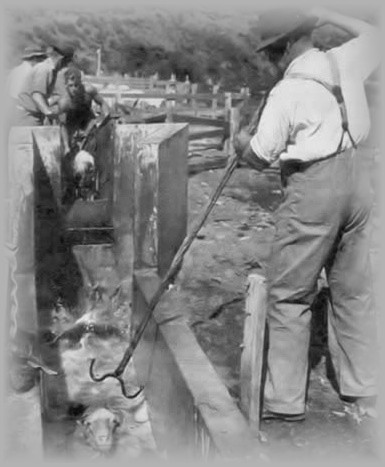
The late Elisabeth Elliot, one of the godliest women of our generation, told about a time Sheep_dippingyears ago while visiting friends who owned a sheep ranch in Northern Wales. One day she saw a shepherd pick up a sheep and take it to a sheep dip which is a large vat of liquid insecticide and fungicide, and put the sheep into the vat, and the sheep frantically fought for air. Then the shepherd pushed the head down, but the sheep kept coming up, and the shepherd kept pushing it down, because all of the surface of the sheep had to be coated with the solution to keep it from getting ill.

She said, “I wondered what it’s like to feel like your shepherd is trying to kill you? Then she remembered the death of her missionary husband at the hands of the very people he served and said, “Oh, I remember.”

If this story of Abraham tells us anything it tells us that sometimes your shepherd, who is trying to save you, will feel to you like he is trying to kill you. And that is a dark time, indeed. I don’t know what it looks like for you, but I know this: Every human being that ever lived has walked in darkness sometime. But one day, one day the “third day” will come. It came for Abraham.

It came in the life of another one who also stepped out on the “road to godforsakenness” who, like Isaac, had to carry on his back the wood on which he would be killed. Who cried out in his darkest hour, “My God, my God, why have you forsaken me?”

Only when it was time for his sacrifice, no voice cried out to stop the Father, and Jesus was killed. But the third day came for him, too. And the third day will come for you and for me, someday, friends.

Faith is about tenacious obedience and we live with this promise: The third day will come.

Posted in Uncategorized | Tagged , , , , , , , | 6 Comments

Hattie’s Song

“The kingdom of heaven is like leaven, which a woman took and hid in three measures of meal till it was all leavened.”~ Jesus

The bedraggled man sat in my office and tried to wet his lips, but his tongue was too dry. His shoulders were rounded and stooped as if he carried the world. His eyes kept flitting around from one window to the next, glancing at me furtively. Finally, he’d gathered enough spit to speak.

“Pastor Joe, your sermon yesterday on hope and leaven made me think of something that happened to me when I was a little boy. I don’t know why, but I feel as if I’m supposed to tell you this story.

“I was eight years old when my grandmother remarried a man named Bob. During the summers my mother would take us up to their ranch in northern Texas for a visit. Grandpa Bob sat me on his knee, tussled my hair; told me stories.  I liked Grandpa Bob. He let me drive the tractor and feed the chickens.

“They had a maid that worked for them, cleaning, cooking and generally taking care of the house.  Her name was Hattie. She was a beautiful, large black woman. She made the best biscuits in the world but she barely spoke. When I was in the sitting room with my mom and grandparents, I could hear Hattie in the kitchen as she slammed cabinet doors and banged pots and pans.

“Don’t break all the dishes, Hattie.” Grandpa Bob would yell out to her with a grin.  Then he turned to me and said, “Hattie can’t hear a lick. She doesn’t realize how hard she’s banging stuff.”

“My mother had me stay with them at the ranch for the summer with Grandpa Bob and my Grandma. Grandpa took me everywhere with him. We went to town to the feed store. He took me to the Town Talk Café for breakfast. He took me to the courthouse and we sat on some benches with other old men and they told stories and laughed.

“One Friday evening we went to a large meeting in a farmer’s field. There were lots of men there and they had their cars and trucks all in a circle with their headlights pointing to the center. In the middle of the circle of headlights was a large oak tree.

“Grandpa Bob had a wooden box that he put in front of his truck and he stood up on it and began to speak. Everyone listened to him. It was like he was their boss or something. I couldn’t understand everything he said but it sounded as if he was angry. I’d never heard him speak in anger before that night. He was yelling at the black man who was being held by the arms under the tree. I was sitting in the front seat of the car and grandpa Bob’s back was to me and I couldn’t make out everything he said, but then they put a rope around the black man’s neck and pulled him up in the air from a rope they had tossed over the limb of the tree. The man kicked and kicked and kicked and kicked until he didn’t kick anymore.

The man stopped, wet his lips, and wiped a tear from his eye.

“Pastor Joe, it was the most horrible thing I’ve seen in my life. I was only a boy. Who takes their grandson to something like that?” he asked.

All I could do was shake my head in sadness.

He continued, “On the way home Grandpa Bob told me over and over again about how we needed to remind those people of their place and that if they ever started getting ideas like that black-no-good-son-of-a-bitch-preacher, King—then all of society would come unraveled.

“While he talked I kept seeing that black man’s feet kicking and kicking and then going still.

“Later that night I was in my bed and couldn’t keep from crying so I sobbed in my pillow. Directly, I heard the door to my room open. I turned my head towards the door thinking it might be Grandpa Bob coming to tell me to stop crying, but silhouetted against the hallway light was the round figure of Hattie. She sat on the edge of the bed and stroked my face. Her hands smelled of cinnamon and honey. She patted my chest with her thick black hand, and the more she was tender with me the more I could see that man’s feet hanging from the tree, and I cried all the more.black hands

Then I heard her softly begin to sing:

Precious Lord, take my hand
Lead me on, let me stand
I’m tired, I’m weak, I’m lone
Through the storm, through the night
Lead me on to the light
Take my hand precious Lord, lead me home

“When she was finished she patted me on the head and quietly stepped out of the room.

“The next day I heard a man preaching on the radio from the kitchen. When I went in and sat down at the table I saw Hattie washing dishes and she was listening carefully to the preacher man. She saw me come in and asked me if I wanted pancakes for breakfast.

“I must have had a shocked look on my face thinking about the song she sang to me the night before and now her listening to the radio because Hattie looked at me sternly and yet with a hint of kindness and said, “You can keep a secret can’t you?” I nodded my head. She said, “I’m only pretending to be deaf so’s I can hear what Mr. Bob is planning and warn my people when I hear something’s coming that’ll bring them harm. I’m like leaven in the loaf that the Bible talks about. He don’t know I can hear, so let’s keep it that way, Okay? One day, judgment run down as waters, and righteousness as a mighty stream like Dr. King say.”

“I nodded.

“Aren’t you scared, Miss Hattie?” I asked.

“Yes, boy, I’m scared. But God knows what He’s doing. I do my part and he do His part and all will be well one day.”

“From that day on my step grandfather did his best to fill my head with hate and Hattie would fill it with love every night.

“In time my grandparents died and I lost track of Hattie but in the early nineties I went back to that community to look for her. I went to the only cemetery in town and had the hardest time finding her.  Eventually I found her in the “colored section.” The only marker on her grave was a small metal plate with a number twenty-seven. I vowed that when I could get the money I’d get her a nice stone.

“I’ve never had enough money, but no one has marked my life like Hattie. She never spoke an ill word about my grandma or grandpa Bob. She just filled me with love whenever they weren’t around. Told me stories, smiled at me and sang. And, Pastor Joe, she could sing like an angel and that always gave me hope.”

He took a sip of water from the Styrofoam cup and thanked me for my time and excused himself.

I sat in my chair—slack-jawed. But I kept humming that tune all day. I couldn’t get it out of my head.

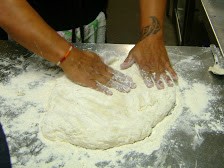
The leaven of the gospel of the Kingdom hid its way into her life and was kneaded into Hattie’s soul and there lay–until a little boy needed a song—and today I’m telling you their story. That’s how the Kingdom spreads.

So, get your hopes up and sing.

Somebody might be listening.

Posted in Uncategorized | Tagged , , , , , | 2 Comments

The Best Priorities

Being the new pastor at a church is exciting and frightening at the same time. It is exciting because I have all kinds of ideas, dreams, and hopes for the future of this little mountain church. I want to grow old with her. I want it to be the last church I pastor. I’m thrilled with the idea of settling into the community and getting to know the people, feel the Spirit-wind blow and join God in what He is already doing here in this Valley.

But it is frightening too. It is frightening because everyone’s expectations are so high. Including my own. With such high expectations will come the inevitable fall when I, or they, don’t live up to those lofty ideals. I fear making a mistake. I fear letting people down. I worry about hurting someone’s feelings with my snarky humor or strong opinions. I am concerned that the church will not respond to my leadership; that she will resist the change that needs to occur in order to reach others with the Gospel of Jesus and care for the souls that are already here.

So, there you have it. Excited and frightened.

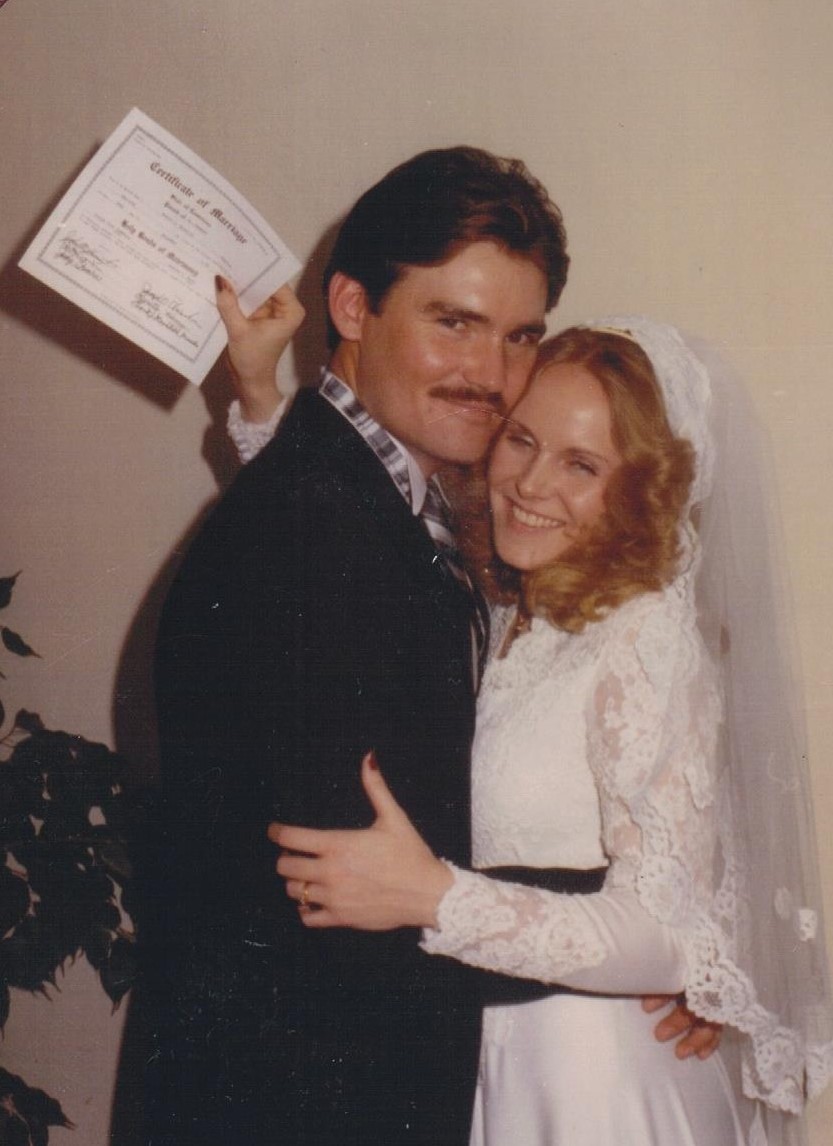
WeddingReminds me of the early days of my marriage. Thrilled that this beautiful blond would even consider wanting to spend the rest of her life with me. I had few prospects at that time. I was pouring concrete for a living. But she saw something in me that made her take a chance on an old redneck like me. And I was scared at the responsibility of providing for her, worried that I would let her down, and frightened out of my mind that I would make a mistake that would break her heart.

Eventually, all of those things happened.

And yet we are more deeply in love today than we were 34 years ago this spring when we were in the blush of a new relationship.

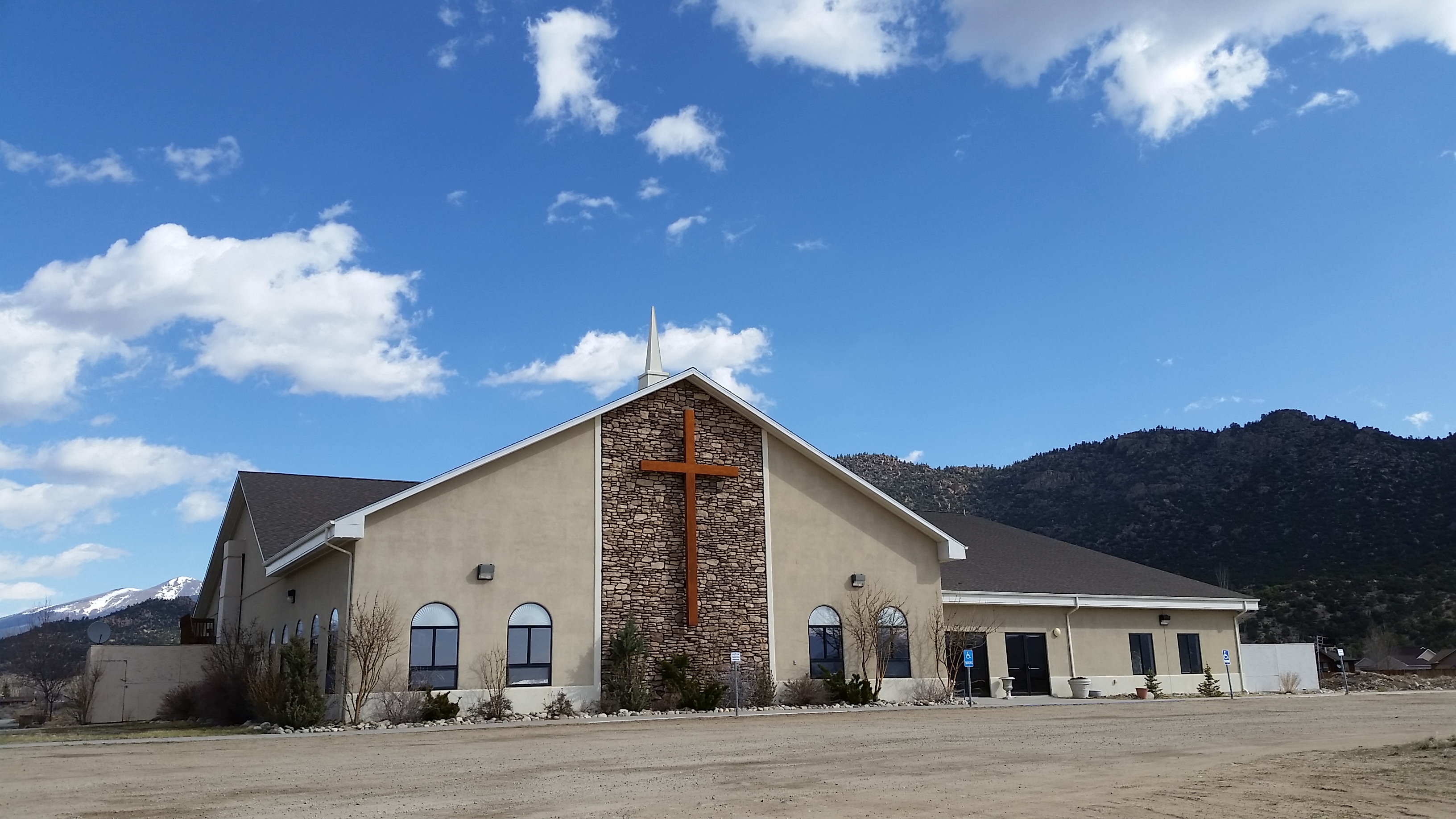
That is all I can hope for with my new church, Mountain Heights Baptist Church.

I have three priorities for this new relationship in the mountains. They apply to my first wife and my new Church.

  1. Hear her

Listening is the most undervalued skill in the relational process. We have opinions and we feel a compulsion to inflict those on everyone in our world. We have advice we give out freely with or without permission. But the greatest gift I can give both my wife and my church is a zipped lip, an open mind, and unhurried time.

  1. Love her

I want her to feel cherished. I want her to know down deep, where the knobs are, that she is the love of my life. That I would live for her and die for her. I want her to see my love in how I server her, pray for her, and play with her. I want her to feel as if she is the top priority in my life. I want our love to grow old together, for old love is the most gentle and vigorous love there is. And it is that love that will change the souls of both of us.

  1. Bless her

I watch her as she sleeps. I whisper a prayer of blessing over her. I am fully present when I am with her. I say words of affirmation, affection, and truth to her. I believe in her in ways that makes her believe in herself. I want her to know that she is the only one for me. I want her to feel completely secure in my love. I want to sing, dance, and laugh with her. My heart will be wide open to her.

What will keep me from turning the Church into my competing lover instead of my first wife?  What will ensure that appropriate boundaries are maintained? It’s pretty simple. I used to tell my sons when they were little that I loved them, but I loved their mother first and loved her more. They got to where they could finish that last sentence.

“Boys,” I’d say “I love you.”

Then they would say in unison, “We know, Dad. You love Mom more.”

I wanted them to know proper order of priority. Same with the bride of Christ.Mountain Heights

I love Jesus, I love Lynette, and I love the last best hope for this world—the Bride of Christ. In that order.

So, I show fear the door, because…

“…perfect love casts out fear…” ~ Saint John


Posted in Uncategorized | Tagged , , , | 12 Comments

Colorado is Calling

All that is gold does not glitter,
Not all those who wander are lost;
The old that is strong does not wither,
Deep roots are not reached by the frost. ~ J.R.R. Tolkien, The Fellowship of the Ring

There are things about my job I don’t like. I don’t like the intangible nature of my calling. I work with people at a soul level on problems that do not have quick solutions. There are deep-seated pathologies that will take months and years to find healing.  In fact, some of those wounds will never be healed this side of Heaven. I don’t like that. I want their pain to go away—today.

I don’t like officiating weddings for people I do not know.  That’s right, I don’t like doing weddings for your cousin’s friend. Nobody wants to hear what pastor says at a wedding, especially a pastor that they don’t know. Folks are too busy ogling the bride’s maids or wondering if there is going to be any alcohol at the reception. Get a Justice of the Peace, for crying out loud.

I know—I sound grumpy.

But recently I’ve come to love an aspect of my calling almost more than any part.  It is serving Communion by Intinction.

Intinction \in-ˈtiŋ(k)-shən\ It’s a fancy word for saying we are taking Communion by dipping bread in wine/grape juice. I am a Baptist so that means we use non-alcoholic grape juice only.

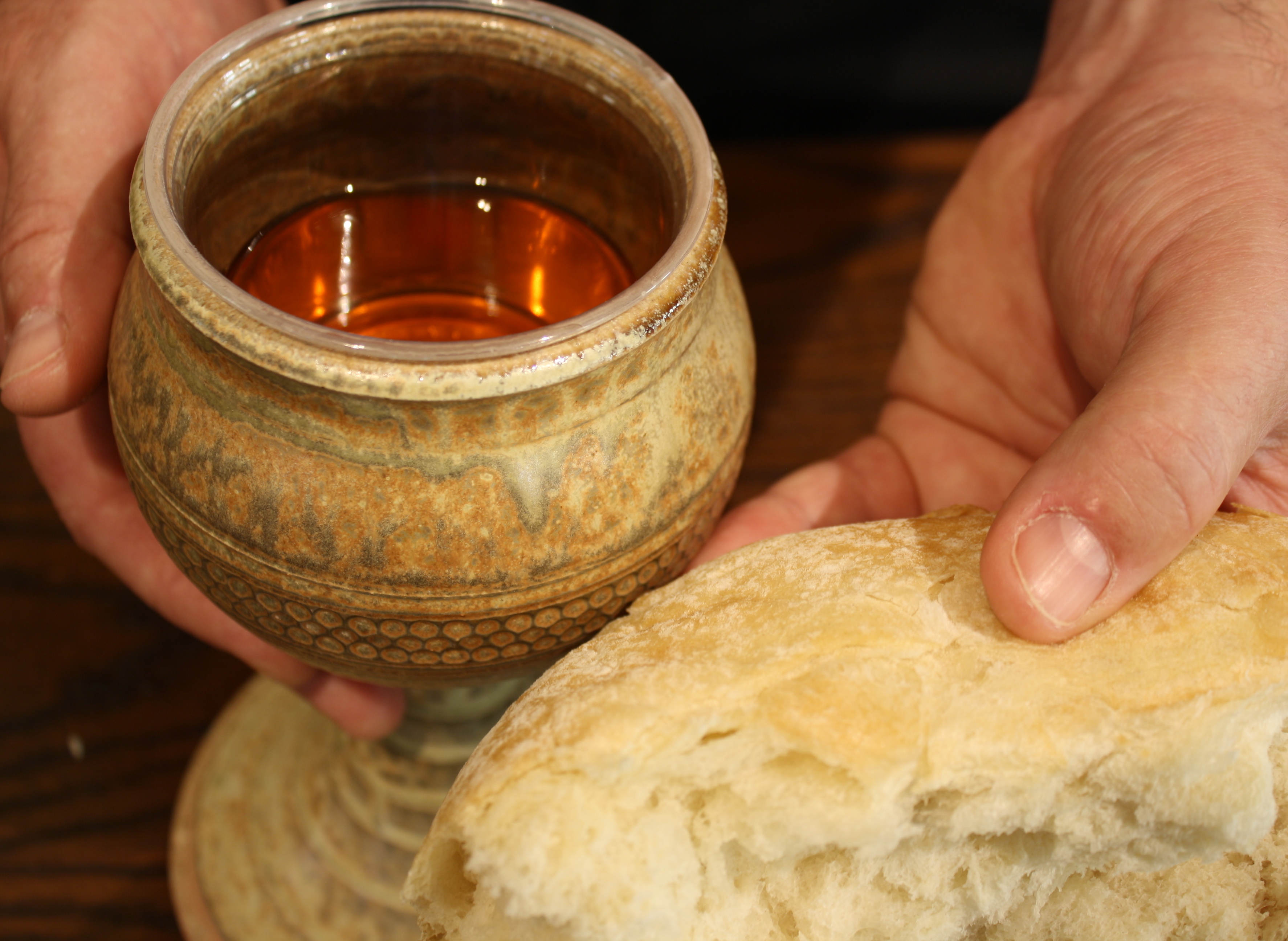
You can’t do this wrong and no one looks at you funny if you don’t “do it right.” When theycommunion come forward, a basket of bread is placed before them then they dip the bread in the cup and eat.

When given the bread I say words of affirmation, such as “Christ’s body broken for you.” When given the cup: I say, “The blood of Christ shed for you.”

Folks are usually silent and don’t say anything, maybe a silent prayer or, they say, “Amen” or, “Thanks be to God!” or, they may also say whatever the Spirit leads them to say.

The practice of receiving communion by intinction is an ancient one. In the last few generations many Protestant churches have revived this practice in Sunday worship. When taking Communion by Intinction, the body of the Church acts together, moving as a community towards the Table. In the Baptist tradition, we believe that salvation is given to us and is not something we take; by being handed bread, the symbolism for this belief is enacted.

But the reason I love it is because when I serve the bread and fruit of the vine, I lock eyes with people I love and sometimes call them by name as I say, “Christ’s body broken for you. Christ’s blood shed for you.” And in that two second eye-to-eye, soul-to-soul moment a look leaps between pastor and people and a connection occurs that doesn’t happen in any other encounter. The Holy Spirit is present as our souls—pastor and people—take, bless, break and give the body and blood of Christ together. Two hours of conversation is compressed into two seconds of soul care.

Last Sunday I administered communion for the last time in the Pacific Northwest. My wife and I have accepted a call to pastor Mountain Heights Baptist Church in Buena Vista, Colorado. As the congregants came forward to receive the elements from both of us—many tears flowed—from pastor and people.

Almost half of my ministry life has been in the beautiful Pacific Northwest and we will miss it very much. The mountains, the water, the coffee, the rain, the lushness (it is so green here it feels like the front lawn of heaven) But more than all of that we will miss the precious souls we have grown to love.  But God has been clear about what our next assignment will be and I’ve learned a long time ago it’s best not to argue with the Lord.

I could quote John Muir and say, “The Mountains are calling and I must go” but that would not be accurate.

So, I will tell you that God said, “Get off my lawn!”

Gotta go.

Posted in Uncategorized | Tagged , , , | 12 Comments

Is It Worth It?

They sing a new song:

“You are worthy to take the scroll
and to open its seals,
for you were slaughtered and by your blood you ransomed for God
saints from every tribe and language and people and nation;
you have made them to be a kingdom and priests serving our God,
and they will reign on earth.”  Revelation 5:9

Not going to lie, there have been times when I’ve asked myself if being a minister was worth it. On more than one occasion I’ve asked myself, “Has it been worth the hours of listening in coffee shops, the gallons of coffee, and the thousands of words shared to lead, guide, and direct fellow pilgrims? Has been worth the countless text-prayers, pages of journal-prayers, and the hundreds stories that I heard and hold as treasure in my heart–was it worth it?

Thoughts like those in times like these make me wonder what the answer would be if we asked some of the heroes of the bible the same question.

To ask Abraham, “Was it worth it to leave Ur of the Chaldean, wander around Canaan, live in a tent, and in the end have nothing to show for it other than one son, a funeral plot and still unfulfilled promises of God?”

To ask Moses, “Was it worth it to give up the pleasures and treasures of Egypt to lead a million of whining former slaves through the wilderness for 40 years and never even get into the promised-land yourself?”

To ask Jeremiah, “Was it worth it to preach over 60 years and never have even one positive response to your message?”

To ask Mary, “Was it worth it to say ‘Be it unto me according to your will,’ when that submission resulted in a Son who was crucified on a Roman cross?”

To ask John, “Was it worth it to preach the gospel and plant churches all over the known world, and in the end, wind up in exile on Patmos?”

Have you ever asked yourself, “Is it worth it to live a life of faith in God when no one else is?” Is it worth it to get up on Sunday morning and go to church when all your friends are in the mountains or at the beach enjoying a bright day?

Is it worth sharing the gospel with your friend and perhaps risk losing the friendship? Is it worth it to tell the truth, when lying would get you further ahead? Is it worth it to stay in an unfulfilling marriage and seek to diligently honor your spouse and God? Is it worth it to get involved in a thankless ministry that no one sees and no one notices?

Not long ago an 84-year-old lady asked me if when she died and I were her pastor would I preach her sermon with the King James Version of the Bible. I said, “I’ll do you one better. I’ll not only preach your funeral sermon with the King James Bible, I’ll preach it with your bible and then give it back to you when I’m done.” She liked that answer.

That encounter reminded me of a story I read.

There was a woman who had been diagnosed with a terminal illness and had been given three months to live. So, as she was getting her things in order, she contacted her Pastor and had him come to her house to discuss certain aspects of her final wishes.

She told him which songs she wanted sung at the service, what scriptures she would like read, and what outfit she wanted to be buried in. Everything was in order and the Pastor was preparing to leave when the woman suddenly remembered something very important to her.

“There’s one more thing,” she said excitedly.

“What’s that?” came the Pastor’s reply.

“This is very important,” the woman continued. “I want to be buried with a fork in my right hand.”

The Pastor stood looking at the woman, not knowing quite what to say.

In all my years of attending socials and dinners, I always remember that when the dishes of the main course were being cleared, someone would inevitably lean over and say, ‘Keep your fork.’ It was my favorite part because I knew that something better was coming…like velvety chocolate cake or deep-dish apple pie. Something wonderful, and with substance!”

So, I just want people to see me there in that casket with a fork in my hand and I want them to wonder “What’s with the fork?” Then I want you to tell them: “Keep your fork…the best is yet to come.”

At the funeral people were walking by the woman’s casket and they saw the cloak she was wearing and the fork placed in her right hand. Over and over, the Pastor heard the question, “What’s with the fork?” And over and over he smiled.

During his message, the Pastor told the people of the conversation he had with the woman shortly before she died. He also told them about the fork and about what it symbolized to her.

He was right. So, the next time you reach down for your fork let it remind you, ever so gently, that the best is yet to come.

Is it worth it?

My personal answer to all the above is yes! Not because it is easy. Not even because it is the right thing to do. It is worth it because He is worth it and we aren’t home yet.

He is worthy of every prayer.

He is worthy of every act of obedience.

He is worthy of every temptation ever resisted.

He is worthy of every song of worship ever sung.

He is worthy of every tear of repentance ever shed.

He is worthy of every ounce of labor ever expended.

He is worthy of my life.

He is worthy of the church’s life.

He is worthy.

So, keep your fork. The best is yet to come.

Posted in Uncategorized | Tagged , , , , , , , , | 3 Comments

FINDING GOD’S WILL–A GUEST POST FROM JOE CHAMBERS

I was asked to write a guest post for my friend, Jamie Greening. Lynette and I have been wrestling with a major decision in our lives recently and this framework has helped us. Nothing new here…just need to practice what we know.

Jamie Greening's avatarPastor Greenbean

Today we have a special Greenbean treat.  My friend, Pastor Joe Chambers--a
climber of mountains, walker of trails, and student of the ancient ways, 
shares some suggestions for how we can know and do the will of God.  In 
addition to being a pastor, Joe writes two blogs, one called Field Notes on 
The Jesus Way, the other is titled Above Tree Line.  I encourage you to check them 
both out.

Guidelines for Finding God’s Will

To walk out of His will is to walk into nowhere. ― C.S. Lewis

Pastor Joe Chambers Pastor Joe Chambers

I have come to believe that contemporary Christians do not have a good working theology for discerning God’s leading in our lives. I blame our consumer oriented culture that is bent on selling us what we are not aware we even need. And I point my boney finger at the prosperity Gospel on the airwaves…

View original post 435 more words

Posted in Uncategorized | Leave a comment

How to Live in this Good Earth

Music is a sacrament.~ Bono

For the Christian, pleasure is innocent until proven guilty. ~ Tim Keller

All of us at various times in our lives come to a place where we notice something almost sacramental, rich, and holy about the experience of listening to music of Beethoven or Mozart. Or listening to Johnny Cash sing Amazing Grace.

There is something loaded and layered with meaning to take a long walk along the gentle lapping shoreline of the Puget Sound.  Something transcendent about watching a bee pull nectar from an alpine-forget-me-not at fourteen thousand feet above sea level. There is something holy about watching a sunrise or the smell of a baby’s hair. There is something packed full of beauty and goodness about the innocent laugh of a toddler. Or the wise gentle smile of a grandparent.

What do we do with these instincts that this material reality is so beautiful, good and holy? Is it merely neurons firing and synapses reacting in our brains or is there more going on?

Live in God’s World Playfully

Have you noticed that Christians are some of the saddest, dourest, meanest people on the planet?  And yet one of the salient marks of what Scriptures say are supposed to set us apart from people with God is that we are joyful people.

God made this world and even in its groaning and marred state we are to be enjoying the creative world God has placed us in.

Will we actually slow down enough to see the individual petals of a flower, hear the distinct tone of a song bird, taste the texture of a pan-seared steak, or have a leisurely conversation with an old friend? Will we slow down enough to see, hear, taste, smell, and touch this good earth? How will we ponder and praise the moments of beauty God offers us this week?

Live in God’s World Gratefully

That is one of the great benefits of gathering weekly to worship. When we gather to sing, pray, laugh, study, hear, and love as a gathering of the faithful we bring into focus all of the inarticulate praise of the cosmos into an expression to the living God. Worship is practice in gratitude.

This is why it is so important that we determine to be present in a place of worship even when we don’t feel like it. Without the weekly discipline it is so easy to fall into a default mode of working on the next item on your “to do list” that we fail to realize we have so much life and grace for which to be thankful.

In worship we are to slow down long enough to be stunned by the beauty of God and the grace of Jesus and—to say thank you as a people.

Live in God’s World Seriously

Believing that this world is both beautiful and broken at the same time.  God loves this world so stubbornly that He enters it in Jesus to restore it and heal it. And each of our lives are supposed to be signposts to that blessed hope. And that means we get serious about serving the world that God loves.

Confronted with a cancer or a slum the Pantheist can say, ‘If you could only see it from the divine point of view, you would realize that this also is God.’ The Christian replies, ‘Don’t talk damned nonsense.’ For Christianity is a fighting religion. It thinks God made the world—that space and time, heat and cold, and all the colors and tastes, and all the animals and vegetables, are things that God ‘made up out of His head’ as a man makes up a story. But it also thinks that a great many things have gone wrong with the world that God made and that God insists, and insists very loudly, on our putting them right again. ~ C.S. Lewis, Mere Christianity,

When you work in your yard, when you speak with the clerk at the store you frequent, when you teach a child to read, when you build a house, when you pump gas, when you provide employment for others, when you process transactions at a bank, when you write a story, when you listen to a friend, when you play with a child, when you cook a meal…it is all spiritual.

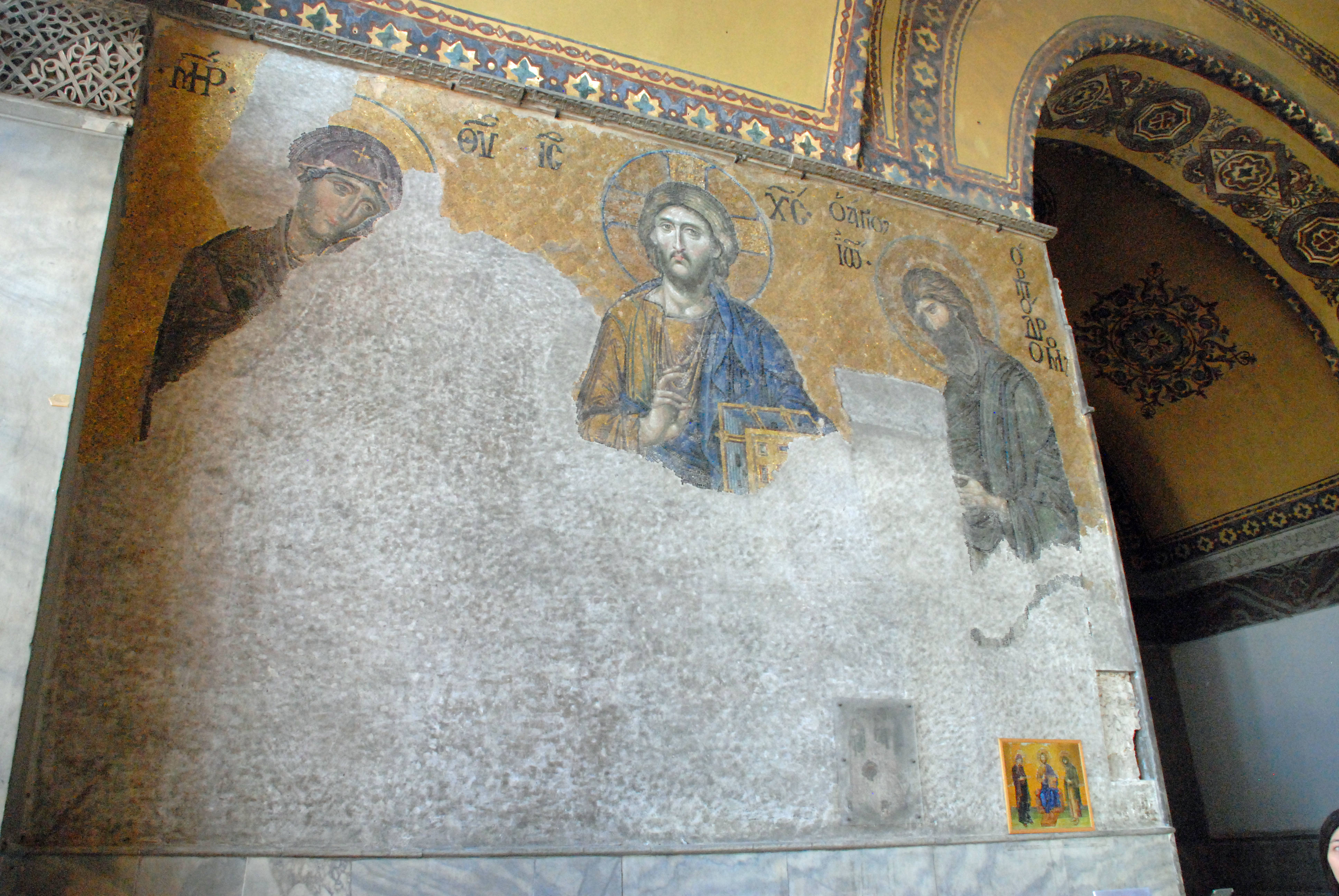
Hagia SophiaOne of the fascinating restoration projects going on in the world today is happening in the Middle East. The church of Hagia Sophia (literally “Holy Wisdom”) built in Constantinople, now Istanbul, was first dedicated in 360 by Emperor Constantius, son of the city’s founder, Emperor Constantine. To this day it boasts the largest unsupported dome structure in the world. It is beautiful, breath-taking and transcendent. And yet, with all of its grandeur, it is in disrepair.

In the 15th century sultan Mehmed ravaged the city and converted it into a mosque, which it remained until the fall of the Ottoman Empire in the early twentieth century. Plastering over the beauty of the mosaics with the ugly of plain plaster. But in the 1930s the Hagia Sophia was officially commissioned as a museum and is no longer controlled by a religioushagia-sophia entity. Since that time, slowly—week-by-week and month-by-month and year-by-year—the ancient beauty of that place is being restored. The plain plaster is carefully and gently chipped and peeled away so that the original beauty underneath might reemerge once again.

What a wonderful picture of what God is doing in this world through the apprentices of Jesus and what the maker of Heaven and Earth is doing with His creation. He is repairing and restoring a ruined cathedral through the person and work of Jesus and He intends—no, insists—that it be beautiful once again.

So, dear friends and fellow pilgrims, may you know the maker of Heaven and Earth and learn to live well in His good world.

Kings of the earth and all peoples;
Princes and all judges of the earth;
Both young men and maidens;
Old men and children.
Let them praise the name of the
 Lord.    Psalm 148:11


Posted in Uncategorized | Tagged , , , , , , , , , , , | 4 Comments

What is Soul Care Really?

Soul Care is an exciting adventure in our spiritual lives bearing tremendous fruit,
countering the perspective some have that more important missions are before us.
I am witnessing in my own life and many who come here how significant this inner
work is for our vitality and effectiveness personally and vocationally. Soul Care
is serious business that reaps great rewards!

Today I want to share with you a bit of what this looks like and why we are engaged
here at Potter’s Inn to grow the Church through care of the soul.

In Mark, chapter 8:34-37 we read:

Then, calling the crowd to join his disciples, Jesus said, “If any of you wants 
to be my follower, you must turn from your selfish ways, take up your cross, and
follow me. If you try to hang on to your life, you will lose it. But if you give
up your life for my sake and for the sake of the Good News, you will save it. And
what do you benefit if you gain the whole world but lose your own soul? Is anything
worth more than your soul?”

Jesus talks about a turning point here, taking up your cross and even losing your
life for His sake. It seems that some today interpret this as a charge to lay aside
all personal ambitions and go follow Jesus in radical ways, without considering
their own life as important. This mentality drives a lot of people into the missional
movement at great price and even carnage to themselves and the Gospel message. Some
would say, “We must give up what we want and do what God wants.” Is this really
what Jesus meant for us? Why does He then question the benefit of gaining the whole
world (outer markers of success) in exchange for losing our own soul? This is a
shift back to the importance of who we really are – a charge to consider what we
can lose if we don’t carefully pay attention to what really needs to die.

Consider that what Jesus meant was not ambition for a life of personal sacrifice,indian-paintbrush
but instead death to our old nature or false self in order to really live. We can
identify within us a broken pot. Our souls are marred with stories of hurts, hangups
and habits that, frankly, come from our sin nature. This old way of living is not
the new way Jesus came to proclaim and make available to us. He is in the business
of making us new – moving us from our false self to our true identity as His beloved.
He the Master Potter, seeking to reshape our clay into a new pot as He sees fit.
(Jeremiah 18:1-6)

There is a difference between “taking up your cross” for reasons of doing versus
reason of being. I believe Jesus meant the latter. He’s not concerned about what
we do so much as who we are.So taking up our cross and following Him is a call to
die to our old nature, our false self, or broken pot and allow Him to reshape us
into something new, beautiful and, yes, useful as He sees fit. What value is there
if we gain all the successes and benefits this world has to offer and even live
a life of service to God that is exemplary, yet lose the opportunity for the Potter
to do the inner work of restoring our broken soul.

The fact is, the soul – the palette of our life – is not fixed overnight. What took
a lifetime to mar, takes a lifetime to transform. It’s a process in which we allow
the Divine Potter to put His hands on us. It’s a choice to follow Him down to the
Potter’s house where the inner work happens. Jesus is inviting us to deep, inner
work in order to really live the life He wants for us.

When we talk about Soul Care, we are describing the process of turning from our
selfish ways, taking up our cross (death to our old ways, our false self) and following
Jesus on the journey of personal transformation. At Potter’s Inn, our team is simply
providing the ingredients that help us go down to the Potter’s house where He is
at the wheel. We are guiding the soul away from what is a lie to what is true,
from the voices of our false self to our true self. We are companions with pilgrims
who want the hand of the Potter on them.

We believe three ingredients foster care of the soul so well: Intimacy, Beauty and
Adventure. Intimacy is what God has wanted with us all along – to be close to us, very close.

Beauty is what God designed to get our attention. It’s a sharp point that pierces
our soul to wake us up and see Him! Adventure is what our hearts long for. Within
us is a strong desire to really live! And the adventure of plunging the depths of
our souls leads us to experience transformation from the Divine Potter.

The soul care process is like weed killer and fertilizer for a plant. It nips the
weeds at their root while boosting new growth. We are empowered to deny our old
self and walk into our new self. It is very exciting for us to watch people begin
to take up their cross and truly follow Jesus, some for the first time even after
years of professing to be a follower of Christ. This is how the Church will really
grow.

Posted in Uncategorized | Tagged , , , , , , , , | 1 Comment