Clinton, Trump…Or?

For God is not the author of confusion but of peace… Let all things be done decently and in order. ~ Saint Paul

“Let the lie come into the world, let it even triumph. But not through me.” ~ Alexander Solzhenitzen

Of two evils, choose neither . ~ Charles Haddon Spurgeon 


This article will not change anyone’s mind about who they are going to vote for. If you are a Hillary hater or a Trump supporter, nothing I am going to say is going to change your mind. If you hate Trump and love Hillary, the same is true of you.

(Don’t confuse me with the facts, my mind is made up)

20161020_094145I will not be able to convince what we used to call Yellow Dog Democrats to change their vote. Yellow Dog Democrats was a political term applied to voters in the Southern United States who voted solely for candidates who represented the Democratic Party. The term originated in the late 19th century. These voters would allegedly “vote for a yellow dog before they would vote for any Republican”.

To be fair there are Yellow Dog Republicans too.

So this article is not for the Yellow Dogs or the single issue fanatics (pick an issue: abortion, climate change, gun control, trickledown economics, welfare state, etc.). I am writing more for myself than anyone else, but there is a growing group who are repulsed by both major party candidates and are tired of being shamed and put down with the false argument that to not vote for Hillary is to vote for Trump and vice versa.

To that point, the math is not valid that to fail to vote for candidate A means you are wasting your vote and by default you are voting for candidate B. Someone much smarter than me has written and excellent article about the math in that scenario. You can read it by clicking here.

Both major party candidates are flawed in their character and policies that are beyond the pale. You can read a much better article outlining that position by clicking here.

Here is my position: I cannot vote for Hillary because of her hubris to be President, her untrustworthy character, and her rabid support of even partial birth abortion is chilling. Her unequivocal support of extreme LGBTQ issues is a fundamental assault of the traditional family according to the Judeo-Christian values that I hold dear. Her entire public life is strewn with scandal after scandal. The ACLU’s support of her candidacy alone makes me shudder.

I cannot vote for Trump because he behaves like an immature twelve-year-old boy. (apologies to all twelve-year-old boys) He insults anyone who disagrees with him. He mocks women, speaks of and allegedly has assaulted women, mocks fat women, mocks the disabled. He is part owner of many casinos that promote the sin of gambling (remember when Christians were against that vice?) and inside those casinos are strip clubs where women are exploited and objectified. He brags about his infidelity while married. His equivocation on accepting the results of the election are unprecedented. (His extreme supporters frighten me.)

America’s white nationalists have spoken, and they’ve spoken loud and clear: Donald Trump is their presidential candidate of choice.

From former Ku Klux Klan grand wizard David Duke on down, the proudly racist fringe of the American electorate supports Trump.

Trump is unrepentant about his past behavior. He doesn’t believe he needs to apologize for anything.

My Christian convictions will not allow me to vote for either of these immoral people, platform or no; Supreme Court Justices or no; executive orders run amok, or no. Decency still matters to me. To vote for the lesser of two evils is still voting for evil.

Christians, please. Stop viewing this election through the eyes of pragmatism and start looking at it through the eyes of faith. ~ Carey Green

I recently had a conversation that went as follows:

Big Church Pastor: Joe, don’t you think Donald beat Killary tonight on the debates?

Me: No. In fact, I think America lost in the debate.

Big Church Pastor: Don’t tell me you aren’t voting against Killary.

Me: I’m writing in a candidate I’d be proud to have as a president.

Big Church Pastor: By not voting for Trump, you will be voting for Killary.

Me: No. I will be voting for my candidate and sleeping with a clear conscience.

Big Church Pastor: You *purests* are going to hand her the election.

Me: If I’m a *purest* does that make you an impurest?

Big Church Pastor: ____________.

The other day Lynette and I were driving to town and she made a simple, but profound observation. She said there is going to come a day when God and history will look back on this election and see three columns on the ballot. One column will be all those who voted for Hillary. The second will be all those that voted for Trump. But there will be a third column who said to the Democratic party and the Republican Party and to the American people, “No!”

Then she said, “I want my vote to be in the third column; the column for decency.”

There is a painting in which Faust is playing chess with the Devil. Faust has only a few pieces left on the board and seem to be check-mated.  The expression on his face Faustforetells his doom.  The Devil, who seems to be very much in control, has a sneer of glee.

Through the years people would come to the gallery where the picture was displayed and gaze and ponder the hopelessness of the situation.  As they would leave, most left with the sense that the artist had captured the essence of their own situation.

Then one day, a great chess master came into the gallery.  He stood for hours focused on the painting and specifically the chessboard.  Day after day, he would return studying the portrait.  Finally, with a shout that disturbed everyone in the gallery, “It’s a lie!  You still have a move.”

Our move is to sign our name in the third column.

Speaking of Faust…

For what shall it profit a man, if he shall gain the White House, and lose his own soul?

Posted in Uncategorized | 8 Comments

The Journey

By faith Abraham obeyed when he was called to go out to the place which he would receive as an inheritance. And he went out, not knowing where he was going.  Hebrews 11:8

There is a difference between an adventure and a quest. An adventure is a there and back again experience or story. It’s an exciting thing you choose. You go and have your adventures, and you have all your thrills, and it spices up your life. Then you come home again, and you pick your life up again where it left off.

A quest is not something you choose; it comes to you. You sense a requirement. You’re called to it because of what’s involved, and you never come back from a quest. In a quest you either die for the quest, or if you do come back, you’re so changed you never, in a sense, come back. You’re never the way you were. You’re changed so radically.

In the way I have described the difference between an adventure and a quest—Christianity is not an adventure; it is a quest. It’s not there and back again. It’s not like, “I want to have some fun. I want to enrich my life.”

Christianity is a quest. God says, “Go! You’re going to be radically changed. Don’t ask me whether or not what I’m about to do will fit into your agenda. Christianity is a whole new agenda. Don’t say, ‘How is this going to enrich my life?’ Christianity is a whole new life.” What does it mean to set out on this journey? It means to go, not knowing where you’re going.

The life of journeying with God becomes a primary image in the Bible for what the life of faith is like. The Christian journey is all about faith. It’s all about hearing God in the Scriptures and responding—even if you, like Abraham, are not entirely sure where you are headed.

Because as you follow Jesus, you can’t fit your Christian life into your agenda for life. He refuses to be an add-on. Or as I heard one person say, “If Jesus is the Son of God, creator of the universe—you don’t make him your assistant in life. He is not a junior partner in your firm. He is not a co-manager in your shop. He is King.”

Walking with Jesus gives you a new agenda for life. It sends you in a new direction. Walking with Jesus is a journey where our entire lives are re-directed by God’s grace. It’s about faith.

But we don’t exist for ourselves. We exist for others; to be dispensers of God’s grace to those who are not in the forever family yet.

I want to be the kind of person that doesn’t retreat from the world. I want to be more like first responders, who run in when others are running out—I want to be a man that is running into the burning building of our culture. I am for this world. I love what God loves and He so loved the world that He gave His only begotten Son.

As I think about this ancient story I see that God graces Abraham, failure that he is, and will continue to show himself to be, and yet God stays faithful to his children who turn out to be just as flawed as he is, and God graces them one-by-one. And on down the line through the centuries, until when you look at the first chapter of Matthew in the New Testament we see, in the family tree of Jesus Christ Himself, that our Lord is called a “Son of Abraham.”

And in that “son of Abraham” God would explode His blessing, life, and abundance on the entire cosmos. The Son of Abraham lives for us, suffers for us, and then dies for us. He takes upon Himself our curse so that we can have the blessing of the With-God life. Because of the call of grace and the sacrifice of Jesus—we have the possibility of being restored to our true vocation of being the humans God imagined when He created Eden.

Following the journey of faith with Jesus might, at times, feel as if you don’t know where you are going. You might not know where you will end up. You might find yourself in the undiscovered country. You may not always know where you are going but you will never be lost.

In the Fellowship of the Ring, shortly after the hobbit Frodo Baggins is called to carry the ring that will undo the forces of darkness that threatens his world, there’s a moment in the story in which he is staying at an inn and feeling the weight of his mission—he is terrified at the journey ahead of him. And while he is at this inn he receives a letter from Gandalf the Gray, the wise old wizard, where Gandalf tells him of a long promised King named Aragorn who will wind up overthrowing the forces of darkness bringing healing to the land.

20161015_090214He tells Frodo about Aragorn by means of a little poem:

All that is gold does not glitter,
Not all those who wander are lost;
The old that is strong does not wither,
Deep roots are not reached by the frost.

From the ashes a fire shall be woken,
A light from the shadows shall spring;
Renewed shall be blade that was broken,
The crownless again shall be king.

That is a stunning picture of what Jesus does for us. Jesus sparks the fire of God’s love out of the ashes of our death. Jesus bursts God’s light into our shadows. Jesus, the King of the universe, becomes crownless, broken, and rejected so that you and I can be blessed and graced by God.

So, if you follow Jesus it may seem at times that you wander in life, but you will never be lost.


Posted in Uncategorized | Tagged , , , , | Leave a comment

Obey Your Thirst

“I thirst!” ~Jesus

Have you ever been thirsty?  I don’t mean the average thirst where a drink of water sounds good after a long walk or after working in the garden on a hot summer day. I mean really — really thirsty…where your tongue sticks to the roof of your mouth and all you can think about is water.

In the summer of 2013 I hiked the Pacific Crest Trail the length of the state of Oregon. I traveled from the border of Oregon and California to the border of Oregon and PCTWashington, some 460 miles- averaging 15 miles a day. One of the biggest challenges in southern Oregon was the lack of water.  It was an unseasonably warm August so the temperatures were regularly in the 90s.

I had a set of maps that told me the most reliable water sources along the trail and I quickly learned that when the map says “seasonal source”, it means dry in August. So planning and carrying enough water was pretty critical to making it from one destination to another.

At one point ten days into the hike I met a man traveling south while I was traveling north and I asked him about water sources that he might have passed before he got to me.  He said that trail angels had stashed several 5 gallon buckets of water at the intersection of a highway and the trail twenty five miles north of my position.

I loaded up five liters of water and rationed myself for the day and a half and timed it that I would run out of water two or three miles short of the water cache he told me about.  Everything went fine for the next couple of days.  The temperature soared to 92 degrees and I ran out just when I thought I would, but was comfortable knowing that there would be water where the guys said there was.

As you might imagine when I got to the place he said there would be water—there was none. I searched and searched and came up empty. My tongue had begun to swell and I began to get a little punchy in the head. I looked at my map and saw that the nearest water was at Crater Lake resort area about a mile away.

I sat in the shade of a tree and felt my body actually go into a little bit of a panic.  A sense of desperation came over me.  Here’s the funny part: I would be walking on a blacktop highway into the National Park and people would be driving by, so I was in no real danger. I could flag someone down if I was in really bad shape, but my body didn’t know that, and I could really feel the sense of desperation in my body even though my mind knew I was safe.

At different points in my life, for spiritual reasons, I’ve taken prolonged fasts from food, but there is nothing that compares to the desperate urgency the body feels when it thirsts.

Have you ever been thirsty like that?

Thirst is something we experience when the pituitary gland secretes two hormones in the body.  One causes a physical reaction in the kidneys and the other causes the more complicated activity of the hypothalamus to send signals to the salivary glands to reduce secretions. I discovered many years ago that just thinking about thirst can make you thirsty — it causes the hypothalamus to start talking to the salivary glands.

Physical thirst can be excruciating and dangerous. Dehydration will get you into serious difficulty in a hurry. But an nnsated spiritual thirst can lead to a parched life and eternity.

Our Thirst

The metaphor of thirst is used to describe the parched, arid and dried up state of life that we find ourselves in when the living God is not at the very center of our lives.  A life without God is a thirsty and parched life.

ParchedThirst is one of the most powerful spiritual symbols in all of scripture. As dehydration draws the whole of our physical being to a longing for water, so a spiritual void will draw our spirits into a search for deeper meaning for our lives.

The Bible teaches us that the thirst that drives all other desires is a thirst for God. The Psalmist expressed it this way, I spread out my hands to You; My soul longs for You like a thirsty land. (Psalm 143:6).

Consider a character in the novel Infinite Jest by David Foster Wallace.  The lengthy and complex work takes place in a North American dystopia, centering on a junior tennis academy and a nearby substance-abuse recovery center. LaMont Chu is a tennis prodigy that is obsessed with becoming the next great professional tennis star who asks the resident guru named Lyle for help.

“Trust me,” he tells LaMont, “the pros whom you envy do not feel what you burn for. They are trapped, just as you are.”

“Is this supposed to be good news?” asks LaMont. “This is awful news.”

“LaMont, are you willing to listen to a remark about what is true? The truth will set you free. But not until it is finished with you. You have been snared by something untrue. You are deluded. But this is good news. You burn with hunger for food that does not exist.”

Why do we exhaust ourselves at work trying to climb to another level of recognition on the org chart or to another income bracket? Yet when you look closely at the people who are already there they are no more happy and content than we are.  Why is that? It’s because those desires are meant to lead beyond themselves to the God for whom we were made.

The desires under our desires, the thirsts under our thirst—is for God.

Jesus’ Thirst

When Jesus hung on the cross and said “I thirst”,  there is more going on than physical dehydration. At this point in the brutal crucifixion Jesus had been in pain for quite some time and He had lost lots of blood before this point in the process and yet he had not expressed any bodily discomfort or pain in any way. So why now?

Augustine says that when Jesus said, “I thirst”, he was saying that He thirsted for the world to be restored to Eden.  When he hung on the cross with people cursing him, He was thirsting for you and I to be rescued and restored to what God originally intended. On the cross His mouth went dry for us so that our deep thirst could be quenched in life with God.

When Jesus said, I thirst, someone at the foot of the cross tried to do something about His thirst- they filled a sponge with sour wine, put it on hyssop, and put it to His mouth.

I think John wanted us to see ourselves in the person of this unnamed stranger. When we get close to Him we want to satisfy the deep thirst of Jesus. When we come to drink deeply of life with God, when the Living God comes to define our lives, we begin to possess something of His thirst for the world.Water splashing into glass

Mother Teresa had a sign placed above the entrance to the chapel in all her missions around the world. It read, “I thirst, I quench.” When we offer a cup of cold water to those in need, we are giving water to Jesus on the cross, we are quenching his thirst. When we serve others in Jesus’ name, when we are helping to quench human need, we are serving Jesus himself.

When we satisfy our deepest thirst in Jesus we begin to thirst for the things that He thirsts for—the world that he loves.

Have you ever been thirsty like that?

Posted in Uncategorized | Tagged , , , | 2 Comments

Finding Your True Self

For I have come to set a man against his father,
and a daughter against her mother,
and a daughter-in-law against her mother-in-law. ~ Jesus

Former Poet Laureate Billy Collins is one of my favorite poets and he wrote a piece called “The Lanyard.” It is a series of verses that he wove together in gratitude for his mother as lanyardinprogresshe described the experience of weaving together a lanyard at summer camp.

I had never seen anyone use a lanyard
or wear one, if that’s what you did with them,
but that did not keep me from crossing
strand over strand again and again
until I had made a boxy
red and white lanyard for my mother.

She gave me life and milk from her breasts,
and I gave her a lanyard.
She nursed me in many a sick room,
lifted spoons of medicine to my lips,
laid cold face-clothes on my forehead,
and then led me out into the air light

and taught me to walk and swim,
and I, in turn, presented her with a lanyard.
Here are thousands of meals, she said,
and here is clothing and a good education.
And here is your lanyard, I replied,
which I made with a little help from a counselor.

Here is a breathing body and a beating heart,
strong legs, bones and teeth,
and two clear eyes to read the world, she whispered,
and here, I said, is the lanyard I made at camp.

I love those verses because they show us that we probably owe more to our family than we, perhaps, are willing to admit. And yet Jesus has the nerve to insist that we love Him more than dear old mom.

This is a piercing paradox that is at the very heart of what it means to live as an apprentice of Jesus—to be a Christian.

Traditional and ancient cultures felt the sharp edge of this saying a lot different than we do today. In ancient culture, the family was everything to the individual. Some of the bite of this saying is softened in our culture of individualism. For some, when you read those ancient word think, “I don’t see what’s the big deal here. My family put the “fun” in dysFUNctional families. We are such a mess. I’m thinking about divorcing my family now!”

But Jesus is an equal opportunity offender, because we in the west and modern world prioritize not the family, but the self. Our whole lives revolve around finding ourselves. Maximizing ourselves. Self-Actualization. And Jesus says, “If you would like to taste the With-God life, you have to even lose yourself.

In other words, “You will not fit me into your agenda in life. I need to BE your agenda in life.”

Whoever does not take up the cross and follow me is not worthy of me. Those who find their life will lose it, and those who lose their life for my sake will find it. ~ Jesus

Jesus calls us into a journey of losing ourselves. Of identifying the entirety of our lives, (our past, present, and future) our goals, our allegiances, our hopes for ourselves—and locating all of that in Him. To do that we have to die a death to every other kind of loyalty, attachments, goals, and relationship that would otherwise be the very nerve-center of our lives.

In Jesus words, he calls us into a journey of taking up a cross. For us that is sort of a benign symbol. We adorn our churches with it. We wear it around our necks on gold chains. But the cross in the ancient world wasn’t a decorative symbol. It was an instrument of execution. It was a symbol of capital punishment. It would be like us adorning our church with a hangman’s noose in our baptistery. Or wearing a jewel-encrusted injection needle around your neck. Or hanging a gold plated replica of a waterboarding table up in your living room.

This is what Jesus is calling us to do. To undergo a death to every other ultimate attachment or loyalty that we have.

00-irish-cross-07-12And this mark of death is actually the central image of the Christian family. This is why we celebrate crosses in our church. And when I anoint a sick person’s forehead with oil and pray for them, I anoint them with the motion of the cross.

Following Jesus is a journey into a life that is marked by a cross.

The famous theologian Dietrich Bonhoeffer, who was martyred for his opposition to Hitler just before the end of WWII, wrote in his classic work The Cost of Discipleship:

The cross is laid on every Christian. The first Christ-suffering which every man must experience is the call to abandon the attachments of this world. It is that dying of the old man which is the result of his encounter with Christ. As we embark upon discipleship we surrender ourselves to Christ in union with his death—we give over our lives to death. Thus it begins; the cross is not the terrible end to an otherwise god-fearing and happy life, but it meets us at the beginning of our communion with Christ. When Christ calls a man, he bids him come and die. 

For lots of people that statement sets their teeth on edge.  Our inner dialogue goes something like this, “This seems so backward and belittling. I thought life was about finding myself and being a fulfilled human being.”

If that thought crossed your mind, I want you to notice something. Jesus knows that when we live mostly to find ourselves, maximize ourselves, and fulfill ourselves—we inevitably wind up losing ourselves.

David Brooks wrote a piece for the New York Times a few years ago about Alex Rodriguez as this incredible athlete, and arguably one of the most naturally talented baseball players of all time, was caught and suspended from Major League Baseball for using performance enhancing drugs.

One of the mysteries around Rodriguez is why the most supremely talented baseball player on the planet would risk his career to allegedly take performance-enhancing drugs?

My theory would be that self-preoccupied people have trouble seeing that their natural abilities come from outside themselves and can only be developed when directed toward something else outside themselves. Enclosed in self, they come to believe that their talents come from self, are the self. Locked in a cycle of insecurity and attempted self-validation, their talents are never enough, and they end up devouring what they have been given.

At every step along the way, Rodriguez chased self-maximization, which ended up leading to his self-destruction.

You see, a life enclosed in self, a life that exists for nothing else but self-maximization always winds up in self-destruction.

I believe that without in intervention from Heaven we all will turn in on ourselves and our souls will become recluse and calcified. Self-maximization will inevitably lead to self-destruction.

Jesus says that if we want to find a way out of that downward spiral, we find it by finding ourselves in Him. The only way to really find ourselves is on the other side of losing ourselves in following Jesus.

Here is the beauty of this: You can trust losing yourself to Jesus more than you can trust losing yourself to any other thing in this world. You can pick up the cross and follow Jesus and allow all the other allegiances of your life to die, because, in Jesus, the God of the Universe actually takes up a cross and dies a death for you.

Jesus was willing to lose Himself to find you—you can trust Him enough to lose yourself in Him.

Posted in Uncategorized | Tagged , , , , | 2 Comments

Barak, It’s what You Are

Set in A.D. 180, Gladiator tells the story of General Maximus Decimus Meridius (played by Russell Crowe), who was about to be given reigning authority in Rome by the aging emperor, Marcus Aurelius. Before this could take place, however, the emperor’s son, Commodus, killed his father in order to establish himself on the throne. He then ordered the murder of Maximus and his family. Maximus escaped, and the movie follows him as he is sold into slavery, becomes a nameless gladiator, and finally seeks justice against wicked Emperor Commodus.

The turning point comes late in the movie. After Maximus wins a great battle in the Coliseum, Emperor Commodus decides to meet this unknown gladiator face to face. The crowd watches as the emperor in full pomp strides with his soldiers onto the sands of the Coliseum.

The emperor asks the simple question: “What is your name?”

Maximus, streaked with blood and dirt from the battle, takes off his helmet and says: “My name is Maximus Decimus Meridius, commander of the Armies of the North, general of the Felix Legions, loyal servant to the true emperor, Marcus Aurelius, father to a murdered son, husband to a murdered wife. And I will have my vengeance, in this life or the next.”

The crowd erupts with a deafening roar, while the emperor visibly shakes under the weight of the true identity of a man he thought was a mere slave. The emperor flees the Coliseum, only to face defeat and death later at the hands of Maximus.

All of us know from experience that names matter. Names orient us to identity and relationships. They are gateways into who we are and who other people are.

When our son and daughter-in-love were going through names for our grandchildren, I remember a couple of the names floated out there were vetoed straightaway by my wife who has taught years of 3rd grade elementary school. She’d say, “Oh, not that one. I had a rotten kid named that 8 years ago.”

Names matter.

I call my wife “Nette” (which is short for Lynette), and when I do in front of her mother I see Wanda flinch. And sometimes she says, “I wish you wouldn’t call her that.” I asked her one time why she doesn’t like that shorten version and she said she had a classmate in elementary school named Nette that she couldn’t stand.

So, being the kind and considerate person that I am when I found out that it bothered my mother-in-law…I say it every time I’m around her.

Names mean something.

Interestingly, at the close of every service at our church I stand down  front of the gathered saints, raise my hands, and bless them in God’s name.

I’m not sure how the word “Bless” rings in your ears. I think most of the time we think of it as a polite church word. We say “Bless their heart” before speaking badly about someone. Like, “Bless his heart, he’s so lazy.” Or “Bless her heart, she just can’t say no to cake.”

I’m not sure we really understand what we are saying. To quote Inigo Montoya from the film The Princess Bride, “I do not think that means what you think it means.”

The word “Bless” in Hebrew is not a cute word or an insignificant word. It is a word of depth and power. It is a one-word distillation of the way that the living God treats us. In Hebrew it is the muscular word “Barak”. When God says He “Baraks us” He is saying that He commits His whole self to us. He looks us in the eye and knows us completely and likes what he sees. He gives himself to us. All that he has and all that he is ours.

That’s what God means when He says, “I bless you.”

And blessing is the first word and the last word that God pronounces on the cosmos and on us. If you read the beautiful poetry and prose of the first two chapters of Genesis, it pictures a Creator shaping the cosmos with imagination, intelligence, and creativity out of soupy nothingness. And as God makes one layer and stage of creation after another, he steps back and says, “It is good.” He baraks it.

Then when you flip to the back of the book that we love, just before you get to maps, you find that the Alpha and Omega, the Beginning and the End, the First and the Last. Blessed are (you)…and (you) may enter through the gates into the city.

Blessing comes when someone says, “You are my beloved child. In you I am well pleased. Everything I have is yours.”

Some time ago I asked my parents how I got the name: Joseph Oren Chambers. Here is what my parents told me:

20160926_102717“I was on a date with your Mom and was telling her about my dad and all the things I did with him, watching him conduct business, bargaining with ranchers on the price of the calves he was taking to a farmer to fatten out and onto the butcher (these ultimately ended up in the butcher market in his grocery store) or to the dairy farmer to make a deal on the price of milk.

“My Dad liked to walk out over the open prairie facing the sun looking at the ground for something to shine, hoping to find arrowheads. Flint reflects in the sun like a piece of glass.  He took me with him and, as you know, we found many of them. We talked about them, imagining what different arrowheads were used for.  After I had told your mom about my dad and what he meant to me, she said, “We will name our first son after him.”

Nine years ago I got a phone call from my oldest son and he told me that he and Ashley were going to have a baby, but not just a baby, a baby boy. Then my son said, “And Dad, we are going to name him Oren.”

I can’t tell you what that did to my soul. My Father gave me his father’s name. My son gave his son my name. I’ve been “baraked.” That is what God does in Jesus for each of us who follow Him.

God looks at us and, because we are walking with His Son, He calls each of us “Beloved.”

And the Lord spoke to Moses, saying: “Speak to Aaron and his sons, saying, ‘This is the way you shall bless the children of Israel. Say to them:

“The Lord bless you and keep you;
The Lord make His face shine upon you,
And be gracious to you;
The Lord lift up His countenance upon you,
And give you peace.”’

“So they shall put My name on the children of Israel, and I will bless them.” (Numbers 6:24-27)

May you grow into your name.

Posted in Uncategorized | Tagged , , , , | 1 Comment

Generosity Begets Generosity

The center of a Christian’s life is a cosmic act of extravagant and infinite generosity. God is willing to spend everything to have us, to love us, and to embrace us.

In Jesus, the transcendent Creator takes on the appearance and likeness of the creature.  He doesn’t come into this world as an emperor, King, President or CEO, but as a fetus.  He was born in a stable to a blue-collar Jewish worker.

The second person of the Godhead who knew what it was like to be everywhere at the same time now knows the binding confines of skin. He has to use doors!  Ride animals. Eat and sleep. The God of the Universe now has to say, “OK, Mom.  Yes, sir, Dad.”  Think of the humiliation Jesus must have felt when he traveled among mere men who did not bow or cry out in adoration and worship.  The creator is now rubbing shoulders with men he had created.  Men who would growl, “Get out of my way Jew-boy!  Who do you think you are?”

20160919_093643-1Why did Jesus go through that? So that God could give us everything. So that God could give us Himself. God spends everything in order to give us everything.

I remember my first paying job. I was five years old. My father had turned over a plot of ground behind our house with a spade and I wanted to help. Of course the shovel was too much for me to handle so he gave me the job of breaking up the dirt clods left behind and preparing the ground for rows.

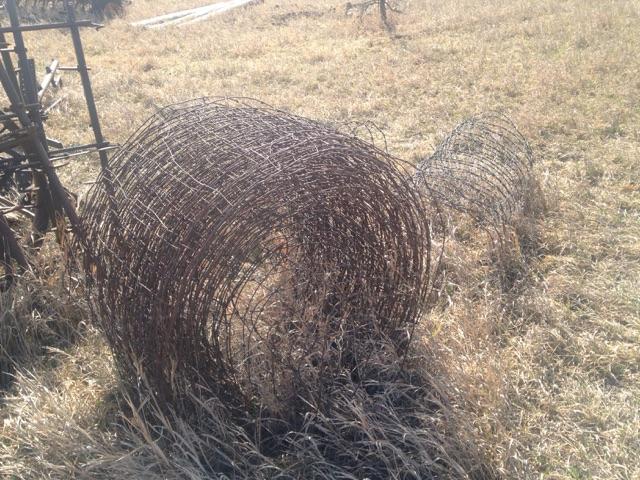
I was, again, too small and uncoordinated to handle a garden rake so he had the idea of taking a remnant of a role of hog wire that was about 12 inches in diameter and running a hog-wire-rollrope through the core of that tube of wire and making a loop with the rope. Then he put me in the traces of that loop of rope tied to that roll of wire and told me to walk up and down the turned ground until the dirt clods were all knocked down and smooth.

I imagined I was Samson working for the uncircumcised Philistines after he had been turned in by Delilah and blinded. After I finished the job my parents paid me fifty cents—in nickels. Ten nickels!!! I was thrilled. That money went a long way in 1963. Think of all the double bubble gum that would buy!

Then my parents thought it would be a good idea to teach me about tithing. Said that I had the privilege to give one of those nickels the coming Sunday in the offering plate when it was passed.

I don’t remember thinking that “having the privilege” to give was such a great thing. That would be like saying, “Joe, you get the privilege of eating cooked carrots tonight at dinner.” Or, “Son, you have the privilege of getting your baby teeth pulled tomorrow so that your adult teeth can come in smooth and straight.”

Why did I feel that way? Because I hadn’t yet been properly overwhelmed by God’s generosity on a hill called Calvary.

One of the telltale signs of a deep work of grace in a person’s life found in Scriptures is that the person becomes a generous person with whatever material things they possess.

Look deeply at the cross until you fall so deeply in love with Jesus that bubbling up from your soul comes affection, love, and generosity. That is how your soul is formed. Shaped into the character of God.

And remember, we are never more Godlike than when we give.

For God so loved the world that He gave…

Posted in Uncategorized | Tagged , , , , | Leave a comment

How Do You Spell Relief?

When I kept silent, my bones grew old. ~ King David

Sir Arthur Conan Doyle, the writer of the Sherlock Holmes novels, was quite a prankster.  One day he played a prank on five of the most prominent men in his home town in England.  He sent an anonymous note to each man, which simply said, “All is found out.  Flee at once.”  Within twenty-four hours all five men had left the country.

We all live with a certain level of guilt. Left to sit in our soul, sin will cause us much inner turmoil and heartache. Unresolved guilt will leak out in our lives in a myriad of ways; from sarcasm to outright anger. It will contribute to the disintegration of intimacy in relationships. Unresolved guilt will estrange us from the God who created us.

Guilt will wreck your life leaving us in need of restoration.

When we harbor sin it causes a soul-sickness that only finds it’s relief when we confess our sins to one another and to God. I promise you, from personal experience, you will never regret the relief you will feel when you release that sin to God.

Run the Rockies Half Marathon

Run the Rockies Half Marathon

Earlier this summer I ran/walked a half marathon from Copper Mountain to Breckenridge. I have long since stopped trying to compete with anyone in races like that. My goal this day was to finish.  I knew I would be last because I intended to walk the 13.1 miles. As it turns out at the starting line in Copper I got caught up in the excitement of the race and began to run. I ran for 7 miles and then started walking. I would pass every aid station and tell them that I was the last guy. They would get on their radio and say Bib #817 just past we are shutting down the station.

At the end there was a giant inflatable blue arch that said “FINISH” but there was no one there to cheer for me for finishing. There were about 15 people who had “Event Staff” on the back of their shirts and when they saw me began to cheer. But I knew they were cheering that they could go home now and not for my accomplishment.

As I crossed the finish line they gave me a drink of something and a slice of pizza. I was grateful for something cold to drink and something to eat.  I called Lynette, who was shopping at the outlet mall, and she came to pick me up. I asked her to drive home because I wasn’t feeling well.

As we swerved and sloshed our way over the mountain pass I started feeling worse and worse. My stomach began to rebel against the cold drink and pizza. When we passed through Leadville I told Nette, “If I say ‘pull over’ you better not hesitate. You better pull over no matter what.”

Ok, she said.

Five minutes later I said, “Pull over!”

“But there is no…”

“Pull over!”

She did.

I barely opened the door when I lost the pizza on the side of Lynette’s car and the side of the road in the most violent way.

As I cleaned myself up and laid back down in the passenger seat, I marveled at how much better I felt.  I had fought and fought to hold down that pizza and when I finally let it go. I felt like a brand new man.

Lynette pulled back on to the road, disgusted.

And then I told her how much better I felt and how it was like hiding sin in our lives and feeling the guilt and shame of unconfessed sin roiling in our souls, making us heart-sick. But then when we acknowledge our sins and release them in confession, sometimes with great force on the road to repentance, we feel so much better and wonder why we kept them inside for so long.

Do you want to know what Lynette said?

“Don’t ever do that in my car again just so you can have a story for your sermons.”

Listen to the way Eugene Peterson translates old King David’s poem from Psalm 32:3-5

When I kept it all inside,
my bones turned to powder,
my words became daylong groans.

The pressure never let up;
all the juices of my life dried up.

Then I let it all out;
I said, “I’ll make a clean breast of my failures to God.”

Suddenly the pressure was gone—
my guilt dissolved,
my sin disappeared.

One of the basics of how I was taught to pray as a young Christian was the element of confessing of sin.  We used the acrostic ACTS that stood for Adoration, Confession, Thanksgiving, Supplication. To this day when I pray, I usually practice some form of those elements.

In our church, we have time in our service where we give space for individual and corporate confession. I’ve actually had some ask why we do it every week. It reminds me of a story a friend of mine told about a time in his service. In his service when they read the scriptures together at the end of that reading he recites a line from the prophet Isaiah:

The grass withers, the flower fades,
But the word of our God stands forever.

One Sunday a grumpy middle school girl came up to him in a huff and said, “Pastor Paul, why is that every week after you read the Bible you always say, “The grass withers, the flower fades, but the word of our God stands forever”?

The pastor leaned over, smiled and said, “That’s why.”

There is an aspect of spiritual muscle memory that happens when we do this important discipline regularly. In the same way, a basketball player shoots a hundred free throws in practice, the way a pianist practices scales; we want to practice being honest with God and drinking deeply of His forgiveness.

I need to practice this discipline of confession and receiving His forgiveness so often that itconfession comes as natural to me as a good habit. Until it gets to the place of instinct in my life. Until being honest with God about my mess and as confident about His forgiveness is a reflex.

When I regularly practice the discipline of confession I position myself for a holy restoration. The God who created me is gently waiting for me to own up to what and who I am so that He can clean me up.

And when that happens—my heart is filled with joy. It happens every time.

And all of heaven rejoices when restoration happens on earth.

Posted in Uncategorized | Tagged , , , , , | 2 Comments

The Call to Worship

Their idols are silver and gold,
The work of men’s hands…
Those who make them are like them;
So is everyone who trusts in them.
Psalm 115:4,8

Corporate worship is designed to embed your story in the larger story of redemption, so you’ll always place your hope in the grace of Jesus. ~ Paul David Tripp

In writer/director Christopher Nolan’s 2000 haunting movie Memento, the feature character is a man named Leonard. This is a tragic character in the classic Greek sense of that word.

Leonard (Guy Pearce) is a man who is struggling to put his life back together after the brutal murder of his wife. But Leonard’s problems are different from those of most people in his situation; he was beaten severely by the same man who killed his wife. The most significant manifestation of Leonard’s injuries is that his short-term memory has been destroyed; he is incapable of retaining any new information, and must resort to copious note-taking and Polaroid photographs in order to keep track of what happens to him over the course of a day (he’s even tattooed himself with a few crucial bits of information he can’t get along without).

Leonard is a tragic character because he can’t remember his story.

In many ways Leonard is a picture of many of us and the times in which we live. We are a people that don’t have a clear picture of our story.

Scientist have validated what various cultures have known for years: In order for each of us to make sense of our lives we all live with some sort of meta narrative, some form of story of the world that shapes how we live and our choices in day-to-day life.

This is what a story answers for us. And we can’t live without a sense of our story. But often, like the character Leonard, we try to stitch together moments, snapshots and ideas to try to have a narrative that helps to make some sense of our lives.

Our faith is a story of what the living Creator of all of reality has done to form, love, rule and rescue us and the entire cosmos in the person of Jesus Christ.

worshipAnd when I drive up the dirt driveway that leads to our church, walk into the building and sing songs and pray prayers, I am telling this story. When we participate in worship week-by-week we are celebrating, enacting and telling the story of rescue, redemption, and restoration by our Creator God of the cosmos. By doing these acts and elements we are sinking the story deeply into our lives and creating soul-memories.

And what I learn from the ancient poems of the Bible is that we all worship—something or someone. For atheism is not the opposite of worship, idolatry is.

The late author David Foster Wallace was asked to deliver a commencement at Kenyon college in May of 2005. By no means is he a believer. But he shares some powerful insights into the concept of worship in that address.

Here’s something else that’s weird but true: in the day-to-day trenches of adult life, there is actually no such thing as atheism. There is no such thing as not worshipping. Everybody worships. The only choice we get is what to worship. And the compelling reason for maybe choosing some sort of god or spiritual-type thing to worship…is that pretty much anything else you worship will eat you alive.

If you worship money and things, if they are where you tap real meaning in life, then you will never have enough, never feel you have enough. It’s the truth. Worship your body and beauty and sexual allure and you will always feel ugly. And when time and age start showing, you will die a million deaths before they finally grieve you. Worship power, you will end up feeling weak and afraid, and you will need ever more power over others to numb you to your own fear.

Worship your intellect, being seen as smart, you will end up feeling stupid, a fraud, always on the verge of being found out. But the insidious thing about these forms of worship is not that they’re evil or sinful, it’s that they’re unconscious. They are default settings.

Worship is our default setting. And we always become like what we worship. So, when we worship something other than the Living God ultimately it will only degrade and dehumanize us.

A simple diagnostic to asses who or what I am worshipping is to try to imagine what would cause me to come completely undone if I lost it. Everyone loses loved ones and things in life—we all do. And it hurts. But what is it in my life that if it is threatened with loss causes me to panic? What do I turn to for comfort when it feels like my life is falling apart? What are the things in my life that if I didn’t have them would make me feel like I weren’t a person anymore?

The ancient book that we love suggests that we give our heart-allegiance to the One who created us.

God created everything that is. He made God’s dimension of reality and ours. The living, free, sovereign God is the One who stitched together the tectonic plates that lie at the floor of the oceans. He is the one who thought up the majestic elk, the gentle dove and the weird duckbill platypus. He is the One who hand-placed the over billion stars in our galaxy and the billion or more galaxies in our universe. And He is the God who has shaped every atom, neutron, quark and string at the sub-atomic level. And He is the God who knows every freckly age spot and hair follicle of your body and mine.

God is our creator. That’s why we worship Him.

We not only worship Him because He is our creator, we worship Him because he is our rescuer.

You who fear the Lord, trust in the Lord;
He is their help and their shield.

God rescues us even when we are good as gone. We worship a God who has rolled up His divine sleeves, gotten his hands dirty rescuing a sin and death-ravaged creation. God “mixes it up” with real people in real places to save us from ourselves. Even in all of our mess and brokenness He shields us, protects us and helps us.  He marks us with His love and blesses us.

And what we have in the Bible is an epic story of God doing exactly that with people like you and I down through the ages until He finally helps, rescues, and blesses us once and for all in the person of Jesus of Nazareth.

I love the story of when a missionary described the God of the universe as found in Jesus to a Chinese woman for the first time. As she heard the missionary describe Jesus her eyes filled with tears and then she said, “I always knew there ought to be a God like that somewhere, I just didn’t know His name.”

And so, dear reader, immerse yourself in the story of Jesus week-by-week and find healing for your broken soul.

Now that you know His name, perhaps you will find yours.

Posted in Uncategorized | Tagged , , , , | Leave a comment

Slow Healing

God saw everything that he had made, and indeed, it was very good. And there was evening and there was morning, the sixth day. (Genesis 1:30)

I took them up in my arms;
but they did not know that I healed them. ~ God (Hosea 11:3)

We had bruised hips, blistered feet, and various scrapes and cuts; battle wounds with the mountain. Our destination is a remote alpine lake. It is a talisman for me, a place of reverence. Some of the glory bestowed upon the lake is due to its rugged beauty and some is because it is the headwater for many myths that have shaped my life.

To say it is elemental and formative to my life as a human being on this earth would be accurate. At age thirteen on my first trip to the lake, I moved from being a boy into the awareness of what it meant to be a man. Over the next many decades, I took many friends and family into this sacred place.

cRESTONE

The lake is cupped in an alpine cirque as if treasured by the right hand of God. Surrounded by thousand-foot cliffs that crumble into talus and scree right into the cobalt blue water; and at other places, the slope is gentle enough for shallow topsoil to find purchase. The dark loam, however thin, is rich enough to grow lush mountain grass, skunk cabbage, cinquefoil, and giant dandelions. Colorado blue spruce lace one end of the lake like giant fingers holding the water in place.

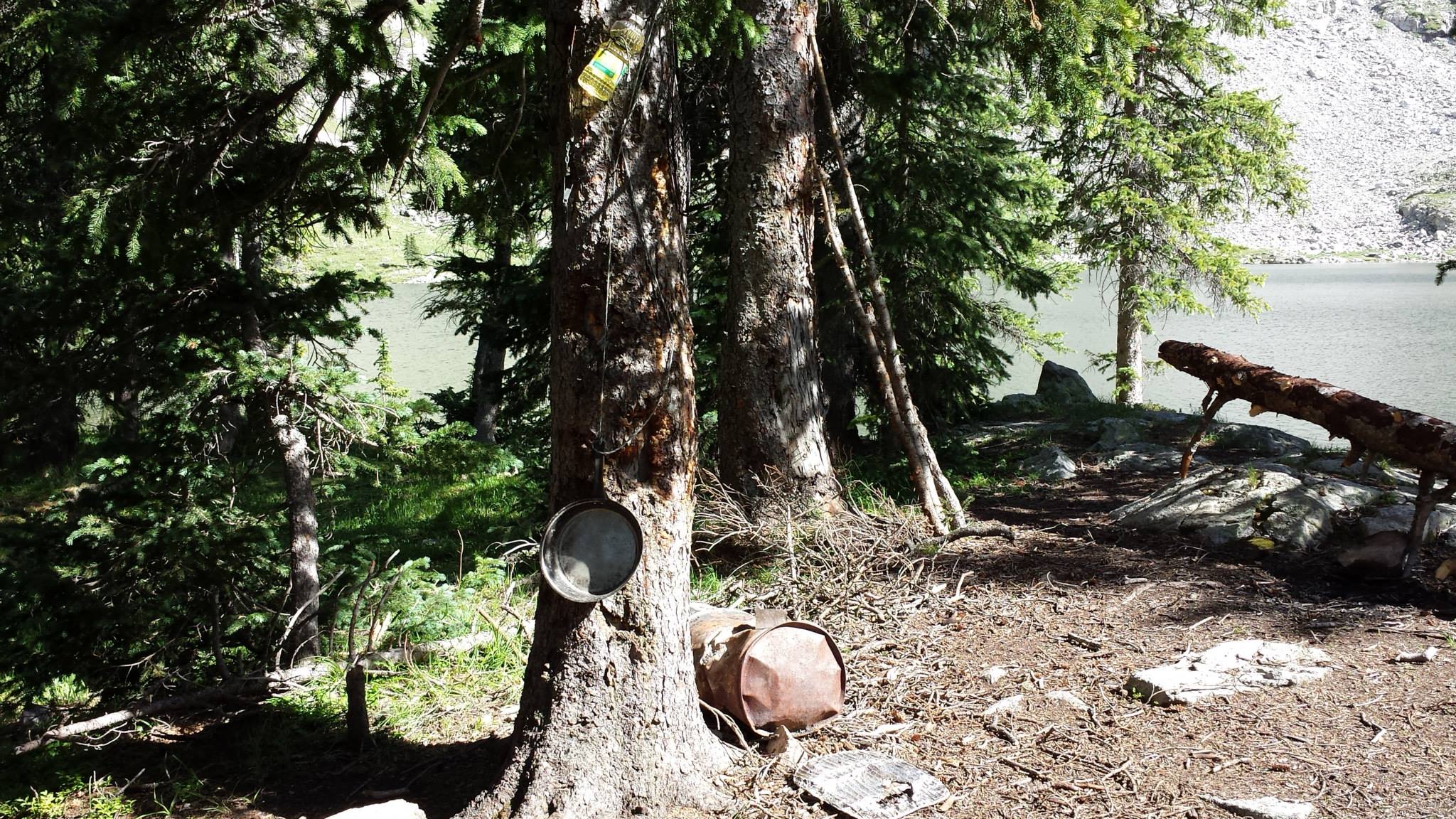
Our group believed in “leaving no trace” while in the wilderness. I was struck at how little had changed in the two-decade since we had tried to clean up the careless mess of others. The lakeshore was pock-marked with dark charcoal fire-rings. Rusty tin cans, plastic, and other trash littered old campsites and even hung in the trees. So, we decided to leave one clearly visible and accessible campsite with a fire-ring and clean up the others.

Carefully we cut the sod and laid it to one side. Digging down beneath the topsoil to the gravel base, we then buried charred pieces of wood and any organic items we could find.

Wounds

Wounds

The bottles, cans, and plastics we packed out. We replaced the sod and watered the area making many trips to the lake with our single liter bottles. We offered a prayer of dedication asking our Creator-God to bless the efforts to right the environmental wrongs of others.

We wanted to honor the Creator we felt so close to in this remote wilderness, but we also did it because we wanted the place to look better for our own enjoyment. Maybe we even wanted to teach a lesson of what it means to honor the land to others who would come to the lake.

So why was it so easy for me to find the restored area two decades after our efforts at environmental restoration? Did we do it wrong? What struck me as I stood at that place beside the lake was this: in spite of our best efforts, some ecosystems are extraordinarily fragile and healing takes a long time.

Sadly, I could still see the outline of the trench. The sod stood like clumps of green braille on brown ground. Honestly, the area where we buried the refuse looked more like a grave than a place of restoration. I said a prayer, shook my head, and walked away.

It has occurred to me that our souls are much like the fragile ecosystem above treeline: remote, strikingly beautiful, and fragile to the carelessness of man. Whether that harm is self-inflicted, neglect, or from others; we scar easily. Restoration takes a long time.

What then? Do we fail to cooperate with God in restoring His world? Do we quit because it takes longer than we want? Do we busy ourselves with some task or project that has a more immediate return on our investment? No. We must not be so shallow. Time is tender and tough above tree line. Tender in that it only takes one moment to do generational damage to the land. Tough because it is stubbornly relentless in its process of restoration. It is the same with the restoration of a soul. I must remember that God doesn’t get in a hurry about anything.

Scanning the souls in my relational landscape, I see a charred fire-ring of betrayal here, a pock-marked heart there, and I can’t help myself. I pick up the shards of broken souls, the crumpled cans of discarded dreams, and the burnt wood of moral failures and start the process of cooperating with our God to restore his world, one life at a time. It may take a long time for these marred souls to blend into the lush land of the Kingdom of Heaven, but what else can I do? Some things are even more precious than water cupped in the hand of God.

You.

Posted in Uncategorized | Tagged , , , , , | 4 Comments

Embrace Your Thorn

 …A thorn in the flesh was given to me… And He said to me, “My grace is sufficient for you, for My strength is made perfect in weakness.”  2 Corinthians 12:7,9

Our greatest fulfillment lies in giving ourselves to othersThe real question is not “What can we offer each other?” but “Who can we be for each other. ~Henri Nouwen

Many of us spend most of our time denying what most of us know about all of us — we are all broken people. We live in a culture where folks are quite expert at impression management. We do our best to control how others see us.  We dare not let anyone see our true selves.  So we project a hologram image of what we want folks to see and believe about us.  Chief among our projections is strength and competence. But God is not as interested in using our strengths as He is our weakness.  People may not be able to relate to our strengths, but they can relate to our weaknesses.

God specializes in working through the least of us. That has always been God’s way.  When God wanted to start a nation, he didn’t use a young man.  He used 99-year-old Abraham.

When He wanted to deliver His people out of slavery, He didn’t use a strong man.  He used a babe in a basket.

When He wanted those people to conquer Canaan, He didn’t use a George Patton.  He used a very insecure Joshua.

When He wanted to defeat a giant named Goliath, He didn’t use a Hulk Hogan as His champion.  He used a teenage shepherd boy named David.

When He wanted to prepare the way for the coming Savior of the world, He didn’t use a theologian from a seminary.  He used an orphaned preacher named John.

When he wanted to bring His Son into the world, He used a little teenage girl and a feed trough.

When He wanted to choose His leadership team for His ministry, He used semi-literate peasants.

And when He wanted to launch His church, He used a rag-tag group of quitters with no budget and no building.

It’s in human weakness that God shows how strong He is!

thorns-1Own your thorns. The reality is there are no people without thorns, there are just some thorny people in denial. But everybody has thorns.  We need the courage to get real about our thorns – no hiding, no pretending.

People who know you well will not be shocked. They will not say, “You have a thorn? I had no idea, I’m shocked and appalled.”  They’re more likely to say, “I know you have a thorn. I know about thorns in you you don’t even know you have yet. And I love you anyway. And I’ve got some thorns too.”

Embrace your thorns, your brokenness, and then give that broken-self away to others in love.

We have been graced so that we can grace others.  Our humanity comes to its fullest bloom in giving.  We become beautiful people when we give whatever we can give: a smile, a hand-shake, a kiss, an embrace, a word of love, a present, a part of our life…all of our life.

I am learning that the best I can offer my brothers and sisters is not wise counsel, but rather my open heart and my full attention to the pain throbbing in their souls.  That is another way of describing grace.

But what if I’m not addressing my own wounds appropriately?

Part of what it means to be emotionally intelligent is to be self-aware. Being self-aware is not just knowing your strengths and weaknesses. Those are important, but that is not all “self-aware” means. It means that I am fully aware of how I affect those around me; that I am cognizant of how my moods, emotions, and even my wounds are impacting the souls around me.

I have wondered if people carrying oozing soul-wounds are blind to the fact that they are living out of that wound in ways harmful to others. When you are in deep pain, the slightest touch is excruciating. Therefore, hearing the truth about your life and your performance are often taken very personally and then reacted to in either a fight or a flight strategy.

Unaddressed soul-wounds distort our perception of reality: “People are out to get me. People don’t care. People are dangerous. People can’t be trusted. People are_________! People will heal me.  People will love me.” Thus, people are here for me and my wound.

The truth is much harm falls from the lips of wounded Christians into the souls of others because they lack the perspective and discernment that comes with a steady dose of three things:

  1. Truth: I have a thorn.
  2. Grace: I am radically accepted by God and He is ever-present with me.
  3. Time: God rarely gets in a hurry about anything.  If He did the cross would have happened in Genesis 4.

Heavy doses of each element will bring about soul-healing. Too much of a single part of that triumvirate will cause a false positive of soul-wellness. Not everyone trying to help others is well enough in their own right to be of any lasting assistance.

It’s one thing to be a wounded healer and another thing to be a wounded warrior. Serving others from our woundedness is radically different than serving others for our woundedness.  The first serves out of embracing their wound and loving others tenderly, the latter helps others in order to assuage the undressed wound still festering in their own soul.  One brings healing and life, the other spreads thorns and germs.

God, help me to love others so that, even though I am weak, You can squeeze the balm of Gilead out through the cracks in my soul to bring healing to the hurting. Amen.


Posted in Uncategorized | Tagged , , , , , , , | 1 Comment