The Best Priorities

Being the new pastor at a church is exciting and frightening at the same time. It is exciting because I have all kinds of ideas, dreams, and hopes for the future of this little mountain church. I want to grow old with her. I want it to be the last church I pastor. I’m thrilled with the idea of settling into the community and getting to know the people, feel the Spirit-wind blow and join God in what He is already doing here in this Valley.

But it is frightening too. It is frightening because everyone’s expectations are so high. Including my own. With such high expectations will come the inevitable fall when I, or they, don’t live up to those lofty ideals. I fear making a mistake. I fear letting people down. I worry about hurting someone’s feelings with my snarky humor or strong opinions. I am concerned that the church will not respond to my leadership; that she will resist the change that needs to occur in order to reach others with the Gospel of Jesus and care for the souls that are already here.

So, there you have it. Excited and frightened.

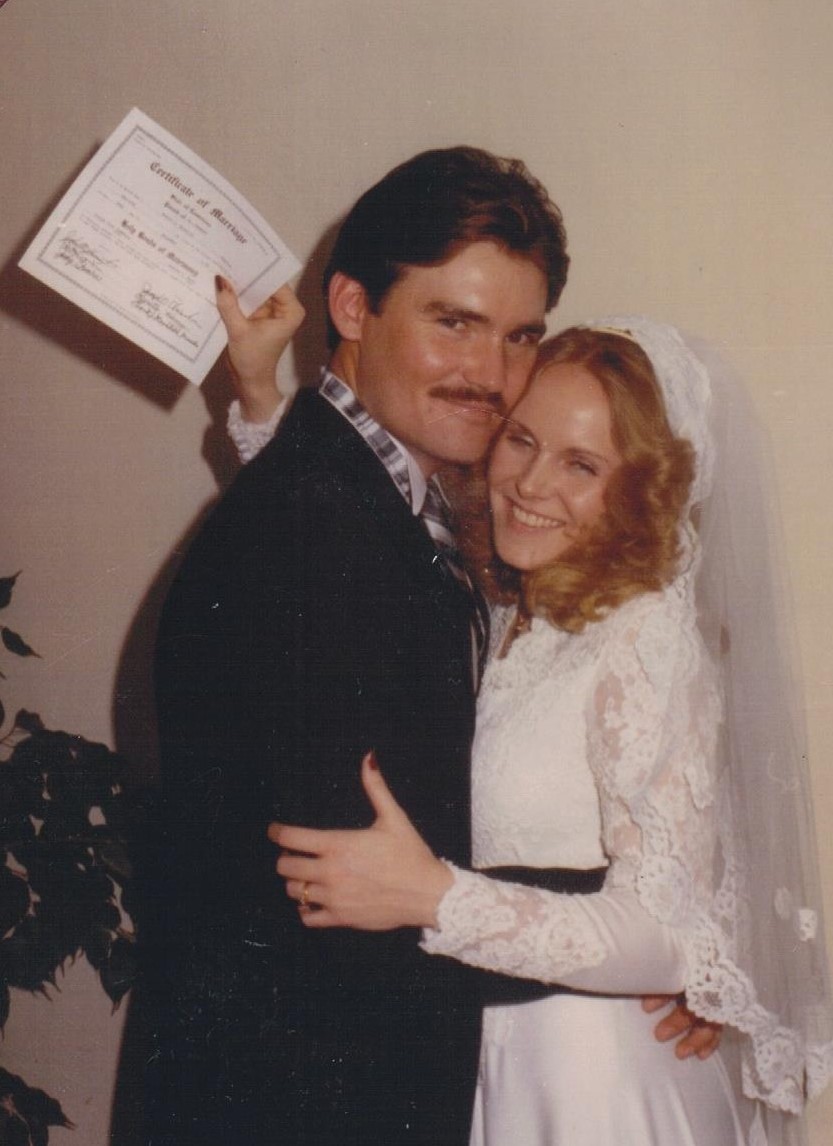
WeddingReminds me of the early days of my marriage. Thrilled that this beautiful blond would even consider wanting to spend the rest of her life with me. I had few prospects at that time. I was pouring concrete for a living. But she saw something in me that made her take a chance on an old redneck like me. And I was scared at the responsibility of providing for her, worried that I would let her down, and frightened out of my mind that I would make a mistake that would break her heart.

Eventually, all of those things happened.

And yet we are more deeply in love today than we were 34 years ago this spring when we were in the blush of a new relationship.

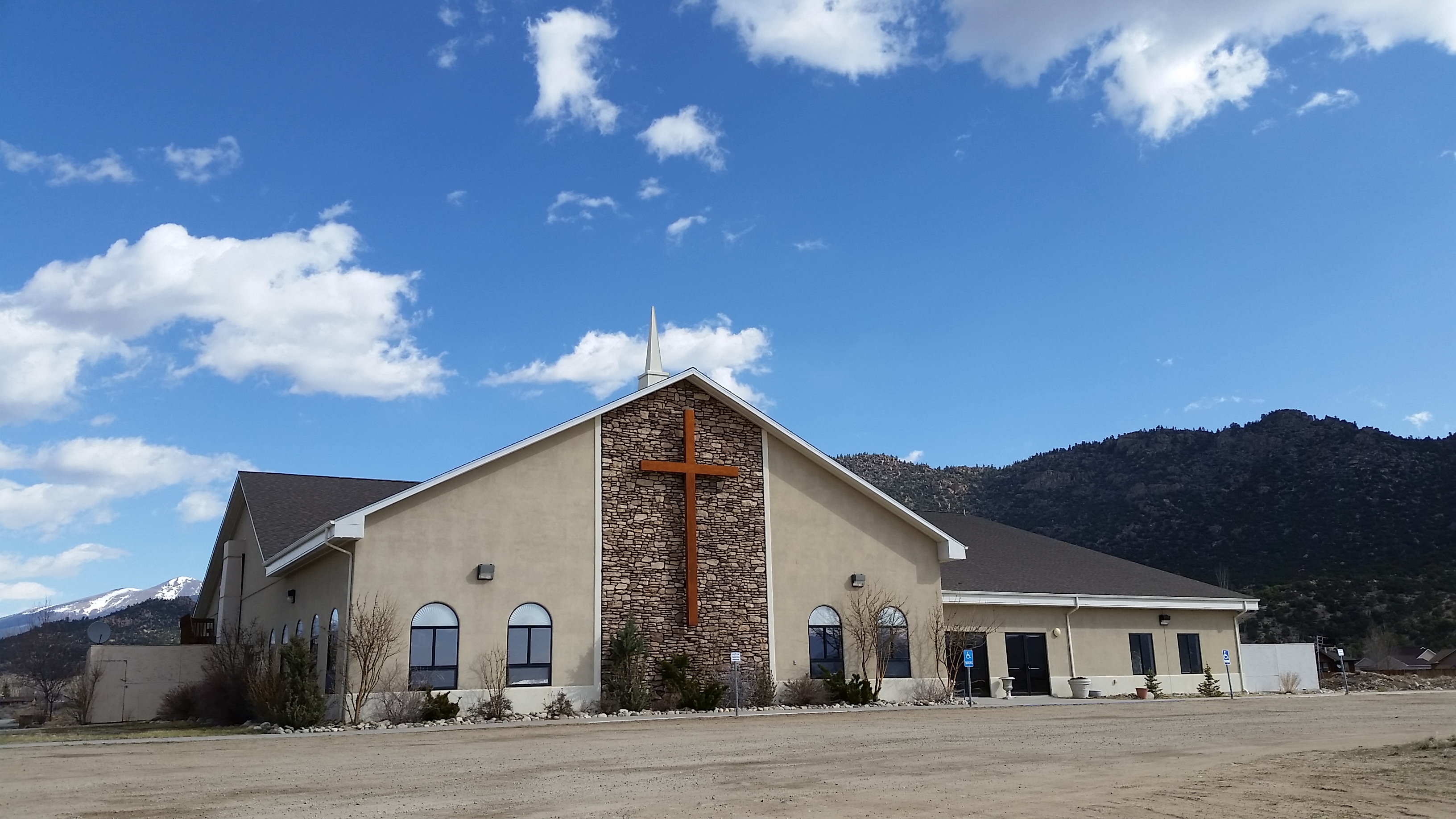
That is all I can hope for with my new church, Mountain Heights Baptist Church.

I have three priorities for this new relationship in the mountains. They apply to my first wife and my new Church.

  1. Hear her

Listening is the most undervalued skill in the relational process. We have opinions and we feel a compulsion to inflict those on everyone in our world. We have advice we give out freely with or without permission. But the greatest gift I can give both my wife and my church is a zipped lip, an open mind, and unhurried time.

  1. Love her

I want her to feel cherished. I want her to know down deep, where the knobs are, that she is the love of my life. That I would live for her and die for her. I want her to see my love in how I server her, pray for her, and play with her. I want her to feel as if she is the top priority in my life. I want our love to grow old together, for old love is the most gentle and vigorous love there is. And it is that love that will change the souls of both of us.

  1. Bless her

I watch her as she sleeps. I whisper a prayer of blessing over her. I am fully present when I am with her. I say words of affirmation, affection, and truth to her. I believe in her in ways that makes her believe in herself. I want her to know that she is the only one for me. I want her to feel completely secure in my love. I want to sing, dance, and laugh with her. My heart will be wide open to her.

What will keep me from turning the Church into my competing lover instead of my first wife?  What will ensure that appropriate boundaries are maintained? It’s pretty simple. I used to tell my sons when they were little that I loved them, but I loved their mother first and loved her more. They got to where they could finish that last sentence.

“Boys,” I’d say “I love you.”

Then they would say in unison, “We know, Dad. You love Mom more.”

I wanted them to know proper order of priority. Same with the bride of Christ.Mountain Heights

I love Jesus, I love Lynette, and I love the last best hope for this world—the Bride of Christ. In that order.

So, I show fear the door, because…

“…perfect love casts out fear…” ~ Saint John


Posted in Uncategorized | Tagged , , , | 12 Comments

Colorado is Calling

All that is gold does not glitter,
Not all those who wander are lost;
The old that is strong does not wither,
Deep roots are not reached by the frost. ~ J.R.R. Tolkien, The Fellowship of the Ring

There are things about my job I don’t like. I don’t like the intangible nature of my calling. I work with people at a soul level on problems that do not have quick solutions. There are deep-seated pathologies that will take months and years to find healing.  In fact, some of those wounds will never be healed this side of Heaven. I don’t like that. I want their pain to go away—today.

I don’t like officiating weddings for people I do not know.  That’s right, I don’t like doing weddings for your cousin’s friend. Nobody wants to hear what pastor says at a wedding, especially a pastor that they don’t know. Folks are too busy ogling the bride’s maids or wondering if there is going to be any alcohol at the reception. Get a Justice of the Peace, for crying out loud.

I know—I sound grumpy.

But recently I’ve come to love an aspect of my calling almost more than any part.  It is serving Communion by Intinction.

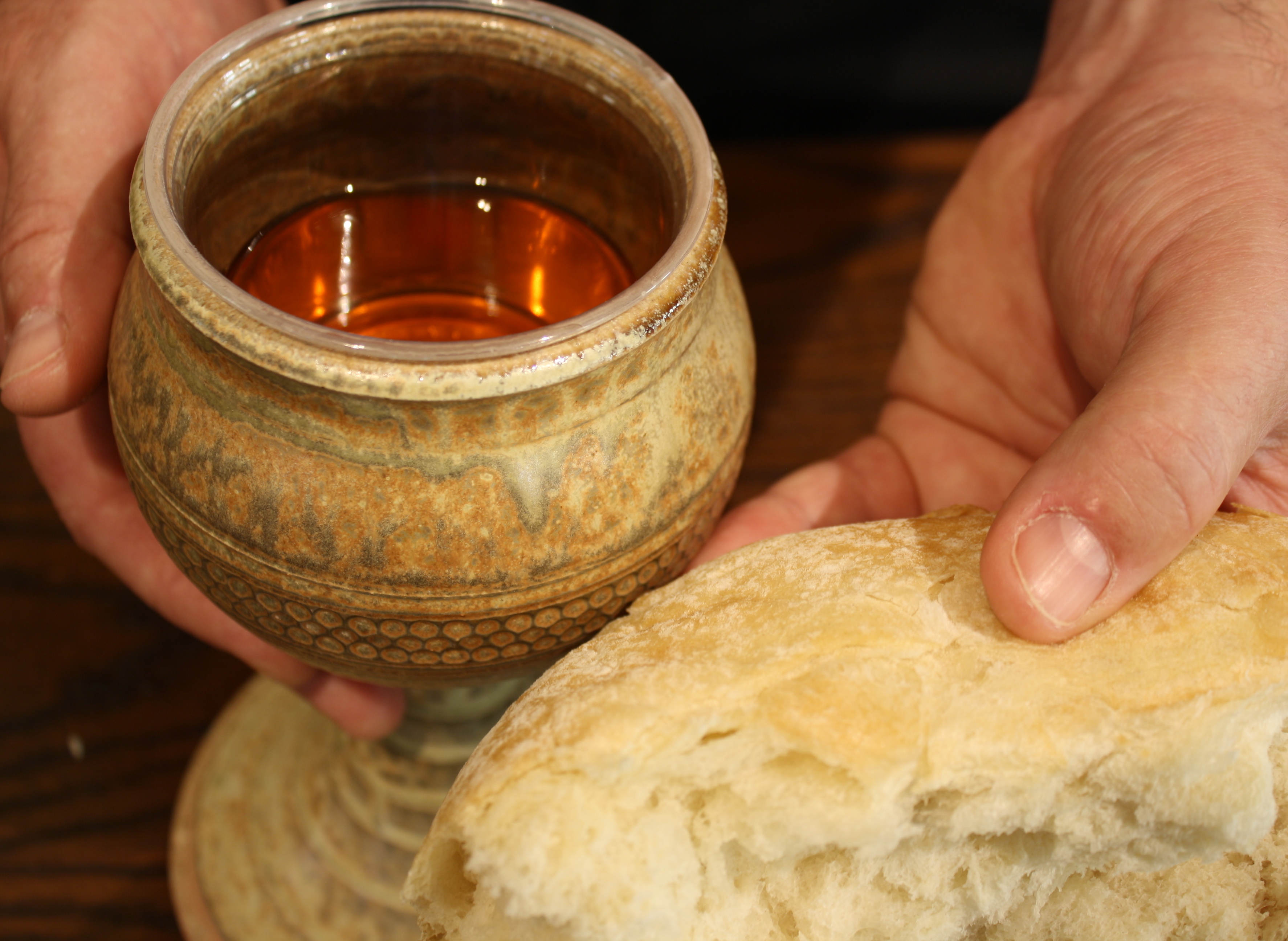
Intinction \in-ˈtiŋ(k)-shən\ It’s a fancy word for saying we are taking Communion by dipping bread in wine/grape juice. I am a Baptist so that means we use non-alcoholic grape juice only.

You can’t do this wrong and no one looks at you funny if you don’t “do it right.” When theycommunion come forward, a basket of bread is placed before them then they dip the bread in the cup and eat.

When given the bread I say words of affirmation, such as “Christ’s body broken for you.” When given the cup: I say, “The blood of Christ shed for you.”

Folks are usually silent and don’t say anything, maybe a silent prayer or, they say, “Amen” or, “Thanks be to God!” or, they may also say whatever the Spirit leads them to say.

The practice of receiving communion by intinction is an ancient one. In the last few generations many Protestant churches have revived this practice in Sunday worship. When taking Communion by Intinction, the body of the Church acts together, moving as a community towards the Table. In the Baptist tradition, we believe that salvation is given to us and is not something we take; by being handed bread, the symbolism for this belief is enacted.

But the reason I love it is because when I serve the bread and fruit of the vine, I lock eyes with people I love and sometimes call them by name as I say, “Christ’s body broken for you. Christ’s blood shed for you.” And in that two second eye-to-eye, soul-to-soul moment a look leaps between pastor and people and a connection occurs that doesn’t happen in any other encounter. The Holy Spirit is present as our souls—pastor and people—take, bless, break and give the body and blood of Christ together. Two hours of conversation is compressed into two seconds of soul care.

Last Sunday I administered communion for the last time in the Pacific Northwest. My wife and I have accepted a call to pastor Mountain Heights Baptist Church in Buena Vista, Colorado. As the congregants came forward to receive the elements from both of us—many tears flowed—from pastor and people.

Almost half of my ministry life has been in the beautiful Pacific Northwest and we will miss it very much. The mountains, the water, the coffee, the rain, the lushness (it is so green here it feels like the front lawn of heaven) But more than all of that we will miss the precious souls we have grown to love.  But God has been clear about what our next assignment will be and I’ve learned a long time ago it’s best not to argue with the Lord.

I could quote John Muir and say, “The Mountains are calling and I must go” but that would not be accurate.

So, I will tell you that God said, “Get off my lawn!”

Gotta go.

Posted in Uncategorized | Tagged , , , | 12 Comments

Is It Worth It?

They sing a new song:

“You are worthy to take the scroll
and to open its seals,
for you were slaughtered and by your blood you ransomed for God
saints from every tribe and language and people and nation;
you have made them to be a kingdom and priests serving our God,
and they will reign on earth.”  Revelation 5:9

Not going to lie, there have been times when I’ve asked myself if being a minister was worth it. On more than one occasion I’ve asked myself, “Has it been worth the hours of listening in coffee shops, the gallons of coffee, and the thousands of words shared to lead, guide, and direct fellow pilgrims? Has been worth the countless text-prayers, pages of journal-prayers, and the hundreds stories that I heard and hold as treasure in my heart–was it worth it?

Thoughts like those in times like these make me wonder what the answer would be if we asked some of the heroes of the bible the same question.

To ask Abraham, “Was it worth it to leave Ur of the Chaldean, wander around Canaan, live in a tent, and in the end have nothing to show for it other than one son, a funeral plot and still unfulfilled promises of God?”

To ask Moses, “Was it worth it to give up the pleasures and treasures of Egypt to lead a million of whining former slaves through the wilderness for 40 years and never even get into the promised-land yourself?”

To ask Jeremiah, “Was it worth it to preach over 60 years and never have even one positive response to your message?”

To ask Mary, “Was it worth it to say ‘Be it unto me according to your will,’ when that submission resulted in a Son who was crucified on a Roman cross?”

To ask John, “Was it worth it to preach the gospel and plant churches all over the known world, and in the end, wind up in exile on Patmos?”

Have you ever asked yourself, “Is it worth it to live a life of faith in God when no one else is?” Is it worth it to get up on Sunday morning and go to church when all your friends are in the mountains or at the beach enjoying a bright day?

Is it worth sharing the gospel with your friend and perhaps risk losing the friendship? Is it worth it to tell the truth, when lying would get you further ahead? Is it worth it to stay in an unfulfilling marriage and seek to diligently honor your spouse and God? Is it worth it to get involved in a thankless ministry that no one sees and no one notices?

Not long ago an 84-year-old lady asked me if when she died and I were her pastor would I preach her sermon with the King James Version of the Bible. I said, “I’ll do you one better. I’ll not only preach your funeral sermon with the King James Bible, I’ll preach it with your bible and then give it back to you when I’m done.” She liked that answer.

That encounter reminded me of a story I read.

There was a woman who had been diagnosed with a terminal illness and had been given three months to live. So, as she was getting her things in order, she contacted her Pastor and had him come to her house to discuss certain aspects of her final wishes.

She told him which songs she wanted sung at the service, what scriptures she would like read, and what outfit she wanted to be buried in. Everything was in order and the Pastor was preparing to leave when the woman suddenly remembered something very important to her.

“There’s one more thing,” she said excitedly.

“What’s that?” came the Pastor’s reply.

“This is very important,” the woman continued. “I want to be buried with a fork in my right hand.”

The Pastor stood looking at the woman, not knowing quite what to say.

In all my years of attending socials and dinners, I always remember that when the dishes of the main course were being cleared, someone would inevitably lean over and say, ‘Keep your fork.’ It was my favorite part because I knew that something better was coming…like velvety chocolate cake or deep-dish apple pie. Something wonderful, and with substance!”

So, I just want people to see me there in that casket with a fork in my hand and I want them to wonder “What’s with the fork?” Then I want you to tell them: “Keep your fork…the best is yet to come.”

At the funeral people were walking by the woman’s casket and they saw the cloak she was wearing and the fork placed in her right hand. Over and over, the Pastor heard the question, “What’s with the fork?” And over and over he smiled.

During his message, the Pastor told the people of the conversation he had with the woman shortly before she died. He also told them about the fork and about what it symbolized to her.

He was right. So, the next time you reach down for your fork let it remind you, ever so gently, that the best is yet to come.

Is it worth it?

My personal answer to all the above is yes! Not because it is easy. Not even because it is the right thing to do. It is worth it because He is worth it and we aren’t home yet.

He is worthy of every prayer.

He is worthy of every act of obedience.

He is worthy of every temptation ever resisted.

He is worthy of every song of worship ever sung.

He is worthy of every tear of repentance ever shed.

He is worthy of every ounce of labor ever expended.

He is worthy of my life.

He is worthy of the church’s life.

He is worthy.

So, keep your fork. The best is yet to come.

Posted in Uncategorized | Tagged , , , , , , , , | 3 Comments

FINDING GOD’S WILL–A GUEST POST FROM JOE CHAMBERS

I was asked to write a guest post for my friend, Jamie Greening. Lynette and I have been wrestling with a major decision in our lives recently and this framework has helped us. Nothing new here…just need to practice what we know.

Jamie Greening's avatarPastor Greenbean

Today we have a special Greenbean treat.  My friend, Pastor Joe Chambers--a
climber of mountains, walker of trails, and student of the ancient ways, 
shares some suggestions for how we can know and do the will of God.  In 
addition to being a pastor, Joe writes two blogs, one called Field Notes on 
The Jesus Way, the other is titled Above Tree Line.  I encourage you to check them 
both out.

Guidelines for Finding God’s Will

To walk out of His will is to walk into nowhere. ― C.S. Lewis

Pastor Joe Chambers Pastor Joe Chambers

I have come to believe that contemporary Christians do not have a good working theology for discerning God’s leading in our lives. I blame our consumer oriented culture that is bent on selling us what we are not aware we even need. And I point my boney finger at the prosperity Gospel on the airwaves…

View original post 435 more words

Posted in Uncategorized | Leave a comment

How to Live in this Good Earth

Music is a sacrament.~ Bono

For the Christian, pleasure is innocent until proven guilty. ~ Tim Keller

All of us at various times in our lives come to a place where we notice something almost sacramental, rich, and holy about the experience of listening to music of Beethoven or Mozart. Or listening to Johnny Cash sing Amazing Grace.

There is something loaded and layered with meaning to take a long walk along the gentle lapping shoreline of the Puget Sound.  Something transcendent about watching a bee pull nectar from an alpine-forget-me-not at fourteen thousand feet above sea level. There is something holy about watching a sunrise or the smell of a baby’s hair. There is something packed full of beauty and goodness about the innocent laugh of a toddler. Or the wise gentle smile of a grandparent.

What do we do with these instincts that this material reality is so beautiful, good and holy? Is it merely neurons firing and synapses reacting in our brains or is there more going on?

Live in God’s World Playfully

Have you noticed that Christians are some of the saddest, dourest, meanest people on the planet?  And yet one of the salient marks of what Scriptures say are supposed to set us apart from people with God is that we are joyful people.

God made this world and even in its groaning and marred state we are to be enjoying the creative world God has placed us in.

Will we actually slow down enough to see the individual petals of a flower, hear the distinct tone of a song bird, taste the texture of a pan-seared steak, or have a leisurely conversation with an old friend? Will we slow down enough to see, hear, taste, smell, and touch this good earth? How will we ponder and praise the moments of beauty God offers us this week?

Live in God’s World Gratefully

That is one of the great benefits of gathering weekly to worship. When we gather to sing, pray, laugh, study, hear, and love as a gathering of the faithful we bring into focus all of the inarticulate praise of the cosmos into an expression to the living God. Worship is practice in gratitude.

This is why it is so important that we determine to be present in a place of worship even when we don’t feel like it. Without the weekly discipline it is so easy to fall into a default mode of working on the next item on your “to do list” that we fail to realize we have so much life and grace for which to be thankful.

In worship we are to slow down long enough to be stunned by the beauty of God and the grace of Jesus and—to say thank you as a people.

Live in God’s World Seriously

Believing that this world is both beautiful and broken at the same time.  God loves this world so stubbornly that He enters it in Jesus to restore it and heal it. And each of our lives are supposed to be signposts to that blessed hope. And that means we get serious about serving the world that God loves.

Confronted with a cancer or a slum the Pantheist can say, ‘If you could only see it from the divine point of view, you would realize that this also is God.’ The Christian replies, ‘Don’t talk damned nonsense.’ For Christianity is a fighting religion. It thinks God made the world—that space and time, heat and cold, and all the colors and tastes, and all the animals and vegetables, are things that God ‘made up out of His head’ as a man makes up a story. But it also thinks that a great many things have gone wrong with the world that God made and that God insists, and insists very loudly, on our putting them right again. ~ C.S. Lewis, Mere Christianity,

When you work in your yard, when you speak with the clerk at the store you frequent, when you teach a child to read, when you build a house, when you pump gas, when you provide employment for others, when you process transactions at a bank, when you write a story, when you listen to a friend, when you play with a child, when you cook a meal…it is all spiritual.

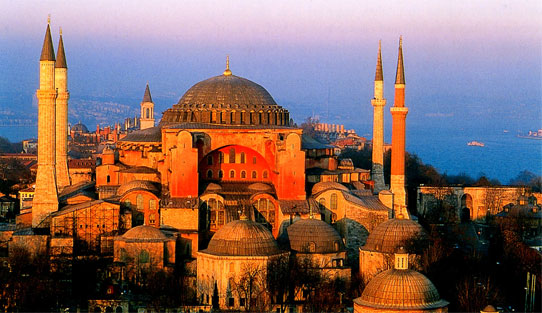
Hagia SophiaOne of the fascinating restoration projects going on in the world today is happening in the Middle East. The church of Hagia Sophia (literally “Holy Wisdom”) built in Constantinople, now Istanbul, was first dedicated in 360 by Emperor Constantius, son of the city’s founder, Emperor Constantine. To this day it boasts the largest unsupported dome structure in the world. It is beautiful, breath-taking and transcendent. And yet, with all of its grandeur, it is in disrepair.

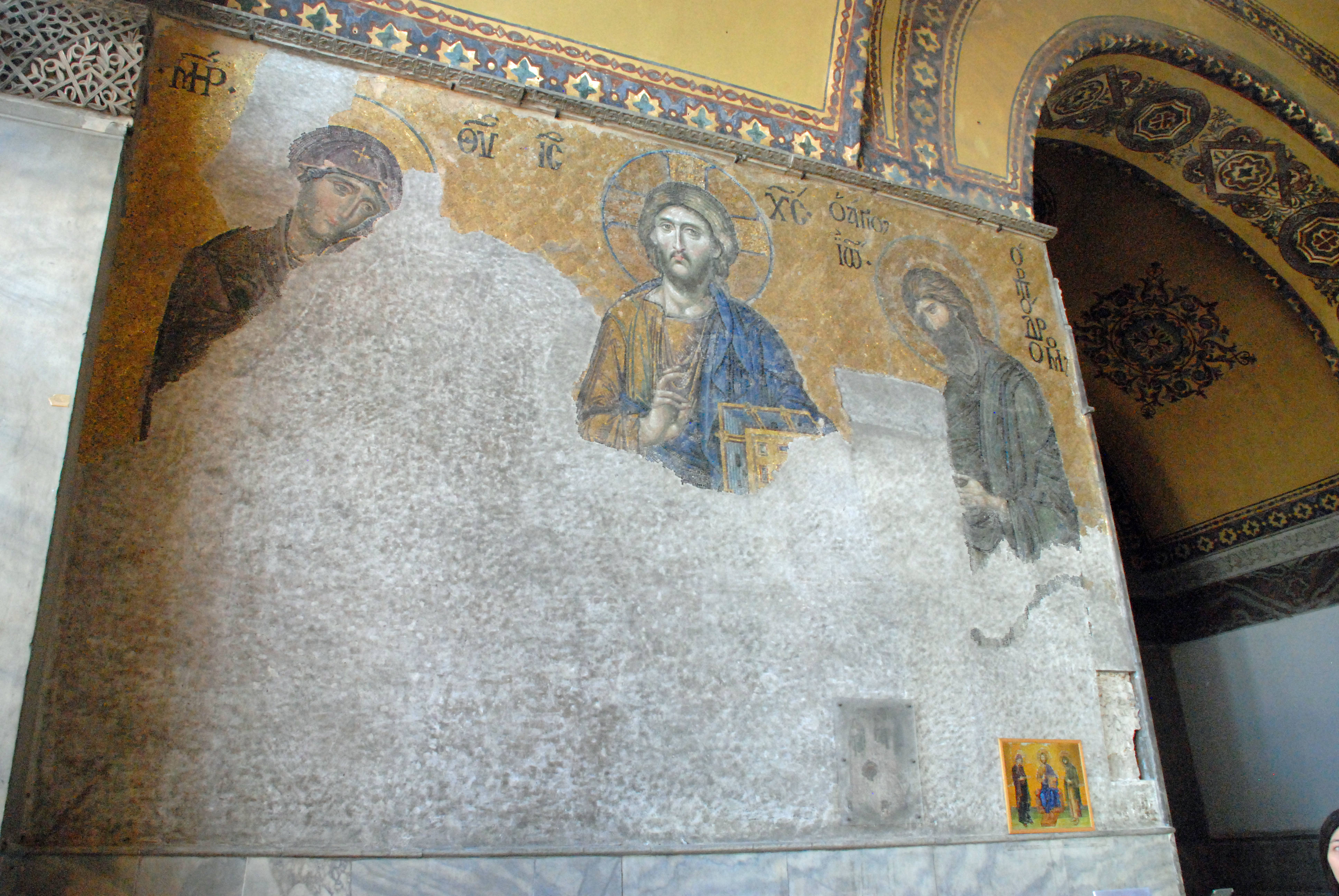
In the 15th century sultan Mehmed ravaged the city and converted it into a mosque, which it remained until the fall of the Ottoman Empire in the early twentieth century. Plastering over the beauty of the mosaics with the ugly of plain plaster. But in the 1930s the Hagia Sophia was officially commissioned as a museum and is no longer controlled by a religioushagia-sophia entity. Since that time, slowly—week-by-week and month-by-month and year-by-year—the ancient beauty of that place is being restored. The plain plaster is carefully and gently chipped and peeled away so that the original beauty underneath might reemerge once again.

What a wonderful picture of what God is doing in this world through the apprentices of Jesus and what the maker of Heaven and Earth is doing with His creation. He is repairing and restoring a ruined cathedral through the person and work of Jesus and He intends—no, insists—that it be beautiful once again.

So, dear friends and fellow pilgrims, may you know the maker of Heaven and Earth and learn to live well in His good world.

Kings of the earth and all peoples;
Princes and all judges of the earth;
Both young men and maidens;
Old men and children.
Let them praise the name of the
 Lord   Psalm 148:11


Posted in Uncategorized | Tagged , , , , , , , , , , , | 4 Comments

What is Soul Care Really?

Soul Care is an exciting adventure in our spiritual lives bearing tremendous fruit,
countering the perspective some have that more important missions are before us.
I am witnessing in my own life and many who come here how significant this inner
work is for our vitality and effectiveness personally and vocationally. Soul Care
is serious business that reaps great rewards!

Today I want to share with you a bit of what this looks like and why we are engaged
here at Potter’s Inn to grow the Church through care of the soul.

In Mark, chapter 8:34-37 we read:

Then, calling the crowd to join his disciples, Jesus said, “If any of you wants 
to be my follower, you must turn from your selfish ways, take up your cross, and
follow me. If you try to hang on to your life, you will lose it. But if you give
up your life for my sake and for the sake of the Good News, you will save it. And
what do you benefit if you gain the whole world but lose your own soul? Is anything
worth more than your soul?”

Jesus talks about a turning point here, taking up your cross and even losing your
life for His sake. It seems that some today interpret this as a charge to lay aside
all personal ambitions and go follow Jesus in radical ways, without considering
their own life as important. This mentality drives a lot of people into the missional
movement at great price and even carnage to themselves and the Gospel message. Some
would say, “We must give up what we want and do what God wants.” Is this really
what Jesus meant for us? Why does He then question the benefit of gaining the whole
world (outer markers of success) in exchange for losing our own soul? This is a
shift back to the importance of who we really are – a charge to consider what we
can lose if we don’t carefully pay attention to what really needs to die.

Consider that what Jesus meant was not ambition for a life of personal sacrifice,indian-paintbrush
but instead death to our old nature or false self in order to really live. We can
identify within us a broken pot. Our souls are marred with stories of hurts, hangups
and habits that, frankly, come from our sin nature. This old way of living is not
the new way Jesus came to proclaim and make available to us. He is in the business
of making us new – moving us from our false self to our true identity as His beloved.
He the Master Potter, seeking to reshape our clay into a new pot as He sees fit.
(Jeremiah 18:1-6)

There is a difference between “taking up your cross” for reasons of doing versus
reason of being. I believe Jesus meant the latter. He’s not concerned about what
we do so much as who we are.So taking up our cross and following Him is a call to
die to our old nature, our false self, or broken pot and allow Him to reshape us
into something new, beautiful and, yes, useful as He sees fit. What value is there
if we gain all the successes and benefits this world has to offer and even live
a life of service to God that is exemplary, yet lose the opportunity for the Potter
to do the inner work of restoring our broken soul.

The fact is, the soul – the palette of our life – is not fixed overnight. What took
a lifetime to mar, takes a lifetime to transform. It’s a process in which we allow
the Divine Potter to put His hands on us. It’s a choice to follow Him down to the
Potter’s house where the inner work happens. Jesus is inviting us to deep, inner
work in order to really live the life He wants for us.

When we talk about Soul Care, we are describing the process of turning from our
selfish ways, taking up our cross (death to our old ways, our false self) and following
Jesus on the journey of personal transformation. At Potter’s Inn, our team is simply
providing the ingredients that help us go down to the Potter’s house where He is
at the wheel. We are guiding the soul away from what is a lie to what is true,
from the voices of our false self to our true self. We are companions with pilgrims
who want the hand of the Potter on them.

We believe three ingredients foster care of the soul so well: Intimacy, Beauty and
Adventure. Intimacy is what God has wanted with us all along – to be close to us, very close.

Beauty is what God designed to get our attention. It’s a sharp point that pierces
our soul to wake us up and see Him! Adventure is what our hearts long for. Within
us is a strong desire to really live! And the adventure of plunging the depths of
our souls leads us to experience transformation from the Divine Potter.

The soul care process is like weed killer and fertilizer for a plant. It nips the
weeds at their root while boosting new growth. We are empowered to deny our old
self and walk into our new self. It is very exciting for us to watch people begin
to take up their cross and truly follow Jesus, some for the first time even after
years of professing to be a follower of Christ. This is how the Church will really
grow.

Posted in Uncategorized | Tagged , , , , , , , , | 1 Comment

People of the Towel

There is a remarkable difference in the way a philanthropist gives money and the way an investor gives away money. A philanthropist gives away from an abundance he or she already has received and they don’t expect a return on their gift. Not so the investor.

When you realized how much God has given you in Jesus, you can spend yourself on others with no thought to whether there will be a return on investment.  You give yourself away like philanthropist and not like an investor. Why? Because you have a limitless wealth of grace from God.

So when He had washed their feet, taken His garments, and sat down again, He said to them, “You also ought to wash one another’s feet. For I have given you an example, that you should do as I have done to you. John 13:12,14-15

The word “example” in verse 15 is a word in the ancient world used to describe an artist who would create a pattern or template so that other, less talented artisans, could use to recreate what the master had created.wpid-wp-1428275381551.jpeg

Jesus is saying that when we are united to his life; his life-style becomes the pattern or the template for our life. When Jesus washed feet as an act of selfless service he was doing something that slaves did. But when you and I follow Jesus and descend into greatness, when we spend ourselves for other people and put their needs ahead of our own, even if no one notices it, we are doing what our Creator-God did.

You probably won’t realize it at the time. You’ll be too busy thinking of the people you’re working for and with. But, as you look back, you may be startled by the joy of realizing that as you walked into that house, that hospital, that place of pain or love or sorrow or hope, Jesus was walking in, wearing your skin, speaking in your tone of voice. ~ N.T. Wright, John For Everyone Part Two page 49

You and I are how Jesus intends to serve our friends, enemies, and our neighborhoods. As we take up the towel and stoop to serve, we are God’s last best hope for the world.

This is one of the reasons that Churches that I am attracted to are the ones that serve the neediest parts of their neighborhood, region and the world. I want to be a part of a community that has on their heart what Jesus had on his heart.  I want to be a part of a gathering of saints that are willing to stoop and serve the needs of a community and the world.  I want to attach myself to a church who is willing to descend into obscurity in the world’s eyes and greatness in the eyes of God.

Philip Yancey writes in his book Vanishing Grace: What Ever Happened To The Good News?

John Marks, a producer for television’s 60 Minutes, went on a two-year quest to investigate evangelicals, the group he had grown up among and later rejected. He wrote a book about his findings, Reasons to Believe: One Man’s Journey Among the Evangelicals and the Faith He Left Behind. The church’s response to Hurricane Katrina turned the corner for him and became a strong reason to believe. One Baptist church in Baton Rouge fed sixteen thousand people a day for weeks; another housed seven hundred homeless evacuees. Still another church served as a distribution point for fifty-six churches, and churches in surrounding states sent regular teams to help rebuild homes for years after the hurricane, long after federal assistance had dried up.

Most impressively to Marks, all these church efforts crossed racial lines and barriers in the Deep South. As one worker told him, “We had whites, blacks, Hispanics, Vietnamese, good old Cajun. . . . We just tried to say, hey, let’s help people. This is our state. We’ll let everybody else sort out that other stuff. We’ve got to cook some rice.”

Marks concludes,

I would argue that this was a watershed moment in the history of American Christianity . . . nothing spoke more eloquently to believers, and to nonbelievers who were paying attention, than the success of a population of believing volunteers measured against the massive and near-total collapse of secular government efforts. The storm laid bare an unmistakable truth. More and more Christians have decided that the only way to reconquer America is through service. The faith no longer travels by the word. It moves by the deed. (page 137 Kindle)

Will you serve each other, your community and the world?  Many churches serve each other and that’s about it. It is a healthy, Christlike church that loves God, loves each other and serves the world. There are countless little things that you can do that will teach you humility and bring civility to this hostile world.

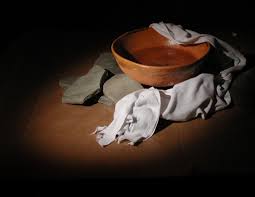
towel and baisYou can serve the community for the sake of the community. For if the Gospel is not good news for everybody it is not good news for anybody.

One day the leaders in your community will come to you and say, “I may not agree with your doctrine, but it is better for us that you are here.”  They will be glad that there is a group of people so committed to personal and social restoration.

And the scripture will be true about you that says, “When the righteous prosper, the city rejoices…” Proverbs 11:10

All because a group of dirty-footed, and sullied-souled believers descended into
greatness by following their Savior as he stooped to serve and knelt to love.

Posted in Grace, Humility, N.T. Wright, Philip Yancey | Tagged , , , | 1 Comment

The Cost of Easter

“…You were bought at a price.”             I Cor. 6:20

One day a little girl was combing her mother’s hair leaned over and said, Momma, you know I love you don’t you?  The mother said yes I know it.

Momma, I love to comb your hair with these little strands of gray but so full and so beautiful.  I love to comb your hair.  Mother, I just love your voice.  Your voice is so sweet.  I love to hear you sing.  As far back as I can remember your lullabies would gently put me to sleep.  I love your voice.

Momma, I just love lookin’ at your eyes as they sparkle and the dance with delight.  I just love lookin’ into your eyes, they mean so much to me.

But Momma why…tell me why…why did you let your hands get so scarred and so rough?  Why didn’t you get you some lotion or some crème?  Why didn’t you take better care of your hands?

There was a long moment of silence.

The mother reached around and caught her little daughter’s hands and pulled her around, picked her up and set her on her lap.  And said, “Mary, I’ve got something to tell you; maybe I should have told you this before now.

“What is it, Momma?”  Mary asked.

She said, “Mary, there was a mother who had prayed to God to give her a baby girl.  And the Lord answered her prayers and gave her this baby girl.  And she got so much joy in doing for this baby girl.  She loved the sewing and the knitting and making clothes for this baby girl.

One day while this mother was ironing remembered that she needed something from the drug store and she looked there and the little baby girl in the crib sleeping.  The mother thought, “I’ll ease off to the drug store and get these articles and get back before her nap is over.”

And, Mary, this mother went to the drug store and on her way back, fire trucks passed her but she didn’t think nothing of it until she got to the corner.  And when she got to the corner and looked the fire trucks were parked in front of her apartment.  And the ladders were up to the third-floor window where she lived.

And all of a sudden, Mary, she remembered that when she was ironing and had decided to go to the drug store she had left the iron on the board.  And it was her apartment that was on fire and that her little girl was in there!

And she began to run and the firemen would pull at her to try to stop her and the policeman reached for her to try to stop her and she pulled out of her coat and ran up the stairs and opened the door to her apartment and Mary as she moved across the floor she looked and flames of fire were reaching out to embrace her little girl so she raced over to the crib grabbed her little girl and pulled her to her bosom…as the flames of fire were reaching for the little girl they burned the mother’s hands.

And, Mary, I want you to know that little girl was you.

Tears began to roll down Mary’s cheeks.  She began to weep and wash those hands with her tears.   She began to kiss them and said, “Oh Momma.  Oh, Momma.  Oh, Momma.  How I love your hands!  Because your hands saved me!”

Why do we worship Jesus?  Because…

wpid-screenshot_2015-04-04-16-46-40-1.png“. . .He was wounded for our transgressions, He was bruised for our iniquities; the chastisement for our peace was upon Him, and by His stripes we are healed.”         Isaiah 53:5

I don’t know about you, but I love Him. I worship Jesus because he took my punishment and because He purchased my salvation with his broken body and shed blood.

The old Puritan prayer reminds us,

If my life is to be a crucible amid burning heat, so be it, but do Thou sit at the furnace mouth to watch the ore that nothing be lost. If I sin wilfully, grievously, tormentedly, in grace take away my mourning and give me music; remove my sackcloth and clothe me with beauty; still my sighs and fill my mouth with song, then give me summer weather as a Christian.

Amen. 

Posted in Uncategorized | Tagged , , , , , | 2 Comments

Kneeling to Love

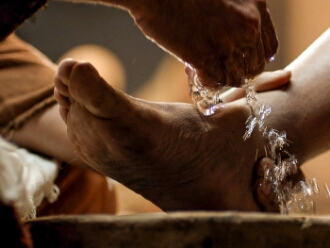
He poured water into a basin and began to wash the disciples’ feet, and to wipe them with the towel with which He was girded.  John 13:5

Our culture is obsessed with upgrading. How many of us work hard to be less than we were the day before? How many of us strive to have less, be less, look less and use less of everything in our lives? NO, our culture today is all about upward mobility. We strive to upgrade our lifestyles, our gadgets, and games. Some people upgrade relationships. Why do we do this?  Psychologists call this the Virus of Affluenza.

It entails placing a high value on acquiring money and possessions, looking good in the eyes of others and wanting to be famous.

The Saudi Prince, Alwaleed, who is often described as the most influential businessman in the Middle East sued Forbes magazine for getting his information wrong in their list of the richest men in the world. Forbes reported that he had 20 billion where Alwaleed claimed he has 30 billion. That lower amount placed him 26th on the list of the richest men on the planet.

When it comes to Jesus, we find a whole different attitude of thinking, where the world is striving for upward mobility, Jesus calls his disciples to a life that is totally the opposite. Jesus was the most prestigious, wealthy, and powerful person to ever live and yet how does he choose to spend that prestige, wealth and power?

God Serves Us

As Jesus and his friends enter this upper room where they were going to celebrate the Passover together, they are getting comfortable, taking off outer garments like we might take our coats off as we enter a house; and as the conversation begins to pick up and the din of the room begins to rise, you can almost sense a palpable nervousness because whoever owned the house hadn’t arranged for someone to wash the feet.

The disciples, eyes shot from one to the other with the look on their faces that silently ask the question, “Who is going to wash the feet here?” You know Peter, James and John had a look on their faces that said, “We are Jesus’ closest friends so clearly we outrank everyone else and we’re not washing anything.”

All of the disciples are reluctant to do this lowly task because to wash the feet of anyone was to admit that you were the least important person in the room.

wpid-wp-1427681244269.jpegThe nervous conversation grinds to an awkward halt as Jesus, the teacher, the king, rises from his place at the head of the table strips down to his underclothing, picks up a towel and a basin and begins, one foot at a time, to scrub clean the dirty feet of his slack-jawed disciples.

Jesus would have moved slowly around the oval table, washing the feet of Nathaniel, then Andrew, then Thomas, then Philip, then James and John as all of them sit in red-faced silence.

And at some point Jesus takes in his hand the dirty feet of Judas and locked eyes with this man who had witnessed so much of the kingdom in the last three years, knowing that the next time they lock eyes would be when Judas would betray his friend, teacher, and Lord with a kiss.

When we see what is happening here we can only tremble. But if we gaze longer at this scene we see something more than the stunning surprise of Jesus washing his disciple’s feet. Because if you sit with this scene you get the sense that it doubles as a parable of how God humbled himself to condescend into humanity—the incarnation.

Jesus is the living creator of the cosmos and he is willing to stoop all the way down into human life, is willing to humiliate himself to become one of us, is willing to assume our life so that he can heal our lives. God stooped all the way down into human life and then all the way down into suffering and death to restore us with his life.

Jesus cleanses and refreshes us by absorbing our filth and brokenness on the cross so that he can restore us to God. He is a God who serves. It requires a certain amount of humility to receive this from the Lord of the Universe. Peter’s problem was that he was too proud to admit that he needed a washing.

One of the first things we have to do in the With-God life is to learn to receive. Our faith isn’t first and mainly projects, activities, and plans—but receiving. Receiving with empty hands God’s cleansing work on our behalf is the first and main thing about being a Christian.

As a follower of Jesus for 55 years, I can testify that this is one of the very first things that we forget. We forget that the journey of following Jesus is not about doing more or being better so that we need less grace from God, rather it is the journey of receiving, digesting, and metabolizing more of God’s grace into our lives so that He has access to more of our lives.

Peter eventually learned this lesson of humbling receiving:

Yes, all of you be submissive to one another, and be clothed with humility, for

“God resists the proud,
But gives grace to the humble.”

Therefore humble yourselves under the mighty hand of God, that He may exalt you in due time…     1 Peter 5:5-6

Makes you wonder if, when he wrote the phrase “mighty hand of God,” he thought of a calloused carpenter’s hands from Galilee that held his dirty feet many years before where he learned the most important lesson of his life…

Receiving is the first and the main thing in following Jesus.

Posted in Uncategorized | Tagged , , , , , , , , , , | Leave a comment

Your Bones Are Showing

When my father came over here penniless with $100 sewn into his underwear, thank God some well-meaning liberal didn’t come put his arm around him and say, ‘Let me take care of you.’ ~Senator Ted Cruz

Being a liberal is the best thing on earth you can be. You are welcoming to everyone when you’re a liberal. You do not have a small mind… I’m total, total, total liberal and proud of it. I’m a total Democrat. I’m anti-Republican. And it’s only fair that you know it. I’m liberal… The ‘L’ word!~ Lauren Bacall

Structure is so important to the security of our lives.  We build a solid footing and foundation upon which we build our houses that provide us hearth and home. We establish laws and social norms to give us a sense of order in which we can connect, relate, and respect fellow human beings.  We have fundamental principles that must be understood and adhered to in order to fly through the skies.  There are grammatical rules, mathematic rules, and spiritual rules. Writing stories have structure: Beginning, middle and end.

Structure is vital. Rubble-stone-foundation

I heard a preaching professor say one time that structure and outlines were very important for a strong sermon.  They are the skeleton upon which you will attach ligaments, cartilage, and muscle. A human body without a skeletal system is weak and anemic. A skeletal structure is life-critical to the human body.  Without is we are a blob of mushy flesh, liquid and organs.

But, he went on to say, that while the skeletal structure is essential if you can count the bones it is a sign of a weak and unhealthy body.  Something is amiss.  We don’t want to see the bones, but those bones are essential to a healthy body.  The same is true of a sermon.  If the first thing we see are the “bones”—the outline, if that is the most impressive part of a sermon, then it is a sermon that is devoid of strength and the ability to go anywhere. And, ultimately, it won’t produce life in the hearer.

I’ve not always adhered to that guidance and when I failed to do so, when my outlines were the focus of my sermons or even my essays—they have been emaciated efforts of persuasion.

I wonder if that principle of stealth structure might be wise when it comes to one’s political or theological positions. When a person’s Calvinsim or Dispensationalism is so patently obvious to those who read or listen, perhaps too much attention is being paid to that “ism.” Within the larger community of faith those isms are reduced to preaching to the choir at best and theological propaganda at worst. Their theological skeleton is on full display.

In our increasingly polarizing post-Christian culture I feel the same could be true of our politics.  When I listen to a speaker, or read an author, or even peruse social media and it is patently clear that the author is a liberal or conservative I wonder if they are paying too much attention to an ideology.

This is especially true of those who call themselves Christians. When I see a social media post or read an article from a Christian and I can clearly see the fundamentalism or the socialism throbbing on the page or the screen, I think that the author is letting his or her ideology drive their lives. Their political bones are poking through their thinly stretched Christian skin.

Anne Lamott is an example of a liberal Christian that wears her politics on her sleeve so much that it makes it hard for me to filter out her ideology to read some genuinely profound things from her acerbic pen. I think her “in your face” social liberalism and politics are sticking out so far that she is sometimes hard to take very seriously.

The same is true of James Dobson, Kirk Cameron and Cal Thomas on the fundamentalist side. I can’t hear them because they so shrill in my ear.

Jesus was subversive and ambiguous about politics.

“Are you the king of the Jews?” asked Pilate. “You have said so,” Jesus replied.   Mark 15:2

Before Pilate he is deliberately ambiguous—it sounds even more ambiguous in the original language than the English translation.

Literally:  “You say it.”

Pilate:  “Are you king of the Jews?”

Jesus:  “If you say so.”

What?  What kind of answer is that?  It is not a denial or an affirmation.

Think about what Jesus could have said:  “No.  No. No!  My movement is in no way political.  I am only a spiritual leader.  All I do is give people spiritual peace of mind and happiness in their personal life and what I am trying to do will have no impact on the political order.”

But He doesn’t say that.

Neither does he say, “Yes!  Yes! Yes!  Of course I am a political leader.  We are going to shake up this world.  Power to the people!  We are going to rally the people to join a coffee party and elect only people who pass our litmus test.  After that we are going to go occupy Rome.  We are going to put prayer back in school and legislate that everyone must pray.”

He doesn’t say that.

Ask the Buddha, “Are you a political leader?”  Buddha would quickly answer, “No!”

Ask Mohamed, “Are you a political leader?”  Mohamed would quickly say, “Yes!”

Ask Jesus, “Are you a political leader?”  Jesus would say, “Yes and no.”

If you don’t see the difference, you don’t understand Christianity.

As this national election season approaches I am praying that those of us who say we follow the rabbi from Galilee might feed our souls with more and more of Him so that the propaganda of our theology and politics might not distract from who He is.

The world is aching for a structure.

It’s called a cross.

Posted in Uncategorized | Tagged , , , , , , , , , , | 1 Comment