The Most Valuable Antique is an Old Friend

“How are you doing today, pastor?” he asked.

“I’m doing Okay.”

“You seemed a little discouraged last Sunday,” he said.

“Yeah, no pastor spends hours preparing a sermon only to preach it to more chairs than the people he loves.”

“It was a good sermon, pastor. I needed to hear it,” he said.

“Thanks.”

Then for the next hour we just talked about the stuff of life.

My friend is about ten years older than me, maybe more than ten years. He has a shock of white hair, a soft and smooth face and speaks with a deep and warm Texas drawl. He laughs often. It is easy to be in his presence. No posing, no pretense, and no pissing contests.  Just the simple, quiet presence of a good man.

We didn’t talk about politics, theology, or literature. We just skipped from topic to topic in a random and ricocheted way and told each other stories from our lives.

I’ve only known him for a year, but he feels familiar, like I’ve known him longer. As if he has always been here. Or maybe I sensed that he was coming my way down through the years for such a time as now. All I know is that day, in that coffee shop, I needed an old soul to sit with me for a while.

Later that evening I mentioned to my wife about the coffee and said how encouraging it was to me. She asked me why it was so encouraging.

“What did he say that picked up your spirits?” she asked.

“Nothing.”

There are friends that you seek and cultivate. I have friends like that. I think of my friend Scott and Cameron. I saw them from a distance and said to myself, “Joe, you would do good to have them as your friends.” And now they are great friends. Growing deeper as the months and years roll by.

But then there are surprising friends. You didn’t see them coming, but they showed up at just the right time. That’s the way it is with my coffee-drinking friend from Texas. He came along at just the right time. And I have to say that while I was deeply and darkly discouraged that day, my friend didn’t TRY to encourage me. He didn’t even buy my coffee. He just sat with me, listened to me, and laughed at anything remotely funny.

Sit. Listen. Laugh.untitled

Pretty good ingredients for buoying a sagging soul.

Friendships are such simple things and yet we complicate them when we bring our own soul-disease into the relationship. Our insecurities, our need to fix each other, our need to make the pain go away, our dysfunction. Even our need to impress each other with our intelligence or humor. It is so winsome to sit with someone who has no agenda save being in your presence.

A young lady that grew up in the youth group with my sons, but who is developmentally delayed and suffers from severe epilepsy, wrote on a childhood friends Facebook wall the following post:

Happy Birthday, Jake! I’m so glad that it is your day for joy. I am always going to be a great friend for you.

Look closely at those words. Read them again—slowly.

Those are two great affirmations. She didn’t write them to me, but like the drawl of my Texas friend’s voice, I found comfort in them that gray day.

Birthday or no, I’m glad this is your day for joy.

Posted in Uncategorized | 2 Comments

Call Me Ishmael

“Community is the place where the person you least want to live with always lives.”  Henri Nouwen

“Let us journey on our way, and I will go alongside you.”  Esau, (Genesis 33:12)

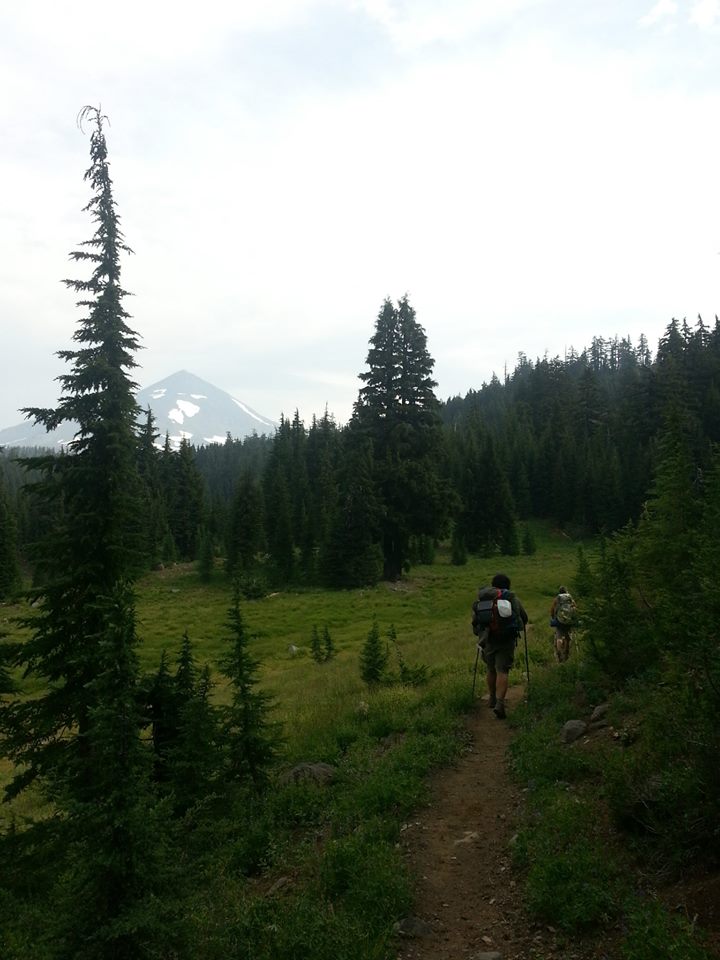
It was getting dark on Day 26 of my trek through Oregon on the Pacific Crest Trail, so I pitched camp under a thick canopy of spruce.  Deadfall the size of small cars crisscrossed the forest floor leaving just enough space for a tent between the downed timbers.  Fresh water flowed close by from higher up on the mountain.

Two middle-aged men had already set up their camp and were finishing their evening meal.  They laughed easily and spoke kindly to me.  Soon I was asking them stock questions section hikers on the PCT asked of one another. 

“Where are you guys from?”

“Well, I live in Wisconsin but my brother lives in California,” replied the one named Bill.

“What do you do when you aren’t on the trail?”

Bill said, “I’m an engineer.”

“I owned a computer software company before I sold it,” said the brother named John.

“Yeah, he has all the money. I still have to work for a living.”

I stoked the fire in my stove and shooed mosquitoes away from my face while I sipped cool water and waited for my supper to cook. The conversation turned towards the personalities we’d met on the trail.  I mentioned that I started out in California by myself, but had found fellow hikers that traveled the same pace I did and kept running into each other and camping at the same places; sort of leap frogging each other on the trail. It was fun.

“You guys seem to get along well on the trail for brothers,” I said.

“Well, it hasn’t always been like this,” John said.

“Really?”

“Yeah, I couldn’t stand John for years, “Bill said laughingly.

I smiled and thought of my own brother. 

“Obviously things have changed,” I said. “What happened?”

For the next ten minutes they told me about their quarrel, the misunderstanding, and the way it affected their lives and the lives of their families for decades. 

“About ten years ago, our mother died,” one said.

“At her funeral we were so brokenhearted that our grudges and guards came down. In the remembering of our mother and our childhood, we laughed, cried, and hugged each other for hours.  I don’t remember whose idea it was, but one of us said we needed to keep doing this. We need to get together for a week or two for the rest of our lives and do some of the adventures we dreamed about when we were young.”PCT brothes

The other one said, “Yeah, four years ago we canoed in Minnesota for three weeks. Three years ago we decided to hike portions of the PCT together—as much as we could in two weeks until we finished all of Oregon.”

I watched closely as they finished each other’s stories and sentences.  They would wink, defer, and tease like only brothers can do.  It was plain to see that they loved each other very much and were determined to make up for all the years of estrangement. In fact, one of them said, “Nothing compresses and bends time like being in the wilderness with your brother.”

When I awoke at dawn, they were all packed up and slinging packs over their shoulders. They waved at me and disappeared down the trail in the dappled light beneath the spruce.

After breakfast I wrote these words in my journal:  these two brothers remind me of Isaac and Ishmael.  Apart for years and together at the death of Abraham.

Do you know that story?  Abraham and Sarah decided to fast-track God’s will by letting Abraham sleep with Sarah’s servant girl, Hagar, in order to produce an heir, for Sarah was barren.  They named the baby boy Ishmael. Not long after that, Sarah got pregnant with Isaac. As the boys grew Sarah felt threatened and had Abraham send Hagar and Ishmael away.  And so, peopleless and landless, off into the wild went mother and child, but God didn’t abandon them there. In fact, Genesis 21:20 says, God was with the boy, and he grew up; he lived in the wilderness, and became an expert with the bow.

As far as we know, the brothers never entered community with one another.  They were separated by class, culture and hostility.  At least until their father died.  [Abraham’s] sons Isaac and Ishmael buried him in the cave of Machpelah.   Genesis 25:9

What an opportunity for these two brother to walk together and perhaps circumvent the bloodshed that has plagued that part of the world for generations!  Opportunity lost. And the world is the worse for it.

In time, Isaac had twin sons, Esau and Jacob.  Jacob tricked older brother Esau out of his birthright and inheritance. Esau was so furious he chased Jacob to a far country.  There the brothers remained—estranged, filled with murderous hatred, and fearful manipulation—for decades. 

But then Jacob wanted to come home; prodigals almost always do. In one of the more staggering stories in the Bible, Jacob returns home to see his failing father and humbles himself before his brother who has come out to meet him.  Jacob fully expects there to be trouble.  In fact, he is prepared to die. Let me shorten the story by saying, as my grandfather would, “Jacob came home with his hat in his hand.”

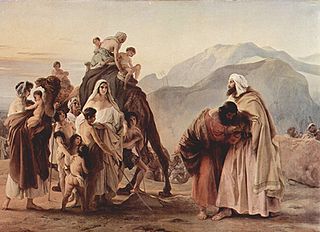
esauEsau ran to meet his brother with open arms. When Esau didn’t attack Jacob, but instead treated him with grace.  Jacob said, “No, please; if I find favor with you, then accept my present from my hand; for truly to see your face is like seeing the face of God”  Genesis 33:10

You want to know what the face of God looks like? You see it reflected in the face of a brother who extends grace to a brother.  In that closing space between two brothers, God shows up and shines his glory on upturned and humbled faces.

Oh, how we need this today.  We need it in families, in churches, and in denominations.  We need it in schools, corporate boardrooms, and on the freeways.  We need it in courtrooms, congress, and cable news affiliates.  We need it in Israel, Syria, and Iraq. We need it between the liberals and conservatives.  We need it between arrogant pastors and disgruntled church members.

Grace will heal our land when it first begins to break our hearts.

It happened once at the grave of an ancient patriarch, it happened a second time on the far side of a creek called Jabbok, and it happened a third time beside the grave of a mother somewhere in California.

It could happen again in Ferguson, Missouri. It could happen again at Mars Hill Church in Seattle. It could happen again in my heart.

When hearts are broken so that grudges and guards come down and healing love flows like a cool mountain stream.  

And we learn to live as brothers.


Posted in Uncategorized | Tagged , , , , , , , | 4 Comments

Stop Bringing The World Into The Church

But we will give ourselves continually to prayer and to the ministry of the word.  Acts 6:4

As I was learning how to navigate the professional Christian life, I remember that the older generation, the very conservative branch on the Christian family tree, kept harping about how the world has gotten into the church.  They didn’t like playing taped music in church, women wearing pants, or songs not found in the church hymnal. High tech special effects were brightly colored figures on the flannel graph.

Worldly Church

They were right and they were wrong.  The church has gone worldly, but not because of fashion or fog machines.  It has gone worldly because we have adopted the values of the world as our own.

When I was a young and virile pastor, there was something that I pined for more than almost anything:

1. Singular top-down leadership (validation of self)

2. Unbridled competition (method of attainment)

3. Numerical success (proof of validation)

My obsession to become a more effective leader led to a competitive spirit that drove me to obsess about success. What mattered most was that I was successful, which was always measured in terms of numerical growth, financial gain, and organizational efficiency. If any of those were weak, I simply gained more leadership skills and tools so that the line on the success graph always tracked up and to the right.

How did I know if my numbers weren’t sufficient?  I compared my numbers to last year and if they were down, I worked harder, drove harder, and pushed harder until they were up at least 10% over the previous year’s numbers.

When numbers are tracked, analyzed, and celebrated, that seems to me not very far from reducing people to symbols and when I do that, I objectify a soul.  What can be worse than that?  How big does a church or business have to get before it starts objectifying people?  Rick Warren has famously said, “Since the church is a living organism, it’s natural for it to grow if it’s healthy.”  That would be true if the church was a garden or a disease; however, the Bible refers to a church as a family more than any other metaphor.  Do we want our families to grow at an unchecked pace?  Why not look at the church as the ‘body of Christ”?  If a body grows and grows we might say it is obese.  Is that healthy? Someone said recently, “Baptists count everything except calories.” I only have to look at my own waistline to see the veracity of that snark.

Singular top-down leadership feeds all the wrong things inside me. It strokes my ego and sense of self-importance.  I am only a frog’s hair away from using people as pawns on my board to accomplish more ego-gratifying success.  Competition arouses my flesh and makes me want to win.  It makes me want to beat—someone or something—and it inflames my need to control my world.

If leadership is influence and I know that I have influence over someone’s life, it creates an itch in me that is hard to resist.  That tickle is “power” and when I have power, I tend to use it for my purposes.  I am quite adept at camouflaging it all in altruistic and spiritual language.  I say all the right things:

“This is for the glory of God.”

“We count people because people count.”

“God was also interested in numbers; He even named a book in the Bible after it.”

“Ever number represents a soul that matters to God.”

“Leadership is my spiritual gift.”

“I want to multiply the impact of our ministry.”

Of course all of those have elements of truth in them.  That is why I can say them with a straight face and kid myself into thinking that what I am doing is ordained of God.  No one dare challenge me or I will pull out the big guns and say something like, “Touch not my anointed, and do my prophets no harm.” (1 Chron. 16:22)

Singular top-down leadership easily lends itself to power plays; and power plays use people and damage them.  Every time I damage someone, I do damage to myself.  I can’t harm you without harming myself.

Let me use a crass illustration. (I do not drink whiskey.) Top-down leadership is like whiskey. A little sip may be harmless, but too much whiskey can cause great damage to the person who drank it and the people in his world.

o-WHISKEY-facebookThe active ingredient in whiskey is alcohol. It makes drinking fun, makes me feel good, and causes me to behave in ways I might not normally do. The alcohol in my illustration is competition.

The effect of the alcohol is inebriation, that is, success.  The more success I enjoy, the more whiskey I drink and the more alcohol is activated, the more inebriated I become.

Some people drink whiskey for the taste; they sip it from time to time. Others drink whiskey because they want to get high.  Still others drink whiskey because they are addicted to the drug of alcohol.

To extend this metaphor let me point out that not everyone who sips whiskey becomes an alcoholic, but some do. No one knows who is susceptible or at what point enjoying the taste turns into enjoying the high. Where is the turn from needing a drink to get through the day to driving drunk and killing a family in a minivan?

Singular top-down leadership is toxic to my soul.  I can’t handle it.  I hurt people with it and I hurt myself with it.  I wonder if it is time to reexamine the leadership model of the western church.

Several years ago the concept of ‘servant leadership’ became a buzz idea.  In the Baptist circle of pastors/leaders I ran with, it was looked down upon as a weak and anemic model. Who would want to be collegian and egalitarian in their approach to leading the church? You can’t control that.  So, we turned our backs on the idea of serving as a model for leading.

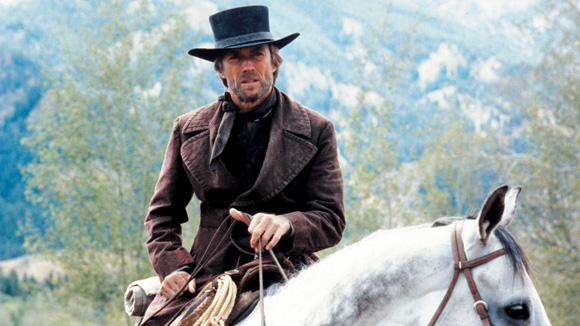
In the 1985 film Pale Rider, the Clint Eastwood character known as “The Preacher” is tempted to leave his small flock at a mining site to move into town and have a building and town folk to come to church.  He is basically given a blank check if he would stop shepherding (protecting) his little flock from the greedy owner of a larger mining operation that wanted the rich but smaller claims.  After the temptation to shift his ministry to the town, Preacher says, “You can’t serve God and mammon, mammon being money.”palerider1

For the health of the souls I’ve been entrusted with, I have to choose.  I can’t do both and keep the world out of the church. And, for crying out loud, we need to stop looking through the lens of the Corporate America leadership model when we read the Bible. I want to suggest we look afresh at what leadership is in the New Testament.  Perhaps we stop looking at Moses and David as models and look at Jesus as the model.

Jesus was a leader of a different kind.  He taught, modeled, prayed and served.  He didn’t organize or systematize anything.  He focused more on being than doing.

Will today’s Christian leaders be content with that?  I don’t know.  It’s not very ego swelling. Will the organizations (church included) allow a leader to lead like Jesus? I don’t know.  It’s not very efficient and the growth is slow and often ponderous. They may not have the patience for that.

The church is not the corporation of God. We are not an NGO of God. We are not the institution of God. We are not the government of God. We are not God’s team.  We are the family of God and a family needs presence, teaching, modeling, and prayer. It is often slow and ponderous work to raise a family.  It can’t be done quickly and success is NEVER measured by numbers, but always by generational character and integrity.

You know that the rulers of the Gentiles lord it over them, and those who are great exercise authority over them. Yet it shall not be so among you; but whoever desires to become great among you, let him be your servant.  Matthew 20:25-26

That is the Jesus way, and I like it.


Posted in Uncategorized | Tagged , , | 2 Comments

Old Men Walking

The dove’s lonesome coo played in the distance as we walked on the sand-filled road across the back side of the Baca Land an Cattle Company access in the San Luis Valley of south-central Colorado. Pinion’s and junipers stood at attention like centinentals. Our packs were the lightest we’ve ever carried into the wilderness.

His pack was heavier.

We both limped—me from miles of trails and years of running on pavement. He limped because of two knee replacements and even more miles on faded trails in the wild.

We talked little at first light—as if on an early big game hunt or, perhaps, entering the most ancient of cathedrals.

20140720_152610 I love walking in the wild with my father. There are faster men; there are even men who know more about the wilderness than my father, but no one, and I mean no one, knows more about the wilderness of the Sangre de Cristo Mountains and the wildness of the soul of Joe Chambers than my father. Thus I would rather walk in those hills with him than sit in a coffee house with Billy Graham any day of the week.

We both struggled with the overgrown trail of deadfall Cottonwood, Aspen, and wild rose bush of Deadman Creek trail. From time to time we found a log that had been cut decades ago which indicated that we were on what once was considered a trail. The going was slow, arduous and painful. I could hear the creek dancing down the canyon on my right, but the thatch was too thick save only a few fleeting glimpses of the tumbling water.20140720_093051

We camped and ate our Spanish rice, shooed mosquitoes away from our faces and he told me he fell three or four times that day.

Climbing out of the cross-hatched creek bottom was our top priority. Scaling the canyon wall on all fours in the loose scree, prickly pears and yucca plants we found a thin but better trail and our pace picked up.

The next day he slowed down even more. We came to the idea at the same time that he should stay at the beaver ponds three fourths of the way to the lakes and that I make the final pitch up and into the basin alone. I wanted to be there with him. He took me the first time over forty years earlier and we both were thinking this may be our last trip to the sacred lakes.

I pushed on to the lakes assured that we made the right decision. It was a brutal climb through more thick brush, deadfall, and dark timber with a labyrinth of game trails obscuring the ancient trail.

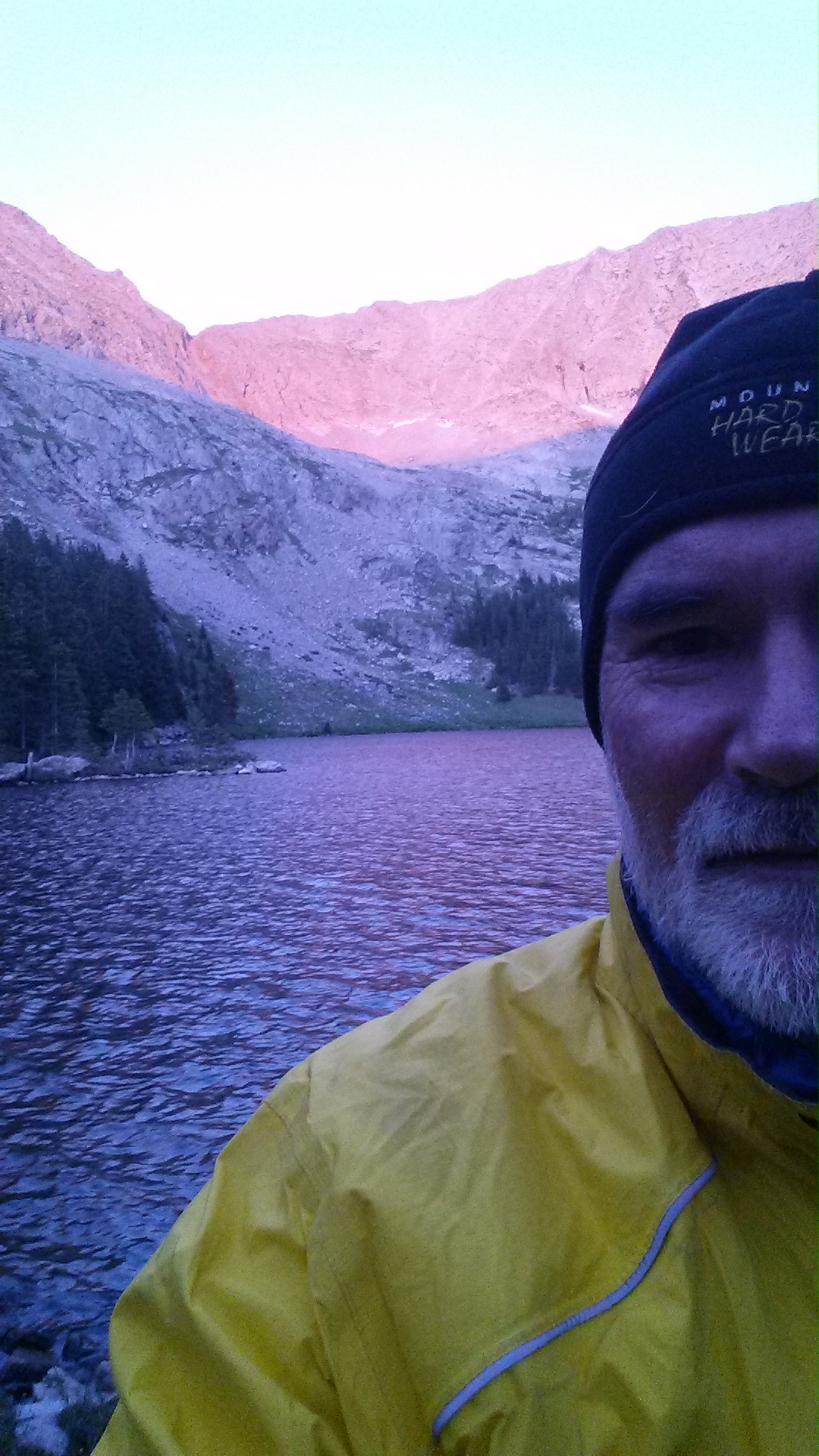
20140722_201935 I arrived at the upper lake at 7:00 PM as tired as I have ever been in the wilderness; too tired to eat my supper, I sipped a cup of berry drink, snapped a selfie with alpine glow splashed on the cirque holding the alpine lake behind me and crawled into my sleeping bag.

I fished all the next day. The cutthroat trout were as plentiful and beautiful as at any time in the 40 years of our pilgrimages.

I prayed.

I wrote.

I sang.

I breathed deep the 11,071 foot air.

At noon of my second day I reloaded my pack and descended to the camp where I left him. He had caught fish in the creek and enjoyed a meal of trout fried in bacon grease. We broke his camp and hiked miles and hours down the canyon to a previous camp site. We enjoyed our meals, talked and laughed.

We talked about God. We talked about regrets in life. We talked about our hopes for the future. The ease by which conversation flowed between two old men who have walked in the wild with a holy God for so many decades was smooth as a banister in grandma’s house.

Finally, just as it was getting too dark for old eyes to see, the reading of Psalms came bubbling to the top of our conversation.

“Let me read to you the Psalm God gave me to read every day this week,” I said.

I read in entirety and aloud Psalm 29…

Ascribe to the Lord, O heavenly beings,     ascribe to the Lord glory and strength.  Ascribe to the Lord the glory of his name;     worship the Lord in holy splendor.

“Let me read to you my Psalm,” he said and turned to find his Bible.

He read in entirety and aloud Psalm 141…

I call upon you, O Lord; come quickly to me;    give ear to my voice when I call to you.  Let my prayer be counted as incense before you,     and the lifting up of my hands as an evening sacrifice.

We talked about what we might imagine God telling us from our respective Psalms. We talked of the mystery and the whispers of God. We talked about the wrinkled contours of our lives and how these ancient words find their ways into our souls.20140725_175503-1

Two old mountain men sitting on a gray log, reading Psalms aloud to each other as the dark closed in on us. The darkness of the day, and the twilight of our lives—

…in the holy wild.


Posted in Uncategorized | 4 Comments

Trust Your Shepherd

He maketh me lie down in green pastures.~ King David

My shepherd makes me lie down because I don’t want to lie down. I am hell-bent on controlling everyone or thing in my sphere of influence.

Every morning when I go to brush my teeth I notice that the toothpaste tube has been assaulted. I can’t explain to you how distorted and mangled the tube of toothpaste is. It looks as if someone was angry about something—what they had for dinner the night before, the loss of the GNP, the prospect of Donald Trump becoming president, sagging pants on men, someone leaving the lid up on the toilet—I don’t ‘know—but it is all being taken out on the tube of toothpaste with a violence that, quite frankly, scares me.

I have gently mentioned that it doesn’t have to be that way. I have asked that she carefully start from the bottom, and, with gentleness and grace, roll the bottom of the tube upwards towards the opening the way Jesus would do it. It is a much more efficient and sane way of dispensing toothpaste instead of choking the tube as if it were and insolent spouse.

Not a great moment in our marriage. I’ve come to the realization she will probably go to her grave choking the tube of toothpaste like it was a weasel caught stealing her chickens.

We go crazy over that, don’t we? We just gotta control this person, gotta get them to do what I want them to do. We live with the illusion that I can control the people in my life. I can control my job. I can control my money. I can control my health. I can control my circumstances. Then, sooner or later in every life comes the news—at death if not before—no, you are not in control.

Since the Good Shepherd is present—anyplace can be a green pasture where your soul is restored.

A green pasture can show up at an office where everybody else is going crazy, or at a house where there is noise and even conflict, or at a hospital room where your health is gone—because that’s where the shepherd is. And He is in the soul-restoring business.

It is in vain that you rise up early and go late to rest, eating the bread of anxious toil; for he gives sleep to his beloved. Psalm 127:2

Who gives sleep to the beloved? He does. The Good Shepherd does. That doesn’t mean it’s a bad thing or a wrong thing to work hard, it just means this idea that the belief that I can control my world is illusory at best and messiah-like at worst.

Your life is a gift, and rest is a gift, and some people have not rested well for a long time.

One of the ways my former church ministered to me as their pastor was to let me have generous blocks of time off in the summer to do the thing that most revitalizes my soul.

Time in the wilderness.

One summer they allowed me to hike the Pacific Crest Trail for 30 days and it was the greatest gifts ever given to me as a minister of the Gospel. It sent a message to me that said, “Pastor, we are as concerned for your soul as you are for ours.”

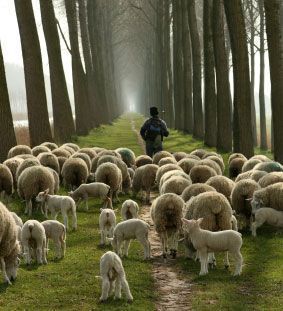
The Lord is my shepherd; I shall not want. He maketh me to lie down in green pastures: he leadeth me beside the still waters.images5RUD3ND3

Sheep don’t like noisy waters because if they fall in with all that wool and they get saturated, they will drown. So they need to have water that is still. Our lives get so busy, and then I miss life. I drown in noise and the unrest inside me.

Friends gave Lynette and I a few days at a time-share on Vancouver Island, BC. We rode the ferry from Anacortes over to Victoria. It was about an hour and a half long ride. We were leaving Mukilteo to get away to rest and be restored beside the waters of Nanoose Bay. But on the Ferry ride there was a gaggle of kids that were enjoying the ferry ride way too much. They had a nerf ball and were bouncing and tossing it and rolling it around under my feet and laughing and screaming. I felt my #getoffmylawn persona begin to rise up inside of me. I thought surely their parents are unaware of their behavior so I looked around for what looked like might be there parents and sure enough there they were just across the way—watching the little monsters play. And they had smiles on their faces! They were reveling in the play of their children.

Not me. I was battling an internal expectation that my world be the way I want it and it was not happening for me so—up my #getoffmylawn meter went.

About that time a ferry official, complete with uniform, badge and whistle, walked by and sternly told the urchins that they couldn’t throw the ball and run around like they were a bunch of drunk Methodists. Internally I cheered her on—hoping she might taze them into submission—but she didn’t and when she was out of sight the kids went back to bouncing around like Tigger on speed.Tigger_happy

So you know what I did? I took a breath and I decided to join the parents in their delight at their kids having fun on the ferry. I smiled and laughed—imagining them as my grandchildren and let that moment fill my heart with conviviality.

I almost missed that moment of restoration the Good Shepherd put in front of me brilliantly disguised as delinquent munchkins.

Instead of trying to control everything in frenetic activity, surrender to Him. Instead of contributing to the cacophony of noise in your world with your fidgeting soul—listen to Him.

He has something to say to you, “There is another way to do life. Do your best and trust me for the outcomes.”


Posted in Uncategorized | Tagged , , , , , , , | 2 Comments

Worrying the Word

Other than suffering I believe that mediation on God’s Word is the single greatest tool God has ever used to facilitate change in my character AND to communicate how much He loves me.

What is Biblical Meditation?

Happy are those
who do not follow the advice of the wicked,
or take the path that sinners tread,
or sit in the seat of scoffers;
but their delight is in the law of the Lord,
and on his law they meditate day and night. Psalm 1:1-2

The Hebrew word “meditate” is the word hagah. Can you say it? Hagah means to mutter to yourself, to talk to yourself, to muse, to ponder.

As a lion growls, a great lion over his prey… Isaiah 31:4. 87716755 (2)

The word translated “growl” here in Isaiah is the word hagah in Hebrew. You’ve watched enough nature shows to visualize this scene. A lion has killed his prey and has a giant paw draped over the kill and he begins to lick the carcass with his big red tongue and a low growl or purr rumbles from deep inside his chest. He protects it, gnaws on it, chews it, licks it, and turns it over and licks the other side.

“Like a lion, king of the beasts, that gnaws and chews and worries its prey…” (MSG)

You’ve seen a dog “worry” its bone. She chews on it beside the fireplace, picks it up and takes it in the other room and licks, chews, and even lays on top of it.

Happy are those (whose)
…delight is in the law of the Lord,
and on his law they meditate day and night.

This tells us a couple of things about mediation:

Think about the Word of God.

In eastern meditation you are to empty your mind of all thoughts, but here we are told to worry over the Law of the Lord. To sit with it. To reflect on it. To internalize it. Meditation is prayerful reflection on what God has told you in His word. It is responding to God. It is answering God. It’s listening to God. It’s asking questions of the imagery. It’s asking questions of the meaning of the phrases.

Feel the Word of God.

Notice it says that happiness will come our way when we delight in the law of the Lord. This tells me that meditation is not just an intellectual pursuit, but also involves my heart. The purpose of meditation is to take the truths that we discover in our analysis, chew on them until they drop 18 inches into our hearts so that it actually affects us.

The purpose of meditation is not so much to make the truth clear to your heart, but real to our heart. It’s tasting the goodness and the sweetness and the flavor of God’s Word for you. It’s shaping your feelings and your imagination by making it real in your heart. Meditation is the mind descending into the heart.

So if we can learn to meditate on the Law of the Lord we will experience happiness and blessedness. Meditation can change you for the good. But meditation can change you for the bad as well. Because the wicked or ungodly also mediate.

The ungodly…follow the advice of the wicked,
(they) take the path that sinners tread,
(they) sit in the seat of scoffers.

Wicked refers to those living a life with no regard to God in their Monday-Saturday life. Advice here refers to thinking or world view, Path refers to behaviors, and scoffers refers to attitudes.

So who or what shapes your thinking? What shapes your behavior? What shapes your attitude? The idea here is that no one follows the advice of the wicked out of duty. They don’t have to force themselves to head down this path. It is not a drudgery. They all go willingly. They go because they want to go down that road.

We’ve been watching the “other crowd” intently and find their way to be an attractive way, we’ve studied their life trajectory and decided that it makes sense to us and so now we are delighting in it.

And that’s how worldliness happens. You start looking at the ways of the world and they captivate your imagination, and soon you begin to hagah and delight in them and it starts to change your behaviors and attitudes.

Are there any Benefits to Meditating?

They are like trees
planted by streams of water,
which yield their fruit in its season,
and their leaves do not wither.
In all that they do, they prosper. Vs. 3. beautiful-tree-beside-tokoy-river

Like a tree planted by streams of water. That image may be lost a little on us here in the Pacific Northwest where water is so plentiful, but it would be a powerful image for desert-dwelling Bedouins. And the writer is teaching us to meditate by asking us to meditate. That is a wonderful way to learn.

Ask the question and look for the meaning of how is a tree planted by streams of water like a meditating person?

1. Meditation takes time.

Trees don’t grow over night. Trees put their roots down deep into the soil. Trees know they aren’t going anywhere. Meditation takes a great deal of time and over time it has a cumulative effect. Don’t leave here and try to meditate on a passage and then expect instant character change. That would be like going without one meal and then getting on a scale to see how much weight you’ve lost.

How do you eat a Porterhouse Steak? How do you enjoy a glass of fine wine? How do you drink a cup of good coffee? How do you read a good book? Slowly, you sip and savor so that you can experience the full range of sensuous pleasures.

Meditation takes time. Be patient with incremental change.

2. Meditation leads to depth and stability.

The tree is planted; it’s rooted. Unlike the chaff. Do you know what chaff is? Chaff is the husk. It’s the empty hull of a grain. Chaff is form without substance. There is a hollowness to chaff. There is a superficiality to chaff. There is a rootlessness to chaff. The psalmist is saying that the ungodly are like the hulls being carried away on the wind.

Notice that the ungodly or wicked are characterized by movement. If you look at the verbs that are attached to the wicked, it’s verbs of movement: walk, stand, sit, blows away.

Hebrew scholar Robert Alter said of this Psalm that, the ungodly are in constant motion. They’re restless, without direction, carried here and there by forces over which they have no control.

This is chaff. Someone who is subject to the winds of circumstance. Someone who is blown here and there by the winds of people’s approval.

Contrast that with the picture of a meditating person who is characterized not by random movement, but by stability. A tree is planted. The meditating person is a tree whose roots are down into the ground, and they’re not just drawing moisture from the soil, but they are drawing from streams of water—perhaps an underground aquifer. When a tree is planted beside a stream or river its health does not depend on the weather. Its growth doesn’t depend on the ambient condition. Circumstances all around can fluctuate and change and they will be just fine because they have tapped into another source—a deeper source.

Joy is not the absence of suffering, but it’s the presence of God. ~Elizabeth Elliot.

Unlike chaff, the meditating person is not subject to the climate change of the culture around them. Their roots go deep.

3. Meditation leads to fruit.

Derek Kidner pointed out in his commentary that the tree is not a pipe. A pipe is only a channel for water. But a tree will take in the water, assimilate the moisture, and produce, not water, but fruit.

That means that when we mediate on the Word, drawing it into your mind and heart, something organic happens; something transformational happens, and the Word becomes a part of you, and the Word turns into fruit: love, joy, peace, patience, kindness, goodness, faithfulness, gentleness and self-control.

When I was younger I wanted to be a pipe, but the older I get the more I want to be a tree.

4. Mediation leads to growth.

…their leaves do not wither. In all they do, they shall prosper.

At first glance this seems a little too good to be true. Seems like the writer is saying, “If you do this then this good will happen. If you don’t do this, a bad thing will happen.” Seems formulaic. And we Americans in our self-help torpor love quick easy formulas. We expect quick and easy solutions to very deep and complicated pathologies.

But the psalmist says that the tree will bear fruit when? All the time? At the end of the day? That fruit will ALWAYS be hanging on the tree? NO. It says the tree will bear fruit “in its season…”

See, meditation leads to stability, not immunity from suffering and dryness. There will be dry times. And there will times of barrenness. The godly will suffer. There will be winter for the godly. It doesn’t say that the godly will always have health, wealth and happiness…it says fruit and growth will come in season.

How Do We Meditate?

  1. • Begin with 1-2 minutes of silence.
    • Invite the Holy Spirit to reveal to you the message Jesus wants you to hear.
    • Read a selected passage aloud very slowly with long pauses. Feel the words on your tongue.
    • Notice a word or a phrase that seems to resonate to your heart. Stop. Say the word and hagah.
    • Sit with that word or phrase. Chew on it.
    • Finish reading the passage.
    • Sit in silence saying the word or phrase several times to yourself. (hagah)
    • Read the entire passage a second time engaging your five senses.
    What do you see?
    What do you smell?
    What do you taste?
    What do you feel?
    What do you hear?
    • Journal or speak those images aloud.
    • Sit with the sights, sounds and smells of the passage for a few minutes.
    • Read the passage again a third time this time listening, seeing, and noticing what.       Jesus might be trying to get you to do or say in your life for this given day. Imagine Jesus is sending you and encrypted message through the passage and you are to hear it and decode it.
    • Do what he tells you to do.

Closing the Feeling Gap

Do you ever feel as if God is distant from you? How many of you ever feel as if God is a million miles away? Faithful Practice of Meditation helps close the gap between knowing you are loved and feeling loved.

What if one of my grandkids habitually were so busy playing that every time they passed my chair and I offered them my lap to sit in or offered to read them a book they just kept on playing like I wasn’t even there. I offer to sit with them, but they are too busy watching T.V. or playing video games or wanting to blow bubbles. No matter what I do they are so absorbed in their only play-world that they don’t take the time to “be” with me.

If they consistently operated that way is it possible that they might grow up and complain to their parents, friends or therapist that they never felt loved by their grandpa. Is it possible that they could grow up with that viewpoint? Of course.

I’m here to tell you that you’re heavenly Father is more than willing to go for walks with you, sit with you beside a bubbling stream, whisper to you through the laughter of a child—but you have to notice. You have to pay attention.

And that comes from hagah. Pondering on the Word that became flesh for you. If you do that over time, you will be changed and you will feel adored by your Heavenly Father.


Posted in Uncategorized | Tagged , , , , | 1 Comment

Every Pastor Needs a Pastor

Christian leaders are in trouble. And when the leaders are in trouble the Church is in trouble. Our culture, both inside and outside the church is grinding down Christian leaders.

According to Thabiti Anyabwile one of the pastors of Anacostia River Church in Southeast DC, in an article he wrote for the website 9Marks back in 2014:

50% of the ministers starting out will not last 5 years.

1 out of every 10 ministers will actually retire as a minister in some form.

4,000 new churches begin each year and 7,000 churches close.

Over 1,700 pastors left the ministry every month last year.

Over 1,300 pastors were terminated by the local church each month, many without cause.

What if we were to offer Soul Care to ministers and their families early and often? When I was a boy my father, who was a pastor, had a man who worked for our denomination he considered his pastor. I’ll never forget the name, Wendell Grant. My father and mother respected and felt safe with Mr. Grant. I heard his name spoken with the reverence that comes from a life of impact on young ministers in our home. I believe we need to go back to finding pastors for our pastors. We all need a pastor who will ask hard questions and challenge our motives, values and ideas. We need a pastor who will hurt with us, listen to us, and pray with us. Every pastor needs a pastor for the health of their own souls and the souls of his or her spouse and families.

In the early 90’s on a large game preserve in South Africa the rangers began to notice that white rhinoceroses were being killed by much larger animals. Turns out the killers were adolescent bull elephants. These elephants had been orphaned and were left on the reserve to fend for themselves. In the wild, the males herd together and the older and much larger bulls keep the younger bulls in check. Without the older bulls to model adult elephant behavior and the gravitas to challenge the younger bulls—they were doing great damage.

I believe that many younger pastors needs an older pastor—a seasoned pastor, a tough old pastor, a scarred old bull—to come alongside them and “be” with them. This “being” would include praying with them, asking about their soul, inquiring about their families—and sometimes asking very hard questions about their private life. The wisdom that can only come from experience is missing in many younger pastors life. It would be important that these young “bulls” respect the older bull because they will challenge him and he has to be able to hold his own. He must be filled with grace to offer to a pastor who is hurting and at the same time he must be unflinchingly willing to speak truth into their lives.

How could this benefit the Kingdom? What if someone was willing to travel to meet with a pastor, listen to him, pray with him, believe in him, challenge him, and walk with him for years? What if there were retreats, seminars and other resources offered him and his wife specifically designed to care for their interior life? What if a pastor-to-pastor relationship was established so that if he needed to call someone in the middle of the night when he was tempted to look at an inappropriate website he felt safe to call his “pastor?”

Can you imagine the carnage that would be avoided? And what about the man who never fails morally, but who quits because he just too tired to go on? Or what about the man who settles for a sub-standard ministry of mediocrity because he is bored and lives an unchallenged life? What if someone was dedicated to caring for his soul?

Qualified Soul Care might keep a pastor from falling into moral failure so that a family and a church never fragment into a million pieces.  What if a pastor never had to tell his sons that their father has been unfaithful to their mother? What if a denominational leader never had to go to a devastated and betrayed church to mitigate the grief of a forced termination of a pastor?

How do you measure something that NEVER happened? It is likely incalculable.

It is time for soul-mentoring to be more highly valued than numerical success in the American church culture. If we don’t pay attention to the health of the souls of our younger leaders, we run the risk of waking up one day only to find one dead ministry after another littering our American landscape.

Christian leaders are at risk, but we are not a people without hope. We have the time-tested disciplines of the Church that are simply waiting to be re-introduced into a modern age.   I sense that the younger generations of pastors are very eager to learn from older leaders who value their souls, whether they know it now or not. We have the presence of the Holy Spirit, we have the energized dynamic of resurrection power, and we have wounded healers limping around who are willing to serve Jesus by serving pastors.

Whoever walks with the wise becomes wise, but the companion of fools will suffer harm.  Proverbs 13:20.

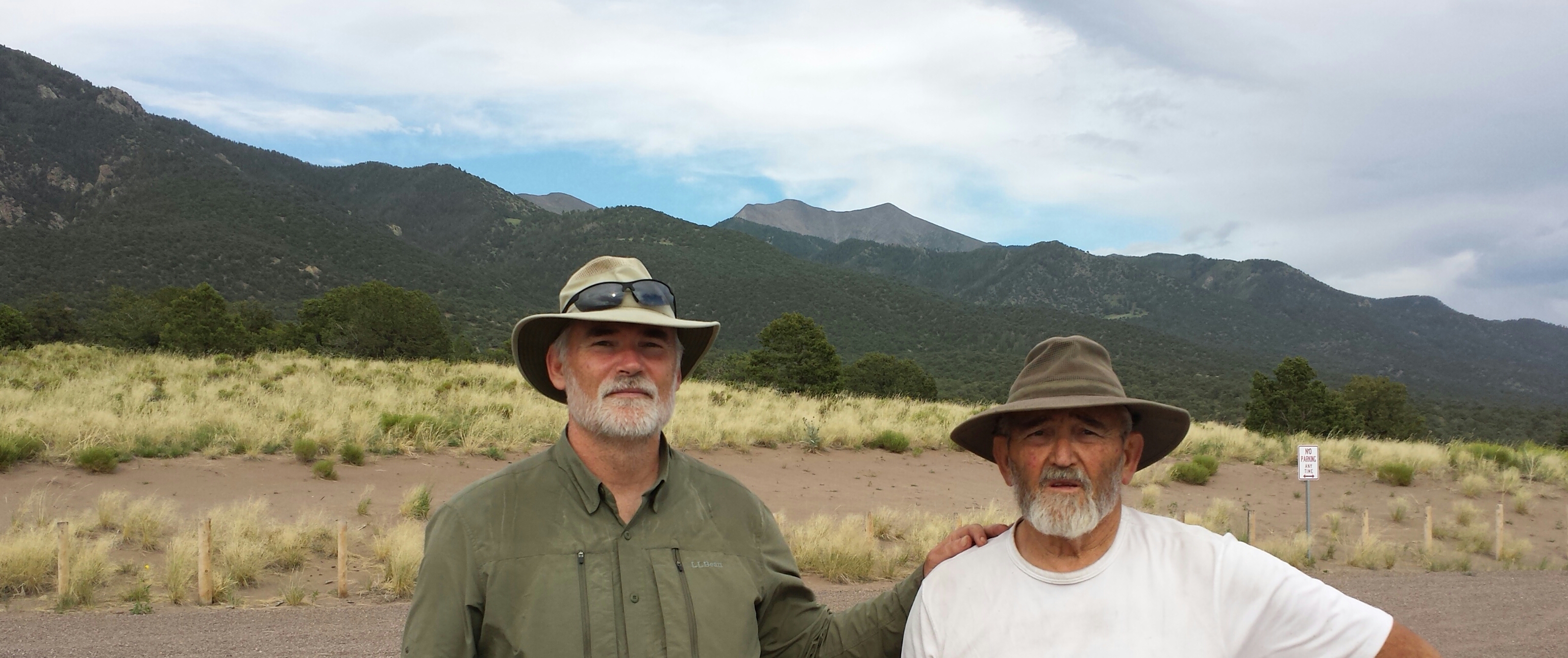
Old bulls walking with young bulls.

That’s me on the left.

Posted in Uncategorized | Tagged , , , , | 4 Comments

What is Shaping Your Soul?

The Lord is my shepherd; I shall not want. ~King David

I am a willing victim of my times. This culture shapes and forms me into exactly what it wants me to be. I have become an automaton railing against the system that whets my appetites for newer and shinier stuff and then I buy it as soon as no one is looking. Sometimes I fool myself by going to the thrift store to buy it after someone else has had their fill, but I am a consumer either way.

It doesn’t matter what “it” is. Could be anything. Could be the latest book, backpack, music CD, Planet of the Apes movie, or new Droid phone. I am a sucker for the marketing machine. They have me on the end of their line like a trout and are reeling me in. I say I am free to choose, but over and over again I confuse delay with refusal. I convince myself that if I delay a purchase or buy it on sale that I am sticking it to the man. But it is a ruse.

When We Were Young

We haven’t always been this way as a culture. After WWI we figured out how to create mass quantities of “stuff” at relatively efficient rates of exchange. Then we hired people to create a sense of desire where there was once contentment. They didn’t want to use the word “propaganda,” so the term “public relations” was coined and it slipped right by us.

We must shift America from a needs- to a desires-culture. People must be trained to desire, to want new things, even before the old have been entirely consumed. […] Man’s desires must overshadow his needs.  ~Paul Mazur, Lehman Brothers, circa 1927

My mother might remember a time when wearing a dress made of used flour sacks was acceptable and desired. I doubt she was ever content with homemade items, but I know 9c122000f5c7cc43bf1db7a1394ff758for certain I was never content with homemade stuff. My earliest memories are of watching Saturday morning cartoons where commercials for Johnny Quest action figures, pearl-handled six-shooters in genuine simulated leather holsters, Easy Bake Ovens, Hot Wheels, and Mrs. Beasley dolls were splashed with no shame every few cliff-hanging minutes on the television.

Today toys have changed but the desire-arousal commercials bring is still the same. My grandchildren were playing in the living room recently while Lynette and I watched a show; they were oblivious to it. But when a commercial came on, they stopped playing and watched the sixty second ad. I am convinced that advertising departments in corporate America have figured out a way to subliminally tap into our appetites. They’ve done something to capture the attention and imagination of three-year-olds long enough to stop them in full-throttle fun. Next time you are around small children, watch what happens when commercials come on the TV.

 The Culture is Shaping the Church

Even in church circles we have adopted the consumer approach to life. In the ‘90s it became popular to preach to the “felt needs” of the people. Sermon series were marketed to arouse interest, attract a crowd, and grow a church. I know because I was a card-carrying member of the church-growth crowd; I have file folder after file folder of notes on felt need sermons to prove it. It is all pabulum at best and downright emotional pornography at worst. This is still around today.

We pastor types used to say about converting unbelievers that “you have to get them lost before you can get them saved.” Think about that statement. I have to convince you that you are going to hell before I can rescue you from your destination. I have to sell you on the idea that you are unhappy in order to tell you about Jesus, who won’t make you happy but will take you to heaven when you die. What’s more, if you’re a person of some means, you may have to go through some great tragedy to be desperate enough to become a Christian. Really? On more than one occasion I have heard a pastor say the reason it is so hard for rich people to become a follower of Jesus is because they can buy just enough happiness that they don’t have to listen to the aches and pang of their souls.

I am a man of many wants. Most of my clothes come from thrift stores, but I shop a couple times a week for more used items. I have more books than I can possible read and cassette tapes of sermons that are thirty years old. I have backpacking gear I will never use again and socks that long ago lost their sole mates. (sorry) Am I becoming a hoarder?

What do I need to flourish as a person? I love what the late preacher Ron Dunn said, “You will never really know that Jesus is all that you need until Jesus is all you’ve got. Then and only then will you know that Jesus is all that you need.” Let that sink into your busy mind. What do you really need to flourish for all of eternity?

Jesus, just Jesus. Or as Tullian Tchividjian said, “Jesus + Nothing = Everything.”

Shape Your Soul…Shape Your Church

What do we need to wean ourselves off this torpor-inducing existence in the very ethos of our culture? Even in our church culture? May I suggest some ideas?

  1. Question my wants.

If I don’t have that new smart phone, will I get farther and farther behind in what is considered cool by cool people? If I don’t get that promotion, will my existence not be validated? If I can’t turn heads with my beauty, will I not be loved? If I can’t drive that car and live in that house and be able to go on those vacations, then ____________?

When I trained for marathons and saw someone running while I was driving I would think, “Dang it! They are getting ahead of me.” But they weren’t.  I wasn’t racing them.  I was just training to race against myself.  I don’t have to have the stuff others have. I don’t have to keep up.  It’s not a race.  It’s all soul training.

Don’t trust your heart when it comes to desires. Remember what the prophet said in Jeremiah 17:9, “The heart is deceitful above all things, and desperately wicked: who can know it?”

I’ve started to ask myself: What lie am I telling myself that makes this want feel like a need?

2. Turn down the volume.

The white noise of our culture is engineered to shape our souls to the point that we confuse wants with needs. Therefore, I have to ruthlessly omit this kind of soul clutter from my life. If I can’t be shut of it, I at least have to take steps to diminish its impact on my very malleable soul.

A couple of simple steps is to watch only recorded shows and fast forward through the advertisements. I’ve begun to mute the sound during commercials. Budget what you listen to or watch much as you might cut sweets or soda from your diet. It’s summertime—go for a walk and pay attention to creation. Do what you told your kids to do when they were little, “Get outside!”

3. Walk with the Shepherd.

When I spend time alone in quiet with Jesus, my world starts to shrink and my God starts to enlarge. I can’t explain it very well, but the simple truth is when I sit still, open my head, heart and hands towards Jesus, I feel His presence and all troubles still present, begin to diminish in His shadow.

My father used to sing a song when I was a boy that has found its way on my lips more than a few times in recent days:

Fill my cup, Lord; I lift it up Lord; Come and quench this thirsting of my soul. Bread of Heaven, feed me till I want no more. Fill my cup, fill it up and make me whole.

I’ve decided that I will repent of cooperating with the culture as it tries to influence and shape my soul according to its predetermined schemes. I think the Shepherd has a better way. It is slower and the adrenalin rush is not as sensuous, but the benefits to my soul are incalculable.

Ultimately I have to ask myself the question: Do I want to cooperate with a flawed culture as it shapes my soul and tells me what to want OR will I follow my Shepherd into green pastures and still waters?

A willing victim or a faithful sheep? sheep-with-shepherd

I don’t know how much of God you have, but you have as much of God as you want.

Lord, remind me that what I want the most shapes my soul the most.

Posted in Uncategorized | Tagged , , , , | 4 Comments

Helter Mercy

Jesus asked him, “What is your name?” He replied, “My name is Legion, for we are many.” Mark 5:9

A pretty girl started coming to our church when I was a sophomore in high school and I asked her out. We began dating. She said she had recently broken up with the school thug. Said that it was over; said she was free to date who ever she wanted. She was wrong.

A few days later I was walking down the hallways towards the parking lot to drive home when my brother saw me and grabbed my arm to say, “He’s out in the parking lot. He’s waiting for you. He’s going to kill you.”

“Oh,” I said.

Walking through the parking lot didn’t seem like such a good idea. That’s where many fights occurred in our school. I had even seen a knife fight out there.

“I’m going to the library,” I told my brother.

“What? You never go to the library.”

“I know. No one will look for me there. Go tell dad on him.” I said.

I stayed in the library for a couple of hours. I eventually snuck out to the front door of the school and could see that the parking lot was empty and the threat was gone. I waited for my father to arrive.

That evening I went to work at Burger King where he showed up there to drag me out into the parking lot and beat the fool out of me. The manager had been an all-state heavy weight wrestler and he jumped over the front counter and told my enemy that he couldn’t have it his way today.

A few weeks later I was with her at a basketball game when he showed up and stood at the exit. She leaned over to me and asked if she could go talk to him. Two things flashed in my seventeen year old mind: One, why was she asking permission to go talk to anyone? Second, yes, by all means, go talk to the guy.

After their conversation he stepped out through the exit; she came back and sat beside me. Trying to act cool and not scared spitless—I didn’t even ask her what they talked about, I just watched the game and when it was over and we walked out of the gym. Just outside, leaning against the brick wall, was my enemy. My girlfriend was on my arm and, dadgummit, I was going to walk her to my car and finish our date. No one was going to run interference for me out here in the parking lot now.

I glanced at him, nodded my head, and kept walking. We were parallel with him, then a little past him, and all the while I kept thinking I was going to be jumped from behind. It never happened. We got in my car and drove off and enjoyed our date. I never had issues with him again.

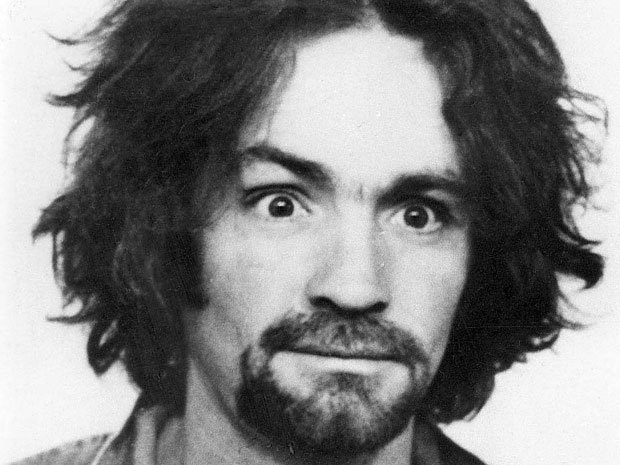
Much later I found out two things: One, he went to prison for cutting a man’s throat during a drug deal gone bad. Second, he thought I looked like Charles Manson and that’s why he always hesitated to fight me.

manson
Do you have an enemy?

On the eastern shores of Galilee Jesus encounters a man who had an enemy that was much stronger than he was. He is a creature you would probably meet only in your worst nightmares, if even there. He is a man possessed with demons. They drive him to violence. They drive him to cry out like a wild dog howling in the night. They drive him to the solitary places—in the hills, among the tombs.

There he acts like a rabid animal, living on the ragged, outer fringe of humanity. Luke tells us that it has been a long time since he’s worn clothes or lived in a house. There are no houses in Palestine for men like him. No hospitals. No asylums. He has no place to go…his only refuge are the holes dug in the hillside, used to bury the dead.

His hair is a matted tangle of filth. His body is scarred white around his wrists and ankles where manacles once tried to restrain him. He is covered with scares from self-inflicted wounds. He barely resembles a human. How did the image of God become so marred and defaced? How did he get to where he is now? How did he end here—his only home, a tomb; his only companions, demons?

We don’t know…but now his body is a beachhead for Satan. And it is onto this beachhead that Jesus now lands.

Jesus is so much stronger than our strongest enemy. And on those chalky hills that day ‘Legion’ was restored.  He was integrated again.  All because of his encounter with the one who made him.

I don’t know who your enemy is—it might be the school bully, your boss, or even your self-destructive tendencies. But here’s what I do know: The Lord of the Mercy is your best protector from your enemy.
16866_247929225035_5768905_n

Tell God on your enemy.

Charlie Manson, really?

Posted in Uncategorized | Tagged , , , , , | 5 Comments

Mary Lou Retton and the Southern Baptist Convetion

“Psssst! You better get off of that stage, Chambers.  Security is going to come to get you.”

I struggled to recall how I knew the familiar face; then it dawned on me that we had both attended Howard Payne University in Brownwood, Texas.  He had known me as a preacher boy always in trouble because of the pranks I was involved with around school.  Now, I wore a navy blue suit and sat on the platform at the beginning of the 1993 Southern Baptist Convention in Houston, Texas.

Some 30,000 messengers had made the pilgrimage to this giant convention hall to uphold the battle for the Bible and keep the momentum going in the so-called “conservative resurgence.”  I sat on the dais with many dignitaries that day, but I only remember one—the 1984 Olympic gold medalist in gymnastics.  Her image covered countless magazines and more importantly, her pixy haircut and million-dollar smile had graced the breakfast of champions—Wheaties. Mary Lou Retton’s smile almost blinded me when we were introduced.

Mary Lou Retton

I straightened my yellow paisley power tie and stuck my hand out saying, “Hi, I’m Joe Chandler from Colorado. Chambers, I’m Joe Chambers.  Not Chandler. I don’t know anyone named Joe Chandler.”  She tilted her head to the side, flashed her smile, and said, “Nice to meet you, Joe.”

We sat down beside each other and she mentioned she had done some training in Colorado Springs when she was an Olympian.  She said she loved the mountains. My mouth was dry, I felt a bead of sweat track down my back and, suddenly, I ran out of anything to say. I checked our schedule on my program.  It said that I would open the Convention in prayer and then Mary Lou would greet her hometown of Houston. An official approached and said the order had changed. My prayer was to follow Mary Lou’s greeting. We nodded and glanced at each other like we understood the new play the coach had drawn up in the commercial timeout. Mary Lou motioned to the man to come close and she whispered something in his ear, pointed to the podium, and giggled. He left on her errand with a smile.

I took a deep breath.  She smelled so good. We had mutually and silently agreed to stop trying to chit-chat. My skin prickled and my palms got wet. I was more than a little nervous to pray before 30,000 people, God, and Mary Lou. The night before I had been worried that I would get in front of all those Baptists and either forget my name or decide to preach, take an offering, and have an altar call. Glad I had spent some time on my very first written prayer, I reviewed it. Baptists don’t write their prayers. I had to hide the contraband inside my program because security might discover it and take me away to wear sackcloth and ashes. I asked Jesus to calm my nerves. It was the first time I prayed before I prayed.

Mary Lou was not nervous at all.  Her hands were folded across her lap. She sat still, thoughtful, and ready.  I was swallowing spit that was not there.  The man came back and slid a wooden step behind the podium.

“That’s odd,” I thought. Then I remembered that Mary Lou was four-foot nothin’. Without the two-step riser, the only part of Mary Lou that the audience would see would be the top of her perky little pixy head.

That’s cute, I thought.

Ed Young, Sr. introduced her and she bounced up to a cheering and adoring crowd. I couldn’t see her face as she wooed the crowd, but I imagined her toothy smile and effusive personality translating well to the crowd of Southern Baptists who liked to swoon when a celebrity wasn’t ashamed to be associated with them. She had them eating out of the palm of her hand.  I began to worry that I had to follow after her.

There was a lot to process:  Please don’t look stupid in front of 30,000 Baptists, God, and Mary Lou, Joe. Drop your voice down in your register, speak slowly, and enunciate every word carefully.  Sound authoritative. Don’t sound like a funeral home director and don’t sound like you are reading your prayer.  Security is standing right over there.

Mary Lou was winding down her welcoming speech when I panicked. That man who had brought the wooden step was nowhere to be found.  What am I going to do about that step? The audience doesn’t know it is there.  Will Mary Lou move it? Do I stoop down to move it? Do I climb up the steps and stand where she stood? That would make me 7’10”.

“Dear, Jesus, what do I do?”

Mary Lou concluded, “So, on behalf of the mayor and the city of Houston, let me extend my heartfelt welcome to all of you to our great city.”

The crowd went wild.  She smiled and waved two hands in the air like she had just scored a perfect 10 in the floor exercise. Then she bounded down the step, came over to me, winked, smiled at me, and said, “You’re next.”

The step is still there. She didn’t move it for me.  Where is that guy? That step is sitting there like a step of shame. Sweat is running down my back in rivulets to my nether regions. I can’t breathe.

“And now, pastor Joe Chambers from Lochwood Baptist Church in Lakewood, Colorado, will lead us in prayer.”

With one more whiff of Mary Lou and 30,000 Baptists watching me, I walked to the podium and straddled the two-step riser like I was about to dead-lift a Jeep. Of course, when I did, my stance was almost three and a half feet wide and I shrank by four inches. I imagined them thinking I had stepped into a hole.  I imagined anyone who knew me when I went to college in Texas and remembered me being 6’4”, being confused at my loss of stature. I imagined Mary Lou, seated behind me, thinking—I don’t even want to know what she was thinking.

I bowed my head and hid my red face, licked my dry lips with a sandpaper tongue, and began to slowly read my prayer:

Dear Lord,

We come before you as your children and we stand in need of your grace. Guide our thoughts these days as we make decisions about our portion of Your church. Give our president wisdom, patience and courage to preside in a way that honors You. Help us to not be so busy being Baptists that we forget the joy of being Christians. And now as we pause these moments at the beginning of these meetings, may we hear the soft sound of sandaled feet walking among us. And may He be pleased with our fellowship with one another.  In His name I pray, amen.

Backing out of my straddle, I turned to return to my seat and sat down beside Mary Lou. My heart pounded and my mouth was as dry as desert sand. The president thanked me and went on to introduce the parliamentarian and others on the main platform.

Mary Lou leaned over to me and said, “You handled that step thing well.”

“Thanks,” I said.

The man in the dark suit came back and escorted her off the platform; he told me to follow. She went behind the curtains where her people were waiting; I was told to go the other way where my people were waiting for me—30,000 rather pugilistic Baptists.

Lessons:

  1. Written prayers may not be Baptist, but they are Christian. (See The Lord’s Prayer)
  2. Praying before you pray is a pretty good idea.
  3. Worshipping celebrities is easier than worshipping God on this side of Heaven.
  4. Mary Lou Retton smells really good.
Posted in Uncategorized | Tagged , , , , , | 1 Comment